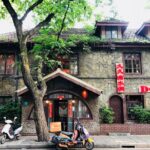
Shanghai’s French Concession tells stories fast. This 3-hour guided walk connects you to the area’s layered past with street-level detail, from former club sites to Shikumen lanes and Tianzifang’s alley maze. The pace is practical, and the guide keeps it human—so the neighborhood feels like a place you can actually picture.
What I especially like is the way the tour balances big-name history with everyday details, and how the guide’s storytelling makes the route easy to follow (look for the yellow umbrella). I also like that every stop is included—admission is free at the sights on the route.
One thing to consider: the $5 is just a reservation fee, and the actual tour is tip-based, so your total cost depends on what you choose to tip (the suggested amount is 150–200 RMB or about 20–25 USD/EUR). If you hate the idea of tipping, this might not feel like your kind of tour.
In This Review
- Key takeaways
- A French Concession walk that makes the city feel walkable
- Price and tips: what $5 really means in Shanghai
- Meeting point, timing, and the end-location advantage
- The first leg through the Former French Concession streets
- Okura Garden Hotel Shanghai: history inside a former club atmosphere
- Huaihai Road: the commercial street with a French Concession vibe
- Shikumen Museum, Shanghai: the lane-house reality check
- Shanghai Culture Square Theatre: from canidrome to arts venue
- Sinan Mansions: tree-lined villas and the lives inside
- Tianzifang: the Shikumen alley maze where your tour day keeps going
- Guides who turn streets into stories (Aubrey, Dinna, Celina)
- Who should book this French Concession walking tour?
- What to do after: Tianzifang and nearby self-guided fun
- Should you book this French Concession walking tour?
- FAQ
- How long is the French Concession guided walking tour?
- What does the $5 price include?
- Where does the tour start and end?
- Is there a suggested tip amount?
- Are any admissions required for the stops?
- How big are the groups?
- What happens if weather is poor?
Key takeaways
- Tip-based tour with a clear suggested tip (150–200 RMB or 20–25 USD/EUR), on top of a $5 reservation fee
- Free entry at each featured stop, so you don’t need tickets for buildings you pass through
- A route that ends in Tianzifang, where you can keep exploring with food, shops, and alleys on your own
- Small-group feel: booking capped at groups of up to 4, with a max group size of 30
- Guides with strong interpretation (Aubrey, Dinna, and Celina are names you’ll see tied to great explanations)
- Street-level highlights: Former French Concession, Huaihai Road, Shikumen lanes, Sinan Mansions, and Tianzifang
A French Concession walk that makes the city feel walkable
The French Concession in Shanghai can seem like a blur of architecture and street names—until you walk it with a guide who can connect the dots. This tour is built around that idea: you don’t just read about the neighborhood, you move through it in a logical line and hear what each place meant back then.
You’ll cover a mix of well-known and lesser-seen areas. The route threads from the former French Club area into Huaihai Road’s lively shopping strip, then heads into the older lane-house fabric of Shikumen, and finishes in Tianzifang’s narrow alley network. That change in scenery is part of the value. It helps you see Shanghai as layers, not one single theme.
Also, the tour has a “friend guiding you” vibe rather than a lecture. People specifically praise how the guides explain history and architecture in a way that feels clear in real time, and you can ask questions without it turning stiff.
You can also read our reviews of more tours and experiences in Shanghai.



Price and tips: what $5 really means in Shanghai
Here’s the simple math. You pay $5 per person to reserve your spot. That booking fee is explicitly described as a reservation fee only—the walking tour itself uses a TIP-BASED model. In other words, your guide’s work is meant to be rewarded directly through your tip.
The suggested tip is 150–200 RMB (or 20–25 USD/EUR). That suggestion matters because it sets a baseline: it’s meant to be comparable to what you might pay for a regular paid walking tour. If you tip at the suggested level, you can think of your total cost as roughly “a normal tour price,” not a bargain.
If you’re traveling on a tight budget, calculate before you book. A $5 reservation can feel too good to be true—until you add your tip. Still, the upside is control: you decide what “fair” means based on how much you liked the guide’s style and the information you picked up.
Meeting point, timing, and the end-location advantage
You start at Huaihai Zhong Lu, 887号 (side gate) in Huangpu District, postcode 200041. The tour begins at 10:00 am. From a practical standpoint, that’s a nice start time because you still get the rest of the day after your 3-hour walk.
The ending point is Tianzifang (near Metro Line 9, Dapuqiao station), around 210弄 Tai Kang Lu, postcode 200023. That matters more than you might think. Tianzifang is one of those places where wandering on your own can turn into an excellent day—food, shopping, and alley exploring right where the tour finishes.
The tour uses a mobile ticket, and it’s confirmed at booking time. If you prefer low-friction check-ins, that’s a small but real win.
One more practical note: the experience has a weather requirement. If weather turns poor, you’ll be offered a different date or a full refund.
The first leg through the Former French Concession streets
The tour’s opening hour focuses on the former French Concession and the kinds of sites that help you understand how the area worked day to day. You’ll visit places linked to the Former French Club, the 1st Road in the French Concession, a little Moscow area, and a local alleyway residence building.
Why this first segment is important: it sets the mindset. Instead of jumping straight into “pretty buildings,” you get context for how a foreign concession shaped street patterns, community spaces, and everyday life. Even if you only remember a few key stories, that framing helps the rest of the walk make sense.
It’s also a good time to ask questions. This is when the guide is often explaining themes—power, identity, social life, and how neighborhoods evolve under outside influences. People tend to value this kind of answer-and-explain moment, and it shows up repeatedly in guide feedback.
A small caution: the opening hour is your most information-dense period. If you’re the kind of person who needs breaks to absorb, bring a bottle of water and be ready to slow your pace for a minute or two at photo stops.
Okura Garden Hotel Shanghai: history inside a former club atmosphere
Next you’ll spend about 20 minutes at Okura Garden Hotel Shanghai. The tour positions it as a former French Club setting, using it as a doorway into cultural and social change during the concession era.
This stop works best if you enjoy the “place has a past” feeling. You’re not just passing by a hotel and moving on. You’re learning what role the space played in the neighborhood’s social rhythm, and how that kind of cultural hub fits into the bigger French Concession story.
The timing here is short on purpose. It’s enough time to get meaning, not so long that you’re stuck in one spot while the rest of the walk goes by.





Huaihai Road: the commercial street with a French Concession vibe
Then comes Huaihai Road Commercial Street, often compared to Shanghai’s version of the Champs-Élysées vibe. The tour encourages you to stroll along and take in the shopping energy, while also hearing “jaw-dropping” style anecdotes tied to the local past.
This is where the tour becomes more than history. Huaihai Road is the reminder that the French Concession legacy is not frozen in time. It lives in streets that became major commercial corridors. So you get a contrast: older meanings and structures versus the modern street life that took over afterward.
If you want quieter photos, aim for side moments rather than the center of the foot traffic. This portion can be busy depending on the day. Keep your phone handy, but don’t block pedestrians—just take quick shots between story beats.
Shikumen Museum, Shanghai: the lane-house reality check
At Shikumen Museum, Shanghai, you’ll focus on traditional lane houses and alleyways—the Shikumen style that’s central to understanding how ordinary people lived alongside the more official spaces.
This stop is valuable because it gives you the contrast that makes Shanghai history feel real. You see the tight alley structure, the kind of homes you can imagine a family sharing, and how those older living patterns differ from the bigger, more formal-looking areas.
It also makes a strong visual bridge to Tianzifang later. If Shikumen feels like “the original alley logic,” Tianzifang feels like how that structure gets reused for today’s art and shopping life.
Tip: wear shoes you can trust. Lane-house areas tend to mean small turns, uneven pavement, and lots of steps where you don’t notice until you’ve already done them.
Shanghai Culture Square Theatre: from canidrome to arts venue
Next is Shanghai Culture Square Theatre, which the tour describes as once a canidrome—and later transformed into a culture and arts hub. Along the way, you’ll hear how the site changed roles over time, from entertainment tied to dogs to a completely different cultural function.
This is a great stop if you like the idea of urban reinvention. It’s not the same kind of “old building, same purpose” story you sometimes get. Instead, you learn how cities keep using space but rewrite its meaning.
The practical value here: it prevents your brain from treating history as “only architecture.” The neighborhood also changes through what people do—what attracts crowds, what institutions run the show, and how a place stays relevant by changing function.
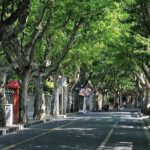
Sinan Mansions: tree-lined villas and the lives inside
At Sinan Mansions, you’ll walk through a historic enclave featuring restored early 20th-century villas that once housed prominent political and cultural figures. The focus is on a quieter, more residential feel than the shopping streets.
This stop helps you understand power and privilege in a very physical way. Large-scale villas, tree-lined avenues, and a sense of planned space tell you that different social layers had different kinds of home environments.
The best part is how this segment slows the pace. Your senses catch up. After busy streets and narrow alleys, you get a chance to absorb scale and layout without constant crowds.
If you’re a photographer, this stop is often where you’ll want to linger—just remember the tour is timed, so keep your questions short and save longer chats for the end-of-walk moments.
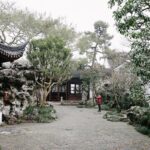
Tianzifang: the Shikumen alley maze where your tour day keeps going
The final stop is Tianzifang, described as a maze of narrow alleys filled with art studios, boutique shops, and cozy cafés. You’ll get a last look at Shikumen architecture, but with a modern creative twist.
This is a smart ending because Tianzifang naturally supports unstructured time. After the guided portion ends, you can choose your own pace: browse, snack, take photos, or just wander without worrying about missing the next “story stop.”
If you want a practical plan, consider grabbing something to eat soon after the tour. You’re done walking for the day, and the area is built for small breaks: sit, recharge, and let the alley atmosphere settle in.
Guides who turn streets into stories (Aubrey, Dinna, Celina)
A big reason this tour earns a 4.9 rating is the guidance style. Names like Aubrey, Dinna, and Celina show up connected to strong results: clear explanations of Shanghai history and French Concession architecture, lots of energy, and a patient approach to questions.
One detail I really like from the feedback is the way people describe finding the guide using a visible cue: follow the yellow umbrella. That makes the walk easier for first-timers who don’t know how to “stay with the group” in a busy city.
Another theme is conversation. People appreciate guides who answer questions patiently and explain at a human speed. If you’re on a short business trip and want maximum learning in limited hours, this kind of guide-led pacing can be a real asset.
The takeaway for you: when you book, prioritize the match of guide style. If you like storytelling that ties architecture to everyday life, you’re in the right place.
Who should book this French Concession walking tour?
This tour fits best if you:
- want a 3-hour overview without cramming in too many transfers
- like walking through neighborhoods where architecture and street layout matter
- enjoy guides who explain both the big themes and the small details
- want an ending location (Tianzifang) that keeps your afternoon open
It may not fit as well if you:
- dislike tip-based experiences and want a fully fixed price
- need long museum-style stops (this is a walking-and-story format)
- get cranky in crowds; some parts like Huaihai Road can be busy
Also, the tour is not just for first-time Shanghai visitors. It’s useful if you’ve already seen some major sights and want a more local, neighborhood-scale understanding.
What to do after: Tianzifang and nearby self-guided fun
Since the tour ends at Tianzifang, plan your next hour around wandering and eating. Look for art studios and small shops along the lanes, and take breaks at cafés when you feel the afternoon heat or crowd pressure.
If you want to keep the theme going, you can also pay attention to the Shikumen shapes you learned about earlier. Even without a guide, you’ll notice which alley walls look traditional and which areas have been repurposed for today’s retail and creative scene.
If your schedule is tight, Tianzifang is still a strong choice because you don’t need to travel far to keep sightseeing.
Should you book this French Concession walking tour?
If you want a cost-effective way to get oriented in Shanghai’s French Concession and you’re okay with a $5 reservation fee plus a suggested tip, I think this is a smart booking. The route is structured enough to keep you from feeling lost, but flexible enough that the neighborhood still feels alive.
I’d book it when:
- you have only a half-day
- you care about how neighborhoods evolved
- you want free-entry stops and a guide who explains what you’re seeing in plain language
I’d think twice if:
- you strongly prefer fixed-price tours
- you plan to tip very low or not at all
Overall, this walk is built for people who like learning through movement. You come away with a clearer sense of how Shanghai’s French Concession shaped streets, social spaces, and the everyday housing style that still shows up today.
FAQ
How long is the French Concession guided walking tour?
It’s about 3 hours long.
What does the $5 price include?
The $5 booking fee is for reserving your spot. The tour itself runs on a TIP-BASED model.
Where does the tour start and end?
It starts at Huaihai Zhong Lu, 887號 side gate (200041) and ends in Tianzifang near Metro Line 9, Dapuqiao (210弄 Tai Kang Lu, 200023).
Is there a suggested tip amount?
Yes. The suggestion is 150–200 RMB, or about 20–25 USD/EUR.
Are any admissions required for the stops?
No. The featured stops are listed as free admission.
How big are the groups?
The experience has a maximum of 30 travelers. Booking is limited to groups of up to 4 people, with private tour arrangements if you exceed that.
What happens if weather is poor?
The experience requires good weather. If it’s canceled due to poor weather, you’ll be offered a different date or a full refund.