REVIEW · WUHAN
Customized Private Wuhan Day Tour (10 attractions to choose / Not group tour)
Book on Viator →Operated by Rafiq in Wuhan · Bookable on Viator
One day in Wuhan can feel like a whole chapter book. This private tour lets you shape the route, then ride it with a local guide, Rafiq, who knows the city’s stories and photo angles. I love the flexibility of choosing 4 landmarks and I love the mix of big sights plus everyday Wuhan stops like the snack streets. The main thing to consider is that it runs 6 to 8 hours, so if you pick far-apart areas back-to-back you may feel rushed.
I also like that you get a real guide-driver setup, not a half-in/half-out bus day. You’ll have hotel pickup in central Wuhan, bottled water, and even a Chinese tea tasting break so the day doesn’t become pure walking. If your hotel is outside the pickup zone, you may need to meet elsewhere, so it’s worth confirming your exact address early.
In This Review
- Key reasons this private Wuhan day tour works so well
- How the custom plan actually feels in a day
- Yellow Crane Tower: views plus the childhood-meets-reality feeling
- East Lake: nature time without leaving the city behind
- Hubei Provincial Museum: big artifacts, easy to understand
- Wuhan Yangtze River Bridge: architecture with a working-city feel
- The Yangtze Ferry feeling from Beach Park
- Wuhan University: architecture, campus time, and seasonal energy
- Guiyuan Temple: prayer customs and the 500 golden Arhats
- Gude Temple of Hankou: Eurasian temple style in a residential maze
- Hubu Alley vs Jiqing Street: snack street choice that changes your vibe
- Chinese tea stop: included break that makes the whole day smoother
- Rafiq’s role: stories on the road and photo help at the stops
- Price and logistics: what $280 per person really buys
- Who should book this Wuhan private day
- My call: should you book?
- FAQ
- Is this a group tour or a private tour?
- How many attractions can I choose?
- How long is the Wuhan day tour?
- Are admission tickets included?
- Is hotel pickup and drop-off included?
- Is lunch included?
- Do you include bottled water and tea?
- Who will guide and drive during the day?
- Is there free cancellation?
Key reasons this private Wuhan day tour works so well
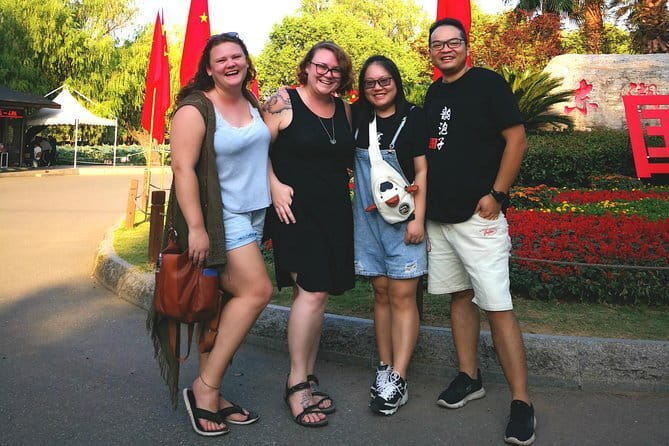
- Rafiq as both guide and driver: 30+ years living in Wuhan means story stops along the way, not just photos.
- Choose 4 of the top 8 landmarks: you can tilt the day toward nature, history, religion, or architecture.
- Real Wuhan moments built in: a river ferry feel and authentic snack streets, not just ticketed attractions.
- Tea and photo help included: one cup of tea per person and a guide who is good at taking photos.
- Tickets and admissions are covered for the selected sights, so you can focus on time on the ground.
- Private vehicle, not a group shuffle: your pace, your timing, your questions.
How the custom plan actually feels in a day
This is a private tour, meaning only your group is in the car. You’re not competing with other schedules, and you can adjust timing on the fly when a line moves fast or a view is worth lingering over.
Here’s the practical structure: you pick 4 out of 8 major sights such as Yellow Crane Tower, East Lake, Hubei Provincial Museum, Wuhan Yangtze River Bridge, Yangtze River Ferry, Wuhan University, Guiyuan Temple, and Gude Temple. Then your day also includes one of the famous food-street areas—either Hubu Alley or Jiqing Street—so you don’t leave Wuhan without tasting daily life.
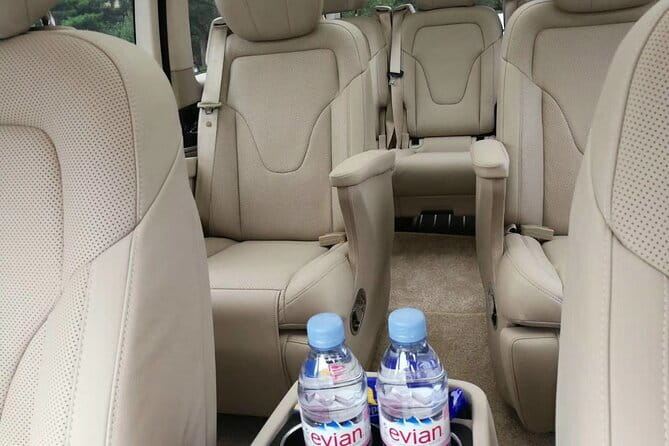
You’ll be in a private air-conditioned car with bottled water, and you use a mobile ticket. Rafiq (and an assistant in some cases) stays engaged throughout, with story context as you travel between stops.
One detail that matters: you’re planning a full day. Since each chosen stop is allocated around 1.5 hours, your selections should match your energy level. If you love museums but also love long walks, you’ll want a smart mix.
Yellow Crane Tower: views plus the childhood-meets-reality feeling
Yellow Crane Tower is Wuhan’s landmark you’ll recognize instantly, and it’s easy to see why people treat it like a must. From the tower area, the city spreads out in layers: Hanyang district in view, modern Hankou district, and the cultural weight of Wuchang district.
What I like about this stop is that it’s not just a climb and a postcard. The Yellow Crane Tower Park has winding paths and quieter corners, so you can slow down and explore a bit instead of only doing the obvious viewpoints. The tower also gives you a sense of scale—Wuhan isn’t flat, and from up there you start understanding how the river shapes everything.
A possible drawback: if you’re sensitive to stairs or crowds at viewpoints, this can feel more active than the other scenic spots. Going with the timing your guide recommends helps.
East Lake: nature time without leaving the city behind
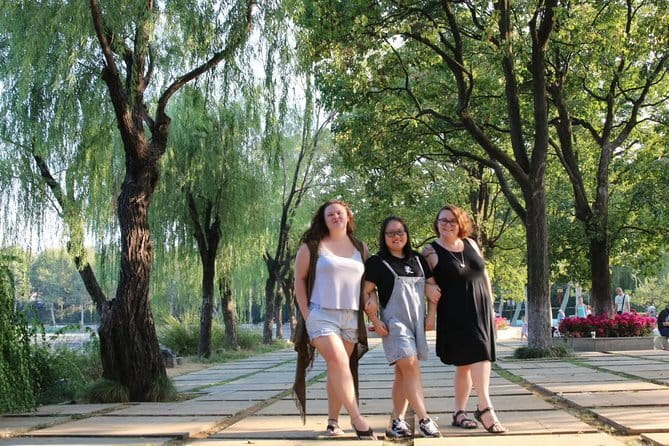
If your day needs a reset, East Lake is the place. The lakeside walk can feel peaceful even though you’re still in a major city. You’ll see weeping willow forms along the shore, lotus pond scenery, and stone bridge views that give you plenty to photograph without needing constant movement.
One of the best practical pleasures here is the option to stop. You can rest on stone benches by the lake and just watch the light change. On a clear day, sunset moments can slow time in a way that makes the rest of the tour feel easier.
I also like that East Lake offers small wildlife moments, like wild ducks you might spot on the water. It’s a reminder that this isn’t just a scenic set piece—it’s a working natural space.
A possible drawback: if the weather is harsh (rain, heavy heat), you’ll want extra breaks because this stop is built for walking.
Hubei Provincial Museum: big artifacts, easy to understand
If you want Wuhan context fast, Hubei Provincial Museum does it. It’s the kind of stop where history stops being an abstract word and becomes objects in front of you.
This museum’s named highlights include bamboo slips used in the Qin Dynasty, the Sword of Goujian, and the chime bells from the Tomb of Marquis Yi of the Zeng State. You’ll also hear about a Blue and White plum vase from the Yuan Dynasty. One detail that matters for music-history fans: the chime of Marquis Yi is described here as the most complete one in China.
Even if you’re not a deep-dive museum person, your guide can translate what you’re seeing into a story about how power and culture moved through the region. It’s a strong counterweight to the outdoor stops.
A possible drawback: museum time can feel more tiring if you cram it right after a long river walk. Build in calm pacing.
Wuhan Yangtze River Bridge: architecture with a working-city feel
Wuhan Yangtze River Bridge is both highway and railway, and that mix is the point. It’s not only a monument, it’s infrastructure that still carries daily movement across the Yangtze.
Opened in 1957 and in operation for over 60 years, the bridge gives you classic engineering geometry. You’ll also get photography angles with views on both sides of the Yangtze River. The riverside walking areas under and near the bridge add another layer: you see real city life, not only a staged viewing platform.
What I like here is that it’s a photo stop with purpose. You see what the bridge does, then you walk and feel how locals move along the river edges.
A possible drawback: if you prefer only indoor attractions or have limited walking tolerance, plan to take breaks and keep your camera ready.
The Yangtze Ferry feeling from Beach Park
One of the most memorable parts of Wuhan is how the river is still lived with, not just photographed. The ferry stop—often connected with Beach Park—brings that to life.
You take a ferry across the Yangtze River and feel the wind and motion right in your face. It changes the day’s rhythm because it’s moving time, not stationary time. You also get to share the ride with ordinary Wuhan residents—pairs, students, and small vendors you might notice during the crossing.
A practical note: ferry rides can be cooler or windier than you expect, even when the city feels warm. Bring something light you can put on during the ride.
A possible drawback: if you’re expecting a quiet, private boat experience, this can feel more social since you’ll be sharing the crossing with local passengers.
Wuhan University: architecture, campus time, and seasonal energy
Wuhan University is a built-in highlight for people who enjoy architecture and walkable spaces. The campus was founded in 1893, and the setting matters: it sits by East Lake and Luojia Mountain.
You’ll see palace-style buildings with both Chinese and Western characteristics. Even just walking a bit gives you a feel for why the campus draws so many visitors. Mid March is specifically noted for cherry blossoms, and the campus can attract millions during that peak time. If you’re not traveling in March, you’ll still get the campus beauty, just without that seasonal surge.
What I like is that it balances the day. After museums and river infrastructure, Wuhan University offers a calmer, more human-paced walk.
A possible drawback: spring-season crowds can be significant. If you’re visiting during the cherry blossom period, consider starting early and letting your guide choose the best times to slow down.
Guiyuan Temple: prayer customs and the 500 golden Arhats
Guiyuan Temple is one of Wuhan’s important temples, founded in 1658. What makes it special is how it functions in daily life. Many locals come here for blessings, so the temple doesn’t feel like a museum piece frozen in time.
You’ll also learn about the tradition tied to the fifth day of the lunar new year, when hundreds of thousands of pilgrims come for what’s described as rob the head of incense worship. That gives you a sense of why people treat this site like a spiritual anchor.
The most distinctive visual element is the 500 golden Arhats in the arhat hall. You can literally count them and try to see how you feel about your own luck.
A possible drawback: temple visits can come with crowding around key prayer moments. Your guide can help you plan the order of viewing so you still enjoy the quieter corners.
Gude Temple of Hankou: Eurasian temple style in a residential maze
Gude Temple of Hankou mixes Eurasian religious architecture and integrates three major Buddhist sects, including Mahayana and Tibetan traditions, which is described as rare in Han Buddhist temples. It’s also tucked into residential buildings and has been hidden in the downtown for more than 100 years.
This matters because it changes the vibe. Without locals, it can be hard to find, and that means when you reach it, it feels less like a tourist checklist item and more like you found a small time pocket. The description notes a sense of dislocation across time and space, and you’ll understand it once you’re inside.
A possible drawback: because it’s in a residential area, it may take a bit more attention to spot and navigate. Going with Rafiq reduces the guesswork.
Hubu Alley vs Jiqing Street: snack street choice that changes your vibe
For food and everyday Wuhan, you’ll get one of two famous streets. Both are built for walking and snacking, but they feel different.
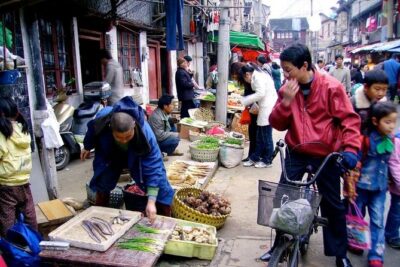
Hubu Alley is described as having 400+ years of history and about 150 meters of snack-stall energy. It’s an official snack street. Here, you’ll want to try local favorites like Re Gan Mian (hot-and-dry noodles) and Hu Tang Fen (soup noodles with fish paste). It’s a tight, concentrated food corridor.
Jiqing Street is a day-and-night story. During the day, it’s described as a time-honored style street, and in the evening it turns into the typical Wuhan scene—lights up, lots of voices, and plenty of places to sample. You can find time-honored food brands such as Si Jimei and Lao Tongcheng, plus some folk craft stalls.
My practical advice: if you want intense snack concentration, pick Hubu Alley. If you want a longer evening atmosphere, pick Jiqing Street.
A possible drawback: both can get crowded, and street food means you’ll likely want to keep flexible with your appetite and your pace.
Chinese tea stop: included break that makes the whole day smoother
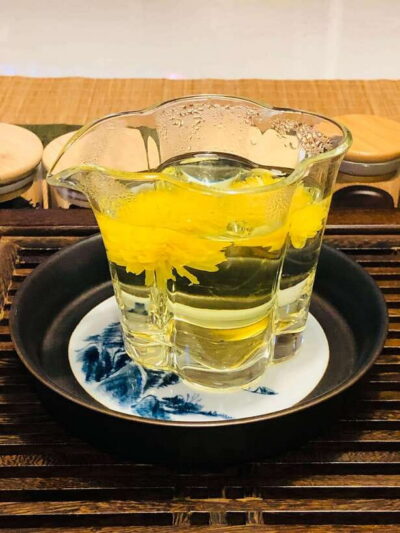
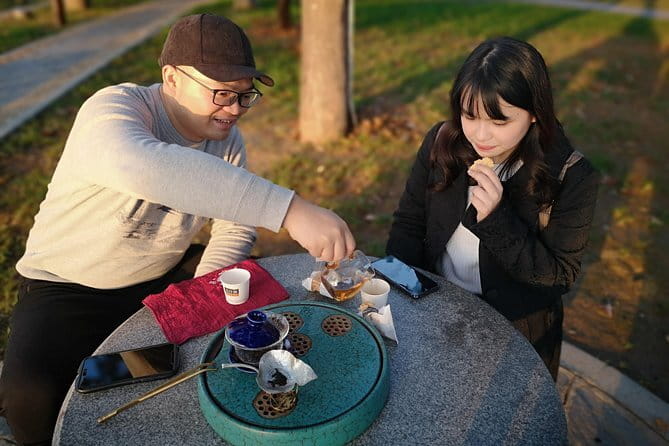
One of those small inclusions that changes how you remember the day: you get one cup of Chinese tea per person, with green tea or black tea options. The tea break also doubles as a reset point in the middle of an active schedule.
Instead of rushing from ticket to ticket, you pause, drink something warm, and let the guide group your next moves together. Your guide also uses this time for story context, and in a long day that matters.
A possible drawback: if you don’t like hot tea, you might still enjoy watching how your guide explains it, but ask ahead which tea you’ll receive.
Rafiq’s role: stories on the road and photo help at the stops
You’re not only being transported. You’re guided by someone who has lived in Wuhan for more than 30 years. Rafiq is known for telling stories about Wuhan along the way, which helps the day feel like more than separate sightseeing boxes.
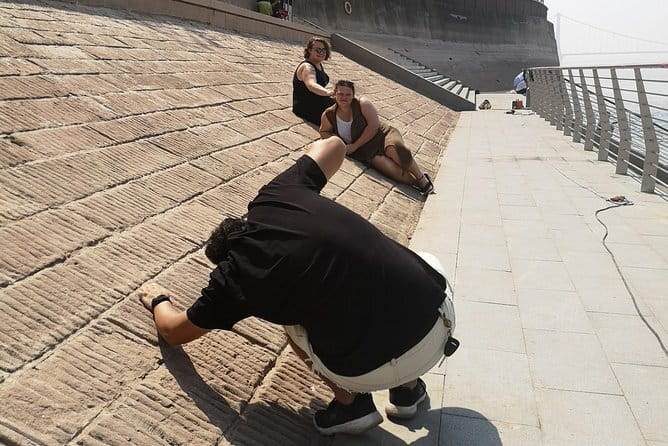
From past bookings, his communication style is a highlight. After you book, he reaches out quickly to see if you have special interests and sends an itinerary ahead of time weeks before the visit. In those same experiences, a guide assistant named Summer has joined the team, adding extra local support. Rafiq is also described as good at taking photos, so you’re less stuck fighting with a shaky phone tripod moment.
This is why the day feels personal: you’re not just following a script.
Price and logistics: what $280 per person really buys
At $280 per person for a 6 to 8 hour day, the value comes from the private format. You’re paying for a dedicated driver, a dedicated guide, and a private car, not a shared bus.
The included items are practical: hotel pickup and drop-off for Wuhan downtown hotels, bottled water, admission tickets for the selected sights, and one cup of tea per person. You also get mobile ticketing.
Two logistics details matter for planning your day:
- Hotel pickup is listed as Wuhan downtown only, and drop-off doesn’t include locations outside the Wuhan Third Ring Road. If your hotel sits beyond that, you’ll want to confirm where you meet.
- The tour lasts most days long enough that lunch or dinner becomes your responsibility. Food streets are included as part of the plan, but a proper meal isn’t built in as a guaranteed stop.
If you want maximum time in the places you choose, private day tours like this often cost more. Here, that cost is softened by admissions being included for the stops you select.
Who should book this Wuhan private day
I’d steer you toward this tour if:
- You want control over your day and you’re picking a mix of nature, museums, and local life.
- You like the idea of a long, guided day rather than a quick highlights tour.
- You care about photo time and clear explanations, not just movement between entrances.
- You’re visiting for a short stay and want a high hit-rate with minimal planning stress.
It may be less ideal if:
- You’re staying far from central Wuhan and don’t want to meet outside the usual pickup zone.
- You have very limited walking tolerance and prefer mostly flat, low-movement sightseeing.
My call: should you book?
If your goal is a Wuhan day that feels local—river ride, snack streets, and temple customs—this is a strong match. You’ll get a private car, admission coverage for the stops you pick, and a guide who can connect the dots with stories as you move around. The custom choice of 4 major highlights is the big win, because it stops the day from feeling pre-packaged.
Before you book, do one simple thing: tell Rafiq what you care about most (views, food, museums, or temples) and confirm your hotel’s pickup area. If you do that, the day runs like a smooth plan, not a scramble.
FAQ
Is this a group tour or a private tour?
This is a private tour, so only your group participates. You’ll have a private driver and a private English/Chinese speaking guide.
How many attractions can I choose?
You can choose 4 of 8 scenic spots, and the day also includes one of the food-street stops (either Hubu Alley or Jiqing Street).
How long is the Wuhan day tour?
The duration is about 6 to 8 hours.
Are admission tickets included?
Yes. Admission tickets are included for the stops in the plan.
Is hotel pickup and drop-off included?
Hotel pick-up and drop-off are included for Wuhan downtown hotels only. It does not include locations outside Wuhan Third Ring Road.
Is lunch included?
No. Lunch or dinner is not included.
Do you include bottled water and tea?
Yes. Bottled water is included, and there is one cup of Chinese tea per person (green tea or black tea).
Who will guide and drive during the day?
The guide and driver are included. Rafiq is the driver and guide, and in past tours an assistant named Summer has supported the team.
Is there free cancellation?
Yes. You can cancel up to 24 hours in advance for a full refund.