REVIEW · BEIJING
Half Day Tour To Lama Temple and Confucius Temple in Beijing
Book on Viator →Operated by Lily's Tour Company · Bookable on Viator
Two temples, one efficient half-day. I like the door-to-door pickup and the pre-booked tickets that help you breeze past long lines, and it’s a smart way to pack in two major Beijing sights without turning it into a full-day slog. One thing to plan around: the Confucius Temple is closed on Mondays, so you’ll swap in the Drum Tower and Bell Tower instead.
A good guide makes the difference here. On this tour, you get an English-speaking guide who turns the sights into a practical mini “religions of China” lesson, with time for your questions and photos—exactly the kind of pacing that works well when you have other plans later. You can choose a morning or afternoon departure, so you can fit it around work or jet lag.
In This Review
- Key highlights at a glance
- Why this Lama Temple + Confucius Temple combo fits Beijing time
- Hotel pickup, exact start times, and choosing morning vs afternoon
- Lama Temple (Yonghegong): what to focus on in 90 minutes
- Confucius Temple + Guozijian (Imperial College): worship meets education
- If it’s Monday: Drum Tower and Bell Tower instead
- The real value: a private guide who answers and adapts
- Pre-booked tickets and mobile entry: less waiting, better flow
- What’s included (and what you’ll need to cover)
- Price and value: is $88 per person fair?
- Who should book this tour (and who might skip it)
- Should you book Lily’s Tour Company for Lama and Confucius?
- FAQ
- How long is the Half Day Tour To Lama Temple and Confucius Temple?
- What time does the tour start?
- Is pickup from my hotel included?
- Are entrance tickets included?
- Is this tour private?
- What happens on Mondays?
- Is lunch included in the price?
Key highlights at a glance
- Hotel pickup and round-trip transfer keeps your day simple and reduces Beijing navigation stress
- Pre-booked tickets help you spend more time walking and less time waiting
- Yonghegong Lama Temple in 90 minutes gives you the big highlights without rushing
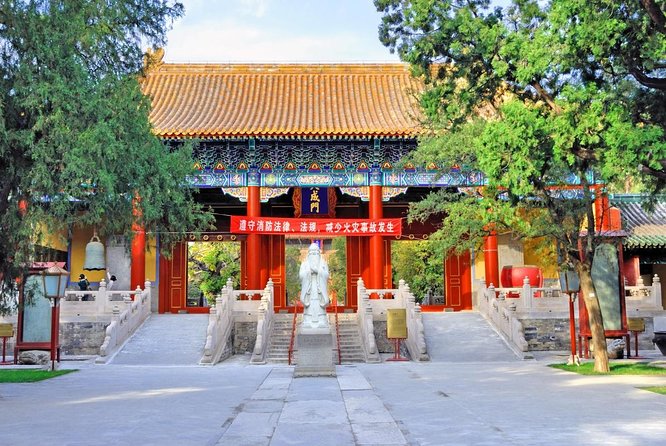
- Confucius Temple plus Guozijian connects worship with China’s education tradition
- Monday sight swap to the Drum Tower and Bell Tower keeps the tour running smoothly
- Private guide experience with a group limited to your party
Why this Lama Temple + Confucius Temple combo fits Beijing time
Beijing has a talent for eating your day—lines, crowds, and transit can snowball fast. This half-day format is built to stop that. You focus on two of the city’s most meaningful spiritual and historical stops in one tight window, with tickets arranged ahead so you’re not spending your precious morning wrestling with the ticket queue.
I also like the pairing because it’s not two random temples in the same neighborhood. Yonghegong (Lama Temple) connects to Buddhism in a very visible, material way—halls, statues, incense-space energy. Confucius Temple and Guozijian (Imperial College) connect to a different tradition: respect, learning, and how education shaped status and government life over centuries. You end up with a more rounded sense of how people in China approached belief and study.
You can also read our reviews of more tours and experiences in Beijing.
Hotel pickup, exact start times, and choosing morning vs afternoon
The tour runs about four hours total, and it’s set up around two departures: 08:30 for the morning option or 13:30 for the afternoon option. That matters because timing affects both your comfort and how you experience the temples.
With hotel pickup, you’re spared the common first-day problem: figuring out transport, then arriving out of breath, then losing time finding the right entrance. Door-to-door transfer means you can show up ready to look, not ready to solve logistics.
Morning tours usually feel calmer for sightseeing, especially in summer or during busy seasons. Afternoon tours are great when you’ve got work commitments earlier in the day—or if you want a slower start and you’re already acclimated. Either way, you’re back at your hotel after the tour, which is a big deal when your schedule is tight.
Lama Temple (Yonghegong): what to focus on in 90 minutes
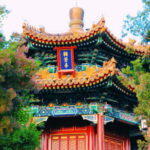
Stop one is the Lama Temple (Yonghegong), and you’ll spend about 1 hour 30 minutes there. This is one of Beijing’s biggest lamaseries, with major structures laid out along a central axis. It was built in 1694, and the layout is designed to guide your eye forward as you move through the halls.
Here are the specific things you should pay attention to at Yonghegong:
- The Hall of Harmony and Peace: the main building and the emotional center of the complex.
- Five halls along the central axis: the design is structured, so you’ll get a clear route instead of wandering.
- Three Memorial Archways: these create transitions and reminders of the temple’s commemorative role.
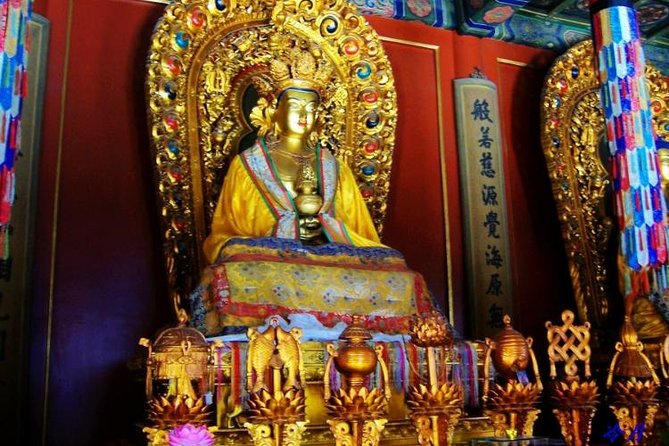
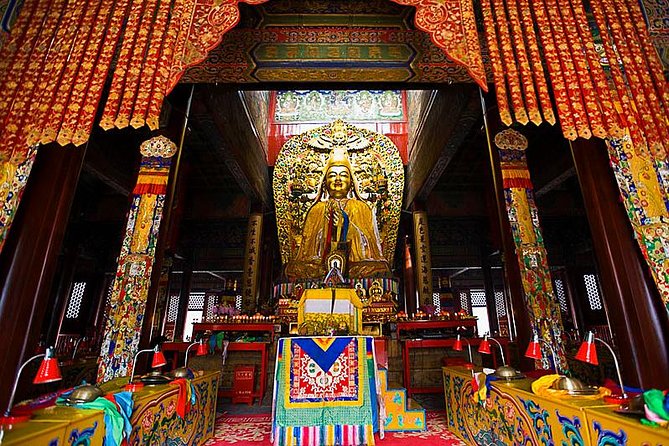
- The massive wood Buddha: the temple houses the biggest single wood Buddha statue in the world, which is the kind of sight that changes how you think about scale and craftsmanship.
Because the time is limited, the most valuable strategy is to go in with a plan for what you’ll prioritize. If you try to photograph everything, you’ll end up tired and underinformed. Instead, I’d focus on the main hall first, then follow the axis layout, and use your guide to explain what you’re seeing as you go.
A private guide also helps you avoid one of the easiest beginner mistakes in Chinese temple complexes: treating every hall as equal. Yonghegong has a clear main building and a hierarchy of spaces. When you understand that, the place feels less like a maze and more like a story you can follow.
Confucius Temple + Guozijian (Imperial College): worship meets education
Stop two is Confucius Temple along with the Guozijian Museum (also known as Imperial College). This part runs about 2 hours, which is just enough time to see the key sections without turning it into a rushed checklist.
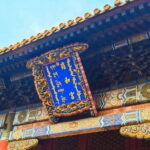
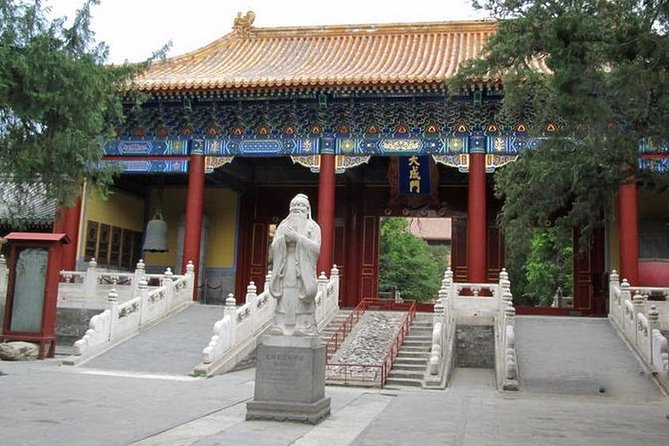
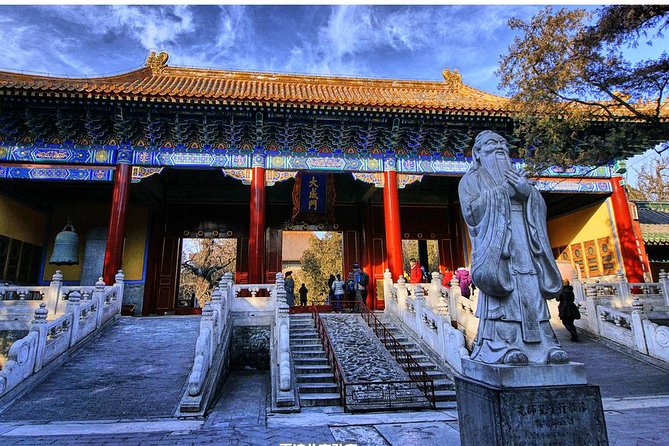
Confucius Temple in Beijing is the second largest in China and was built in 1302. The site functioned as a place where people paid respects to Confucius—the thinker and educationist who became central to how many generations understood morality, conduct, and learning.
Then Guozijian shifts the emphasis from worship to education. Imperial College was the highest learning institute during the Yuan, Ming, and Qing dynasties. Emperors reportedly visited to read Confucian classics to large groups of students—meaning this wasn’t just a classroom. It was part of the machinery of government and social order.
What you’ll get from this stop on a guided half-day is context. For example, you might notice how Confucius-related spaces emphasize respect and ritual, while Guozijian communicates institutions, records, and learning. Together, they show how education in imperial China wasn’t separated from status or ethics. It was a foundation for leadership.
If it’s Monday: Drum Tower and Bell Tower instead
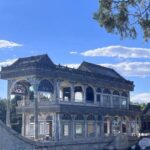
Here’s a practical catch you’ll want to remember: Confucius Temple is closed every Monday. On those days, your guide will take you to the Drum Tower and Bell Tower instead. So if you’re aiming for a specific interior experience at Confucius Temple, check the day of your visit first. The tour will still deliver culture and history—it just won’t follow the exact same temple-to-temple route.
The real value: a private guide who answers and adapts
This tour is private, meaning it’s just your group, and the guide is the engine behind the experience. I love tours like this when the guide doesn’t just recite facts, but can flex to what you actually care about.
In past experiences on this kind of tour format, a guide named Lisa stood out for a few reasons that matter on the ground: impeccable English, patience with questions, and a willingness to share personal perspective (including experiences from her family). She also encouraged lots of photos—useful because temple timing can be unpredictable, and you may need a minute to get the shot without feeling rushed.
Even if your guide isn’t Lisa, the best part of a private setup is that you can ask the one question you always forget to ask in a group tour. Why is this hall so important? What does this symbol point to? How should I interpret the layout? A good guide turns those answers into something you can remember later, not just something you nod at for five seconds.
Also, the tour is described as a personalized masterclass in China’s diverse religions. That’s not just marketing language. You’ll get the sense that Buddhism and Confucianism shaped everyday values differently—through practice, ritual, and community roles on one hand, and through learning, ethics, and governance on the other.
Pre-booked tickets and mobile entry: less waiting, better flow
One of the biggest “hidden” benefits of this tour is that you’re using pre-booked tickets. In Beijing, lines can be long enough to chew up your energy. When tickets are arranged ahead, you often cut down on the time spent in that uncomfortable middle zone of deciding where to stand.
You’ll also have a mobile ticket, which is practical if you don’t want to keep track of paper vouchers while you’re walking around with phone, water, and camera.
Inside the temples, the pacing tends to be smoother because you’re not stuck waiting for the entire group to buy tickets. That means you can focus on what matters: walking the axis layout at Yonghegong, then shifting your mindset at Confucius Temple and Guozijian from sacred space to education-institution space.
Do bring sensible basics: comfortable shoes, water (you get bottled water on the tour), and a charged phone so you can handle the mobile ticket quickly.
What’s included (and what you’ll need to cover)
Included items are what make the price feel more reasonable, especially in a city where transit costs and ticket hassles can add up:
- Bottled water
- Professional guide
- Taxi or Uber car (your exact vehicle may vary)
- Entrance ticket(s)
- Private van or bus if your party is over 5 people
Not included:
- Lunch
Because lunch isn’t included, I’d treat this like a sightseeing sprint, not a slow wander day. If you’re doing the morning tour, eat earlier and plan a snack for later. If you’re doing the afternoon tour, consider a small lunch around midday so you don’t get hungry while you’re in the last stretch.
Price and value: is $88 per person fair?
At $88 per person, you’re paying for more than entry tickets. You’re paying for time savings and coordination: hotel pickup and round-trip transfer, a guide for about four hours, and admissions included for both major stops.
Here’s why that can be good value:
- Transportation is included: Beijing can be confusing for first-timers, and getting from one major site to another efficiently isn’t always easy on your own.
- Tickets are included: you’re not juggling entry fees or last-minute ticket hunts.
- Time is protected: your schedule is limited to about four hours, so avoiding long ticket lines helps you actually enjoy the experience rather than endure it.
- Private guide benefit: even though it’s a private experience, it’s still half-day length—so you get interpretation without the full-day cost and fatigue.
The main reason this may feel pricey is the same reason it can also feel worth it: you’re not getting a full-day buffet of sights. You’re getting a concentrated, guided hit. If you’re the kind of traveler who likes to explore slowly at your own pace without a guide, you might prefer DIY. But if you want a clean plan and clear explanations, $88 can be a solid deal for a short, high-impact day.
Who should book this tour (and who might skip it)
This tour fits best if:
- You want two big Beijing cultural sites in one half-day.
- You like having a plan and a guide rather than figuring it out on your own.
- You have a busy schedule and need to choose morning or afternoon.
- You care about understanding what you’re seeing, not just photographing it.
You might skip it if:
- You want a very long temple day and don’t mind managing transport and ticket lines yourself.
- You need lunch included as part of the package (since lunch isn’t provided here).
- You’re traveling at a pace that doesn’t match guided timing.
That said, even if you enjoy wandering, a private guide can give you a route and then let you slow down where you care most—especially when photos are part of your travel style.
Should you book Lily’s Tour Company for Lama and Confucius?
I’d say yes if you’re trying to make the most of limited time in Beijing. The combination of hotel pickup, pre-booked tickets, and a private English-speaking guide makes it a low-stress way to see two major sites and understand why they matter.
The biggest reasons to book:
- You get efficient pacing without feeling like you’re sprinting alone.
- You’ll see the key highlights at Yonghegong and understand Confucius Temple’s connection to education at Guozijian.
- You’re not stuck on Monday closures, because the tour swaps in the Drum Tower and Bell Tower.
The biggest reason to reconsider:
- Lunch isn’t included, so you’ll need to manage food on your own.
If your priority is authentic context with practical comfort, this is a strong choice for a half-day in Beijing.
FAQ
How long is the Half Day Tour To Lama Temple and Confucius Temple?
The tour lasts about 4 hours total.
What time does the tour start?
There are two options: pickup at 08:30 for the morning tour or 13:30 for the afternoon tour.
Is pickup from my hotel included?
Yes. The tour includes door-to-door round-trip transfers direct from your hotel.
Are entrance tickets included?
Yes. Entrance tickets are included, and the tour uses pre-booked tickets to help you skip long lines.
Is this tour private?
Yes. It’s a private tour/activity, and only your group will participate.
What happens on Mondays?
Confucius Temple is closed every Monday. On those days, your guide will visit the Drum Tower and Bell Tower instead.
Is lunch included in the price?
No. Lunch is not included. Bottled water is included on the tour.
If you tell me your travel dates (especially the day of week), I can help you sanity-check whether the Monday swap affects what you want to see most.