REVIEW · LUOYANG
Zhengzhou: Private Tour to Shaolin Temple & Longmen Grottoes
Book on GetYourGuide →Operated by Discover China Trips · Bookable on GetYourGuide
Two UNESCO sites in one focused day. This Zhengzhou private tour pairs Shaolin Temple with the Longmen Grottoes, so you see two different sides of China’s spiritual and artistic tradition in a single outing. The day runs on your schedule, with a guide who’s there to explain the stories as you walk.
I really like the private-vehicle pace and the ability to ask questions as you go, not just follow a script. And I love how the stops are specific: Pagoda Forest tomb pagodas at Shaolin, then the massive stone-carving galleries at Longmen, where the art is tied directly to Buddhist devotion.
One drawback to plan around: it’s an 8-hour day, and if weather affects outdoor timing (including the theatre portion), you may not see everything as smoothly as you’d hoped.
In This Review
- Key highlights at a glance
- A one-day UNESCO double that actually makes sense
- Getting started in Zhengzhou: private pickup and a smooth start
- Shaolin Temple: Mount Song, Batuo, and why the site grew over time
- Pagoda Forest: more than 240 tomb pagodas
- Kungfu at the theatre: a performance tied to the temple
- Longmen Grottoes: Buddhist stone art from 316 to 907
- Why stone carving hits differently than museums
- Lunch, timing, and what the 8 hours really adds up to
- English guide quality: the real difference maker
- Price and value: is $168 a smart deal for two UNESCO stops?
- Who should book this private day trip
- Should you book Zhengzhou: Private Tour to Shaolin Temple & Longmen Grottoes?
- FAQ
- What sites are included in the tour?
- How long is the tour?
- Is the tour private and in English?
- Is lunch included?
- Do I need an entrance fee and battery bus?
- What documents do I need?
Key highlights at a glance
- Two UNESCO World Heritage Sites in one day: Shaolin Temple plus Longmen Grottoes without the stress of connecting transport.
- Hotel pickup with a name sign: meet your guide in your Zhengzhou hotel lobby and start with minimal hassle.
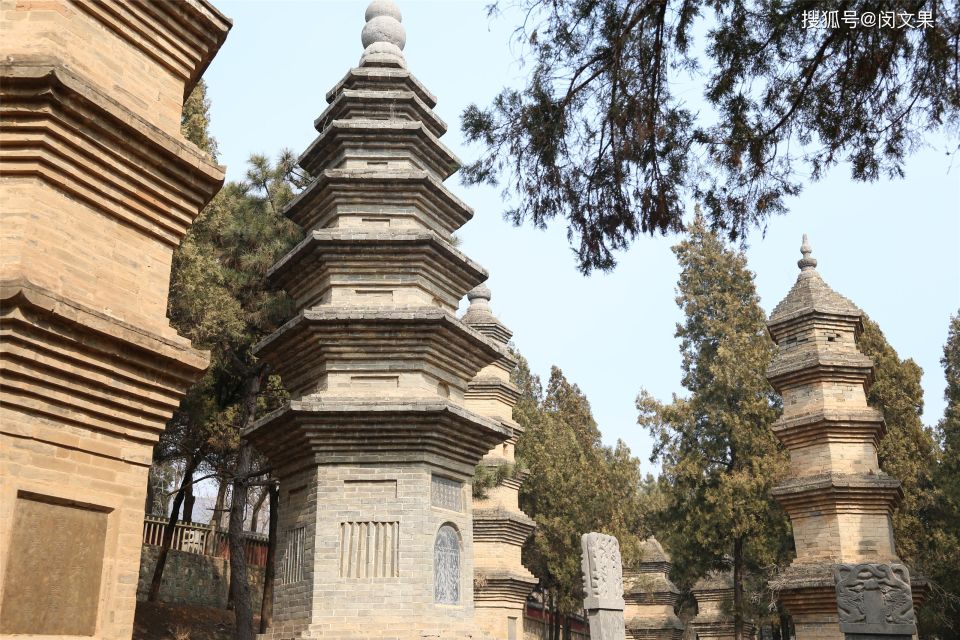
- Shaolin’s Pagoda Forest scale: more than 240 tomb pagodas from Tang through Qing dynasties.
- Kungfu theatre included in the visit flow: watch Shaolin monks perform during the scheduled time at the theatre.
- Longmen’s top-tier stone carving: late Northern Wei and Tang works (316–907), devoted to Buddhist religion.
- English guide with real explanations: guides such as Alice, Jimmy, and Gavin Lee have been praised for clarity and thoughtful context.
A one-day UNESCO double that actually makes sense
Shaolin Temple and the Longmen Grottoes feel like they belong to different worlds at first—one is a living monastic site tied to Mount Song, and the other is a concentration of Buddhist art carved into rock. Put together on the same day, though, the contrast helps the big picture click faster.
Shaolin gives you the human story: Zen Buddhism’s roots in China, a temple shaped by many dynasties, and a tradition strong enough to inspire performance in a theatre setting. Longmen then shifts the focus to what people built and preserved in stone—late Northern Wei and Tang-era carving devoted entirely to Buddhist belief.
This is the kind of tour where the format matters. A private route means you’re not fighting schedules or rushing between stops just to keep up with a group. You’re also free to ask your guide why certain details matter, instead of only collecting photos.
You can also read our reviews of more tours and experiences in Luoyang.

Getting started in Zhengzhou: private pickup and a smooth start
Your day begins with hotel pickup in Zhengzhou city. Your guide meets you in the lobby holding a sign with your name, so you can find each other quickly and avoid the usual guessing-game at the start of a tour.
From there, you head to Shaolin Temple by private car. The drive is about 1.5 hours, which is a solid amount of travel time to settle in, get oriented, and let your guide set expectations for the temple visit. You’ll want to treat the ride as part of the experience—this is where context gets explained before you step into halls, courtyards, and the Pagoda Forest.
The tour also includes return transport at the end. You’ll either go back to your Zhengzhou hotel, or (if you prefer) you can end the tour in Luoyang. That flexibility can be a real time-saver if you’re continuing your route.
Shaolin Temple: Mount Song, Batuo, and why the site grew over time
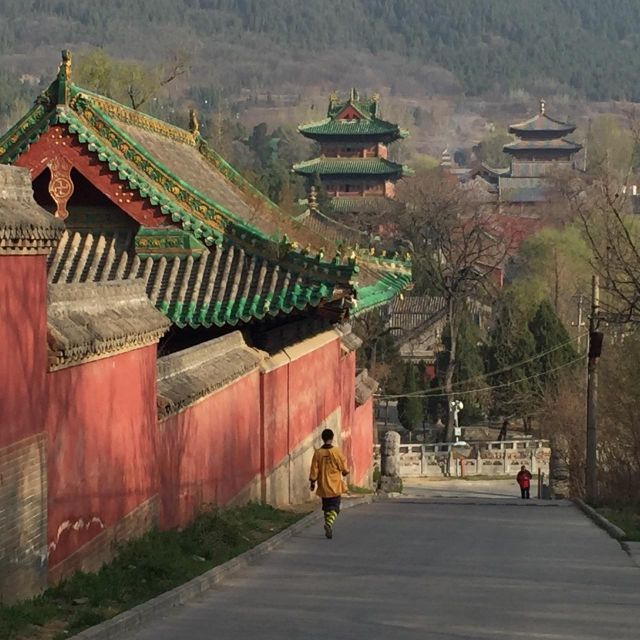
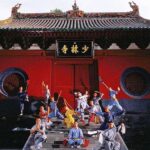
Shaolin Temple traces back to 495 AD, when Emperor Xiaowen of the Northern Wei Dynasty built it for an Indian monk named Batuo. That origin story is more than trivia—it explains why Shaolin matters when you’re trying to understand how Indian scriptures and Buddhist ideas took root in Chinese culture.
You’ll also see why the setting is part of the meaning. Shaolin sits on the slopes of Mount Song, one of China’s five sacred mountains. When you walk the grounds, it’s easy to notice how the temple’s physical layout supports a sense of long-term continuity—this wasn’t a place built once and finished.
What I like about Shaolin Temple in this itinerary is how it connects that continuity to architecture. The original structures were simple, but over succeeding dynasties the complex became more extensive. Many of the structures you see today date from the Ming and Qing dynasties, which means you’re looking at a layered site where different eras left their mark.
Pagoda Forest: more than 240 tomb pagodas
The Pagoda Forest is the kind of place that rewards slow attention. It’s a concentration of tomb pagodas for eminent monks and abbots of the temple, with more than 240 tomb pagodas of varying sizes. They span from the Tang, Song, Jin, Yuan, Ming, and Qing dynasties (618–1911).
This scale is the point. It helps you understand Shaolin not just as a monastery, but as an institution with generations of leadership and remembrance. If you like cultural details—titles, eras, what kind of figures were honored—this section gives you plenty to think about.
If you’re short on time, the advice is simple: don’t rush to the first “big view.” The Pagoda Forest works best when you pause and let the density of the place sink in.
Kungfu at the theatre: a performance tied to the temple
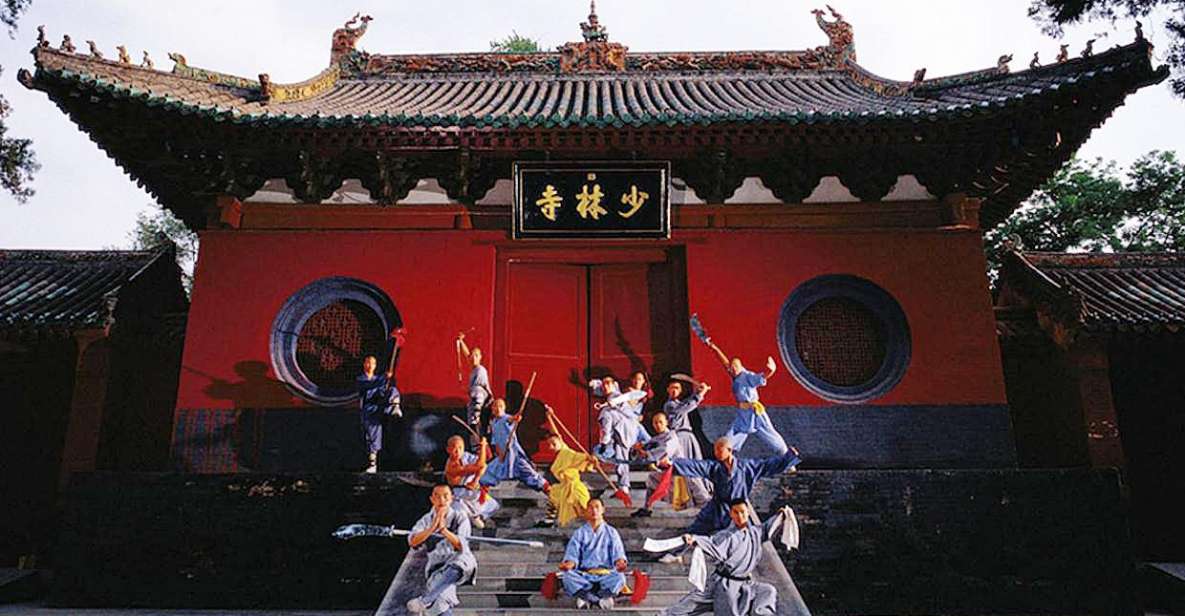
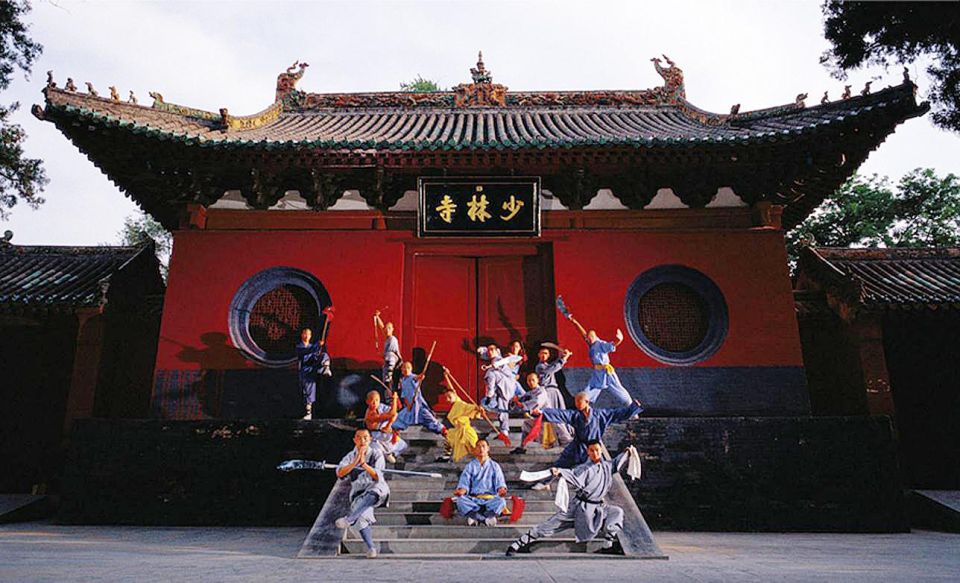
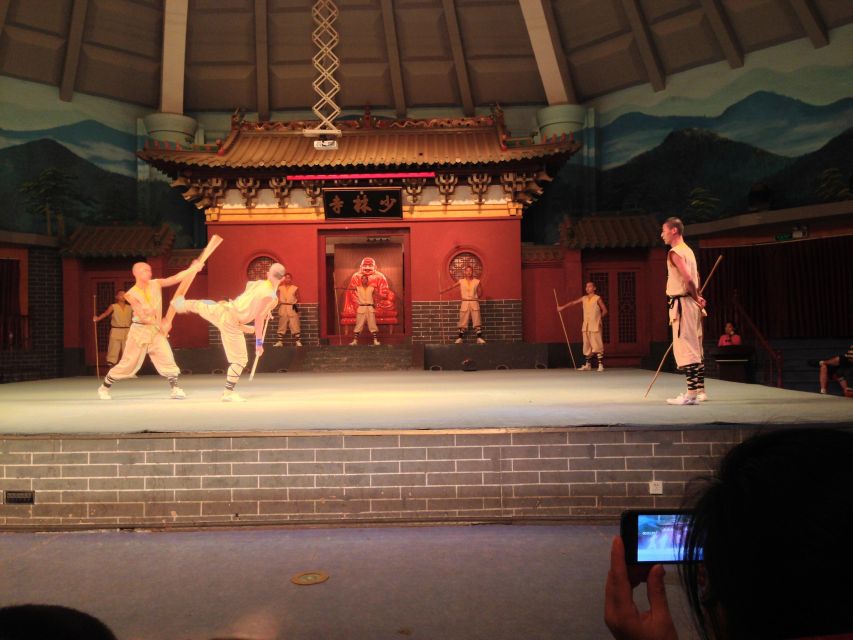
Shaolin is famous for martial arts, and this tour includes a real theatre performance by Shaolin monks. Even if you’re not a kungfu superfan, the value here is that the performance sits in a broader context. Your guide can connect it to Shaolin’s cultural identity, and you can ask questions while you’re watching.
This is also where you’ll feel the advantage of having an English guide. Names, time periods, and spiritual references can be easy to miss if you’re stuck reading captions. When your guide explains what you’re seeing, you get more than a spectacle—you get meaning.
One practical note: because the theatre component is still part of a day schedule, poor weather could impact timing. The tour is designed to keep moving, but like any outdoor-to-indoor flow, the day can vary.

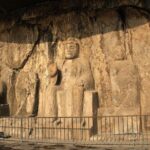
Longmen Grottoes: Buddhist stone art from 316 to 907
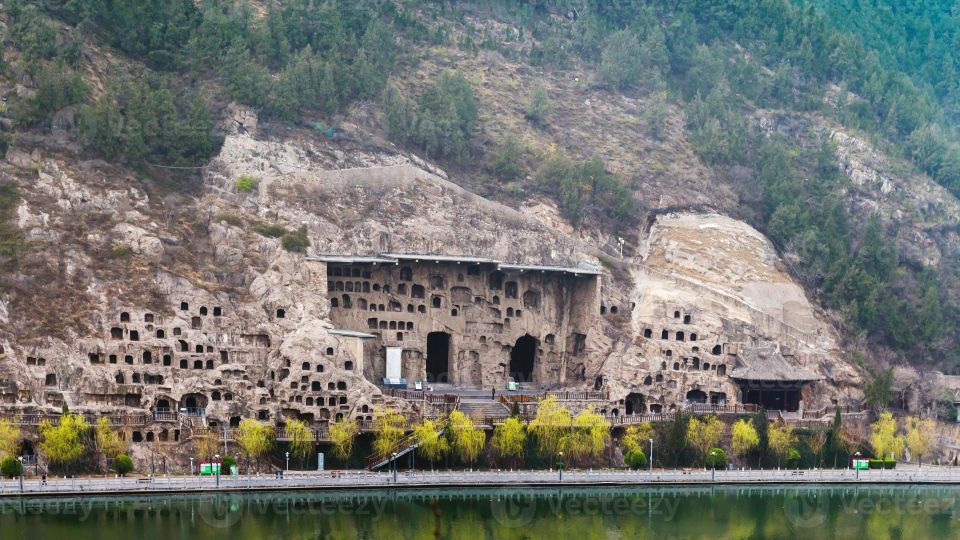
After lunch, the tour transfers to Longmen Grottoes by car. The drive is about 1.5 hours, and that change of pace helps. Shaolin is walks and buildings. Longmen is stone galleries, niches, and a wall-to-wall sense of devotion.
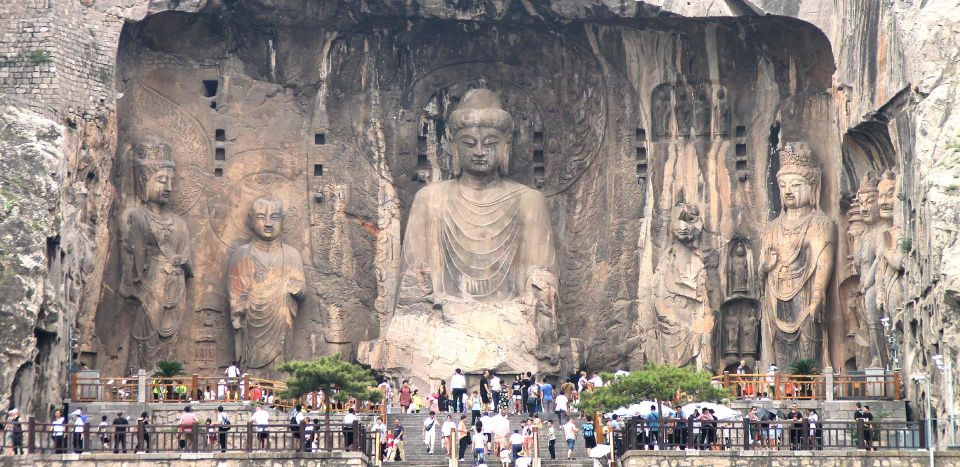
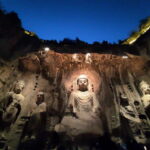
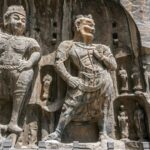
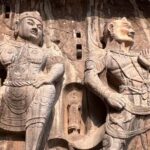
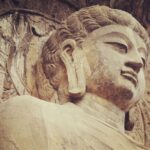
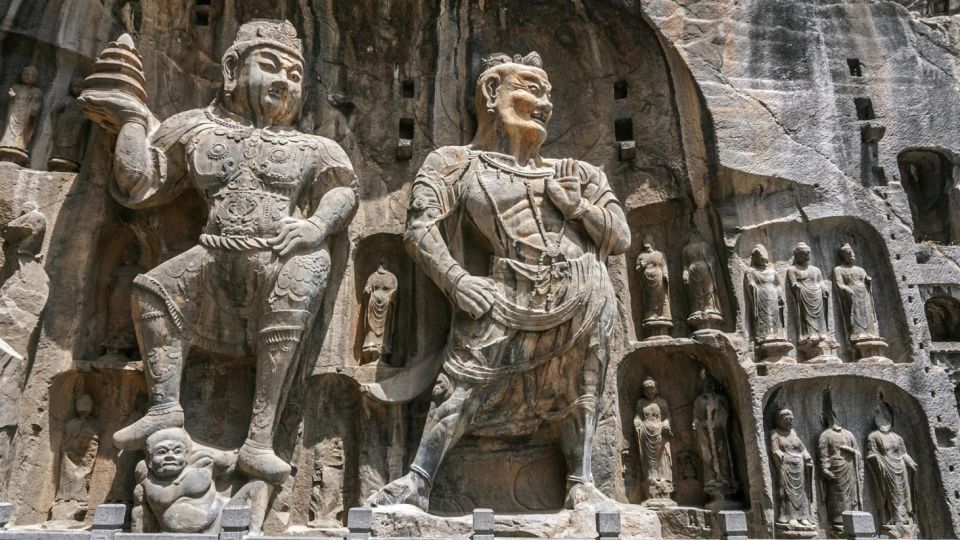
Longmen’s grottos and niches contain the largest and most impressive collection of Chinese art from the late Northern Wei and Tang dynasties, dated 316–907. That range matters because it places the carving in a period when Buddhist religious art in China was maturing into a highly detailed visual language.
The artworks are entirely devoted to Buddhist religion, and that focus is part of what makes the carvings so compelling. You’re not looking at decoration that happens to include religious themes—you’re looking at religious expression built into the rock itself.
Why stone carving hits differently than museums
Museums are amazing, but Longmen is different because the art is fixed to its original environment. Here, the scale feels physical. You’re standing near the niches and carving surfaces that were made for devotional use over centuries.
If you like art history, this is the section that often makes the whole day feel worth it. It’s not just that the carvings are old. It’s that the site concentrates so much effort into stone, all tied to one religious worldview.
You can also choose to include entrance fee and battery bus at the attractions depending on the tour option you select. If you want to reduce walking, that battery bus option can be helpful within the time limits of an 8-hour day.
Lunch, timing, and what the 8 hours really adds up to
This tour runs for 8 hours, and the structure is straightforward: Shaolin first, lunch, then Longmen. The day is built for efficiency without turning into a speedrun.
Lunch is included only if you choose the option that includes it. The included meal is generally a local restaurant stop, and some guides have been praised for taking people to a noodle place and working with preferences like lighter, fresher food. If you’re picky about dietary style, it’s worth mentioning what you’re aiming for to your guide when you meet.
Timing is also why you’ll want to bring patience for transitions. Between the two sites, you’ll have about 1.5 hours driving each way from Shaolin to Longmen, plus the time spent moving through the temple and grotto areas. If you love to linger, you may still find you’re making choices—this isn’t a three-day slow travel plan.
English guide quality: the real difference maker
A private tour rises or falls on the guide, and this experience has strong signal in the feedback. Guides such as Alice, Jimmy, Gavin, and Gavin Lee have been praised for sharing historical knowledge of Shaolin Temple and Longmen Grottoes, staying engaged, and keeping the day focused on the sites.
You’ll also like the tone of the experience: the format encourages questions. It’s not a lecture you can’t interrupt. It’s more like walking with someone who can point out what matters and why.
Two extra points that matter in real life:
- The drive is described as comfortable and safe.
- There’s no emphasis on hidden shopping stops; the day stays centered on the major attractions.
That focus is a big part of why the day feels efficient.
Price and value: is $168 a smart deal for two UNESCO stops?
At $168 per person for an 8-hour private tour, this price only makes sense if you take the inclusions seriously.
Here’s what you’re getting in the base experience:
- A professional guide in English
- Hotel pickup and drop-off in Zhengzhou city
- Private transport by car
- Bottled water
- Entrance fee, attraction battery bus, and lunch are included only if you pick the option that includes them
Value comes from packing in two UNESCO sites with a private guide and transport. If you tried to do Shaolin and Longmen on your own, you’d likely spend a lot of time coordinating transport and timing, and you might still miss the cultural stories that make the sites connect.
The “watch-outs” are simple:
- If you book a basic option, you may have additional on-site costs for entrance and battery bus, plus lunch.
- With an 8-hour window, you’ll want to accept that you can’t see everything at an unhurried pace.
Who should book this private day trip
This tour is a strong fit if you want:
- One day that hits both Shaolin Temple and Longmen Grottoes
- An English guide who explains histories and related stories as you walk
- A private pace where you can ask questions and adjust your rhythm
It may be less ideal if you want a deeply slow, multi-day “study tour” with lots of downtime. It’s also best for travelers comfortable with a packed schedule, since the day is built around two major sites plus a full travel loop.
If you’re short on days in the region, or you want an efficient route ending back in Zhengzhou or in Luoyang, this format is hard to beat.
Should you book Zhengzhou: Private Tour to Shaolin Temple & Longmen Grottoes?
I’d book it if you’re prioritizing UNESCO highlights with a guide who helps you understand what you’re seeing, not just where to stand for photos. The best reason is the pairing: Shaolin gives you the spiritual and institutional context, while Longmen shows the artistic output of Buddhist devotion through stone carving from 316–907.
I’d pause if you’re very sensitive to weather timing or if you’re hoping for an extremely relaxed day. Also check which option you choose. The difference between including or excluding entrance fees, battery bus, and lunch can change the real total.
If you’re traveling with passport details ready and you want a clean, focused route, this is the kind of day tour that can genuinely feel like you “got the essentials” without cutting corners.
FAQ
What sites are included in the tour?
The tour visits Shaolin Temple and Longmen Grottoes, both UNESCO World Heritage sites.
How long is the tour?
The total duration is 8 hours.
Is the tour private and in English?
Yes. It’s a private group tour with an English live tour guide.
Is lunch included?
Lunch is included only if you choose the option that includes lunch. Otherwise, lunch is not included.
Do I need an entrance fee and battery bus?
Entrance fee and battery bus are included only if you choose the option that includes them. If you choose the basic option, those costs are not included.
What documents do I need?
You need your passport. You also should provide each participant’s full name and passport number for ticket booking.