REVIEW · DUNHUANG
8-Day Silk Road Trip of Dunhuang, Jiayuguan, Zhangye with Accommodation
Book on Viator →Operated by Silk Road Angel Tours · Bookable on Viator
Western China hits hard in eight days. This guided loop through Dunhuang and the Hexi Corridor mixes top-tier sites with the kind of logistics that stop you from wasting hours figuring things out. I like that you get a smooth start with airport or station pickup, plus a full set of included admissions and transport along the way.
What really won me over is the balance: Mogao Grottoes and the Singing Sand Dunes sit next to the less-crowded sister caves and frontier relics. And I also like that you’re not doing a daily “where do we eat?” puzzle, since meals are planned and included (seven breakfasts, seven lunches, seven dinners). The one drawback to consider is that it’s a packed, early-days kind of route, so if you hate tight schedules, you’ll feel it.
In This Review
- Key Highlights You’ll Actually Care About
- The Silk Road Route: Why This Gansu Loop Works
- Hotels, Air-Conditioning, and Meals That Keep You Moving
- Day 1 Arrival in Dunhuang: Settle In, Then Let the Tour Take Over
- Mogao Grottoes and Digital Film Center: The Art Museum of the Silk Road
- Yumen Pass and the Frontier Great Wall of the Han Dynasty
- Mingsha Shan and Crescent Moon Spring: Desert Magic With a Camel Ride
- Yulin Caves and Suoyangcheng: The Sister Caves Break the Mogao Monopoly
- Jiayuguan Pass and the Overhanging Great Wall: The Great Wall’s Western Door
- Zhangye Danxia Geopark: Full-Day Color and the Weird Beauty of Rock
- Dafo Temple of Zhangye and Horse Hoof Temple Grottos: Buddha Scale Meets a Quirky Detail
- Pingshanhu Grand Canyon and Your Departure Stretch
- Price and Value: What You’re Really Paying For
- Who This Tour Fits Best
- Should You Book This 8-Day Silk Road Tour?
- FAQ
- How long is the trip and where does it go?
- What hotel standard is included?
- Are meals included?
- Do I get airport or station transfers?
- Are tickets and admissions included for the attractions?
- Is a camel ride included?
- When is the Silk Road show available?
- Can the tour accommodate vegetarian diets?
- Is this a private tour?
Key Highlights You’ll Actually Care About
- Mogao Caves + Digital Film Center with a full 4 hours on the art and the scale (492 grottoes, huge mural and statue totals)
- Singing Sand Dunes and Crescent Moon Spring with time for the views and the included camel ride
- Jiayuguan Pass and the Overhanging Great Wall: Ming-era Great Wall at its western end, plus a climb
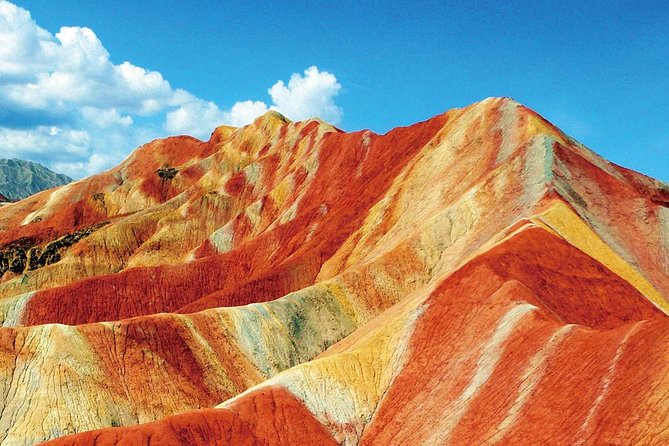
- Zhangye Danxia Geopark with a full day to see the famous colored rock formations
- Giant Buddha Temple and Horse Hoof Temple Grottos for the big religious moments and the distinctive horse-foot imagery
- 4-star comfort in Dunhuang and top hotel picks in Zhangye and Jiayuguan, with air-con and bottled water
The Silk Road Route: Why This Gansu Loop Works
This trip is built around a simple idea: follow the old Silk Road corridor through Dunhuang, Yumen, Jiayuguan, and Zhangye, where both trade history and religious art cluster. You’ll spend your days bouncing between deserts, cave temples, and Great Wall sections, without the usual pain of arranging buses, tickets, and meals one by one.
The big value is that you don’t lose daylight to planning. Your guide, transport, and most ticketed stops are handled for you, so the itinerary can stay focused on the places that earn the hype. And because it’s a private tour/activity with only your group, you’re not stuck pacing like you’re on a conveyor belt.
If you want one sentence to describe this tour: you get a guided “greatest hits” route through Gansu that still leaves room for real time at the major sights.
You can also read our reviews of more tours and experiences in Dunhuang.
Hotels, Air-Conditioning, and Meals That Keep You Moving
You’ll stay 7 nights in hotels that are described as comfortable and strong for this region: a 4-star hotel in Dunhuang, plus the best available hotels in Zhangye and Jiayuguan, all with air-con. You’ll also get bottled water, which matters in these climates when you’re moving all day.
The meals are a major practical win. The tour includes seven breakfasts, seven lunches, and seven dinners, so you can focus on eating well instead of hunting for something you can read. You’re also able to request a vegetarian option if you need it—just tell the operator when booking.
One small note for your expectations: included meals take the guesswork out of the day, but you’re still eating Chinese set-style meals common on group tours. If you’re a picky eater, you’ll want to communicate dietary needs clearly ahead of time.
Day 1 Arrival in Dunhuang: Settle In, Then Let the Tour Take Over
Day 1 is refreshingly low-stress. You meet your guide at Dunhuang airport (DNH) or Dunhuang Railway Station, then transfer to your hotel in a comfort car/van/bus. After that, it’s just relax time.
This matters because Dunhuang is your launchpad for the region’s famous sites. Having that first day as a proper on-ramp helps you enjoy the early-start days that follow, instead of feeling like you’re sightseeing while still mentally on airplane time.
Mogao Grottoes and Digital Film Center: The Art Museum of the Silk Road
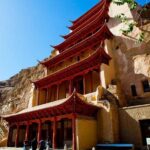
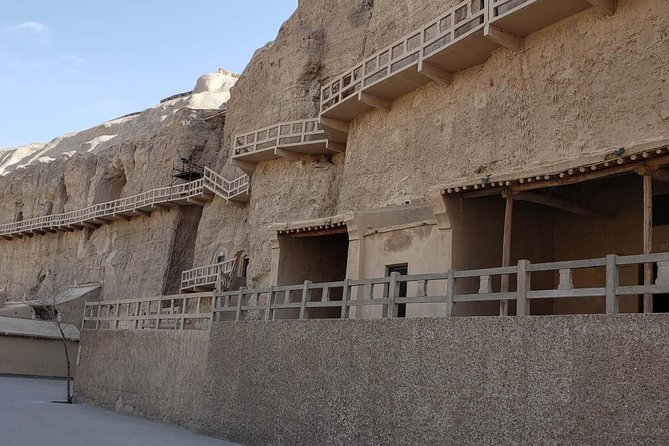
Mogao Caves are the headline, and the schedule gives them respect with about 4 hours plus an included visit to the Digital Film Center. You’ll see the scale of what was created here: 492 grottoes, 45,000 square meters of murals, 2,400 painted statues, and over 250 residential caves remain.
A real tip: don’t treat this as one quick “look around” stop. If you pace yourself, the caves become more than a photo-op. You start noticing patterns in the artwork and how the stories work across time.
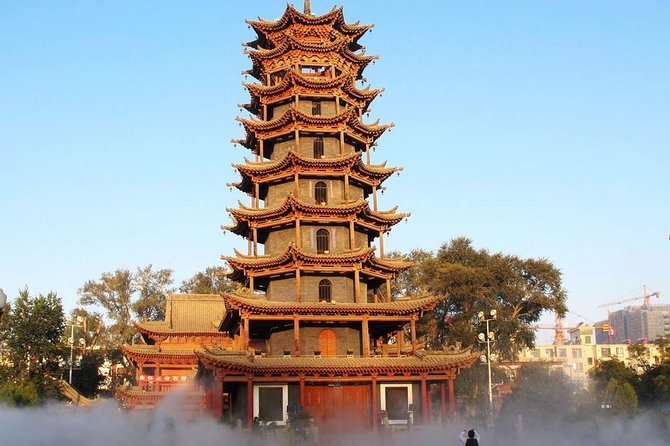
After lunch, you’ll also visit the White Horse Pagoda. It’s a shorter stop, but it adds variety—moving from cave art to a different kind of religious landmark in Dunhuang.
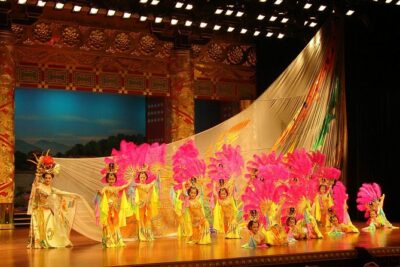
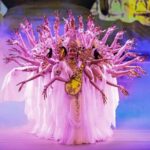
Then, in the evening, there’s a famous dance drama called the Silk Road show. It’s included, and it runs except from Nov to next Mar. If your dates fall in that window, you’ll miss the show—so check your travel month and plan your expectations around it.
Yumen Pass and the Frontier Great Wall of the Han Dynasty
Day 3 starts with Yumen Pass & Great Wall of Han Dynasty. This is not just a wall photo. The Han Dynasty built frontier defenses and routes to secure the border and support commerce with the western regions.
You get about 2 hours here, which is enough time to take in the historical framing without feeling rushed. The value of Yumen Pass is that it helps connect the desert scenery to a purpose: this wasn’t random travel. It was organized movement—guards, walls, trade, and survival.
Mingsha Shan and Crescent Moon Spring: Desert Magic With a Camel Ride
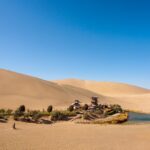
Then you swing into one of Gansu’s signature experiences: Mingsha Shan (Echoing-Sand Mountain) plus the Crescent Moon Lake & Singing-Sand Dunes. This is scheduled as about 3 hours, and you’ll have time for a camel ride in the sand dunes.
The appeal here is simple: you’re standing in an active desert “sound” zone—sand that acts alive when it shifts. Even if you’re not a sand-nerd, the contrast between sharp dunes and the idea of a spring nearby gives the whole scene shape.
Practical advice: wear sun protection and plan for dust. The tour includes admission and transport, but your body still has to handle the desert.
Yulin Caves and Suoyangcheng: The Sister Caves Break the Mogao Monopoly
Day 4 makes a smart choice. After Mogao’s huge scale, you visit the Yulin Caves—often described as a sister site because the caves share origins in style and content. You get about 2 hours here.
This is one of those days where the tour avoids repetition. Yulin doesn’t feel like “just another cave complex.” It’s more like a second chapter that helps you understand how the region’s Buddhist art tradition spread and evolved.
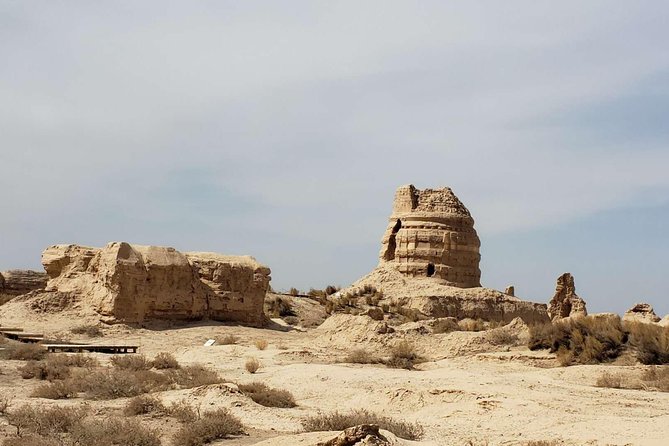
After lunch, you go to the Suoyangcheng Relic Site, a UNESCO-listed area (listed in 2015). This stop is about 2 hours, and it helps you shift from religious art to the idea of a Silk Road stop that once mattered as a hub.
Then you transfer to Guazhou, keeping your travel flow efficient and reducing long mid-day dead time.
Jiayuguan Pass and the Overhanging Great Wall: The Great Wall’s Western Door
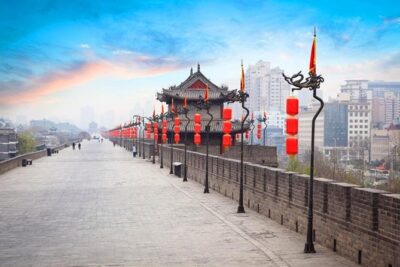
Day 5 is your Great Wall payoff. You’ll bus to Jiayuguan, then visit the Jiayuguan Pass & Museum of the Great Wall, scheduled for about 2 hours. This pass is known as the western end of the Ming Dynasty Great Wall—a key fact because it changes the meaning of the wall. It’s not just “a wall.” It’s a boundary marker.
Then comes the more physical part: Overhanging Great Wall, scheduled for about 1 hour 30 minutes. You’ll climb, and that’s the point. Great Wall sections are easiest to love when you feel the effort. (Your calves will file a complaint later, but worth it.)
If you like Great Wall sightseeing that’s more than a stroll, this day fits you well.
Zhangye Danxia Geopark: Full-Day Color and the Weird Beauty of Rock
Day 6 gives you a long block—about 8 hours—at Zhangye Danxia Geopark. This is where the trip really leans into natural scenery, especially the famous colored rock formations people travel to see in this part of China.
The tour description also points to strong cultural textures in the same region, including references to colored “painting bricks” connected to Wei and Jin Dynasty tombs. Even if you don’t focus on the archaeology angle, the takeaway for you is that this day blends the “wow geology” vibe with local cultural interpretation.
What to expect: a long day with outdoor walking. Bring layers, because the temperature can shift, and wear shoes that can handle uneven ground. The tour includes admission, so your main job is staying comfortable enough to actually enjoy the views.
Dafo Temple of Zhangye and Horse Hoof Temple Grottos: Buddha Scale Meets a Quirky Detail
Day 7 is about religious landmarks with two different flavors. First, you visit the Dafo Temple of Zhangye, which is described as having the biggest Nirvana Buddha in Asia. That’s the kind of superlative that usually feels marketing-ish, but here the schedule gives you time to see it and take it in.
Then you go to the Horse Hoof Temple Grottos, known for the deity horse footprints. This is the kind of detail that helps a religious site feel specific instead of generic.
This day runs about 1 hour for the stop as listed, so it’s not a slow, linger-all-afternoon type of visit. Still, it’s well placed in the middle of your trip: after long travel and Great Wall walking, the caves and temples reset your pace while keeping the interest high.
Pingshanhu Grand Canyon and Your Departure Stretch
Day 8 is your closing act. In the morning, you visit Pingshanhu Grand Canyon, then after lunch you transfer to the airport or Zhangye Railway Station for your next city.
There’s a helpful extra: the operator can help you book high-speed train tickets. That reduces the risk of getting stuck in a travel-day scramble on your final day.
This last day is a good way to end because it gives you one more nature moment before you head out, without turning your departure into a whole second trip.
Price and Value: What You’re Really Paying For
At $2,199 per person for an 8-day tour, this isn’t the cheapest way to travel in China. But it’s also not trying to be. You’re paying for a bundle that adds up fast on your own: 7 nights of hotel, air-conditioned transport, bottled water, local guide, and included admissions across multiple major sites.
You also get something less visible but huge: time. A trip like this works because someone else handles scheduling and keeps you moving between distant locations. If you’ve ever planned your own multi-city Silk Road route, you know how hard it is to keep transportation, ticket timing, and meal needs aligned.
Two practical value signals in the booking details:
- It’s booked far in advance on average (324 days), which usually means this route has strong demand and you may want to lock dates early.
- It includes mobile tickets, which typically makes day-of logistics smoother.
If you’re the kind of traveler who wants to optimize time and reduce hassle, the cost starts to make more sense. If you prefer full independence and you love planning, you might decide to DIY—just know you’d be replacing an all-in schedule with your own risk and homework.
Who This Tour Fits Best
This tour is ideal if you want:
- A guided “greatest hits” route through Dunhuang, Jiayuguan, and Zhangye
- Lots of included admissions without the ticket-chasing
- Comfort upgrades that matter in Gansu heat and cold swings—air-con hotels and transport
It’s also a good match for first-timers to this region, especially if you don’t want to battle language barriers around meals. And because wheelchairs and infant seats are available, it can be a steadier choice for travelers who need that kind of planning.
If your travel style is slow and free-form, you might find the day-to-day structure a bit intense. This isn’t a “take your time in each place” itinerary; it’s a “see the right things efficiently” itinerary.
Should You Book This 8-Day Silk Road Tour?
I’d book it if you want a smart, guided Gansu run where your days are built around major sites like Mogao Caves, the Great Wall at Jiayuguan, and Zhangye Danxia, with hotels and meals already lined up. The biggest reason is that the tour removes so many friction points—tickets, transport, and food—so you can focus on actually seeing.
I’d think twice if you hate tight pacing or you’re sensitive to long outdoor days, especially on the desert and the full-day Danxia stop. In that case, consider whether you’d rather trade comfort and included structure for slower sightseeing.
If you do book: pick travel dates that avoid the Silk Road show blackout period (Nov through next Mar) if that show matters to you, and communicate dietary needs early so the vegetarian option can be handled cleanly.
FAQ
How long is the trip and where does it go?
It runs for about 8 days and travels through Dunhuang, Zhangye, and Jiayuguan along the Hexi Corridor, including stops such as Mogao Caves, Yumen Pass, Jiayuguan Pass, Zhangye Danxia, and more.
What hotel standard is included?
You get 7 nights in hotels with air-con and bottled water. The tour states a comfortable 4-star hotel in Dunhuang and the best hotels in Zhangye and Jiayuguan.
Are meals included?
Yes. The tour includes seven breakfasts, seven lunches, and seven dinners.
Do I get airport or station transfers?
Yes. Pickup and drop-off are included, and your Day 1 start is meeting at the Dunhuang airport or Dunhuang Railway Station. Day 8 includes transfer to the airport or Zhangye Railway Station.
Are tickets and admissions included for the attractions?
Yes. Admission tickets are listed as included for multiple major stops, including the Mogao Caves (with the Digital Film Center), White Horse Pagoda, and several other sights throughout the itinerary.
Is a camel ride included?
The plan includes a camel ride in the sand dunes at Mingsha Shan (Echoing-Sand Mountain), along with the Crescent Moon Lake and Singing-Sand Dunes visit.
When is the Silk Road show available?
The Silk Road show is included, but it is not available from November to the next March.
Can the tour accommodate vegetarian diets?
Yes. A vegetarian option is available if you advise at the time of booking.
Is this a private tour?
Yes. It’s listed as private, meaning only your group will participate.