REVIEW · HONG KONG SAR
Private colonial Cemeteries tour
Book on Viator →Operated by Hong Kong a la carte · Bookable on Viator
One sentence can sum up this tour: Hong Kong has a second street-level story. In about three hours, you’ll walk through five different cemeteries in Happy Valley and hear how faith, daily life, and colonial-era choices shaped the city you see today. I especially like how the private guide keeps the pace human and the explanations clear.
My second favorite part is the variety: Muslim, Catholic, Protestant (Anglican), Parsee, Hindu, and Jewish cemeteries all in one run means you get multiple angles on the same history. One thing to consider is that you are outside for most of the tour and the experience needs good weather, so plan for heat and sun.
In This Review
- Key things to know before you go
- Why Happy Valley Cemeteries Reveal Hong Kong
- The 3-hour plan from Statue Square to Happy Valley Tram Terminus
- Muslim Cemetery: community identity you can see in the details
- St. Michael’s Catholic Cemetery: colonial-era roots in a quiet setting
- Hong Kong Cemetery (Protestant/Anglican): how religion and empire intertwined
- Parsee and Hindu cemeteries: the South Asian thread in Hong Kong
- Jewish Cemetery: memory, community, and a quiet ending
- What makes a private guide worth it (especially for questions)
- Practical stuff: walking, timing, and weather reality
- Value for money: what you’re paying and what you get
- Who should book this tour?
- Should you book this colonial cemeteries tour?
- FAQ
- FAQ
- Which cemeteries are included on the tour?
- How long is the tour?
- Is admission included for the cemeteries?
- Where do I meet the guide, and where does the tour end?
- What’s included in the price?
- What should I bring since snacks and water aren’t included?
- What happens if the weather is bad?
Key things to know before you go
- Central start and tram-end finish: easy to reach by public transport and simple to get back to town
- Five cemeteries, one day: you’ll compare communities side-by-side instead of hearing about them one at a time
- Free cemetery admission: your ticket cost is mainly for the guide plus the tour organization
- A guide who answers real questions: you can ask follow-ups and get straight explanations
- Family-friendly pace: it works for kids and teens when you bring curiosity
- Bring water and sun protection: it’s doable, but Hong Kong weather can be demanding
Why Happy Valley Cemeteries Reveal Hong Kong
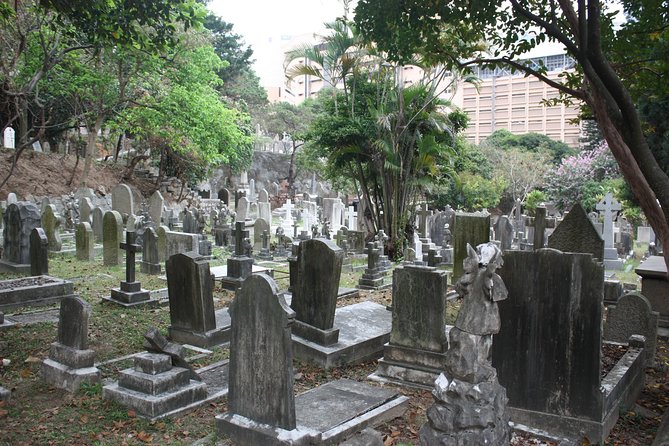
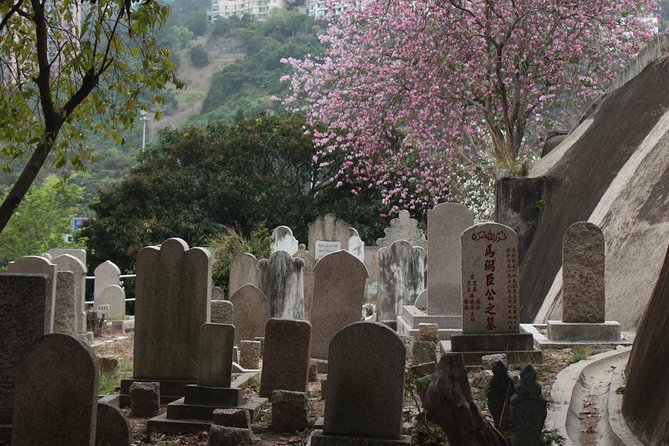
Cemeteries are not usually on a first-time Hong Kong list. That’s exactly why this works. In Happy Valley, you’re not just looking at old headstones. You’re watching how different communities held onto identity—then how the city around them changed.
What I love most is that the tour doesn’t treat the sites like museum props. Instead, the guide connects what you see to people and places: residents who shaped the colony, plus everyday lives that helped the city function. Reviews put special emphasis on how the stories connect to Hong Kong’s development, not just dates and names.
You also get a fast education in how colonial Hong Kong was never one single culture. It was an intersection: different religions, different communities, and different ways of remembering the dead. By the end, you’ll look at Hong Kong with more nuance, especially in Central and the old-administration areas.
You can also read our reviews of more tours and experiences in Hong Kong SAR.


The 3-hour plan from Statue Square to Happy Valley Tram Terminus
The tour meets at Statue Square Central at 9:00 am and ends near the Happy Valley Tram Terminus on Wong Nai Chung Road. That matters because you’re not stuck in one neighborhood all day with complicated transfers. You can get there easily, and you can finish in a spot that’s convenient for onward travel.
The timing is also practical. The first three cemetery stops are listed at about 45 minutes each, and the Jewish cemetery is about 30 minutes. That leaves the middle of the route for transitions and for the other cemetery sites included in the itinerary (Parsee and Hindu). In plain terms: expect steady walking, short pauses for stories and questions, and enough time at each stop to actually read what’s in front of you.
One more note: cemetery admission tickets are free, and you’re with a private guide. Your cost is paying for interpretation and organization, not entrance fees.
Muslim Cemetery: community identity you can see in the details
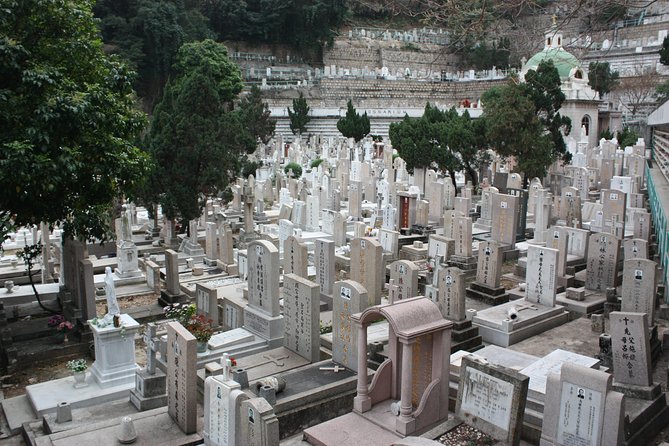
The tour starts at the Hong Kong Happy Valley Muslim Cemetery. This is a strong opening stop because it immediately sets a tone: the site is part of a living, multi-faith city, not an isolated historical set-piece.
Even if you know little about Islamic burial traditions, your guide can help you read the place. You’ll typically spend around 45 minutes here, which is enough time to slow down, observe differences, and understand how the community established itself in Hong Kong. If you like comparing cultures through everyday signals—names, symbols, layout—this is where it starts clicking.
A practical advantage of this first stop is logistics. Starting early helps you beat some heat and gives you a calmer start before the route fills with other visitors.
St. Michael’s Catholic Cemetery: colonial-era roots in a quiet setting
Next is St. Michael’s Catholic Cemetery in Happy Valley. This stop is another chance to compare how different Christian traditions and colonial institutions shaped burial practices.
Your time here is again about 45 minutes. That’s long enough to notice patterns rather than just snap photos and rush on. I like that the guide keeps the discussion connected to Hong Kong’s history—how the colony developed and how residents, including ordinary people, lived through change.
If you’re the type who enjoys context, this is a good mid-morning spot. It’s also a place where your questions matter. Several guide notes in the feedback focus on how the guide was comfortable answering follow-ups and keeping the stories relevant rather than generic.
Hong Kong Cemetery (Protestant/Anglican): how religion and empire intertwined
Stop three is the Hong Kong Cemetery, listed as the colonial Protestant cemetery (often associated with Anglican community roots). This cemetery gives you a view into the world of British-era Hong Kong and the social structures that came with it.
Expect about 45 minutes. This amount of time lets you do more than look at stones—you can compare how the Protestant site feels against the Catholic site you just visited. You’ll likely notice differences in symbolism and the way names and memorials are presented.
This is also where the tour’s theme really lands. Hong Kong’s colonial story is not just about governments and ships. It’s about people who built institutions, lived their faith, and left behind reminders of what mattered to them.




Parsee and Hindu cemeteries: the South Asian thread in Hong Kong
After the Protestant stop, the route includes two additional sites:
- the Parsee Cemetery
- the Hindu Cemetery, which is located within the Hindu Temple
These are the stops that often surprise people. Most first-time visitors expect English and Chinese Hong Kong, maybe a few major neighborhoods. But South Asian communities helped shape the wider colonial-era city, and burial grounds can make that visible.
The itinerary doesn’t give separate time blocks for these two stops, so you’ll experience them as part of the middle of the tour. That can be good. It keeps the day from turning into one long “read-only” museum moment and instead makes you compare communities while the pace stays manageable.
If you want to get the most out of this part, slow down when you’re at the temple-associated site. Anything that sits within a living religious setting will feel different from a cemetery that feels purely archival. Watch how the space is used and how the guide frames what you’re seeing.
Jewish Cemetery: memory, community, and a quiet ending
The final cemetery stop is the Jewish colonial cemetery, with about 30 minutes on the schedule. Compared with earlier stops, this is shorter, so it works best if you come with a sense of curiosity instead of trying to absorb everything in one pass.
This is a good ending point because the mood often shifts. You’ve already seen multiple traditions, so you can focus on comparison: what is similar in terms of remembrance, and what feels unique in community identity. Your guide should also help you connect what you see to Hong Kong’s growth, not just religious practice.
If you’re traveling with family, this is often where teens and kids ask their last big questions. The reviews highlight that the guide’s approach keeps questions welcome, and a shorter final stop can still feel complete if you pace your attention.
What makes a private guide worth it (especially for questions)
This tour is private, so it’s not about marching with strangers in silence. The guide can match your questions and energy level, and that changes the experience a lot.
The feedback repeatedly highlights two things:
- the guide was very engaging and kept the stories lively without turning into a lecture
- the guide was open and prepared to answer follow-up questions
One review specifically praises how the guide showed how Hong Kong got to where it is today through historical events and people. That’s the real value of a guide here. You’re learning a framework for reading the city: migration, community institutions, and colonial development, all expressed through burial culture.
If you want to maximize value, bring one question you genuinely care about. For example:
- How did different faith groups manage community life in a colonial port city?
- What do cemeteries reveal about social status and migration patterns?
- How do these sites reflect Hong Kong’s changing identity?
Then listen for how your guide ties answers back to what you see at each stop.
Practical stuff: walking, timing, and weather reality
This experience lasts about 3 hours and runs in the morning. You’ll spend time outdoors at multiple cemeteries, and the tour requires good weather. Translation: plan for heat, humidity, and sun.
Pack like you’re going for a morning walk:
- bring water (not included)
- wear walking shoes
- bring sun protection such as an umbrella if you’re visiting in warmer months
One review advice tip matters here: go prepared for humidity, and the tour is still do-able with kids and teens, but comfort depends on what you bring. Also, since you’re outdoors, think about clothing that won’t have you regretting it ten minutes into stop one.
On the logistics side, you’ll use public transportation at both ends. The tour starts at Statue Square Central and ends at Happy Valley Tram Terminus, both convenient to reach.
Value for money: what you’re paying and what you get
The price is $171.44 per person for a private experience, roughly 3 hours with a guide and public transport included. Cemeteries have free admission tickets, so your cost is mainly about interpretation, routing, and the effort of making multiple sites work as one coherent story.
Here’s how to judge value fairly:
- If you like context and want the city explained in human terms, a private guided format is efficient. You’re paying to connect the dots quickly across five cemeteries.
- If you’re the type who prefers wandering alone, you could study cemeteries independently. But you’d miss the guide’s connections between burial culture and Hong Kong’s development.
- If you’re traveling with family, the reviews suggest the tour works well with kids who ask questions. That’s often where a private guided approach justifies itself.
Also worth noting: the listing includes group discounts and uses a mobile ticket, which can reduce hassle. If you’re traveling as a small group, check how the discount applies before you lock it in.
Who should book this tour?
Book it if you want:
- a less typical Hong Kong experience that still connects to major themes of the city
- a multi-faith look at colonial-era life in one compact morning
- a private guide who is willing to answer questions and adapt to your pace
- something your kids or teens can handle without boredom, as long as they like asking why things are the way they are
Skip it (or reconsider timing) if:
- you don’t want to be outdoors for much of the tour
- you dislike walking between multiple sites
- you prefer high-energy sightseeing over quiet, reflective stops
Should you book this colonial cemeteries tour?
I think this is a smart choice when you want Hong Kong beyond the usual skyline photos. The Happy Valley cemetery cluster gives you a rare way to compare communities side-by-side, and the guide’s style—answering questions, keeping stories relevant—makes the whole route feel like a coherent lesson, not a checklist.
For most people, the best reason to book is simple: this is a different angle on Hong Kong and one you can’t easily recreate on your own in a few hours. Just come ready for sun and humidity, and you’ll walk away with a fuller sense of how the city grew.
FAQ
FAQ
Which cemeteries are included on the tour?
The tour visits multiple cemeteries in Happy Valley: Happy Valley Muslim Cemetery, St. Michael’s Catholic Cemetery, Hong Kong Cemetery (colonial Protestant), Parsee Cemetery, Hindu Cemetery within the Hindu Temple, and a Jewish colonial cemetery.
How long is the tour?
It’s listed as about 3 hours.
Is admission included for the cemeteries?
Yes. The itinerary shows admission ticket free for the cemetery stops.
Where do I meet the guide, and where does the tour end?
Meet at Statue Square Central, Hong Kong at 9:00 am. The tour ends at Wong Nai Chung Road, Happy Valley near the Happy Valley Tram Terminus.
What’s included in the price?
Included items are public transportation and a private guide. The tour also uses a mobile ticket.
What should I bring since snacks and water aren’t included?
Bring water and some light snacks if you like. Also plan for walking time outdoors, and consider sun protection since weather can be warm and humid.
What happens if the weather is bad?
The tour requires good weather. If it’s canceled due to poor weather, you’ll be offered a different date or a full refund.