REVIEW · BEIJING
Beijing Hands-On Culture Tour: Tea, Instrument, Calligraphy
Book on GetYourGuide →Operated by Cultural Tours China · Bookable on GetYourGuide
Want real China without the detours?
This hands-on Beijing workshop bundles tea ceremony skills, Guqin music instruction, and calligraphy into one 3-hour visit inside a private, air-conditioned art center with room to breathe. I like that you do the work yourself, not just watch a performance and shuffle out. I also like the small group setup, capped at 10, so you get enough time with the experts.
The one drawback: transportation isn’t included, so you’ll want to plan your route to the venue ahead of time. Also, since you’ll dress in Hanfu, wear something comfortable and practical for sitting and photos.
Expect guided instruction in English (with Chinese support), plus a host who helps you get oriented. In at least one experience, the host Sylvia met people at the metro entrance so they could find the art center easily, and she checked ahead about allergies to make the tea session smoother for families.
In This Review
- Key Things You’ll Actually Do (Not Just Watch)
- Tea, Guqin, and Calligraphy in One 3-Hour Session
- The Tea Ceremony: Six Steps and Three Classic Brews
- Guqin Lessons: Playing a Full Melody Yourself
- Brush & Ink Calligraphy, Plus Hanfu Photos
- Why the Small Group Size Matters (A Quiet, Guided Pace)
- Price and Value: Getting Three Classes for $15
- Who Should Book This Beijing Tour (and Who Might Not)
- Should You Book This Beijing Hands-On Culture Tour?
- FAQ
- How long is the Beijing Hands-On Culture Tour?
- What’s included in the ticket price?
- What languages will I be guided in?
- Is the venue wheelchair accessible?
- What should I wear or bring?
- Is it a small group?
Key Things You’ll Actually Do (Not Just Watch)
- Learn the Six-Step Tea Ritual and brew three classic teas you can compare side by side.
- Play the Guqin yourself, guided until your fingers can follow a full melody.
- Write with real brush & ink, including your name or a word like peace or blessing.
- Try Hanfu and get photos shot for you, so the cultural details become real memories.
- Stay in a calm, air-conditioned private space with no crowd pressure and good timing.
- Leave with original souvenirs tied to what you practiced during the session.
Tea, Guqin, and Calligraphy in One 3-Hour Session
This is the kind of Beijing cultural activity that feels efficient, but not rushed. The structure is simple: you rotate through tea, Guqin, and calligraphy with expert guidance in English, then end with photos and take-home items. It’s designed for people who want more than a quick photo stop, but don’t want a full-day class schedule either.
The setting helps. You’re indoors in a certified private art center, and the space is described as air-conditioned and stress-free. That matters in Beijing, because even a “cultural” day can turn into sweat, waiting, and noise if you’re not careful.
It’s also multi-generational friendly. Families with kids (and adults who weren’t sure they’d enjoy arts like calligraphy) still came away happy because the activities are hands-on and guided step by step. The class timing is also set up so each part feels complete, rather than like you’re being dragged through three separate demos.
You can also read our reviews of more tours and experiences in Beijing.

The Tea Ceremony: Six Steps and Three Classic Brews
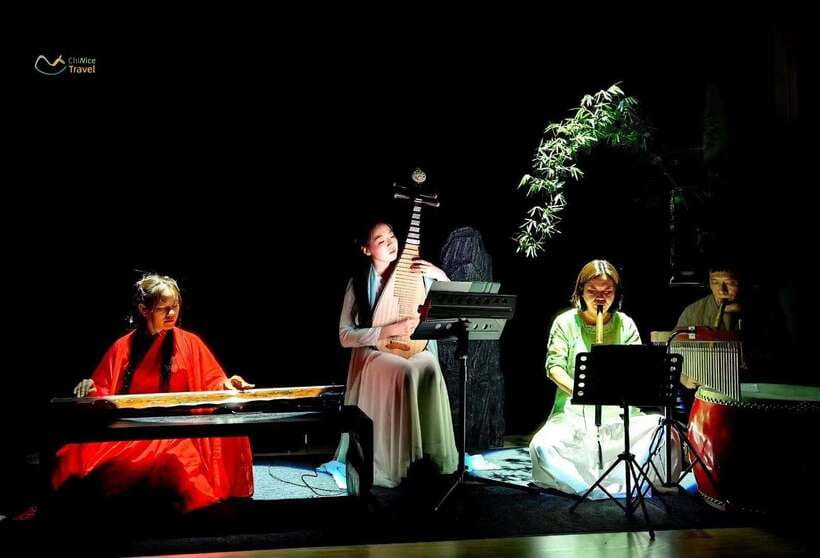
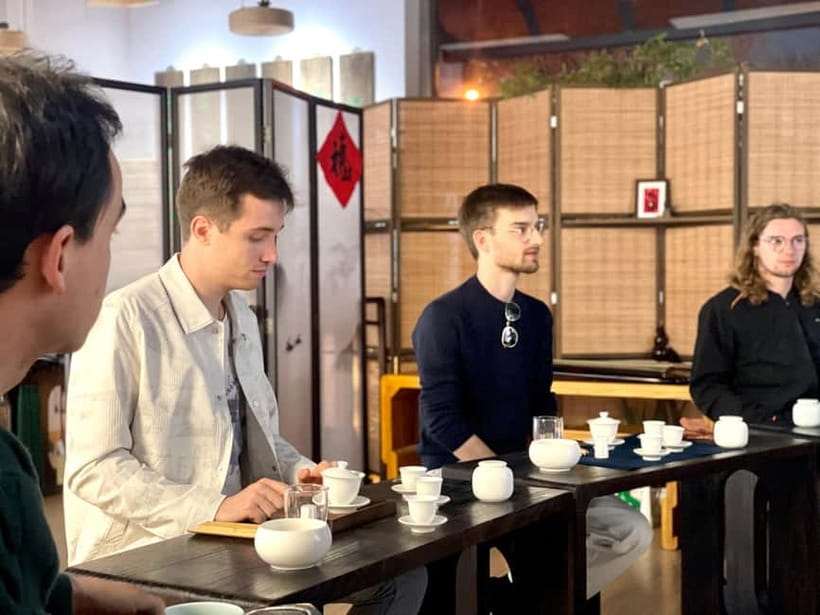
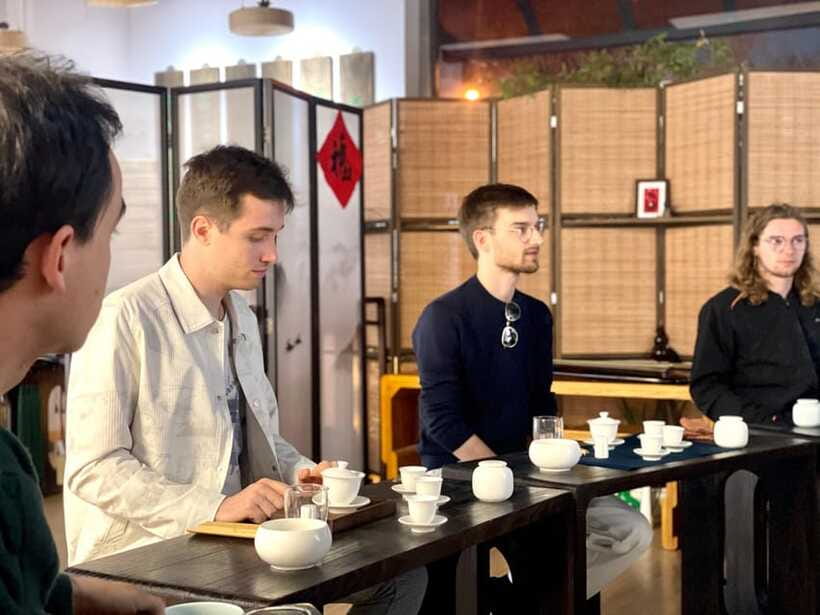
Tea is usually the easiest way into Chinese culture, because it’s sensory and practical. In this experience, you get the Six-Step Tea Ritual taught by a professional tea master, with an emphasis on what’s happening in each step and why it matters.
You also brew three teas and compare them: red, green, and floral. That’s a useful setup because it forces your senses to notice differences instead of treating tea like one single flavor category. You’ll learn what changes in aroma and taste when the tea style changes, which is the real point if you want to understand Chinese tea beyond the buzzwords.
What I like about this part is that it’s not only ceremonial. It’s educational in a way that sticks. Once you’ve made tea yourself, you’re more likely to recognize the style when you see it later in Beijing—at a café, in a shop, or at a family meal.
A practical note: tea sessions can include ingredients and scents. In one case, the host Sylvia asked about allergies in advance so the tea experience could be adjusted if needed. If you have any dietary or allergy concerns, bring them up ahead of time through the organizer so they’re not guessing during the session.
Guqin Lessons: Playing a Full Melody Yourself
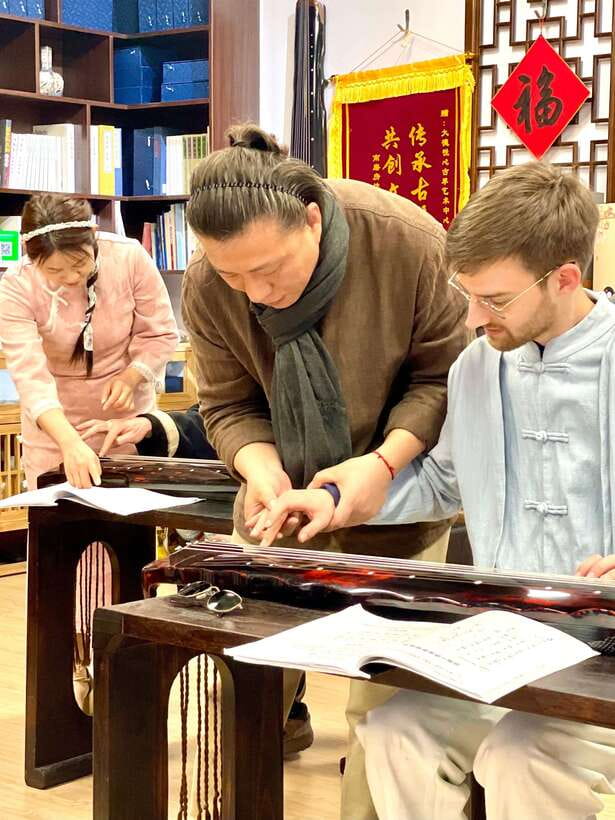
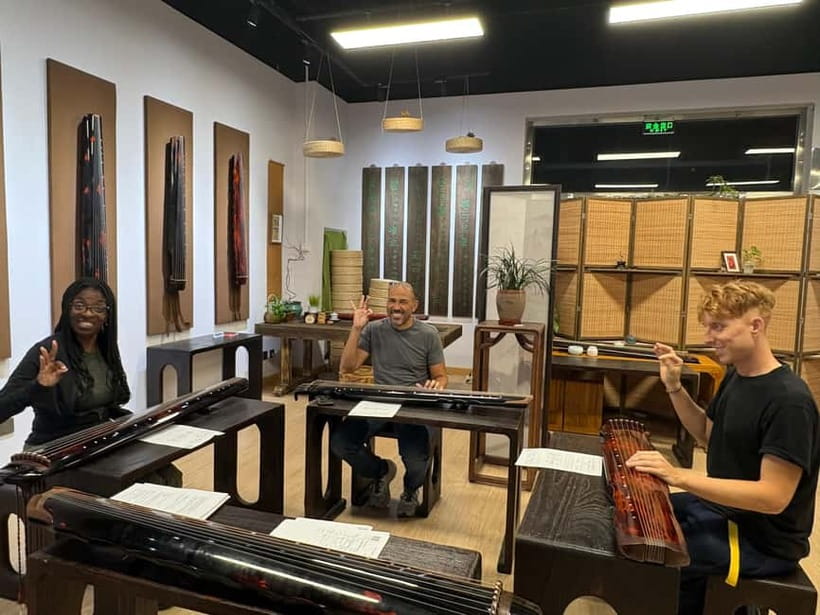
The Guqin is one of China’s most revered instruments, and the biggest trick in any music experience is whether you just hear it or actually learn it. Here, you do real playing. The instruction is step by step, and you’re taught until you can play a full ancient melody rather than only trying a couple of notes.
The guidance is led by a master connected to Guqin performance, and the key thing is how the class is structured. Instead of dumping technical theory on you, the tutor focuses on getting your fingers to find rhythm. You’re learning coordination, timing, and how the sound connects to the touch—so even if you’re a beginner, it still feels achievable.
You’ll also understand why the Guqin’s tone is so distinctive. People describe the sound as deep and mellow, and that quality matters because it changes the mood of the room. Even when you’re concentrating, the music doesn’t feel loud or showy. It feels steady, almost like the lesson is teaching you a calmer way to listen.
If you’re deciding whether you’ll enjoy this part, think of it like this: if you’re willing to try, the Guqin class is built to meet you where you are. If you only want a passive concert, you might still like the sound, but you’ll probably enjoy the full value only if you’re okay getting your hands involved.
Brush & Ink Calligraphy, Plus Hanfu Photos
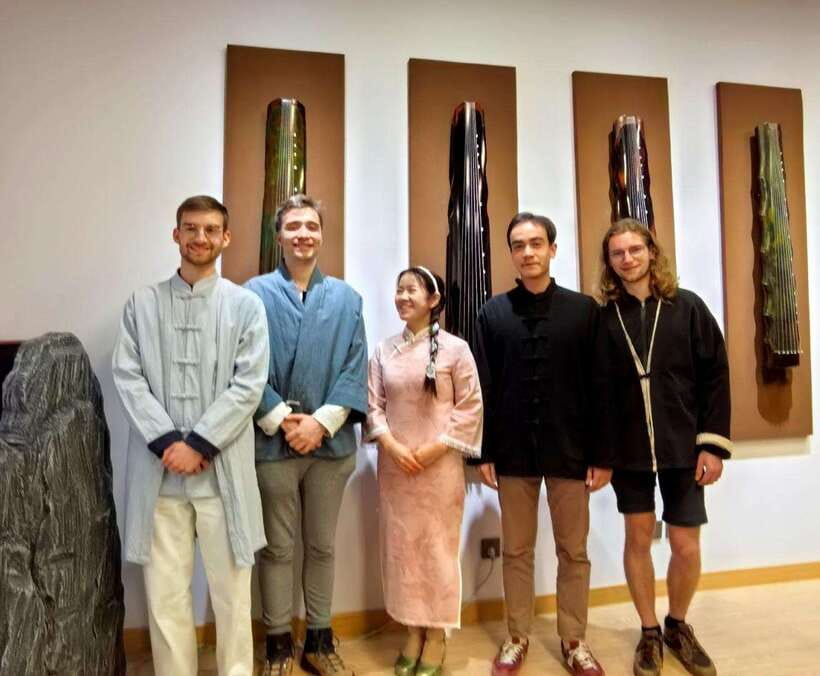
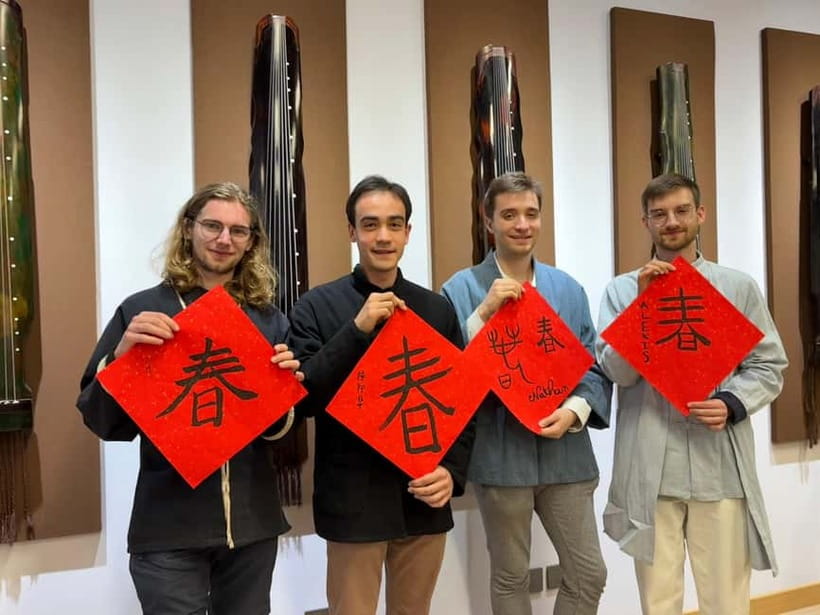
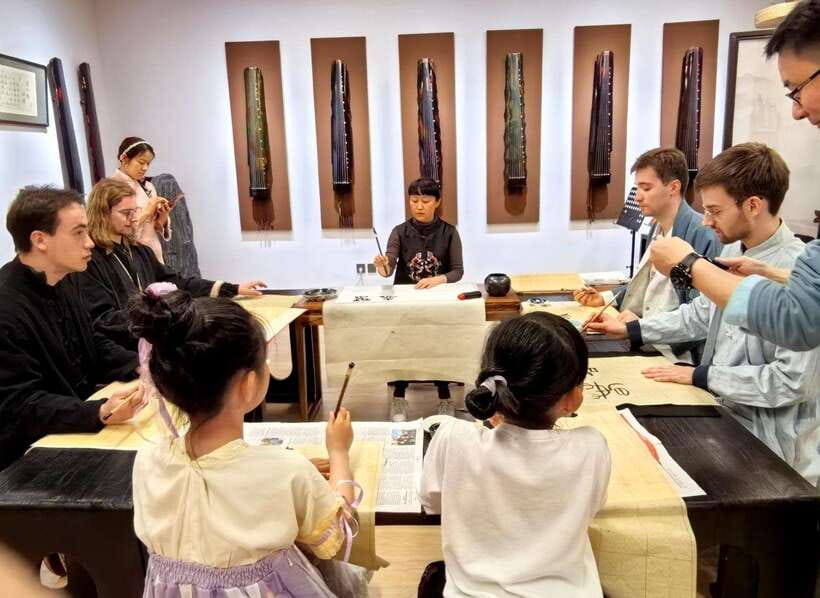
Calligraphy is often sold as copying characters, which can feel frustrating. This experience aims at the opposite: you’re introduced to Chinese writing in a way that explains meaning and evolution, then you practice using brush and ink.
You won’t just trace strokes. You write your own name or choose a meaningful word like peace or blessing. That turns calligraphy from a classroom task into something personal you can actually keep and show. Plus, the act of writing lets you slow down—your attention shifts from counting tourists to noticing shape, balance, and spacing.
Then there’s Hanfu. You rent the traditional outfit as part of the session, and you’ll do a photoshooting while wearing it. That’s not just a costume moment. It helps connect the culture to your body and your sense of style, and it makes your calligraphy and tea skills feel like part of one coherent experience rather than three separate activities.
One detail worth planning for: wear comfortable clothes. You’ll dress for Hanfu, sit for instruction, and handle tools. If you show up in something restrictive or fragile, you’ll feel it when you’re trying to focus on writing.
And bring your camera if you want control over photos. The session includes photoshooting, but having your own device is useful for extra angles and for family members who want to take turns.
Why the Small Group Size Matters (A Quiet, Guided Pace)
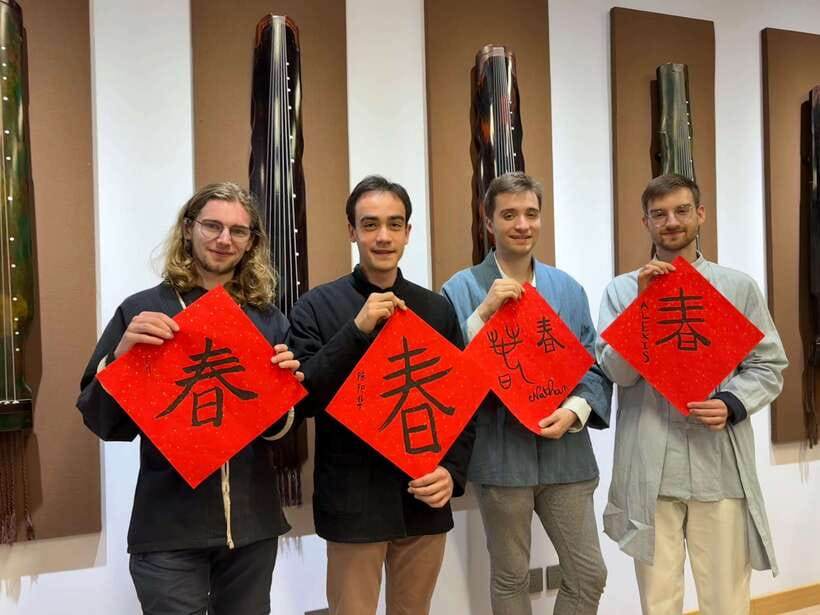
This is limited to 10 participants, which changes the whole feel. When classes are large, you often wait while others finish, and you end up copying from the edge of the room. Here, the pace is designed so each person gets enough attention during the tea, Guqin, and calligraphy steps.
You also get an English-speaking guide who doesn’t just translate words. The guidance connects the dots—history, philosophy, and symbolism—so your choices (like why you brew a certain tea style or why a calligraphy word matters) aren’t random.
The biggest value of the small group format is confidence. You’re not afraid to ask questions because you’re not competing with a crowd for time. And that’s true for all ages. In one family setup, kids and adults participated together without the lesson turning into a kids-only crafts session or an adults-only lecture.

Price and Value: Getting Three Classes for $15
At $15 per person for a 3-hour cultural workshop, you’re not just paying for entry. You’re paying for instruction time, materials, and multiple “hands-on” activities in one package.
Here’s what’s included:
- Water/tea
- Ticket to the show
- Hanfu rental
- Photoshooting
- Guqin class
- Professional guide/tutor (including a Guqin performance master)
- Original souvenirs
The practical tradeoffs are also clear:
- Transportation to and from the venue isn’t included
- Meals and drinks aren’t included
- Personal purchases are on you
So the true cost picture isn’t just the $15 ticket. You also want to budget for getting to the venue and then a meal afterward if you need one. If you’re already staying near good metro access, the location can be easy to manage. If you’re farther out, transportation becomes the main variable.
Still, even with transport added in, this feels like strong value because you’re practicing three skills: tea ritual, music playing, and writing. Many “cultural shows” in big cities teach none of that. This one gives you something you can repeat later.
Who Should Book This Beijing Tour (and Who Might Not)
This tour fits well if you:
- Want hands-on learning in a short time window
- Are traveling with family and want one activity that works for kids and adults
- Prefer a calm indoor setting over outdoor crowds
- Like cultural activities where you leave with something you made (calligraphy) and something you can show (photos, souvenirs)
You might think twice if you:
- Don’t want any participation and prefer a fully passive concert
- Are not comfortable with the idea of dressing in Hanfu during the session
- Have strict mobility needs and need extra help beyond standard wheelchair accessibility (the tour is described as wheelchair accessible, but your exact comfort level matters)
That said, the overall design is beginner-friendly. The teaching is step by step, the group is small, and the setting is welcoming.
Should You Book This Beijing Hands-On Culture Tour?
If your goal is to experience Chinese culture in a way that actually sticks, I’d book it. It’s practical, guided, and hands-on across three big pillars: tea, Guqin, and calligraphy. At $15, the value is hard to beat, especially because you’re not limited to watching.
Do a quick reality check on logistics: plan your route since transportation isn’t included, and arrive about 10 minutes early so you can get ready. Bring comfortable clothes for Hanfu, and bring your camera if you care about photos beyond the included shoot.
If you want one short activity in Beijing that gives you skills, memories, and a calmer, friendlier pace, this is a strong pick.
FAQ
How long is the Beijing Hands-On Culture Tour?
The tour is listed as 3 hours in duration. The highlights also describe the six-in-one cultural experience as taking about 2.5 hours.
What’s included in the ticket price?
Included items are water/tea, ticket to the show, Hanfu rental, photoshooting, Guqin class, a professional guide/tutor (including a Guqin performance master), and original souvenirs.
What languages will I be guided in?
The instruction is offered in Chinese and English.
Is the venue wheelchair accessible?
Yes, the experience is described as wheelchair accessible.
What should I wear or bring?
You should wear comfortable clothes for the Hanfu dressing session. Bring your camera for the photo shoot.
Is it a small group?
Yes. The group is limited to 10 participants.