REVIEW · BEIJING
Beijing Hutongs Walking Tour
Book on Viator →Operated by Roy Li Tours Beijing · Bookable on Viator
Beijing’s hutongs turn the whole city sideways. This walk is an easy, small-group way to see traditional courtyard lanes and real stories behind names you’ve heard on tours. I like the relaxed pace with an English guide, plus the route keeps you moving through places most quick sight-hoppers miss. One thing to watch: you’re walking through tight lanes, so being late at the metro exit can throw off the whole start.
The best part is that you connect landmarks to daily life. You begin around the Bell and Drum Towers area, then move through Nanluoguxiang back lanes, Mao’er Hutong, and ends near Houhai with water-and-alleys scenery. The tour runs about 1 hour 30 minutes to 2 hours, with a cap of 15 people, which makes it feel more like a guided stroll than a lecture with headsets.
In This Review
- Key points to know before you go
- Getting your bearings: starting near Nanluoguxiang
- Bell and Drum Towers: timekeeping as a city story
- Nanluoguxiang lanes: courtyard houses and older street shapes
- Mao’er Hutong: turning history into street-level details
- Empress’s Mansion: Wanrong’s story in a photo stop
- Walking to the water: the Qianhai–Houhai channel feel
- Small-group pace: why max 15 is a real advantage
- Price and value: $30 for a guided hutong route that saves time
- What to bring and how to time your day
- Who this hutongs walking tour fits best
- Should you book this Beijing Hutongs walking tour?
- FAQ
- How long is the Beijing Hutongs walking tour?
- Where do I meet the guide for the tour?
- What time does the tour start?
- What’s the group size?
- What does the tour include?
- Where does the tour end?
- Which sights are part of the route?
- Is the tour accessible by public transportation?
- Is free cancellation available?
Key points to know before you go

- Small group (max 15) keeps the guide’s attention on you, not a megaphone crowd
- Courtyard-home lanes around Nanluoguxiang and Mao’er Hutong show how Beijing life actually fit together
- Puyi’s empress Wanrong’s former residence is a photo stop with real historical context
- Bell and Drum Towers link time to place, so you understand the city’s rhythms beyond monuments
- Ending near Houhai and a Qianhai–Houhai channel gives the walk a calm, watery finish
Getting your bearings: starting near Nanluoguxiang
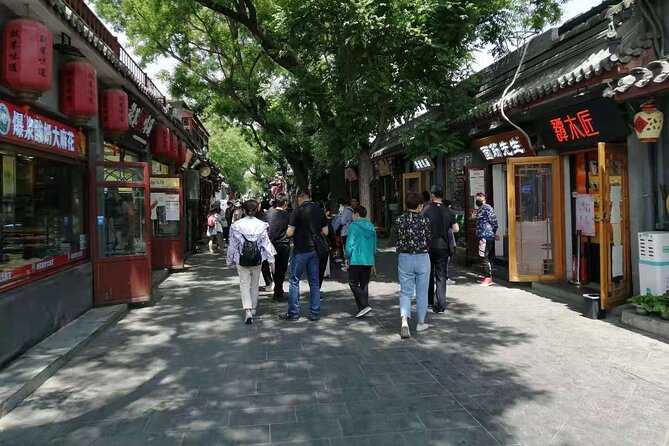
This tour makes sense for a first day in Beijing, because it starts in a busy, easy-to-find zone. Your meeting point is at South Luogu Lane in Nanluoguxiang (Dongcheng District), and the key detail is the metro exit: Line 8 or Line 6 Nanluoguxiang Station, Exit E.
That matters more than it sounds. Hutongs are charming, but they’re also a maze. Starting at Exit E helps you get oriented fast before you step into narrower lanes where quick directions can vanish.
Also, the tour is designed around a comfortable time window—about 1.5 to 2 hours—so you’re not stuck on your feet until midnight. If you like tours that respect your energy, this one fits.
You can also read our reviews of more tours and experiences in Beijing.


Bell and Drum Towers: timekeeping as a city story

The tour’s first big reference point is the Bell and Drum Towers area. Even if you’ve only seen these towers in photos, the value here is what the walk uses them for: Beijing’s sense of time was once managed in a very public, very physical way.
In plain terms, you’re learning how the city told time to itself. That’s the kind of context that makes later sights click. Instead of treating towers as distant architecture, you see them as part of how people lived.
Practical note: this is the part of the walk where you want to arrive on time and ready to listen. If you show up late, the group can move quickly—especially since you’re using the metro exit as the main meeting anchor.
Nanluoguxiang lanes: courtyard houses and older street shapes
After the tower-area start, the tour feeds you into Nanluoguxiang. The lane is known for traditional style, but the guide approach matters: you’re not just “walking a famous street,” you’re walking inside the logic of hutongs.
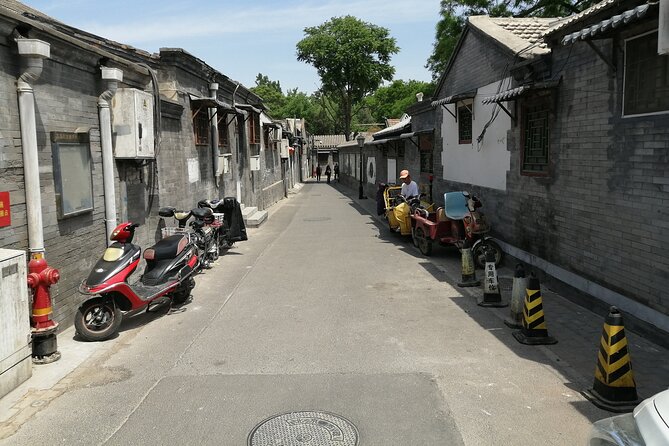
You’ll get a close look at vernacular courtyard houses—described as grey-colored—with old trees nearby. The goal isn’t to memorize a building list. It’s to notice how the lane shapes daily life: who lived close to whom, how courtyards created space, and how the architecture carried generations.
The walk also places Nanluoguxiang back in time, linking the lane to the Yuan Dynasty era. Even if you don’t remember dates later, you’ll probably remember the street feeling: narrower, older, and less designed for photos than for living.
If you’ve only seen Beijing as “big palaces and wide boulevards,” this is where the city changes texture in your hands. The pace stays relaxed, which is exactly what you want in tight lanes where you’re constantly turning your head.
Mao’er Hutong: turning history into street-level details
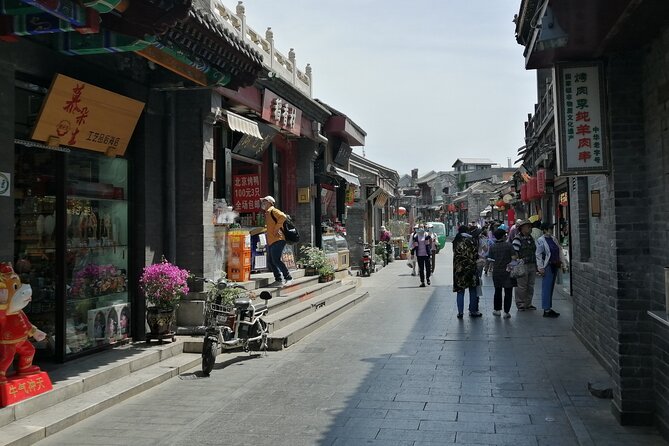
From Nanluoguxiang, you continue into Mao’er Hutong, and this stop is all about “character stories.” Hutongs can feel repetitive if you treat them like scenery. Here, you’re given narratives that give each segment a reason to exist.
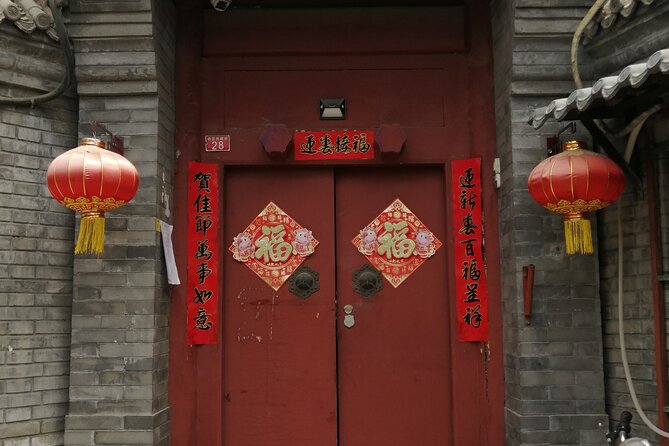
This is also where you slow down and look for the smaller visual clues. Hutong architecture isn’t always dramatic from far away. Up close, you’ll notice the way buildings hug the lane, how courtyards create inward-facing space, and how the street breathes under the tree canopy.
The tour also includes chances to pause for pictures, but the guide’s job is to keep it from turning into a casual walk with random stops. You’re meant to connect what you see—grey courtyard walls, old tree lines, narrow channels—to a bigger story about how different eras left their imprint.
Empress’s Mansion: Wanrong’s story in a photo stop
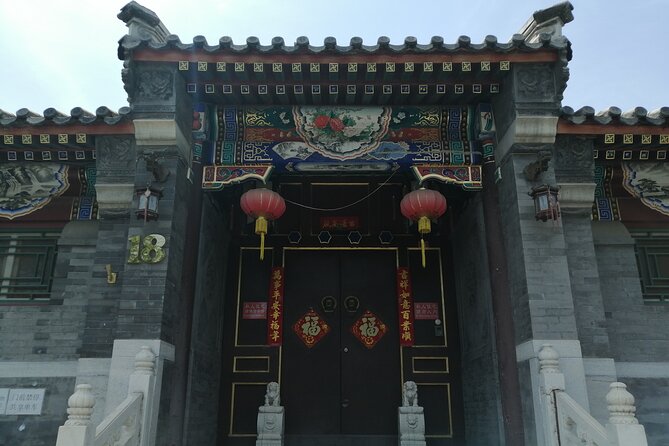
One of the most memorable parts of the walk is the stop at the Empress’s Mansion, described as the former residence of Puyi’s empress, Wanrong. This is a high-interest moment because it bridges hutong everyday style with the unusual life of China’s last emperor.
You don’t need to be a Qing history expert. The tour’s value is in the framing: it helps you understand how imperial figures fit into spaces that look, from the outside, like ordinary courtyard life.
This is also a practical camera moment. The route gives you a focused place to stop and get pictures, without you having to hunt for viewpoints yourself. If you like history in digestible chunks, this is the kind of stop that lands.
One consideration: since it’s a walking tour, this stop is likely brief. If you want hours inside buildings, pair this tour with another outing later. But for a 1.5 to 2 hour overview route, this is a solid “story plus visuals” mix.





Walking to the water: the Qianhai–Houhai channel feel
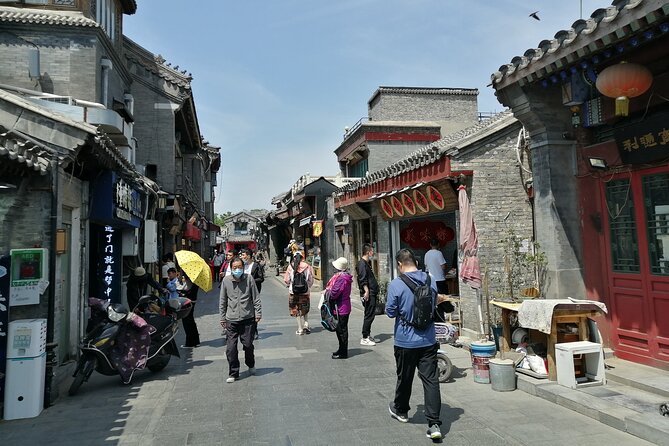
As the tour moves toward the end, it brings you into a different mood. You’ll spend time walking around a narrow channel described as joining Qianhai Lake and Houhai Lake.
Water changes everything in hutong neighborhoods. The lanes feel cooler, the sound softens, and you get more visual variety than straight lanes of courtyards. It’s also a reminder that Beijing’s hutong grid wasn’t only about housing—it’s also about how people navigated and valued water nearby.
The tour finishes around Houhai in the Xicheng District area, with the walk described as ending at the Drum Tower. That means you may feel like you’re returning toward a familiar landmark after spending time in side-lane Beijing.
If you plan your day carefully, you can use this ending location to keep exploring on your own—coffee, snacks, lake walks, or just wandering the area while it’s still light.
Small-group pace: why max 15 is a real advantage
A hutong tour can be either great or exhausting, and this one leans toward the great side because of group size. With a maximum of 15 people, you get interaction instead of “look here, move along.”
The relaxed pace is not a vague promise—it’s built into the tour length (about 90 minutes to 2 hours). That means you can actually notice details while you’re walking. It also helps the guide keep the group together in narrow lanes where spacing gets messy fast.
From the way Roy is described, he also uses an engaging teaching style. One reviewer highlighted that Roy spoke good English and stayed involved by using quizzes. That’s a smart tactic in this kind of tour: it keeps attention up, and it makes facts feel like something you’re doing, not something you’re absorbing.
The trade-off is typical for any walking tour: you’ll be on your feet. Comfortable shoes matter here, especially since hutongs involve lots of turns, uneven sidewalks, and short stretches where you might need to duck into shade or avoid tight pedestrian bottlenecks.
Price and value: $30 for a guided hutong route that saves time
At $30 per person, this tour is priced as an affordable guided orientation to a complex neighborhood. For me, the value isn’t just the history—it’s the practical “how do I not get lost” factor.
Self-guided hutong wandering can be great, but it can also turn into aimless looping if you don’t know the names and don’t have a mental map. Here, the guide supplies the structure: Nanluoguxiang, Mao’er Hutong, Empress’s Mansion, then water-side ending near Houhai and the Drum Tower area.
The tour includes an English-speaking guide, and the ticketing is handled with a mobile ticket. You also get free cancellation up to 24 hours in advance (handy if your first-day schedule shifts). And booking tends to happen about 23 days in advance on average, which usually means decent availability—but not something to wait on if you’re traveling in a busy season.
In short: if you want a first hit of hutong life without spending hours figuring out where to go, this price is reasonable.
What to bring and how to time your day
This tour starts at 10:00 am, and the meeting point is tied to a specific metro exit. So the best move is simple: arrive early enough to handle street-level confusion without stress.
Here are a few practical things that help:
- Wear comfortable walking shoes (hutong sidewalks and lanes are not museum smooth)
- Bring a phone charger or extra battery if you rely on maps
- Plan a light schedule after, since you’ll finish near Houhai/Drum Tower area
- Bring a camera, but don’t let it stop your listening—this tour works when you hear the story while you see the scene
And if you’re someone who tends to move fast: good. Just don’t sprint. The guide’s pace is part of the value, and it keeps the group connected when lanes narrow.
Who this hutongs walking tour fits best
This is a strong match if you:
- Want a first-day orientation to central Beijing hutongs
- Like guided storytelling tied to real places (not just plaques)
- Prefer walking at a human pace with an English guide
- Want one short, focused route that includes both architecture and named historical moments, like Wanrong at the Empress’s Mansion stop
It may be less ideal if you:
- Need a lot of indoor time or long museum stops
- Want to spend the whole day in one district without moving
- Don’t enjoy walking through crowded lanes (the tour is designed for walking, so you’ll feel the neighborhood energy)
Should you book this Beijing Hutongs walking tour?
I’d book it if you’re aiming for the best “bang for your morning” in Beijing’s hutong world. The route connects major reference points like the Bell and Drum Towers with the side-lane texture of Nanluoguxiang and Mao’er Hutong, then adds a history-forward photo stop at the Empress’s Mansion tied to Wanrong. Ending near Houhai gives you a calmer finish and an easy platform for more exploring.
The only real reason not to book is if you hate structured meeting points and tight-lane walking. If you show up on time at Exit E and you’re ready to slow down and look, this tour does exactly what it promises: it helps you see the city beyond the big monuments, at a pace that feels human.
FAQ
How long is the Beijing Hutongs walking tour?
The tour lasts about 1 hour 30 minutes to 2 hours.
Where do I meet the guide for the tour?
Meet at South Luogu Lane in Nanluoguxiang. The metro reference is Line 8 or Line 6 Nanluoguxiang Station Exit E.
What time does the tour start?
The start time is 10:00 am.
What’s the group size?
The maximum group size is 15 travelers.
What does the tour include?
It includes an English-speaking guide. The tour has a mobile ticket, and admission tickets are not listed as included.
Where does the tour end?
The tour ends at Houhai in the Xicheng District area, and it’s described as finishing at the Drum Tower.
Which sights are part of the route?
Key stops include the Bell and Drum Towers area, Nanluoguxiang lanes, Mao’er Hutong, the Empress’s Mansion (former residence of Wanrong), and a narrow channel joining Qianhai Lake and Houhai Lake.
Is the tour accessible by public transportation?
Yes. The meeting area is near public transportation.
Is free cancellation available?
Yes. You can cancel up to 24 hours in advance for a full refund.