REVIEW · BEIJING
Beijing Private Tai Chi Class
Book on GetYourGuide →Operated by Beijing Sanfeng Tai Chi Club · Bookable on GetYourGuide
Tai chi feels simple until you try it. This private class turns it into something you can actually do, step by step, in the peaceful grounds of the Temple of Heaven. I love the way the lessons are built for beginners and the attention to practical teaching moments, like standing meditation and push-hands basics, not just copying moves. One thing to consider: you’ll need to get yourself to the east-gate meeting spot, since hotel pickup is not included.
You’ll spend 1.5 hours with an English-speaking master from Beijing Sanfeng Tai Chi Club, learning the culture side too. Expect a mix of gentle movement, theory tied to Yin Yang and Taoist ideas, and hands-on exercises that aim to help you feel better day to day.
In This Review
- Key points before you go
- Temple of Heaven East Gate: the practical start you’ll appreciate
- What you’ll actually learn in 90 minutes: 9 steps, meditation, push hands
- Tai Chi culture and Taoist ideas: Yin Yang explained for real life
- Standing meditation at the Temple of Heaven: calming, but watch your expectations
- Push hands for beginners: the first taste of softness and balance
- Self-massage for stress and pain: a hands-on takeaway
- English-speaking masters and the private-group advantage
- Price and value: $58 for 1.5 hours that actually teaches
- Who should book this class (and who should skip)
- How to get the most out of the session
- Should you book this Beijing Private Tai Chi Class?
- FAQ
- How long is the Beijing Private Tai Chi Class?
- Where do I meet the instructor?
- How do I get there by subway?
- What’s included in the price?
- What is not included?
- Is this class suitable for beginners?
Key points before you go
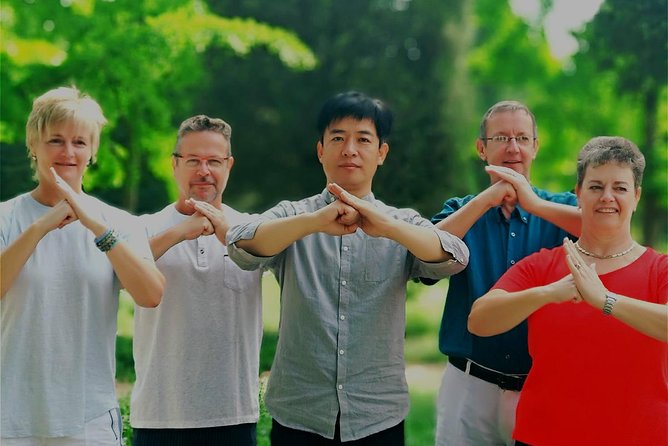
- Temple of Heaven meeting point: start at 天坛公园东门 east gate ticket office, easy by subway.
- Beginner-first structure: a proven step-by-step approach plus a 9-step form experience.
- More than forms: standing meditation and a first taste of push hands.
- Culture with meaning: Yin Yang and Taoist concepts explained in plain terms.
- Body care practice: self-massage methods for stress and pain relief.
Temple of Heaven East Gate: the practical start you’ll appreciate
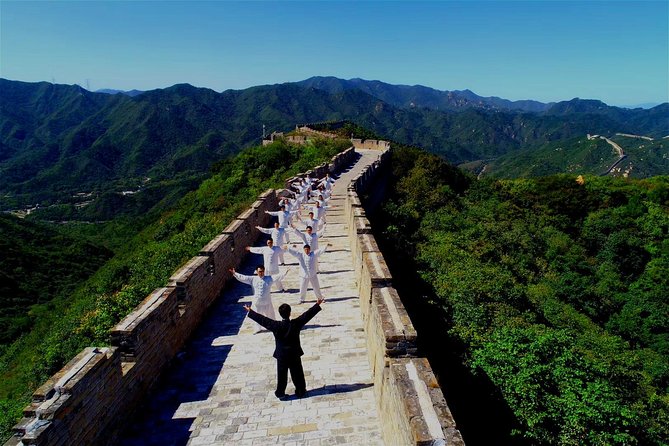
Meeting at 天坛公园东门 (the Temple of Heaven East Gate) is a smart choice for this activity. It keeps the class calm and focused, instead of burning time with long pickups and transfers. You meet at the ticket office at the east gate, 天坛东门售票处, which also makes it easier to find the teacher without guesswork.
Getting there is straightforward: take Subway Line 5 to Tian Tan Dong Men Station, then exit at Exit A. The east gate is about 50 meters away. If you like travel that stays simple, you’ll probably enjoy this part.
Also, plan for the Temple of Heaven entrance fee. It’s not included, so you’ll want to budget a little extra. The upside is that you’re already thinking like a local: you’re arriving to practice on site, not just passing through a photo stop.
One more practical detail: the class runs 1.5 hours. That’s long enough to learn something real, but short enough that you won’t feel stuck when your body is still waking up to new movements.
You can also read our reviews of more tours and experiences in Beijing.

What you’ll actually learn in 90 minutes: 9 steps, meditation, push hands
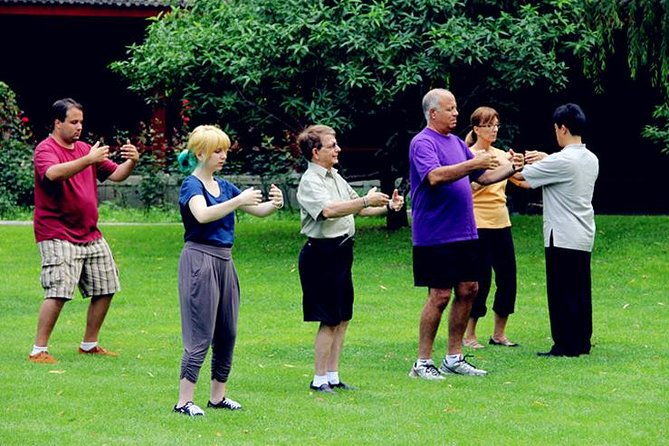
This class is designed for beginners, and you can feel that in how the session is described. You’re not thrown into a long routine or asked to memorize fast. Instead, you learn through a structured progression that aims to make the Tai Chi form feel usable.
Here’s what you can expect to cover during the 1.5 hours:
- A Tai Chi culture presentation that frames what you’re doing and why it matters.
- A 9-step Tai Chi form experience, built to teach the core ideas without overwhelming you.
- Standing meditation and a first push-hands experience.
- Self-massage methods aimed at relieving pain and stress in everyday life.
The 9-step format is especially valuable for beginners. Full Tai Chi forms can feel like learning an entire dance choreography in one go. A smaller step set helps you connect body positions, weight shifts, and coordination. You’ll likely leave with a practical sense of what your feet and legs are supposed to do, rather than only remembering arm shapes.
The meditation portion matters too. Many people think Tai Chi is all about moving slowly. But the session’s emphasis on standing meditation suggests a focus on stillness and attention. That’s often where beginners feel the biggest shift, because you stop treating Tai Chi like gymnastics and start treating it like controlled body awareness.
And then there’s push hands. Even a basic introduction can be a confidence boost because it turns Tai Chi from solo movement into interaction. You get the sense of how softness works and how balance can be trained with a partner, without needing advanced skill.
Tai Chi culture and Taoist ideas: Yin Yang explained for real life
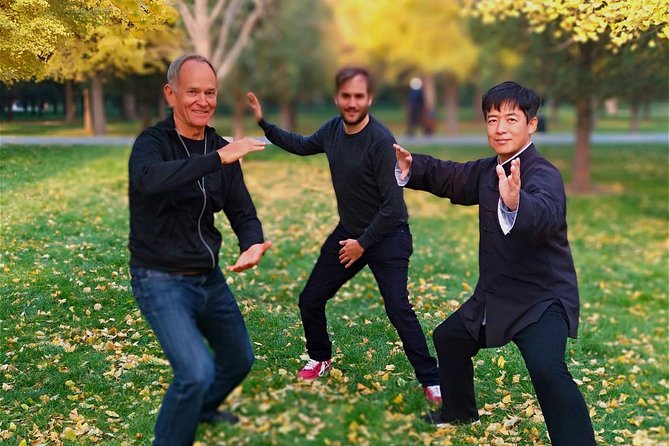
One reason this class earns such strong praise is that it doesn’t treat Tai Chi as a set of tricks. The teaching includes the “why” behind the movements: Yin Yang and Taoist culture, explained as part of the internal martial art experience.
You’ll also hear about Qi (energy). The wording in the class description frames Qi as something you obtain through natural but mysterious exercise. I think that’s the right tone for beginners. You’re not being asked to prove anything instantly. Instead, you’re invited to practice the approach that traditions associate with cultivating Qi: relaxed focus, coordinated motion, and breathing that supports movement.
The culture segment can also help you stop feeling like you’re faking it. When you understand the ideas behind the practice, your form usually improves faster, because you stop copying shape and start aiming for function—weight transfer, alignment, and a calm, grounded posture.
What I like about this kind of lesson is that it makes Tai Chi feel portable. Even if you never become an expert, you can still take the basic mindset back to your routine: slow down, soften your effort, and move in a way that supports balance instead of fighting gravity.
Standing meditation at the Temple of Heaven: calming, but watch your expectations
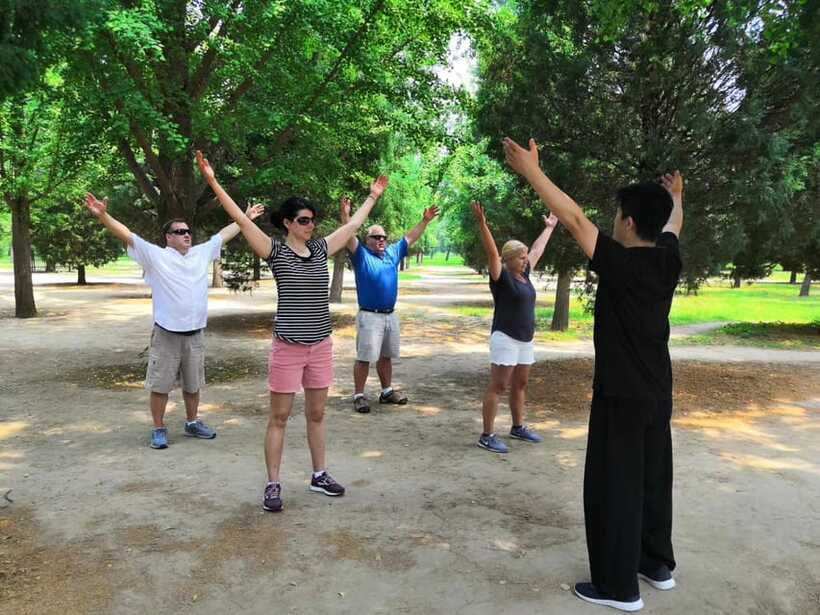
Meditation outdoors at the Temple of Heaven grounds can sound overly poetic. In practice, it’s more helpful than it is mystical. Standing meditation is usually about two things you can feel quickly: stable posture and relaxed attention.
As a beginner, the big challenge is usually holding a position without gripping muscles. If the instructor cues relaxation properly, you’ll likely notice that your breathing steadies and your body stops feeling as tense. That’s the kind of effect you can carry into the rest of your day, even if your mind keeps wandering at first.
One caution: meditation is not an instant switch into perfect calm. You may feel restless for a few minutes, and that’s normal. The value here is that the teacher guides you through the basics of standing practice so you’re not just guessing what to do with your body.
If you’re the type who likes structure, this part should feel reassuring. You’re not meditating into the dark—you’re practicing something with direction.
Push hands for beginners: the first taste of softness and balance
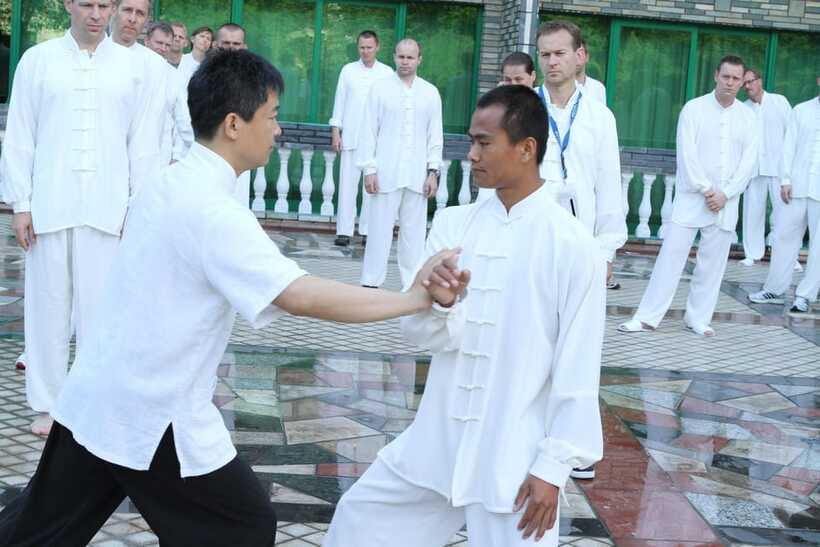
Push hands can intimidate new students, mostly because the name sounds competitive. But in a beginner class, it’s really about learning a few safe skills: how to stay balanced while pressure changes, how to keep your arms from turning into rigid levers, and how to coordinate with a partner without forcing strength.
This class includes a push-hands experience. That matters because it trains you to feel the principles behind Tai Chi instead of just watching them. You’ll likely practice in a way that emphasizes responsiveness over power.
A big benefit of a private format (this is a private group) is that the instructor can adjust your posture and movement quickly. In small sessions like this, you don’t have to wait for a teacher to finish correcting someone else.
If you want a stress-free way to learn partner basics, this is one of the best ways to do it in a short time. You get interaction, but you stay in the beginner zone.


Self-massage for stress and pain: a hands-on takeaway
The class also includes methods of self-massage to help relieve pain and stress in daily life. This is the practical side that many people appreciate after the cultural theory portion.
Even if you don’t think of massage as a Tai Chi topic, it fits the internal-martial-arts approach: you’re using the body’s own systems to loosen, reset, and reduce tension. Self-massage is also a skill you can repeat later. A form you practice once a week fades quickly; self-care habits you can do in five minutes tend to stick.
I like that the class frames these as usable tools. You’re not only leaving with memories of movements—you’re leaving with a routine you can try when your shoulders feel tight or when you’re carrying stress in your body.
As always, go gentle. If you feel sharp pain or discomfort, you should stop and ask the instructor for safer adjustments during the session.
English-speaking masters and the private-group advantage
The teaching team comes from Beijing Sanfeng Tai Chi Club and is described as English-speaking, with instruction also available in Chinese. Reviews mention instructors such as Eric and Leo, and also refer to Master Lui. That’s a good sign for language clarity and teaching style.
In my experience, private Tai Chi is where the lesson clicks faster. You can get corrections on your stance, how your weight transfers, and whether your arms are stiff. Small adjustments make a big difference in Tai Chi, and they’re hard to get in a large group.
What also stands out in the feedback is patience. When you’re learning unfamiliar body positions, patience is not a luxury—it’s the difference between feeling encouraged and feeling lost. This kind of class is built for that beginner learning curve.
If you’re traveling with someone, a private session can also feel less stressful than joining a bigger group. You get the room to ask questions and slow down.
Price and value: $58 for 1.5 hours that actually teaches
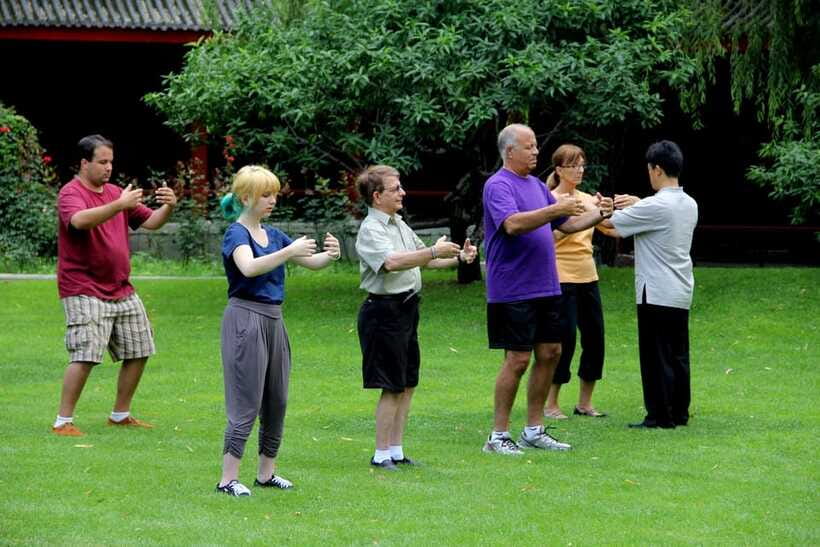
At $58 per person for a 1.5-hour private class, this sits in the mid-range for guided experiences in Beijing. The value comes from what’s included: high-qualified English-speaking Tai Chi masters and a structured lesson that covers form steps, culture context, meditation, push hands, and self-massage.
What’s not included is also important for budgeting:
- Hotel pickup and drop-off
- Food and drinks
- Entrance fee
If you’re already near the Temple of Heaven area, your effective cost drops, because you’re not paying for transport time or logistics. Even if you’re not close, the meeting point is easy by subway, and that reduces the risk of wasting money on last-minute taxi rides.
One more small practical perk: free cancellation is offered up to 24 hours in advance, and there’s a reserve-and-pay-later option. That’s useful when you’re building your Beijing schedule around weather and jet lag.
Who should book this class (and who should skip)
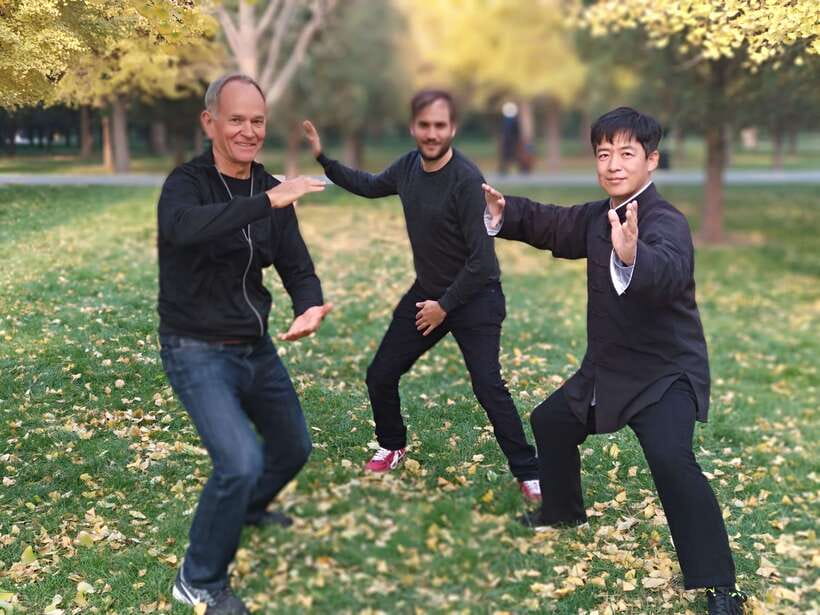
This class is explicitly described as made for beginners, so it fits well if you’ve never tried Tai Chi before. You’ll likely enjoy it if you want:
- a step-by-step entry into the 9-step form
- culture context that explains Yin Yang and Taoist ideas
- a short but complete session with meditation and push-hands basics
- practical body-care tools like self-massage
It may not be a great fit if you’re looking for a vigorous workout or a long, advanced practice. This is about learning correctly and building a foundation.
One clear note from the activity details: it is not suitable for pregnant women. If you’re in any other situation involving movement restrictions, it would be smart to ask the provider before booking, but that specific eligibility rule is the only one listed.
How to get the most out of the session
To get real value from 90 minutes, treat it like a learning lab, not a sightseeing stop. Wear comfortable clothing you can move in, and shoes that support stable standing. You’re going to shift your weight, stay in position, and practice interaction during push hands.
Also, come with a simple mindset: relax into the lesson. Beginners often try too hard. Tai Chi tends to reward softness and patience, not force.
Finally, ask questions. The best private classes invite dialogue, especially when the teacher is explaining both movement and meaning. If you want to understand Qi concepts in a way that makes sense to you, this is the moment to ask.
Should you book this Beijing Private Tai Chi Class?
If you want a beginner-friendly Tai Chi intro that covers more than just memorizing a form, I’d book it. The Temple of Heaven location adds a calming atmosphere, and the lesson structure hits the key parts: culture, 9-step form practice, standing meditation, push hands, and self-massage.
Skip it if you’re expecting a high-energy workout or if you don’t want to manage your own arrival at the east gate meeting point. For most people who want something authentic, gentle, and genuinely instructive, this is a strong use of 1.5 hours in Beijing.
FAQ
How long is the Beijing Private Tai Chi Class?
The class duration is 1.5 hours.
Where do I meet the instructor?
You meet at the ticket office of the Temple of Heaven east gate (天坛东门售票处), at 天坛公园东门.
How do I get there by subway?
Take subway line 5 to Tian Tan Dong Men Station, exit at Exit A, and walk about 50 meters to the east gate.
What’s included in the price?
The price includes English-speaking (and Chinese-speaking) Tai Chi masters for the class.
What is not included?
Hotel pickup and drop-off, food and drinks, and the Temple of Heaven entrance fee are not included.
Is this class suitable for beginners?
Yes. The class is specifically made for beginners and includes a beginner-oriented approach to learning the form and related practices.