REVIEW · BEIJING
Beijing Private Tai Chi Class
Book on Viator →Operated by Beijing San Feng Tai Chi Club · Bookable on Viator
Quiet moves, big mental payoff in Beijing. This Beijing Private Tai Chi Class blends beginner tai chi with Taoist yin-yang context and self-massage you can use right away, taught for real-world bodies, not movie poses. The catch: there’s no hotel pickup, and the class requires good weather, so you’ll want to plan your arrival and not rely on last-minute changes.
I also like that you choose the time of day. Morning or afternoon works, and because it’s private, the instructor can slow down when you need it. Expect calm guidance, standing meditation, and a push-hands experience.
At around 90 minutes for $58 per person, it’s a solid starter option if you want real structure instead of copying moves from the sidelines in the park. Wear comfortable shoes—the kind you can stand in for a while.
In This Review
- Key highlights to know before you go
- Why this private beginner tai chi lesson works
- Meeting at Tian Tan Dong Lu: the simple logistics that matter
- The 90-minute flow: forms, meditation, and push hands (the real structure)
- 1) Tai chi and its culture, before the movement
- 2) Learning 9 steps of a tai chi form
- 3) Standing meditation and a push-hands experience
- Taoism, yin and yang, and Qi: what you’ll actually practice
- Self-massage for pain and stress: a practical add-on
- Your instructor: English guidance and the Eric Liu experience
- Price and value in Beijing: is $58 per person worth it?
- Weather and pace: the two things that can shape your day
- Who should book this class (and who might skip it)
- Before you go: small prep that improves the experience
- Should you book the Beijing Private Tai Chi Class?
- FAQ
- How long is the Beijing Private Tai Chi Class?
- Is this class private or shared with others?
- Where does the class meet?
- Does the price include entrance and instruction?
- Is hotel pickup or drop-off included?
- What will I learn in the class?
- Is the class only for advanced students?
- Do I need good weather to do this activity?
- What should I wear?
Key highlights to know before you go
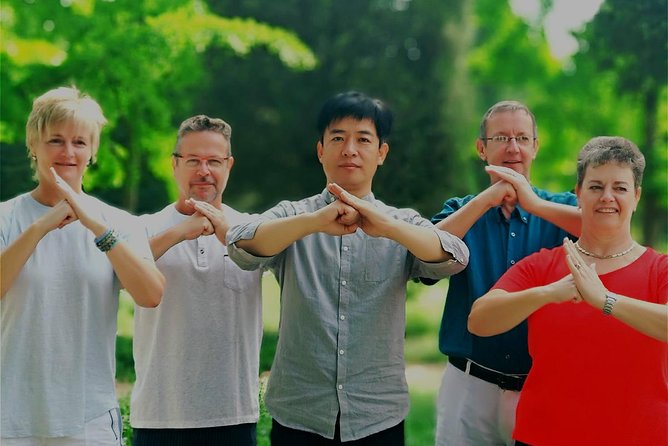
- Private, English-speaking instruction built specifically for beginners
- Learn 9 steps of a tai chi form with slow, deliberate movement
- Standing meditation + push hands experience for practical feel
- Taoism, yin and yang, and Qi concepts tied to what you do in class
- Self-massage methods aimed at pain and stress relief
- Temple of Heaven area meeting point for an easy cultural add-on nearby
Why this private beginner tai chi lesson works
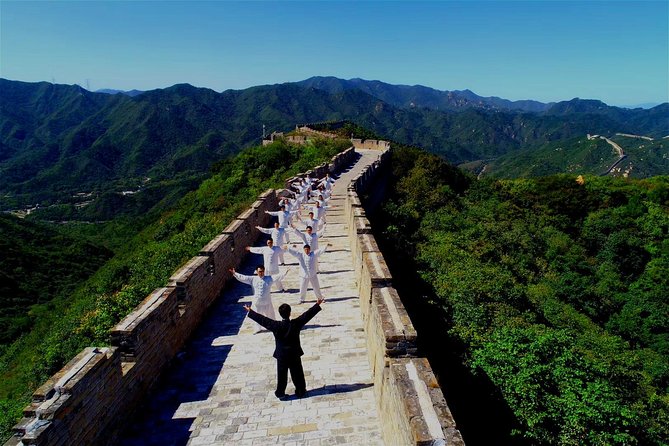
Tai chi can look simple from a distance. In class, it’s anything but random. This lesson is built for beginners, so you’re not expected to already know the stance names or keep up with fast counts. Instead, you learn a step-by-step approach that focuses on body alignment, balance, and control.
What I like is the way the class treats tai chi as an internal practice. You’re not just learning a sequence of movements. You’re learning how to breathe, how to stay present while moving slowly, and how the philosophy connects to the physical work. That matters, because otherwise tai chi can feel like slow choreography with no payoff.
Since it’s private, your instructor can adjust to your pace and your level. If you’re stiff, distracted, or just unsure what your body is supposed to do, that extra attention makes a difference. And for people who feel intimidated by martial arts settings, private instruction usually feels far less stressful than jumping into a group class.
You can also read our reviews of more tours and experiences in Beijing.


Meeting at Tian Tan Dong Lu: the simple logistics that matter
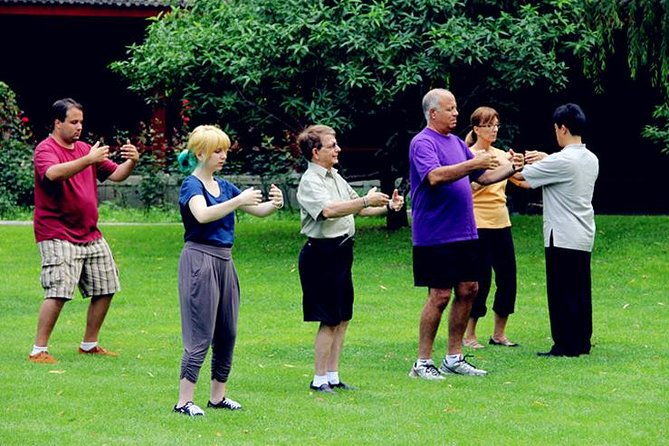
The class meets at 旻园1 Tian Tan Dong Lu, Dong Cheng Qu, Bei Jing Shi 100061, and it ends back at the same meeting point. There’s no hotel pickup or drop-off, so you should plan to get there on your own.
Why this is worth planning: the meeting location is in the Tian Tan (Temple of Heaven) area, which is convenient if you’re already exploring nearby sights. It’s also a practical choice for tai chi. Parks and open space help for stance work and slow movement without you feeling like you’re taking over a crowded sidewalk.
Practical tips:
- Bring comfortable shoes. You’ll be standing and moving slowly, and the floor matters more than you think.
- If you’re visiting in cool seasons, dress in layers. Tai chi is slow, so you might not feel warm right away.
- Bring water if you need it, since food and drinks aren’t included.
The 90-minute flow: forms, meditation, and push hands (the real structure)
The lesson runs about 1 hour 30 minutes, and it’s designed around progression rather than just doing a long practice with no explanation. Here’s what you can expect in a typical session, based on the class content:
1) Tai chi and its culture, before the movement
You’ll start with context: what tai chi is, and how it connects to Chinese philosophy. You’ll hear about Taoism and the yin and yang idea—then you’ll translate those concepts into how you move.
This isn’t just academic. It changes what you pay attention to. When you understand the idea behind the movement, your practice stops being purely mechanical.
2) Learning 9 steps of a tai chi form
A big piece of the class is tai chi form study—specifically 9 steps. That’s a smart length for a first lesson. You don’t get overwhelmed trying to memorize a long sequence, and you’re more likely to remember what you practiced after you leave.
In plain terms, you’ll work on:
- correct stance and posture
- slow transitions
- coordination of arms and weight shifting
- focus and breathing while doing the steps
If you’ve seen tai chi in parks, you might notice people make it look effortless. In this class, you’ll learn how that effortless look is built.






3) Standing meditation and a push-hands experience
After the form work, you’ll shift into standing meditation and then push hands experience. The review highlights suggest this isn’t meant to turn you into a sparring partner overnight. It’s a first taste of how tai chi feels when there’s gentle resistance and real-body contact.
Push hands is especially useful because it teaches you what matters most in tai chi:
- balance over strength
- listening through your body
- staying relaxed while being stable
Even if you’re a complete beginner, you’ll get enough guidance to understand the idea and try a few practical movements.
Taoism, yin and yang, and Qi: what you’ll actually practice
One of the more interesting promises of this class is that you don’t just learn forms. You work toward obtaining Qi (energy) through natural practice. That can sound mystical, so here’s how to think about it without getting lost in concepts.
In class, the yin-yang and Taoism discussion pairs with:
- slow, deliberate movement
- deep breathing
- focus and mental calm while you move
So Qi in this context isn’t presented as something you chase with magic. It’s tied to your attention, breathing, and body alignment. When you do the movements correctly and stay present, you naturally notice a different sense of steadiness and control.
If you’ve ever tried to meditate but found it hard to sit still, tai chi can feel like a workaround. You’re doing something physical, but it’s still meditative. That’s why it often appeals to people who want calm but also want structure.
Self-massage for pain and stress: a practical add-on
This lesson includes methods of self-massage aimed at relieving pain and stress in daily life. That’s a big deal because it makes the class more than a moment. You leave with at least an idea of what to do when your shoulders tighten, your muscles feel tense, or you want something simple and grounded.
You should treat self-massage as a supportive tool, not a cure-all. But as a beginner-friendly, low-risk practice, it fits well with tai chi’s whole idea: gentle internal work that supports the body.
A useful mindset: view it as a routine you can try at home after you learn the movements and breathing patterns. If you do tai chi only in the park, it’s easy to lose the habit. Adding a simple body practice helps you keep going.
Your instructor: English guidance and the Eric Liu experience
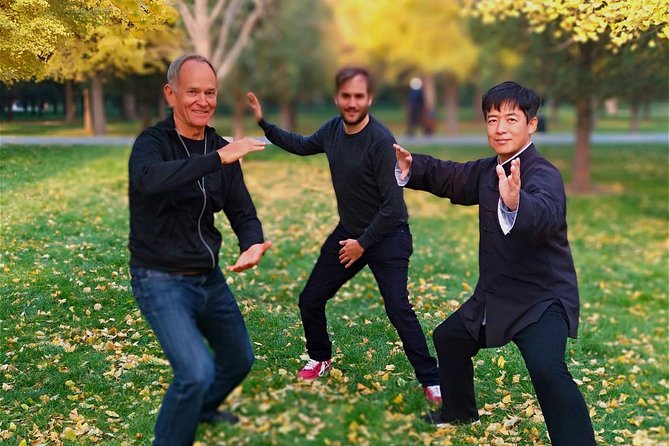
The class is taught by high qualified English-speaking Tai Chi masters. In the name of real-world clarity, one instructor name came up often: Eric Liu. People consistently describe him as kind, patient, and helpful, especially for total beginners.
That’s exactly what you want in a first tai chi class. Beginner tai chi isn’t hard because it’s athletic. It’s hard because it asks you to move in new ways while staying relaxed. A patient instructor who can guide you step-by-step makes it feel doable.
Another good sign from the experience: instruction included more than just moving. Your teacher should explain philosophy and benefits along the way—so you understand what you’re doing, not just how to do it.
Price and value in Beijing: is $58 per person worth it?
At $58 per person, this isn’t a free-wheeling walking tour. You’re paying for a private lesson and a qualified English-speaking master for about 90 minutes. The value depends on your goal.
Here’s how I’d judge it:
- If you want a low-stress introduction where mistakes are corrected gently, private instruction can be worth it. Group classes can be cheaper, but you lose individual guidance.
- If you want cultural context plus practical techniques (form study, meditation, push hands, and self-massage), that’s a lot packed into one session.
- If you’re just trying tai chi once for curiosity, you might find group options cheaper. But this lesson gives you structure you can actually remember.
Also, there are group discounts and the experience uses a mobile ticket, which can help if you’re traveling with friends. For some people, the real bargain is sharing the cost of a private lesson.
Booking timing: it’s often booked around 17 days in advance. That’s a hint to lock in a slot if you have specific morning or afternoon plans.
Weather and pace: the two things that can shape your day
Tai chi is slow, and the class is outdoors in a setting that needs good weather. The experience notes that it requires good weather, and if it’s canceled due to poor weather, you’ll be offered a different date or a full refund.
That means you should:
- keep your schedule flexible on the day you book
- avoid booking this as the only outdoor activity on a weather-risk day
- dress for shifting conditions (cool mornings and warmer afternoons happen in Beijing)
Pace-wise, don’t expect a sweat workout. Expect controlled movement and calm focus. If you want a fast-paced fitness session, this might feel too gentle. If you want balance, breathing, and a calmer body, it’s exactly the point.
Who should book this class (and who might skip it)
I’d strongly consider this if you:
- are new to tai chi and want beginner-focused instruction
- want English explanations of the philosophy, not just movement practice
- like the idea of learning a short form (9 steps) you can actually use later
- want a calmer activity that still feels structured and meaningful
- appreciate practical tools like self-massage for stress relief
I’d consider skipping or comparing options if you:
- want a high-intensity workout
- hate walking up to a fixed meeting point on your own (there’s no hotel pickup)
- can’t be outdoors on the day you plan to do it
This is also a good fit for couples or small friend groups who want something more personal than a group tour. It’s private, so your group is the only one in the class.
Before you go: small prep that improves the experience
Bring:
- Comfortable shoes (important)
- layered clothing so you can adjust to temperature
- an open mind about yin-yang and Taoist ideas tied to movement
Plan:
- to arrive with a little buffer. You’ll get more from the start if you’re not rushing.
- to stay a little mentally quiet. Tai chi rewards attention more than ambition.
And if you’re anxious about being bad at it, good news: the class is built for beginners. That means your instructor is expecting you to learn, not perform.
Should you book the Beijing Private Tai Chi Class?
Book it if you want a beginner-friendly, private lesson that mixes movement with explanation and gives you practical take-home work like self-massage. The price makes sense for one-on-one coaching in a meaningful, multi-part class: form study, meditation, a push-hands introduction, and philosophy tied to Qi.
Skip it or compare if you need transportation from your hotel, only want indoor activities, or expect a workout-style schedule. With good weather and realistic expectations, this is one of the more relaxing ways to get started with tai chi in Beijing—and you’ll leave with more than a few photos. You’ll leave with a simple structure for practice.
FAQ
How long is the Beijing Private Tai Chi Class?
It lasts about 1 hour 30 minutes.
Is this class private or shared with others?
It’s private. Only your group participates.
Where does the class meet?
The meeting point is 旻园1 Tian Tan Dong Lu, Dong Cheng Qu, Bei Jing Shi, China, 100061.
Does the price include entrance and instruction?
Yes. It includes high qualified English-speaking Tai Chi masters and an entrance ticket.
Is hotel pickup or drop-off included?
No. Hotel pickup and drop-off are not included.
What will I learn in the class?
You’ll learn tai chi culture, 9 steps of a tai chi form study, standing meditation, a push hands experience, and self-massage methods for pain and stress relief.
Is the class only for advanced students?
No. The class is specifically made for beginners.
Do I need good weather to do this activity?
Yes. The experience requires good weather. If it’s canceled for poor weather, you’ll be offered a different date or a full refund.
What should I wear?
Comfortable shoes are recommended.