REVIEW · BEIJING
Beijing: YuanMingYuan Park (Garden of Gardens) e-Ticket
Book on GetYourGuide →Operated by PANDA HAPPY JOURNEY IN CHINA · Bookable on GetYourGuide
Ruins with royal swagger. Yuanmingyuan, the Old Summer Palace, is a huge Qing Dynasty garden site where Western garden ideas and Eastern scenery mix in one unforgettable walk.
I especially love the scale of the royal retreat design you can still read in the remains, from ponds and bridges to the feel of a planned “garden city.” I also really like that this is built for independent exploring, with an English textual and visual guide included.
One thing to plan for: the park is big, and going self-guided means you can lose time (some people needed over 4.5 hours to see a lot). If you want a tightly guided story told step-by-step, this setup may feel lighter than you expect since there’s no live tour guide or audio guide.
In This Review
- Key things to know before you go
- Entering Yuanmingyuan: what you’re really walking into
- The e-ticket and English guide: how this visit actually works
- Why the Qing Dynasty garden plan is the star of the show
- The 1860 destruction story you should know before you walk
- Pacing a self-guided garden the size of a small city
- What you’ll actually see: ponds, bridges, pavilions, and broken marble
- Western-meets-Eastern details: how to spot the fusion without a degree
- Extra activities and the WeChat factor
- How much value you’re really getting for around $9
- Best fit: who will enjoy Yuanmingyuan most
- Should you book this e-ticket visit?
- FAQ
- How do I get admission for Yuanmingyuan?
- Is a live tour guide included?
- Is there an audio guide?
- Will the guide be in English?
- How long should I plan for the visit?
- Can I skip the ticket line?
- What do I need to bring for entry?
- Are there starting times?
- Is there free cancellation?
- Can I reserve now and pay later?
Key things to know before you go
- Self-guided with an English textual and visual guide: you learn as you walk, without waiting for a group.
- Skip the ticket line: e-ticket and pre-arranged entry helps keep the day moving.
- Qing Dynasty royal garden remains: you’re walking a once-grand layout, now shaped by history.
- Garden of Gardens theme: the ruins’ beauty comes with a heavy backstory.
- Some activities may require WeChat: if you’re hoping for extra add-ons, plan around phone apps.
- Bring your ID: passport or ID card is required for entry.
Entering Yuanmingyuan: what you’re really walking into

Yuanmingyuan is not a normal park visit. It’s a place where you’re seeing garden design, imperial ambition, and cultural loss all at once. Built in the 18th century during the Qing Dynasty, it once functioned like a grand escape for emperors—an entire outdoor world made of gardens, pavilions, and water features.
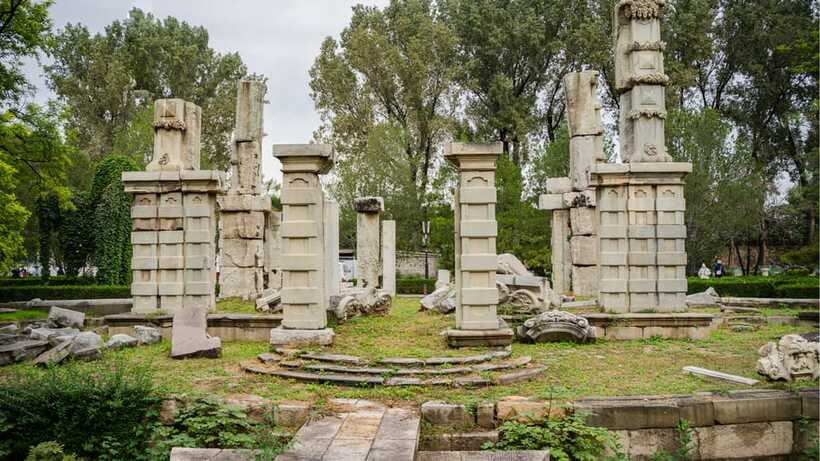
Today, you don’t get a fully restored palace fantasy. You get ruins—overgrown pavilions and shattered sculptures—set in still-beautiful grounds. That contrast matters. It changes the way you look. You start paying attention to shapes and layouts: where water probably flowed, where marble halls likely stood, and how paths connected different garden zones.
And the name people use now, Garden of Gardens, isn’t just poetic. It reflects the way the site became known after the destruction. You’ll feel that when you stand amid the remnants and realize you’re looking at both design and aftermath.
You can also read our reviews of more tours and experiences in Beijing.



The e-ticket and English guide: how this visit actually works

This experience includes an admission e-Ticket plus an English textual and visual guide. In practice, that means you’re not paying for a live guide to escort you minute by minute. Instead, you’re buying the right to enter and a way to understand what you’re seeing while you move at your own pace.
The e-ticket format is the key convenience. When it works well, you avoid the “where do I stand, which line is mine” stress. If you’ve ever started a trip with a scramble at the gate, you’ll appreciate the calmer setup.
The guide being both textual and visual is also practical. Garden sites can be confusing even when you can read signs, because the layout is spread out and the ruins don’t always look like the original. A good guide helps you connect what you’re standing near with what it used to represent.
Also, there’s support from the provider, PANDA HAPPY JOURNEY IN CHINA. One helper named Panda handled e-ticket details and made sure the PDF guide access worked for at least one customer—so if you’re the kind of person who worries something will go wrong with files, that human check can be reassuring.
Why the Qing Dynasty garden plan is the star of the show

The best reason to come here is simple: you’re experiencing a royal garden made with serious intent. Yuanmingyuan wasn’t a random collection of greenery. It was designed as a retreat with an intricate network of gardens, pavilions, and lakes.
Even in ruins, you can still sense that design logic. Think about how emperors wanted to move through a world that felt both staged and natural. The site once included marble halls and artworks—so the garden wasn’t only about “pretty views.” It was about culture, prestige, and controlled experiences.
There’s also a fascinating design fusion tied to the highlights: a mix of Western garden architecture with Eastern impressionistic landscapes. You don’t need to be an architecture expert to feel the difference in style. What changes is the vibe of how space is arranged—straight lines and structured design elements can feel different from the softer, scenery-driven approach.
If you like gardens, you’ll probably enjoy the mental game of imagining the original scenes. If you love history, you’ll enjoy seeing how the physical form of the site reflects Qing taste at its peak.
The 1860 destruction story you should know before you walk

Yuanmingyuan’s tragedy is part of what gives the place its emotional weight. In 1860, during the Second Opium War, the Old Summer Palace was catastrophically destroyed by foreign troops. Looting and burning left behind what we now see as the Garden of Gardens.
That matters because without context, ruins can feel like just “pretty rubble.” With context, you start noticing the pauses in the scene—the missing structures, the broken stone, the empty spaces where buildings once stood.
There’s no getting around the fact that the site is both beautiful and painful. Preservation efforts aim to protect its cultural significance while inviting reflection on the larger history behind the loss. I think that’s the right way to experience it: let the beauty land, and let the tragedy inform how you interpret what you see.
If you prefer purely uplifting sights, this might not feel like that kind of day. But if you want authentic scale plus real-world history, it’s hard to beat.
Pacing a self-guided garden the size of a small city
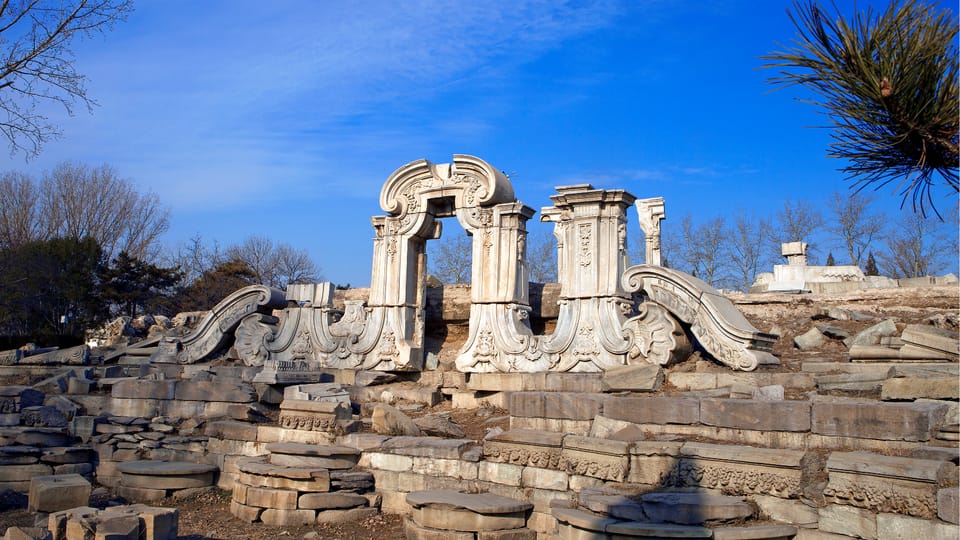
Here’s the practical truth: Yuanmingyuan is large-scale, and self-guided exploring can eat time. One visitor noted they spent more than 4 hours 30 minutes to tour, and it’s easy to understand why. Garden layouts spread out, and ruins can slow you down because you’ll keep looking for the “right angle” or the place where something used to stand.
So I’d plan your day around walking, not around checking boxes. Give yourself enough time to pause. If you show up with the attitude of fast in-and-out, you’ll miss the best part: reading the design in the ground.
A simple strategy works well here:
- Start with the zones that feel easiest to orient first.
- Then circle back for the deeper ruins once you’ve found your bearings.
- Use the guide early so you’re not trying to decode the site while you’re already tired.
If you’re the type who gets turned around in big parks, this will feel familiar. Bring patience and accept that you may need longer than you expect.






What you’ll actually see: ponds, bridges, pavilions, and broken marble
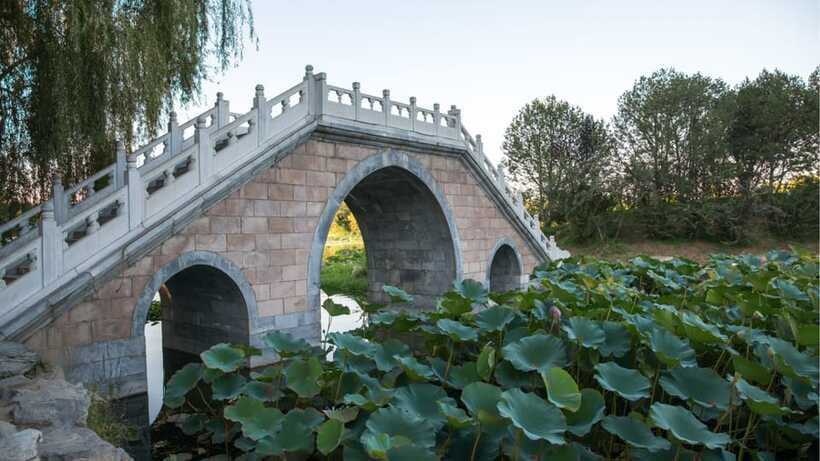
From the highlights, the garden originally featured an intricate system of water and structures—bridges spanning tranquil ponds, and marble halls decorated with ancient artworks and priceless artifacts. You won’t see all of those intact today, but the ruins still point to where those experiences used to happen.
Look for how water shaped the design. Even when the setting changes, ponds and the low areas around water often reveal the planning. Bridges are another clue. When you see an approach leading toward a gap or a remaining base, you can picture the passage once designed for strolling and viewing.
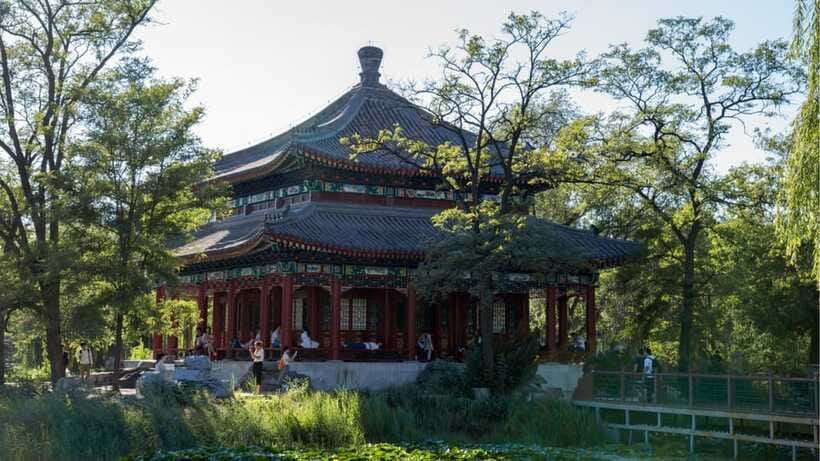
Pavilions are the same story, just more emotional. Overgrown structures and fragmented stone don’t give you the full picture, but they do give you atmosphere. You get that “garden of gardens” effect where nature and history overlap.
And if you care about interpretation, use the included guide to connect what you’re seeing with what it used to be. Without a guide, some parts can feel like they’re asking for context you don’t have yet. With it, the same remains become a story you can follow.
Western-meets-Eastern details: how to spot the fusion without a degree

The headline highlight—Western garden architecture fused with Eastern impressionistic scenery—can sound abstract. Here’s how to make it concrete while you walk.
When you move through different garden remnants, pay attention to two things:
- how space is framed (more structured, symmetrical, or architectural)
- how scenery feels (more “view-making,” softer transitions, scenery that seems designed for drifting eyes)
Even if you don’t know every architectural term, your brain recognizes design patterns. Yuanmingyuan’s blend is one reason it’s more than a quiet ruin walk. It shows an era when different design ideas met in imperial settings.
If you’re into design history, you’ll probably enjoy the mental contrast. If you’re not, you can still enjoy it as “this place feels planned in two different ways,” which is plenty.
Extra activities and the WeChat factor
One practical consideration: some activities may require using WeChat, similar to how other major Beijing sites sometimes run add-ons through mobile apps. For example, a boat ride was mentioned as something you might not be able to do without setting up WeChat in time.
So if you care about add-ons, don’t treat your visit as only walking. Check what extras are available on the day you go, and make sure your phone setup can handle whatever system is needed. If you don’t want any app-based complications, you may choose to focus purely on the ruins and garden remains.
How much value you’re really getting for around $9

At about $9 per person, the pricing feels like a strong deal—especially because admission is included plus the English guide materials. You’re not paying for transportation or a full-service tour package. You’re paying for access and self-guided interpretation.
That’s good value if you’re comfortable moving independently and you’re happy learning from a guide on your phone or on paper/PDF. It can be less satisfying if you expected a live storyteller or an audio narrative driving you through key points.
Also, the skip-the-ticket-line benefit adds value in real time. In a big site, saving time at the start can be the difference between a relaxed visit and a rushed one.
Best fit: who will enjoy Yuanmingyuan most
This kind of self-guided, garden-and-ruins experience fits best if you:
- like history tied to physical places, not just facts on a screen
- enjoy garden design, water features, and how ruins can still show original planning
- can spend half a day to most of a day walking without needing constant guidance
If you’re hoping for a tight, highly narrated museum-style route, you might find it less direct since there’s no live tour guide and no audio guide included.
Should you book this e-ticket visit?
I’d book it if you want a serious place to walk with useful English guide support and an easy entry method. The included e-ticket plus visual guide keeps the day simple, and the site itself is one of those experiences that sticks with you because it mixes beauty with a difficult story.
I’d skip it if you need a guided program to feel oriented, or if you only have a tight time window and can’t stretch into a longer self-paced walk.
If you’re deciding today, my advice is straightforward: bring enough time, download or open the included guide before you arrive, and give the ruins time to work on you. This isn’t the kind of attraction where rushing feels rewarding.
FAQ
How do I get admission for Yuanmingyuan?
You get an admission e-Ticket included with the experience.
Is a live tour guide included?
No. This includes admission and an English textual and visual guide, but there is no live tour guide.
Is there an audio guide?
No audio guide is included.
Will the guide be in English?
Yes, the included guide is in English (textual and visual).
How long should I plan for the visit?
The duration is listed as 1 day, so plan for a full outing rather than a quick stop.
Can I skip the ticket line?
Yes, skip the ticket line is included.
What do I need to bring for entry?
Bring your passport or ID card.
Are there starting times?
The activity is listed for 1 day, and you should check availability to see starting times.
Is there free cancellation?
Yes. You can cancel up to 24 hours in advance for a full refund.
Can I reserve now and pay later?
Yes. The experience offers a reserve now & pay later option.