REVIEW · DATONG
Pingyao Ancient City Scenic Area Pass Ticket Only
Book on GetYourGuide →Operated by China Tour Guide · Bookable on GetYourGuide
A QR code gets you ancient Pingyao fast. What I like most is the skip-the-line QR entrance and the stack of admissions you can use on your own schedule, from city walls to draft banks and bodyguard museums. Pingyao itself is a rare mix of preserved old town streets and family-run historic spaces, so even without a guide you can still build a satisfying loop.
The one thing to watch is that this is a no-guided-tour ticket. You get entry, not explanations, so you’ll want to read signs and plan what you actually want to see first—especially since the pass covers a long list of sites.
In This Review
- Key Highlights I’d Prioritize
- Pingyao’s Real Appeal Comes From “Old Town With Jobs”
- Price and Value: Is $36 Worth It for Entrance Only?
- QR-Entry Logistics: The Part That Actually Determines Your Stress Level
- The Self-Guided Flow: How to Plan a 3-Hour Loop
- Entering Pingyao Ancient City Wall: Your First Wayfinding Win
- Ming and Qing Streets and the County Yamen: Civic Power in Plain Sight
- Draft Banks: The Financial Machinery of Pingyao
- Temples That Give You Structure: Confucian, City God, Taoist
- Museums That Explain Protection and Trade: Bodyguard Agencies + Weapons
- Family Residences and Local Notables: Lei Lutai and the Ma Courtyard
- Extra Museum Stops: Newspapers, Ancient Draft Culture, and Small Surprises
- What You Don’t Get: Plan Around the Missing Pieces
- Who This Pass Suits Best (and Who Might Want Something Else)
- Final Call: Should You Book This Pingyao Ancient City Pass?
- FAQ
- How do I use the ticket at the entrance?
- Does this ticket include a guided tour?
- Is there hotel pickup or drop-off included?
- What’s included in the admission with this pass?
- What isn’t included?
- Is the ticket valid only for one day?
- Can I take photos inside?
- Is the site wheelchair accessible?
Key Highlights I’d Prioritize

- QR picture at the gate: you show a QR image on your phone; no paper ticket needed
- Entrance ticket only: admission to many major sites, but no guided commentary
- A self-guided 3-hour pace: pick a route that fits how much you can comfortably walk
- Finance + security theme: draft banks and bodyguard agency museums in the same day
- Valid for 3 days: you can split your exploring if you don’t want to cram
- Photography allowed, no flash: helps you be respectful inside museums and temples
Pingyao’s Real Appeal Comes From “Old Town With Jobs”
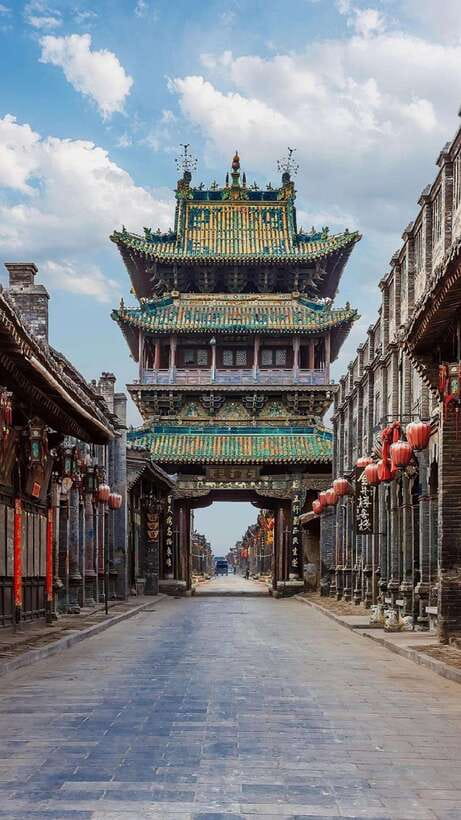
Pingyao (also spelled Ping Yao) is in Shanxi Province, about 600km from Beijing. The city’s story stretches back around 2,700 years, but it grew into something major in Ming and Qing times. That matters, because you’re not just wandering ruins—you’re walking through a place that functioned as a living commercial town.
The UNESCO designation helps explain why it’s so carefully conserved. And one reason it feels authentic is that traditional residences were repurposed into hotels, restaurants, tea rooms, and wine houses. When you combine that with museums set inside former homes of notable families, you get an ancient city that still shows everyday structure—not only stone and walls.
This particular pass is interesting because it targets how Pingyao worked: civic authority (temples and the county yamen), commerce (the draft banks), and local security (bodyguard agency sites). That “how the town ran” angle is what makes it feel more meaningful than a basic sightseeing ticket.
You can also read our reviews of more tours and experiences in Datong.
Price and Value: Is $36 Worth It for Entrance Only?
$36 per person is a reasonable price if you actually use the admission coverage. This is an entrance pass, so you’re paying for access to a lot of specific sites, not a guide, not hotel pickup, and not meals.
Here’s how I think about value with a ticket like this:
- If you want to see multiple categories in one day (wall + temples + yamen + draft banks + museums), the bundled admissions can be cost-effective.
- If you only care about one or two stops, entrance-only pricing may feel like overpaying, since you won’t use most included admissions.
Also, it’s valid for 3 days even though the pass is described as a 1-day ticket. Practically, that means you can keep flexibility: if you spend longer than expected on the city wall or you don’t feel like rushing through a museum, you can spread your day(s) inside the Pingyao area without feeling trapped.
QR-Entry Logistics: The Part That Actually Determines Your Stress Level
The practical win here is the QR system. You’ll need to send the provider your full name and everyone’s passport number. After that, they’ll send you a QR picture. You don’t use a paper ticket. Instead, you show the QR picture at the entrance, and you get in.
One small but helpful detail: flash photography is not allowed. That’s typical in indoor exhibitions and certain heritage buildings, and it’s easy to follow if you keep your phone brightness in check.
If you hate ticket lines, this is the kind of pass you’ll appreciate. When the gate is scanning-based, your time goes into exploring rather than sorting paperwork.
The Self-Guided Flow: How to Plan a 3-Hour Loop
This experience is self-guided, and the suggested touring time is 3 hours. That’s not a lot once you start adding museum time, temple courtyards, and breaks. So think in terms of priorities, not checklists.
A simple way to plan:
- Start strong with the biggest-feeling landmarks early (city wall, main commercial streets).
- Then go into the “inside stories” (draft banks, temples, museums).
- Finally, wrap with the more focused exhibits (bodyguard agencies, ancient weapons, family residences).
Because the pass covers many sites, the best strategy is to choose the theme you want most: commerce (draft banks), civic life (Confucian temple and yamen), spiritual practice (Taoist and City God Temple), or security and protection (bodyguard agencies and weapons museum). You can still see plenty even if you don’t hit every single included stop in one sitting.
Entering Pingyao Ancient City Wall: Your First Wayfinding Win
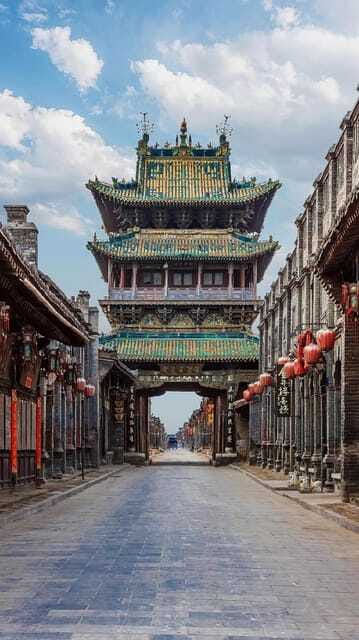
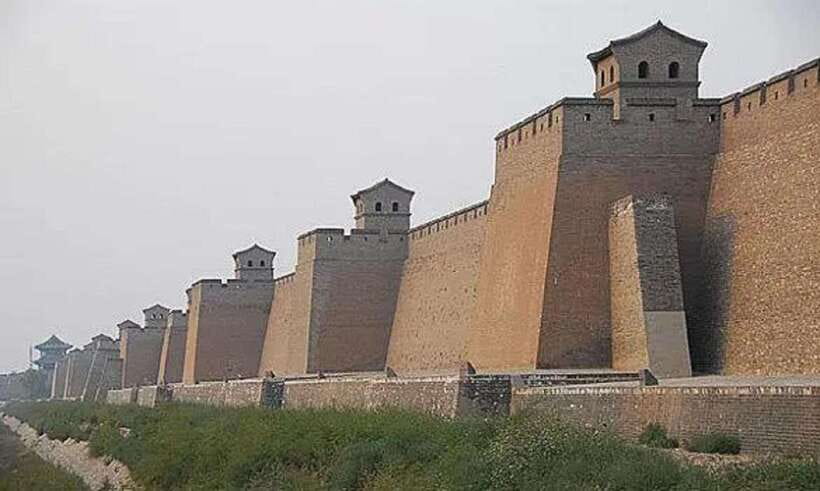
Your ticket includes admission to the Pingyao Ancient City Wall (平遥古城墙). Even if you don’t go into every building, the wall gives you orientation fast. You also get the sense of what made Pingyao defensible and organized.
The wall works best early in the day because it helps you “read” the layout afterward. After you’ve seen the big perimeter and how the town is layered, street-level navigation feels easier.
Tip: If you’re limited on time, don’t treat the wall like a whole marathon. Use it to get a top-down feel, then come back down and focus on the sites that interest you most.
Ming and Qing Streets and the County Yamen: Civic Power in Plain Sight

The pass includes Ming and Qing Street (明清街) and Ancient Government Buildings (县衙). Together, they show two sides of civic life: the public-facing street culture and the real administrative space.
Ming and Qing Street is one of those heritage shopping-and-street-style areas where you can see traditional architecture and feel the “old town” rhythm. Even if you don’t buy anything, it helps you understand how daily life was shaped by the city’s era.
The county yamen is more of a “pause and look” stop. You’re stepping into a space tied to local governance. It’s a good contrast to the commercial draft banks later on.
Draft Banks: The Financial Machinery of Pingyao
This pass has a standout cluster of admissions linked to Pingyao’s banking history. Included sites include:
- Rishengchang Ancient Draft Bank (日升昌票号)
- Weitaihou Draft Bank (蔚泰厚)
- Weishengchang Draft Bank (蔚盛长)
- Baichuantong Draft Bank (百川通)
- Xietongqing Draft Bank (协同庆)
And there’s also a museum stop tied to commerce: Pingyao Chamber of Commerce Museum(平遥商会博物馆).
Why this matters for you: Pingyao’s famous for heritage preservation, but the draft bank theme explains why a town like this mattered. These institutions were part of how money moved and how trust worked across distances.
The best way to get value here without a guide is to look for the basics:
- How they organized trade and records
- How the bank spaces were laid out for operations
- How everyday customers would have interacted with systems
If you like the business side of history—how money, paperwork, and reputation worked—this is the part you’ll probably remember most.
Temples That Give You Structure: Confucian, City God, Taoist
The pass includes several religious sites:
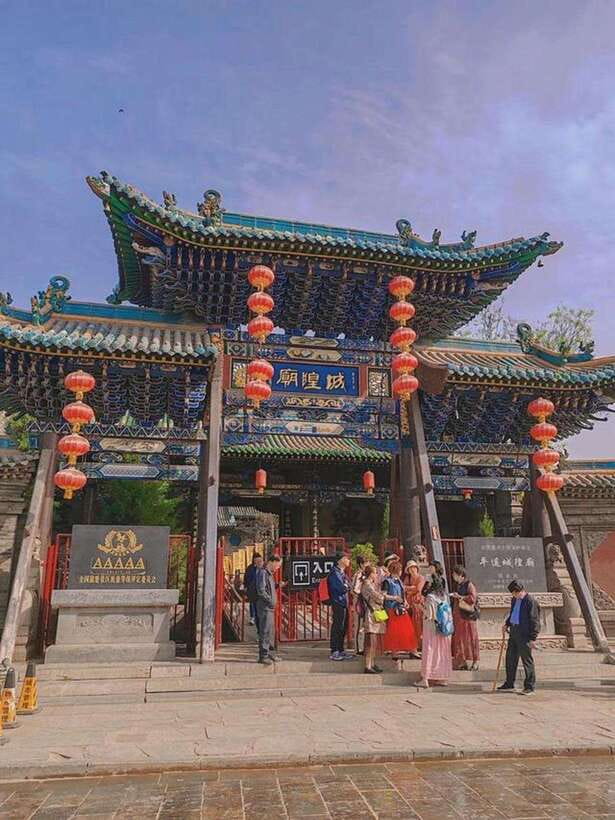
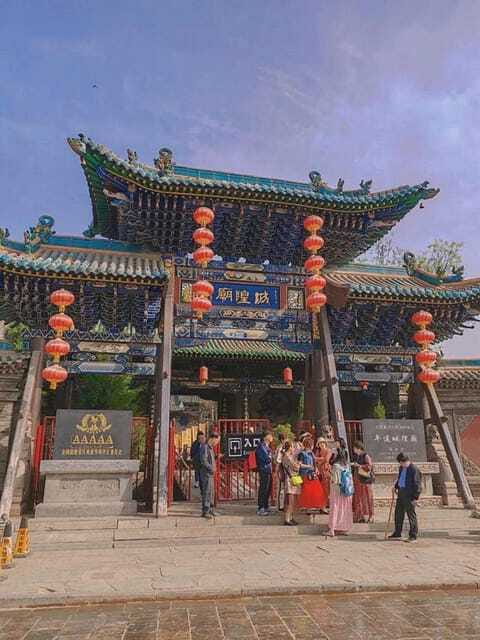
- City God Temple (城隍庙)
- Pingyao Confucian Temple (平遥文庙)
- Qingxu Taoist Temple(清虚观)
- Erlang Taoist Temple (二郎庙)
These aren’t all the same vibe. Confucian spaces tend to feel centered on learning and social order. Taoist temples often feel more ritual and myth-connected, and City God Temples tie into local beliefs about protection and justice.
If you’re self-guiding, temples can be tricky because you might wonder what you’re supposed to notice. The practical solution is to treat each site as a “systems” stop:
- Look at layout and symbols
- Notice how the different spaces are organized (courtyards, halls, entrances)
- Use your time to observe rather than to master theology in one hour
This is also a nice break from museums and bank interiors. Temples tend to offer calmer pacing and easier walking.
Museums That Explain Protection and Trade: Bodyguard Agencies + Weapons
One of the most distinctive parts of this pass is the way it includes security-related heritage:
- Huiwuli Bodyguard Agency Museum (中国镖局博物馆)
- Tongxinggong Bodyguard Agency (同兴公镖局)
- North China First Bodyguard Agency(华北第一镖局)
- Wentaofang Museum of Ancient Weapons(文涛坊)
Pingyao’s economy wasn’t only about money moving. Goods also needed safe transport. Bodyguard agencies were an actual solution to risk, and it makes sense that they fit into the story of merchants and commerce.
The weapons museum adds texture. Even if you’re not a weapons person, it can help you connect what “protection” meant in real terms: tools, styles, and practical thinking.
If you care about human stories—how people worked together to protect valuable shipments—this section is a strong choice.
Family Residences and Local Notables: Lei Lutai and the Ma Courtyard
Included on your pass:
- Mr. Lei Lutai’s former residence (雷履泰故居)
- Ma Family Courtyard (马家大院)
Family residences let you switch scale. Instead of systems and institutions, you get domestic life shaped by status, wealth, and family reputation. In heritage cities, courtyards often tell you a lot—about privacy, hierarchy, and daily routine—without needing a lecture.
If you’re the kind of visitor who likes to see how people lived rather than only what they built, these are worth protecting time for.
Extra Museum Stops: Newspapers, Ancient Draft Culture, and Small Surprises
Beyond the big headline sites, the pass includes smaller “story pocket” museums such as:
- Tianjixiang Musuem(天吉祥博物馆)
- China Rare Newspaper Exhibition Hall(中国珍奇报纸陈列馆)
- Wentaofang Museum of Ancient Weapons(文涛坊) (also listed above)
- Tianjixiang and various bank sites that broaden the commerce angle
The rare newspaper exhibit is especially useful if you like how culture moved alongside commerce. It can make the town feel more modern, even inside an ancient setting.
One caution: with so many included admissions, it’s easy to treat everything as mandatory. That’s how you end up rushing. Choose the ones that match your interests, and let the rest be optional. A self-guided pass should serve your curiosity, not bully it.
What You Don’t Get: Plan Around the Missing Pieces
This pass is entrance only. It does not include:
- a guided tour
- hotel pickup and drop-off
- meals
It also does not include Shuanglin Temple and Zhenguo Temple.
That means you should plan your day around walking and transit on your own, and you should factor in time for food even if you skip the sit-down meal. Pingyao has places to eat, but your pass won’t cover it.
In other words: this is ideal if you like independence. If you want history explained end-to-end, you’ll either need to rely on signage, audio, or a separate guide.
Who This Pass Suits Best (and Who Might Want Something Else)
This is a good match if you:
- want skip-the-line QR convenience
- like a heritage city but prefer setting your own pace
- are interested in commerce history (draft banks), civic life (temples and yamen), or security culture (bodyguard agencies)
- want a flexible schedule across 3 days
You might want a different format if you:
- want a guided explanation for every stop
- are short on walking stamina and need a packaged route with logistics handled
- only want one or two sites and won’t use most admissions
Final Call: Should You Book This Pingyao Ancient City Pass?
Yes, if you’re planning to spend real time inside Pingyao and you’re the type who enjoys stitching together history with your own eyes. The strongest value is the combination of major entrance access plus a theme-rich set of sites—walls, civic spaces, draft banks, temples, and security-focused museums.
If you’re unsure where your interests land, this pass still works. You can start with the wall and street atmosphere, then switch to finance or protection exhibits depending on what grabs you that day. Just don’t expect a guide to connect the dots for you.
FAQ
How do I use the ticket at the entrance?
You’ll receive a QR picture. You show that QR image at the entrance—there’s no need to use a paper ticket.
Does this ticket include a guided tour?
No. This is an entrance ticket only. It does not include a tour guide.
Is there hotel pickup or drop-off included?
No. Hotel pickup & drop-off are not included.
What’s included in the admission with this pass?
It includes admission to a list of sites such as Pingyao Ancient City Wall, multiple draft banks (including Rishengchang and others), City God Temple, Pingyao Confucian Temple, Ming and Qing Street, the county yamen, Qingxu Taoist Temple, Tianjixiang Museum, bodyguard agency museums, Ma Family Courtyard, and more.
What isn’t included?
Shuanglin Temple and Zhenguo Temple are not included. Meals are also not included.
Is the ticket valid only for one day?
It’s described as a 1-day activity, but the ticket is valid for 3 days, so you can have more flexibility than a strict one-day pass.
Can I take photos inside?
Yes, photography is allowed. Flash photography is not.
Is the site wheelchair accessible?
Yes, it’s listed as wheelchair accessible.