REVIEW · SHANGHAI
Red Route Tour- Chinese Communist Party
Book on Viator →Operated by UtravelShanghai · Bookable on Viator
One route, one color, and a lot of meaning. This CCP-focused walk through Shanghai is interesting because you’re not just looking at sites, you’re getting the story behind them while the city shifts around you, from polished shopping streets to museum walls. I really like that it’s led by a professional historian guide and that it includes hotel pickup so you don’t spend your half-day hunting a meeting point. A possible drawback: the focus is political and official-history based, so if you want a more mixed or critical take on China’s past, you may feel you’re only getting one lens.
The structure is also practical. You start in the Xintiandi area, then move on by subway or taxi to see the Propaganda Poster Art Centre, and finish back in the Xintiandi pocket. I like that the stops are designed for walking and short transfers, so the whole thing fits into about three hours. One consideration: there’s no food and drinks included, and you’ll want to plan for a snack or a meal before or after so you’re not making decisions while tired.
The guide makes the difference. One reviewer specifically called out Penny as a fountain of knowledge, and that matches the tour’s promise of timeline-style commentary as you move through Shanghai’s communist landmarks. I also like that it’s a private tour/activity, meaning only your group participates. The main trade-off is simply that it’s not long enough to cover everything you might want about 20th-century China, so treat it as a focused starter, not a full textbook.
In This Review
- Key Points Worth Your Time
- Why This CCP-Focused Route Works in Shanghai’s Xintiandi Area
- What a Historian Guide Adds (Including the Penny Factor)
- Xintiandi Start: Where Modern Streets Meet CCP Origins
- Birthplace of the Chinese Communist Party: The Story Behind the Stop
- Shanghai Propaganda Poster Art Centre: Cultural Revolution Messaging in Pictures
- XinTianDi BeiLi Finish: Letting the Neighborhood Tie It Together
- Price and Value: Is $85 Fair for Three Hours?
- Logistics That Matter: Pickup, Walking Pace, and Getting Ready
- Who This Tour Is Best For
- Should You Book the Red Route Tour on the Chinese Communist Party?
- FAQ
- How long is the Red Route Tour on the Chinese Communist Party?
- How much does the tour cost?
- Is hotel pickup included?
- Is this tour private?
- What are the main stops on the route?
- Are there admission tickets to pay?
- What should I bring or prepare?
- Does the tour include transportation?
- What is the cancellation policy?
- When will I receive confirmation?
Key Points Worth Your Time
- Historian-led route that ties each stop to a clear CCP timeline
- Hotel pickup included, which keeps the half-day from turning into logistics
- Cultural Revolution poster museum with materials centered on that era
- Xintiandi area walking that contrasts modern Shanghai with political origins
- Private group experience so your questions don’t get lost in a crowd
- Mobile ticket for an easy check-in day-of
Why This CCP-Focused Route Works in Shanghai’s Xintiandi Area
Shanghai’s Xintiandi is the kind of place that makes you forget you’re in China’s 20th century, because it looks curated, trendy, and very “present day.” That’s exactly why this tour is smart. You begin here, and you feel the contrast fast: stylish streets and boutiques, right next to the places tied to the Party’s early chapters and later messaging.
The tour is built for people who want context, not just photos. The guide is a professional historian, and the experience is designed as a moving lecture. You’re guided through key communist landmarks while the city changes around you, which helps the story stick. You’re also not stuck on one big museum floor for hours, which is a nice change of pace.
There’s also a practical rhythm to the route. You’ll meet at your centrally located Shanghai hotel, start in Xintiandi, and then you’ll use subway or taxi to reach the next major stop. That means you get variety—street-level walking plus a proper museum experience—without turning your half-day into a commute marathon.
You can also read our reviews of more tours and experiences in Shanghai.
What a Historian Guide Adds (Including the Penny Factor)
If you’ve done enough tours, you know the difference between someone who recites facts and someone who teaches history as a chain of cause-and-effect. This one leans toward teaching. The guide is described as a historian, and the reviews underline that the commentary builds a timeline rather than tossing random dates.
One name shows up in the feedback: Penny. People praised how she explained the history clearly and tied it to what you could see in front of you. Another comment highlighted how the guide took guests down the Chinese history timeline, and even offered restaurant and shopping suggestions afterward. That matters because it means you don’t end the tour with only new facts—you also leave with practical ideas for what to do in Shanghai next.
Still, keep your expectations aligned. This is a tour about the Chinese Communist Party, and the museum stop focuses on Cultural Revolution propaganda materials. You should plan for a perspective that follows the Party’s interpretation and the way it’s been presented historically, not a balanced debate club.
Xintiandi Start: Where Modern Streets Meet CCP Origins
Your first movement is in the Xintiandi area, which is a very visual starting point. You’ll walk through an environment filled with upscale restaurants and boutiques on the way to the “party’s cradle” area—so you get a built-in contrast before you even reach a museum.
Why that works: your brain learns faster when you connect story to scenery. In Shanghai, you can’t help noticing how the city looks now. Starting among the “posh” parts makes the communist origins feel sharper, more unsettling, and more memorable. It also gives you something to do while the guide sets the stage: you’re not just standing around listening while the city passes by.
This part of the tour also serves as an orientation. You get bearings in a walkable zone, and by the time the guide transitions to the CCP story, you’re already physically located in the city pocket the tour wants you to remember.
One more practical plus: walking is part of the design, and the tour recommends comfortable walking shoes. That’s a hint that you should come prepared. If you have knee issues or you get tired quickly, you may want to pace yourself early, because you’ll likely cover enough ground to feel it by stop two.
Birthplace of the Chinese Communist Party: The Story Behind the Stop
After the initial Xintiandi introduction, you’ll move into the area tied to the birthplace/early formation narrative of the Communist Party. The key thing here is how the guide frames it—connecting place to a broader “how this happened” understanding of modern China.
Some feedback also noted that the route includes the French Concession area. That’s useful context because it’s a reminder that Shanghai wasn’t isolated from outside influence. Even if the tour is CCP-centered, it still helps to understand that Shanghai’s political development unfolded in a city shaped by competing forces.
What you should expect from this stop:
- You’re not just seeing a point on a map.
- You’re hearing the guide connect the location to what came next.
- You’re likely to hear about how early communist ideas took root and evolved.
What you might find challenging: this is not a “wander at your own pace” visit. It’s timed and guided. If you prefer quiet, independent museum time, you may feel this stop is more lecture than exploration. The trade-off is that the guide makes the connections for you so you don’t leave confused.
Shanghai Propaganda Poster Art Centre: Cultural Revolution Messaging in Pictures
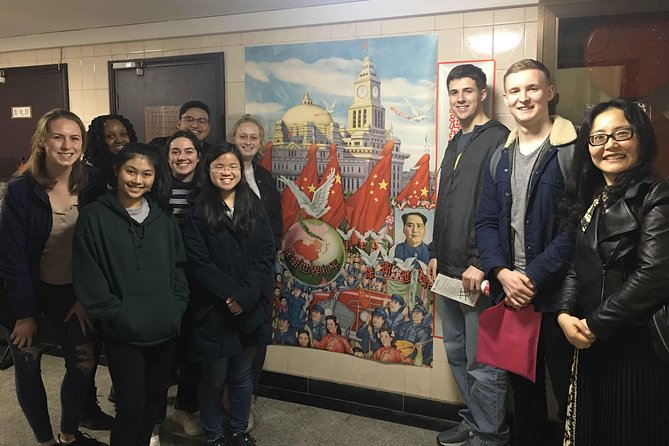
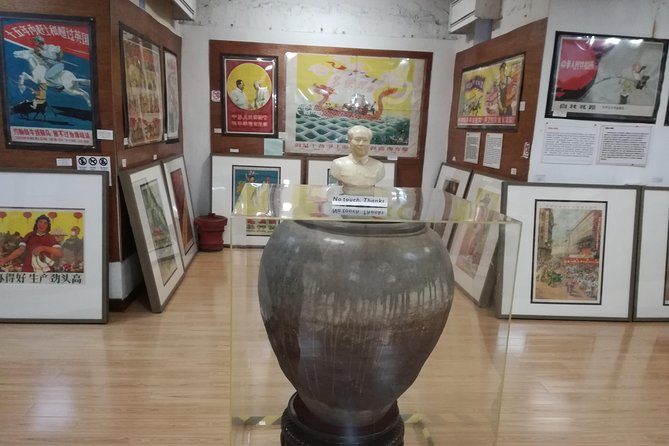
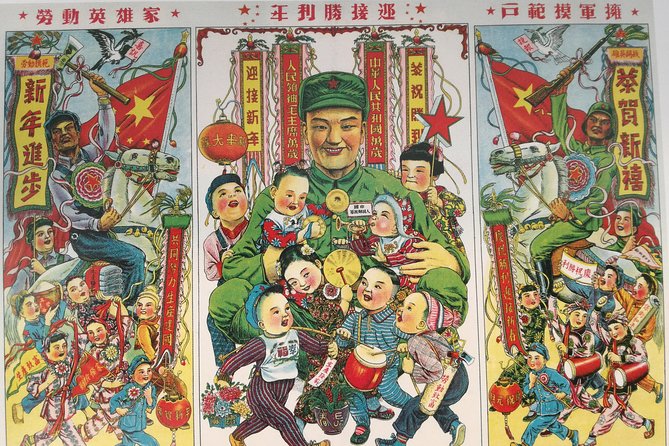
This is the stop that many people will remember for a long time, because posters hit differently than textbooks. The Shanghai Propaganda Poster Art Centre focuses on materials from the Cultural Revolution, and that’s exactly the kind of subject that visuals make instantly understandable.
Here’s what makes it compelling: propaganda is designed to persuade fast. When you see those images in an organized museum setting, the messages feel less abstract. You can also notice patterns—what gets emphasized, how people are shown, what themes are repeated. Even if you don’t read every label closely, the guide’s commentary helps you translate what you’re looking at into historical meaning.
Another reason this stop adds value is pacing. Before the museum, you’re walking through an active part of Shanghai. Then you step into a more controlled environment where you can slow down and let the historical material do its job. If you’re the type who learns best with concrete examples, this center is a strong match.
A balanced note: Cultural Revolution propaganda can be emotionally intense or politically loaded. This tour keeps it structured and explanatory, but it’s still material from a period that many people understand as deeply disruptive. If you’re sensitive to that topic, consider whether you want this level of direct exposure in one half-day.



XinTianDi BeiLi Finish: Letting the Neighborhood Tie It Together
The final stop is listed as XinTianDi BeiLi, and it keeps you within the same general Xintiandi zone. That’s not just convenient. It’s a deliberate way to tie the tour thread together: you start in the stylish district, you go out to the museum, and you return to the neighborhood where the city’s present-day look keeps reminding you of what the story is “about.”
At this point in the tour, the guide’s role shifts slightly from “first exposure” to “wrap-up and connection.” You’re more likely to understand why the locations were chosen. Even the sequence matters: start with origins, move to Cultural Revolution messaging, then come back to the same city pocket so the contrast is fresh in your mind.
If you’re planning photos, this part is good for getting some final shots in daylight and for capturing street scenes that you can later connect to what you learned earlier. But again, expect walking and timekeeping. This is a guided route, not a casual self-guided stroll.
Price and Value: Is $85 Fair for Three Hours?
At $85 per person for about 3 hours, this isn’t a budget excursion, but it can be good value for the type of learning you get. Here’s why:
- You’re paying for a professional historian guide, not just transportation.
- The tour includes hotel pickup from a centrally located meeting point.
- You visit multiple specific sites tied to the CCP story, plus a museum focused on propaganda from a defined historical period.
It also helps that the tour uses a mobile ticket, which reduces day-of friction. That doesn’t sound exciting, but on busy Shanghai days, it’s the difference between starting calm and starting stressed.
One caution on “admission” details: the stop information indicates free admission ticket for the listed sites, but the general tour notes say admission tickets are not included. That can happen when the broader package rules don’t match specific stop entries. My advice: confirm in your confirmation message whether you’ll need anything extra at the museum and whether any special exhibit charges apply.
Also note what’s not included: food and drinks are not part of the price. Transportation to/from attractions is described separately as not included, though the tour does use subway or taxi between stops and includes hotel pickup. Practically, you should budget for a snack and be ready for at least some use of local transit depending on how your group’s transfers are handled.
Logistics That Matter: Pickup, Walking Pace, and Getting Ready
This tour is built to be low-friction for a first-time visitor in Shanghai. You’ll have hotel pickup, the meeting point is centrally located, and the tour is near public transportation. If you’re staying downtown, this should feel easy.
A private tour is offered, which can change the day a lot. Only your group participates, so you’re more likely to get questions answered and explanations tailored to your pace. If your group includes kids, they must be accompanied by an adult, which is worth noting if you’re traveling with a family.
For preparation:
- Bring comfortable walking shoes. You’ll be on foot and moving between stops.
- Plan your timing so you don’t arrive hungry. Food isn’t included.
- Have some water even if you’re not planning to buy it mid-tour. The data doesn’t promise drinks, so you’ll want flexibility.
- Expect to use subway or taxi for at least one segment, so keep a little extra time and patience in your day.
Who This Tour Is Best For
You’ll get the most out of this experience if you:
- Want a guided, timeline-style introduction to CCP history through real Shanghai locations.
- Enjoy learning from visuals, especially museum-style examples like propaganda posters.
- Like structured tours with a historian, where the guide actively explains what you’re seeing.
- Prefer a half-day format that doesn’t swallow your entire day.
You might not love it if you:
- Want a more argumentative or heavily critical take on the Party’s story rather than one guided narrative.
- Dislike politically sensitive museum material.
- Want lots of independent time to roam. This is designed around guided stops.
It’s a strong choice for first-timers who want to understand why modern China looks the way it does, and why the Party’s messaging has shaped everyday life.
Should You Book the Red Route Tour on the Chinese Communist Party?
Book it if you want a focused, organized way to understand CCP history using Shanghai’s physical places—especially if you’re curious about Cultural Revolution propaganda and how posters were used to teach political ideas.
I’d skip it (or at least temper expectations) if you’re hoping for a balanced debate across multiple perspectives, or if you’re not comfortable with politically charged historical material. Also, because it’s only about three hours, don’t expect it to answer every question you’ll have about 20th-century China. Instead, treat it like the first chapter that sets you up to explore more on your own afterward.
If you do book, bring shoes, bring curiosity, and ask your guide what connections you should remember when you’re done. The best part of this tour is that it turns a list of sites into a story you can carry with you through Shanghai.
FAQ
How long is the Red Route Tour on the Chinese Communist Party?
It lasts about 3 hours.
How much does the tour cost?
The price is $85.00 per person.
Is hotel pickup included?
Yes. Pickup from your centrally located Shanghai hotel is included.
Is this tour private?
Yes. Only your group will participate.
What are the main stops on the route?
You’ll start in the Xintiandi area, visit the Birthplace of the Chinese Communist Party, see the Shanghai Propaganda Poster Art Centre, and finish at XinTianDi BeiLi.
Are there admission tickets to pay?
The stop details list admission as free, but the broader tour info also notes that admission ticket information isn’t included. Check your booking confirmation to be sure about any museum-specific costs.
What should I bring or prepare?
Wear comfortable walking shoes. Food and drinks are not included, so plan for snacks or a meal before or after.
Does the tour include transportation?
Your tour starts with hotel pickup, and the route uses subway or taxi between parts of the itinerary. The tour info also notes transportation to/from attractions is not included, so keep that in mind for your schedule.
What is the cancellation policy?
You can cancel for a full refund if you cancel up to 24 hours in advance of the experience start time.
When will I receive confirmation?
You’ll receive confirmation at the time of booking, unless you book within 5 days of travel, in which case confirmation is received within 48 hours subject to availability.