REVIEW · SHANGHAI
Shanghai Propaganda and History Walking Tour
Book on Viator →Operated by Amazing Shanghai Trip · Bookable on Viator
Posters tell the truth in loud ink. This 3-hour tour pairs the Shanghai Propaganda Poster Art Centre with the former residence of Soong Ching-ling, then adds a classic stroll through the French Concession streets. You’re not just looking at images—you get the stories behind them, and a sense of what everyday life felt like in early communist-era China.
I love how the Shanghai Propaganda Poster Art Centre brings you face-to-face with original propaganda posters (over 6,000 pieces spanning the 1940s to the 1990s). I also love that the second stop isn’t just museum time—Soong Ching-ling’s memorial residence connects the political story to a real person and her place in Chinese history.
One possible drawback: this is a tour about politics and propaganda, so if you want mostly light entertainment, you might find the tone a bit heavy. Also, it’s still a walking experience—plan on wearing comfortable shoes.
In This Review
- Key points worth knowing before you go
- Why this tour feels different from standard Shanghai sightseeing
- Starting at Jiangsu Road: getting oriented before the first museum
- Stop 1: Shanghai Propaganda Poster Art Centre and the power of original material
- Stop 2: Soong Ching-ling’s former residence—history through a person
- The wonton soup break: a practical reset during serious content
- Walking Wukang Road: European-style Shanghai you can actually measure
- Price and value: what $73.60 gets you (and what to watch for)
- Pace, logistics, and group size (small details that matter)
- Who should book this tour, and who may want a different plan
- Practical tips to make the most of it
- Should you book this tour?
- FAQ
- How long is the Shanghai Propaganda and History Walking Tour?
- What’s included in the price?
- Where do I meet the guide?
- Does it include a walking portion?
- Where does the tour end?
- Is hotel pickup included?
Key points worth knowing before you go
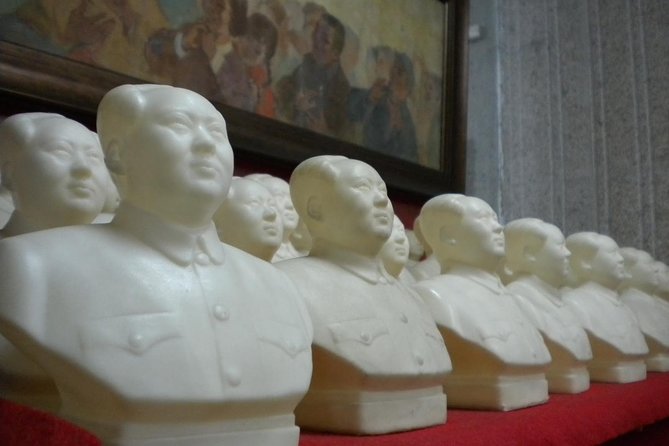
- Over 6,000 original posters, 1940s to 1990s: you’ll see how messaging changed across decades.
- A real guided explanation (in English): the guide connects posters to movements and everyday life.
- Soong Ching-ling’s former residence: history through a personal lens, linked to Dr. Sun Yat-sen.
- Free snacks plus wonton soup: breaks up the museum-and-walk format.
- Small group size (up to 15): easier questions and a more human pace.
Why this tour feels different from standard Shanghai sightseeing
Shanghai has plenty of headline sights. This tour goes the other direction on purpose: it focuses on political communication and the way it shaped public life. You start with propaganda posters that were designed to be seen, remembered, and acted on. Then you shift to a memorial home that offers context for the Republic era and the early communist period.
If you’re the type of traveler who likes understanding what shaped modern China—social pressure, political campaigns, and public messaging—this format makes sense. And the walking portion matters. It ties the museum-style content to the streets where Shanghai still carries layers of foreign influence, especially in the classic French Concession area.
The tone is serious, but it’s also practical. It’s not a lecture where you’re stuck standing in one place. You move between sites, and you get a food stop that helps you stay comfortable while the subject matter stays intense.
You can also read our reviews of more tours and experiences in Shanghai.
Starting at Jiangsu Road: getting oriented before the first museum
The tour begins at Jiangsu Road Metro Station (Changning District), with the start time listed as 1:00 pm. That’s a useful detail for planning: you’re not making a long cross-town trip just to meet the group.
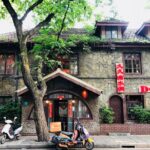
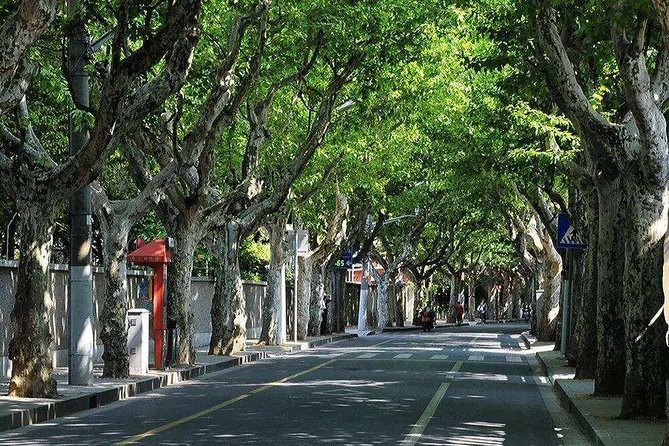
From there, you head into the former French Concession area on foot to reach the Shanghai Propaganda Poster Art Centre. This matters because the French Concession streets give you a visual contrast right away. Even before you enter the museum, you’re seeing Shanghai’s mixed identity—European-era street design alongside later political history.
Your group size stays limited (maximum 15), which helps on a walking tour like this. You’re more likely to keep up, ask questions, and not feel like you’re stuck behind a single-file line.
Stop 1: Shanghai Propaganda Poster Art Centre and the power of original material
The first stop is the Shanghai Propaganda Poster Art Centre, a private museum in the French Concession area. It holds over 6,000 original propaganda posters collected from the 1940s to the 1990s. That range is a big deal. You’re not just seeing one theme or one era—you’re seeing how political messaging evolved as China went through major changes.
The museum experience also has a backstory. The collection was founded by Yang Pei Ming, who started collecting the posters as a hobby in 1995. When you hear that, it changes how you interpret the room. It’s not just government-made art on display—it’s also an individual who kept gathering and preserving what could easily have been lost.
What you’ll see during the visit:
- Posters linked to Chairman Mao’s time
- Visuals tied to political movements during the New China era
- A sense of how campaigns used art, slogans, and symbols to shape public behavior
The biggest value here isn’t the number of posters. It’s the way the guide helps you connect what you’re seeing to what people lived through. A strong example from the tour’s feedback: one guide named Alana was praised for explaining both the history and the meaning behind the posters in a clear, step-by-step way. That’s the kind of guidance that turns a wall of images into a story you can follow.
One thing to keep in mind: propaganda can feel repetitive if you don’t have context. The guide’s job is to keep it understandable—what the posters were trying to achieve, and how they reflected the official priorities of the time.
Stop 2: Soong Ching-ling’s former residence—history through a person
After the poster museum, you go to the Soong Ching-ling Memorial Residence, a former home nearby. This stop shifts from mass messaging to personal legacy, and that contrast is a smart move.
Soong Ching-ling is described as the wife of Dr. Sun Yat-sen. Inside, you’ll see life achievements and historical context connected to both the Republic era and the early communist period. In other words, you’re not only reading about politics—you’re learning how major figures intersected with the broader changes happening around them.
What I like about this pairing is that it helps you avoid a common trap: treating history like a straight line of dates. Here, you can see how political eras influenced people, and how influential individuals were positioned as symbols of national direction.
If you’re traveling with someone who gets uneasy about purely ideological topics, this second stop can help. A memorial residence gives you physical space—rooms, objects, and personal achievements—that makes the era feel more grounded.
Also, the tour description points out that this combination helps you picture Chinese people’s hardships in old times and their desire for a better life. Even if you don’t agree with every message you see in the posters, you can still understand the human need behind the public narrative.
The wonton soup break: a practical reset during serious content
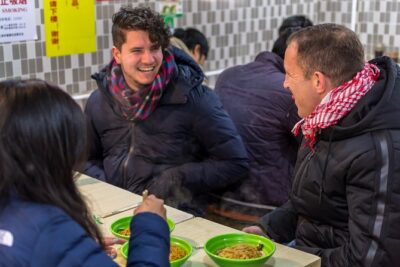
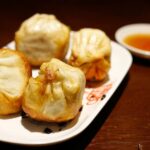
Right after the two main sites, you’ll be guided to a local shop for a bowl of wonton soup. It’s also listed as included, along with free snacks during the tour.
This is more than just “food included.” When you’re taking in heavy material—propaganda, political movements, and historical hardship—a short break keeps you from burning out. It also gives you a taste of everyday local life instead of staying locked in cultural institutions for the whole time.
Even if you think you already know what wonton soup is, don’t assume it will be identical to what you’ve had elsewhere. The point of this stop is that you’ll eat with a local routine and not just with a tour-catered menu.
Walking Wukang Road: European-style Shanghai you can actually measure
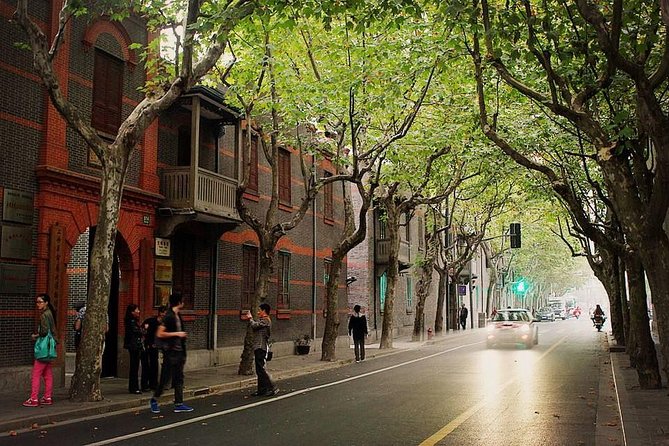
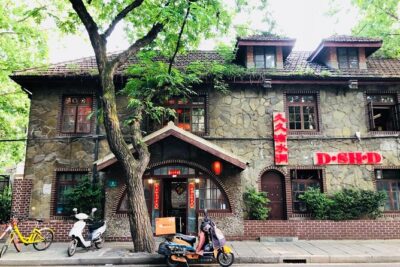
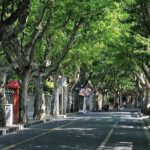
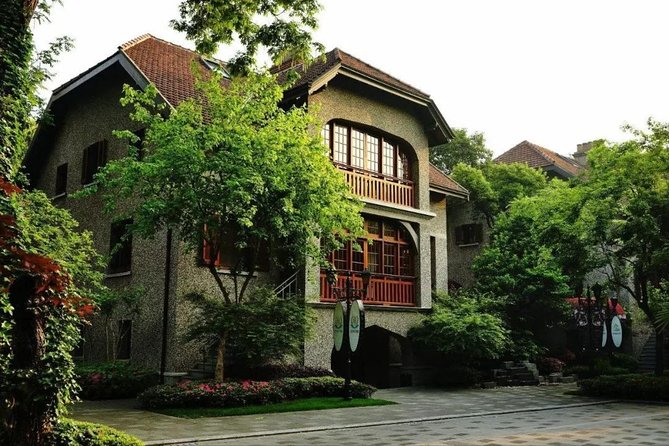
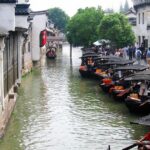
After the food stop, you’ll walk along Wukang Road for about a mile—listed as roughly 1.2 kilometers. The tour frames it as one of the best-preserved European-style streets in Shanghai, with historical buildings along both sides.
This stretch is worth paying attention to because it changes the mood again. You go from message-heavy museums into architecture you can see with your own eyes. And since you’ve just learned about political eras, the foreign-concession streets can feel like a visual reminder that Shanghai’s modern story has always been layered.
Practical note: it’s not a long hike, but it is still walking. Plan for uneven city sidewalks and bring your patience for street-level Shanghai rhythms. Comfortable shoes aren’t optional here.
Price and value: what $73.60 gets you (and what to watch for)
At $73.60 per person, this tour is priced as a guided, multi-stop experience rather than a single-site museum ticket. The value comes from several built-in items:
- Entrance fees included for the two main attractions
- English tour guide
- Wonton soup plus free snacks
- A structured route that mixes museum time with a street walk
- A mobile ticket for smoother day-of access
What you’re really paying for is interpretation. You could technically visit the locations on your own, but the core promise here is that you’ll hear the stories behind the propaganda and see how it connects to daily life and historical shifts. That context can turn a difficult subject into something you can actually follow.
One consideration: it’s about politics and messaging. If that’s not your main interest, you may feel like you’re paying for a specific angle rather than broad sightseeing variety.
Pace, logistics, and group size (small details that matter)
The tour runs for about 3 hours. That length is ideal for a first taste of a focused theme—enough time to cover two meaningful stops plus a street walk, without turning the day into a full half-day ordeal.
Group size is kept to a maximum of 15 travelers. For walking tours, that’s a comfort factor. It’s easier to manage questions, and it’s less likely you’ll feel separated from the guide’s explanations.
Hotel pickup and drop-off are listed as not included, so treat this as a meet-at-a-central-point tour. Your start point is Jiangsu Road Subdistrict / Jiangsu Road Metro Station, and the tour ends at Shanghai Songqingling Former Residence (North Gate), 1843 Huai Hai Zhong Lu.
One more practical tip: service animals are allowed, and the tour is near public transportation. If you’re building the rest of your day, you can usually connect to transit easily after the tour ends near the memorial residence.
Who should book this tour, and who may want a different plan
This is a good match if you:
- Want the sharper, more complicated side of modern Chinese history
- Like understanding how propaganda influenced public life
- Enjoy city walks and want to see the French Concession atmosphere up close
- Appreciate guided context, especially for subjects that can be hard to interpret alone
It may be less of a fit if you:
- Prefer purely scenic tours or light cultural stops
- Don’t want to spend time around political content and images tied to ideological campaigns
- Are expecting a relaxed walking tour focused mainly on architecture
Kids can participate, but children must be accompanied by an adult. The tour also notes most travelers can participate, as long as you can handle walking comfortably for the route.
Practical tips to make the most of it
- Wear comfortable shoes. You’ll be walking between stops and along Wukang Road.
- Bring curiosity, not just opinions. The guide’s job is to connect images to context, and the posters can make more sense when you give yourself time to process them.
- Use your snack break wisely. The included wonton soup and free snacks help you stay focused during museum time.
- If you’re sensitive to emotionally heavy content, mentally prepare for that tone. This tour isn’t shy about the realities of political life.
Should you book this tour?
Yes—if your idea of a great Shanghai day includes understanding how political communication shaped daily life. The combination of original propaganda posters, a memorial residence tied to Soong Ching-ling, and a real walk along Wukang Road creates a story you can follow from message to people to place.
I’d skip it only if you want low-stress sightseeing with minimal political material. Otherwise, this is a strong value for the money because entrance fees, guide interpretation, and food are handled inside the tour, not as separate add-ons you have to plan.
If you can handle a serious topic with an English guide at a small-group pace, book it and plan the rest of your afternoon around easy transit from the end point.
FAQ
How long is the Shanghai Propaganda and History Walking Tour?
It runs for about 3 hours.
What’s included in the price?
The tour includes an English tour guide, entrance fees to the attractions, and Chinese wonton soup. It also includes free snacks, and you’ll have a mobile ticket.
Where do I meet the guide?
You meet at Jiangsu Road Metro Station. The start time is listed as 1:00 pm.
Does it include a walking portion?
Yes. After the stops, you’ll walk along Wukang Road for about 1.2 kilometers (around a mile).
Where does the tour end?
It ends at the Shanghai Songqingling Former Residence (North Gate), 1843 Huai Hai Zhong Lu.
Is hotel pickup included?
No. Hotel pickup and drop-off are not included.