REVIEW · LHASA
8 Days Lhasa Gyantse Shigatse Mt Everest Group Tour
Book on Viator →Operated by Great Tibet Tour · Bookable on Viator
You’ll move fast, and still feel taken care of. This 8-day Lhasa–Gyantse–Shigatse–Everest group route strings together the places first-timers usually chase, with guided visits, tickets, and transfers handled. I especially like the tight trio in Lhasa: Drepung Monastery, the Tibet Museum, and Norbulingka, plus the full-on day built around Potala Palace and Jokhang Temple.
The main thing to think about is altitude and long driving days. You’ll cross high passes on the way to the Everest region, and even with oxygen support, you’ll still want to pace yourself and dress warm.
If you like a clear plan (not hours of map pinning and logistics wrangling), this one fits. The group stays small (up to 12), and the schedule is built to keep you seeing a lot without feeling like you’re sprinting nonstop.
In This Review
- Key things I’d watch before you book
- A Smart 8-Day Circuit That Gets You From Lhasa to Everest
- What $1,100 Really Buys: Permits, Transport, Tickets, and Oxygen
- Altitude and Comfort: How the Schedule Tries to Keep You Okay
- Day 1 in Lhasa: Arrival Transfer and Settling In
- Day 2 in Lhasa: Drepung Monastery, Tibet Museum, and Norbulingka
- Drepung Monastery (Zhebang Si)
- Tibet Museum
- Norbulingka (Precious Stone Garden)
- Day 3 in Lhasa: Potala Palace, Jokhang Temple, and Barkhor Street
- Potala Palace
- Jokhang Temple
- Barkhor Street walk
- Day 4 From Lhasa Toward Gyantse: Yamdrok Yumtso and Karola Glacier
- Kampala Pass and Yamdrok Yumtso Lake
- Karo La Glacier
- Pelkor Chode Monastery in Gyantse
- Day 5 Qomolangma National Nature Preserve: The Long Day to the Everest Area
- Day 6 Everest Peak Lodge Sunrise: Weather Runs the Show
- Day 7 Back in Shigatse: Tashilunpo Monastery and the Panchen Lama Seat
- Day 8: Departure Assistance From Lhasa
- So Who Should Book This Tour?
- Should You Book This 8-Day Lhasa–Everest Group Tour?
- FAQ
- What time does the tour start?
- What’s included in the tour price?
- Are lunch and dinner included?
- Does the price include the Tibet Tourism Bureau Permit?
- Is there free airport or railway transfer?
- How many people are in the group?
- Is oxygen included for the trip?
- Can I cancel and get a refund?
Key things I’d watch before you book
- Small group size (up to 12 people): easier timing, quicker questions, and a calmer feel than big buses.
- Permits and core tickets included: you’re not scrambling for paperwork or entry fees once you land.
- Drepung + Norbulingka + Potala + Jokhang in Lhasa: real religious anchors, not random photo stops.
- Yamdrok Yumtso and Karola Glacier stop on Day 4: big scenery with short, manageable viewing blocks.
- Everest Peak Lodge sunrise option: you’ll try for early light, but weather controls outcomes.
- Oxygen tank for emergency use: not a magic shield, but it’s meaningful on a Tibet itinerary.
A Smart 8-Day Circuit That Gets You From Lhasa to Everest
This tour is built for people who want a “do it all” Tibet introduction without the stress of arranging transport, hotel changes, and site permissions. The route covers four major bases: Lhasa, Gyantse, Shigatse, and the Everest region—and it does it in 8 days.
What that means for you: less time planning, fewer moving parts, and more time inside the monasteries, markets, and viewpoint areas that give Tibet its pace and character.
And yes, it’s still an active trip. You’ll do early starts, walk in temple areas, and spend long chunks in the car on the highway days. If you’re comfortable with that rhythm, you’ll probably love how much ground you cover.
You can also read our reviews of more tours and experiences in Lhasa.
What $1,100 Really Buys: Permits, Transport, Tickets, and Oxygen
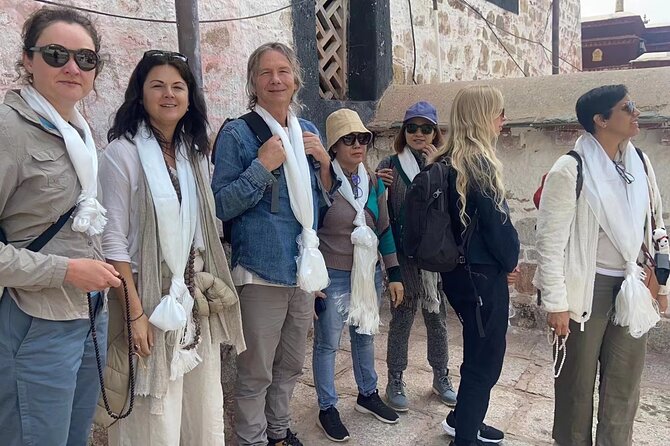
At $1,100 per person (8 days approx.), the value is mostly in the “big infrastructure” parts:
- Lodging for 6 nights in 3★/4★ twin en suite rooms
- 1 night with dorm bed at a guesthouse or nomad tent (based on what’s available for the season)
- A travel-licensed vehicle based on group size and season
- An experienced local English-speaking guide
- Tibet Tourism Bureau Permit (TTB) handled by the agency
- Entry tickets included for the listed sights across the itinerary
- 6 breakfasts, plus a welcome meal
- Oxygen tank for emergency use
- Two bottles of mineral water per person per day
What’s not included is just as important for budgeting:
- Lunch and dinner
- Your China visa, and your flight/train to reach Tibet
- Gratuities to guide and driver
- Any optional sights
- Airport transfer timing outside the free pickup window ($60 per vehicle/time if needed)
My practical take: if you were trying to price this on your own, the permit work, driver/vehicle time, and the number of included sites are what usually make self-planning expensive and annoying. This package is basically buying you a smooth machine.
Altitude and Comfort: How the Schedule Tries to Keep You Okay
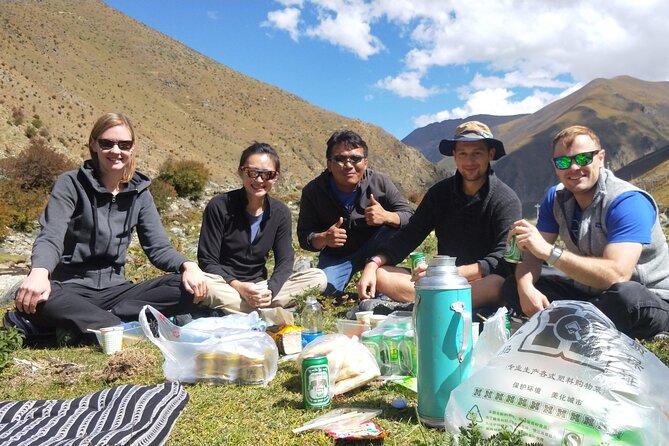
Tibet has two realities: altitude and weather. This itinerary tries to respect the altitude challenge by keeping you moving, but not always sprinting—plus it includes oxygen tank support for emergencies.
Also, the route includes multiple high points:
- Kampala Pass at about 4,790m
- Mountain driving toward Tingri/Everest area
- A sunrise attempt at Everest Peak Lodge (weather dependent)
From what’s been said by past guests, the altitude pace can make or break comfort. One person noted that the group took acclimatization seriously—so don’t treat this like an ordinary sightseeing weekend. Slow breathing, hydrated body, and warm layers matter.
A helpful detail: some accommodations on this kind of circuit can include in-room oxygen. For example, a past guest specifically described the Thangka Hotel (right by Barkhor Street) as having in-room oxygen. Don’t assume it’s the standard for every departure, but it’s a smart sign to look for if you have altitude sensitivity.
Day 1 in Lhasa: Arrival Transfer and Settling In
Day 1 is intentionally simple: pickup and transfer to your hotel.
That’s not filler. In Tibet, your first day is about getting your bearings and letting your body start adjusting. You’ll likely be grateful the plan doesn’t immediately throw you into a marathon of sites.
Because free airport/rail transfers are time-slot based, make sure your arrival fits the included window. Free airport pickup is offered at 9:30am, 1:00pm, and 4:00pm on the first day.
Day 2 in Lhasa: Drepung Monastery, Tibet Museum, and Norbulingka
Day 2 is one of the best “orientation” days because it mixes spiritual scale, everyday culture, and a royal-style escape.
Drepung Monastery (Zhebang Si)
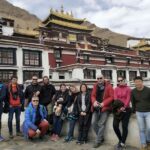
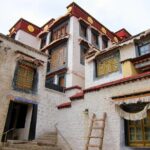
You’ll visit Drepung Monastery, described as the world’s largest monastery, and tied to the Dalai Lama’s long presence there (over 10,000 years in the tour notes). The point isn’t only the size—it’s the feeling of religious gravity. You’ll see why Lhasa isn’t just a city; it’s a living center of practice.
Practical note: temple interiors can be cool and dim, even on sunny days. Bring layers that work for standing and slow walking.
Tibet Museum
Next is the Tibet Museum, where you focus on life scenes, clothing, house architecture, and festival customs. This is a good “bridge” between monument sightseeing and understanding what you’re looking at.
If you’re the kind of person who likes to know what you’re seeing instead of just photographing it, this stop is a big win.
Norbulingka (Precious Stone Garden)
Then you shift into the Dalai Lama’s summer-resort world at Norbulingka. It helps break up the day. You’re still in Tibetan sacred territory, but it feels less like a “serious hall” and more like a royal garden setting.
All three stops have admission tickets included and time allocated for a real visit, not a drive-by.
Day 3 in Lhasa: Potala Palace, Jokhang Temple, and Barkhor Street
This is the “you’re in Lhasa now” day.
Potala Palace
Morning visit to Potala Palace, the main landmark of Tibet and a masterpiece of Tibetan architecture. The tour notes mention its beginnings with King Songtsen Gampo. Either way, Potala isn’t subtle. It’s the kind of place that makes you stand a little straighter.
The visit runs about 2 hours with admission included, so you’ll have time to see the major areas your guide points out.
Jokhang Temple
In the afternoon you’ll go to Jokhang Temple, one of the most sacred sites in Tibet. The tour description flags that it’s always active with local pilgrims, which is exactly what you want: a living religious center, not a staged museum.
Barkhor Street walk
Then you do a walk around Barkhor Street, the devotional circuit tied to Jokhang, plus a central market vibe. It’s a good place to slow down and notice how pilgrims move, how people pray, and how the city fills around the sacred core.
This trio is packed into one day, so wear comfortable shoes. You’re not doing huge distances, but you are doing lots of steps in uneven temple areas.
Day 4 From Lhasa Toward Gyantse: Yamdrok Yumtso and Karola Glacier
Day 4 is mostly a drive-with-rewards day, which is great if you want scenery without feeling like you’re missing the spiritual stuff.
Kampala Pass and Yamdrok Yumtso Lake
On the way from Lhasa to Shigatse, you pass Kampala Pass (around 4,790m) and stop at Yamdrok Yumtso Lake, one of Tibet’s three holy lakes. Expect wide views and that intense high-altitude color you only get at altitude lakes.
Time is short but focused (about 1 hour), so this works best if you keep your camera ready and your expectations flexible on wind and cold.
Karo La Glacier
Then you stop for roadside viewing of the Karola Glacier. The tour notes say it’s about 300m from the main highway. That’s a nice detail because it means you’re not committing to a long trek just to get glacier photos.
Pelkor Chode Monastery in Gyantse
Finally, you visit the main Gyantse monastery: Pelkor Chode Monastery. This is the classic Gyantse contrast to Lhasa—smaller scale, strong local flavor, and a very “I’m here” feeling.
Admission is included, and the itinerary gives time for a walk-through rather than rushing.
Day 5 Qomolangma National Nature Preserve: The Long Day to the Everest Area
This is the day you’ll remember most for driving hours and changing air.
You depart Shigatse to Lhatse (about 150 km). The plan includes a break for lunch at a local restaurant, then you continue on to Tingri, passing Tsola Pass. After that, you spend time at the Qomolangma National Nature Preserve for a long stretch (10 hours listed).
Here’s what matters for your enjoyment:
- Bring warm layers. Even when the sun hits, temperatures can drop fast.
- Expect that you might spend more time in the vehicle than you’d prefer if you’re used to city travel.
- You’ll likely feel the altitude shift more on this kind of day than on Lhasa temple afternoons.
Also, because the tour includes 1 night with a dorm bed at a guesthouse or nomad tent, this is the kind of itinerary day where that accommodation might land. The tour doesn’t label which night it is, so just be prepared for a simpler overnight at some point during the Everest approach.
Day 6 Everest Peak Lodge Sunrise: Weather Runs the Show
If you sign up for this tour, you’re essentially signing up for an early wake-up in hopes of clear skies.
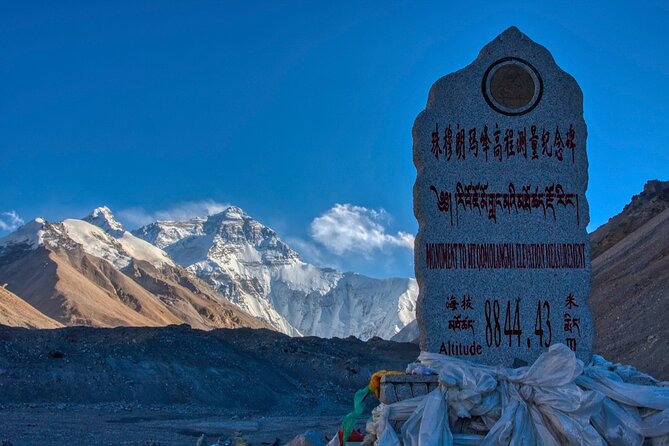
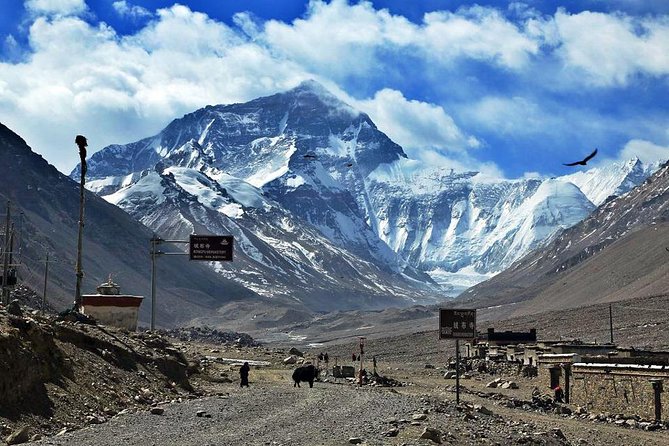
The plan is sunrise if weather is good at Everest Peak Lodge, with about 4 hours allocated for the experience. That “if weather is good” part isn’t a throwaway line. In the Everest region, clouds and wind can change everything fast.
Still, this is one of the most memorable moments of the entire trip. Even if the sky doesn’t cooperate fully, the day’s viewpoint approach often gives you that big-Everest sense of scale that’s hard to recreate later.
Tip: plan to be bundled. You’ll stand or move slowly, and cold is easier to manage with layers than with one heavy jacket.
Day 7 Back in Shigatse: Tashilunpo Monastery and the Panchen Lama Seat
Day 7 returns you to culture with Tashilunpo Monastery in Shigatse, the home of the Panchen Lama.
The tour notes say it was founded by the 1st Dalai Lama in 1447, which gives the site serious weight. This is a strong counterbalance after Everest-region days: you’re back in a place where Tibetan Buddhist learning and devotion are the center of the experience.
You get about 2 hours here with admission included, and that timing helps. Monasteries aren’t just something you rush through.
Day 8: Departure Assistance From Lhasa
On the final day, your guide and driver escort you to the airport or railway station.
Free drop-off to Lhasa Gonggar Airport is offered at 8:30am, 12:30pm, and 2:30pm on the last day, depending on timing. If your plans don’t match, you may need a private transfer that’s not included.
One detail to keep in mind: the tour notes say that on the first and last days, there may not always be guide presence because the group is being picked up/dropped off together. A driver may handle part of it. In practice, it still means you’re not left alone—just don’t expect a full guide-style commentary in every car moment.
So Who Should Book This Tour?
This itinerary fits best if:
- You’re a first-time visitor and want a strong sampler of Lhasa spiritual sites plus the Gyantse/Shigatse anchors
- You want Everest-region scenery without doing independent logistics
- You like structure: pick-ups, included tickets, a licensed vehicle, and a small group
You might rethink if:
- You’re sensitive to altitude and don’t have the flexibility to take days slowly
- You hate long driving segments (Day 5 especially)
- You want more free time than the itinerary allows (this is a scheduled tour with defined stops)
It’s also a solid option if you like having an experienced local guide. People have praised guides by name for being responsive and attentive, especially around altitude pacing.
Should You Book This 8-Day Lhasa–Everest Group Tour?
If your goal is a first Tibet trip with maximum major-sight coverage and minimal headache, I’d say yes. The price makes sense for what’s included: permits, core admissions, a licensed vehicle, guide time, major Lhasa temples, plus an Everest-area sunrise attempt.
My biggest advice is simple: don’t treat this as purely sightseeing. Treat it as a plan that includes altitude and cold as real trip elements. Dress for it, hydrate, and keep your expectations grounded for weather on sunrise day.
If you can handle that, this route is one of the more efficient ways to see Tibet’s core spiritual heart and a shot at Everest views in one organized package.
FAQ
What time does the tour start?
Start time is listed as 9:00am.
What’s included in the tour price?
Lodging (6 nights twin en suite in 3★/4★ plus 1 night dorm bed at a guesthouse or nomad tent), a licensed vehicle, an experienced local English-speaking guide, the Tibet Tourism Bureau Permit, most listed admission tickets, breakfast (6), a welcome meal, oxygen tank for emergency use, and two bottles of mineral water per person per day.
Are lunch and dinner included?
No. Lunch and dinner are not included.
Does the price include the Tibet Tourism Bureau Permit?
Yes. The tour includes the TTB permit and also the express delivery fee for the permit.
Is there free airport or railway transfer?
Yes, you get free Lhasa railway station transfer on the first and last day. Free airport pickup on Day 1 is offered at 9:30am, 1:00pm, and 4:00pm. Free airport drop-off on Day 8 is offered at 8:30am, 12:30pm, and 2:30pm.
How many people are in the group?
Maximum group size is 12 travelers.
Is oxygen included for the trip?
The tour includes an oxygen tank for emergency use.
Can I cancel and get a refund?
No. This experience is non-refundable and cannot be changed for any reason.