REVIEW · SHANGHAI
Shanghai: Yuyuan, City God Temple Old City Tour-Tip Based
Book on GetYourGuide →Operated by MeMolaFreeWalkingTour · Bookable on GetYourGuide
Small streets, big spiritual stories. This is a tight, friendly Old City tour built around City God Temple and the Yuyuan area, where everyday life, folk religion, and traditional medicine all get explained in plain English. I especially like the way the guide connects the sights to what people actually believed and did there, not just what the buildings look like. I also love the hands-on moment with traditional Chinese medicinal herbs, including a tasting related to the king of herbs. One consideration: it’s a walking tour on old-city paths, so it’s not a good match if you have mobility limits.
You’ll be in a small group (up to 10), and that matters here. Fewer people means you can ask questions without feeling rushed, and the guide can tailor tips so you know what to look for next in Shanghai. Just be ready for a focused 2 hours, not a slow wander—if you want long free time at each stop, this may feel a little brisk.
In This Review
- Key highlights to look for
- How this 2-hour Yuyuan and City God Temple tour really feels
- Getting to the start fast: Yuyuan Garden metro and the red umbrella
- Yuyuan Old Street: more than souvenirs on a short walk
- Tonghan Chuntang: tasting the story behind traditional medicine
- City God Temple of Shanghai: Taoism, folk religion, and why wishes matter
- The 9 Zig-Zag Bridge and Mid-Lake Pavilion: scenic pauses with meaning
- Lake Pavilion Tea House: a cultural reset during the walk
- Yuyuan Garden Smallware: local craftsmanship and smart browsing
- Ancient City Park finish: calm end to a dense old-city loop
- Small group, English guide, and the value of questions
- Who should book this Yuyuan and City God Temple tour?
- Price and logistics: what $2.36 buys you in real life
- Should you book this Yuyuan and City God Temple Old City tour?
- FAQ
- How long is the tour?
- Is the tour guided in English?
- How big is the group?
- Where do I meet the guide?
- How do I get to the meeting point by metro?
- What’s included in the tour?
- Can I cancel for a full refund?
- Is smoking allowed?
Key highlights to look for
- Yuyuan Old Street stroll with guided context, not just shopping
- Chinese 12 zodiac figures in costume, tied to local tradition
- City God Temple explanations of Taoism and folk religion celebrations
- 9 Zig-Zag Bridge and Mid-Lake Pavilion views that look great even on a short schedule
- Traditional medicine shop stop with a sampling tied to the king of herbs
- Small product market browsing with practical advice on what’s worth your time
How this 2-hour Yuyuan and City God Temple tour really feels
This tour is designed for people who want meaning, not just landmarks. You spend your short time in Shanghai’s old fabric—gardens, temple culture, street life, and the kinds of beliefs people still talk about—so you leave with a clearer sense of why the area looks the way it does.
The structure is also smart: you get a quick run through the best-known spots, then you get a cultural layer that makes them stick. That’s where the small-group format pays off. With a maximum of 10, the guide can actually answer questions, and the group stays social. In guides named Jie’s case, English is described as strong and the tone as warm and question-friendly, which is exactly what you want in an old-city setting where you’ll spot lots of details.
The price is low for what you’re getting—$2.36 per person. Even if you’re not chasing value for its own sake, the math is hard to ignore: a 2-hour live guide in English plus multiple stops and photo moments is a lot of guided time for the cost.
You can also read our reviews of more tours and experiences in Shanghai.


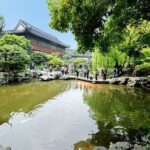
Getting to the start fast: Yuyuan Garden metro and the red umbrella
You’ll start around Yuyuan Garden metro. The tour materials give two nearby meeting references: 豫园站 3号口 (starting location) and Yuyuan Garden station Exit 1 (豫园站1号口) (meeting point). Because both are close, the safest move is to confirm the exact exit in your booking message before you go.
Here’s what to use on the day:
- By metro, you’re aiming for Line 10/14 and 豫园站 Exit 1
- By taxi, ask for Yuyuan Garden station Exit 1
- Look for the tour signal: Find Red Umbrella! If you arrive early, you’ll get your bearings faster and avoid that last-minute scramble
Wear comfortable shoes. Even with only a couple of hours, old-city terrain can include uneven stone and tight corners near temples and garden edges.
Yuyuan Old Street: more than souvenirs on a short walk
The first stop is Yuyuan Old Street, and the key is the guiding angle. You’re not just browsing. The guide sets the scene so the street feels like part of Shanghai’s living history, including how residents’ living spaces changed over time.
What I like most about this start is momentum. It’s an easy entry point—lively enough to keep you awake, calm enough that you can listen. You’ll also find the kind of visuals that make explanation easier: ornate fronts, signage, and the sense of a neighborhood laid out for foot traffic.
If you’re the type who usually gets overwhelmed in market areas, this is where a guide earns their keep. You’ll learn what to pay attention to and what’s mostly there for passing interest, which helps you avoid spending your limited energy on stuff you won’t remember.
Tonghan Chuntang: tasting the story behind traditional medicine
Next comes Tonghan Chuntang, a traditional Chinese medicine shop stop that lasts long enough to be meaningful. The focus isn’t just shopping. You get a cultural explanation of how traditional medicine is presented and practiced in everyday settings, and you get a chance to sample the famous item tied to the king of herbs.
This is the kind of stop that can go either way on tours. Some medicine experiences are more show than substance. Here, the value is that it’s paired with context: you’re learning what you’re seeing and why people treat herbs as part of health beliefs, not just as products on shelves.
Two practical notes:
- If you have dietary restrictions or concerns about samples, ask the guide before you try anything.
- Expect this to be one of the more sensory moments. Even a small sampling can be surprising if you’re new to this style of herbal tasting.
City God Temple of Shanghai: Taoism, folk religion, and why wishes matter
Then you’re in the heart of the old-city spiritual layer: City God Temple of Shanghai. The guide focuses on Taoism and folk religion, explaining the common beliefs and celebrations connected to this kind of worship.
The standout detail for me is how the tour ties the temple to the everyday spiritual calendar. It’s not only about architecture. It’s about people—how they understand protection, luck, and ritual. You’ll also spend time looking at the Chinese 12 zodiac animals, and you’ll see them presented with their own costumes. That adds a playful entry point, and it helps you remember what you’re learning because the visuals are memorable.
One review highlights making a couple of wishes during the experience. Even if your belief system is different, this kind of ritual moment is useful. It shows you how faith is practiced in public space, and it helps you understand the mood inside the temple area.
If you’re sensitive to crowds, go with a flexible attitude. Temple areas can be busy in general, and your guide can help you navigate the flow so you still get time to look and listen.




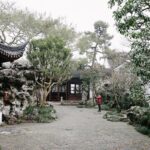
The 9 Zig-Zag Bridge and Mid-Lake Pavilion: scenic pauses with meaning
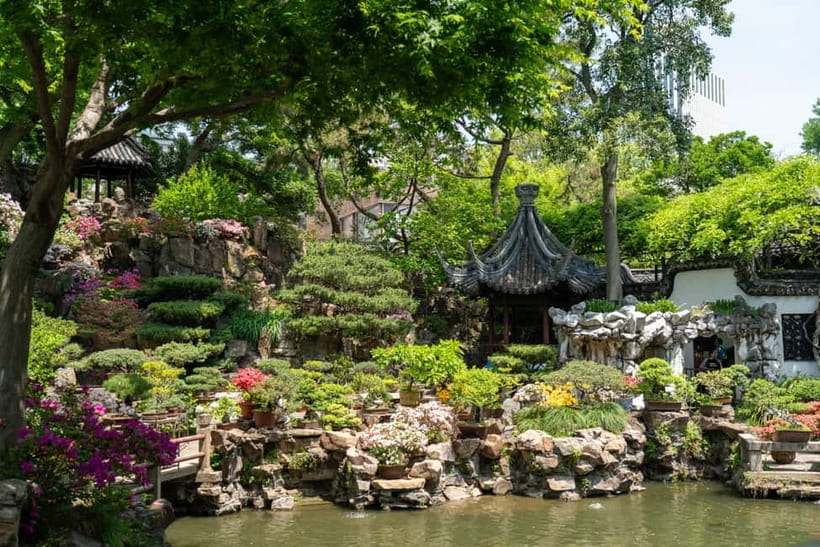
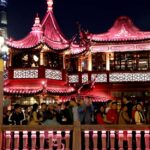
After temple culture comes a calmer stretch: the 9 Zig-Zag Bridge and the Mid-Lake Pavilion area. This is where you get the garden-side views that make Yuyuan so recognizable.
You’ll appreciate this part more if you’re paying attention to how the design guides foot movement. Bridges, pavilions, and lake edges shape what you see and how you move—so you’re not only getting a photo. You’re learning how the space works.
Practical tip: bring your attention back to the guide here. The best garden moments happen when you know what to look for, like the relationship between water, pathways, and pavilion placement. Even with a short tour, the guide can point out the details that make the views feel intentional instead of random.
Lake Pavilion Tea House: a cultural reset during the walk
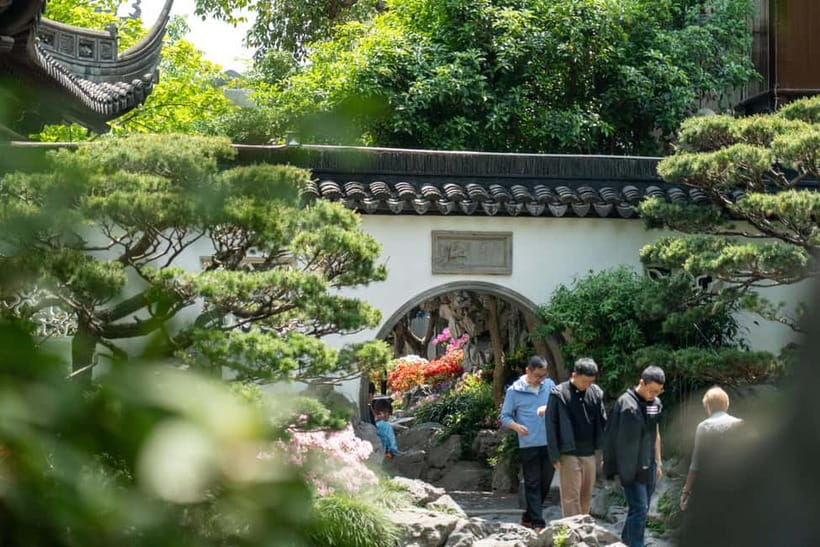
At Lake Pavilion Tea House, the tour gives you a short break while staying in the story of the area. Tea-house stops on tours can become a sales pitch. What you want instead is a calm pause where the guide keeps the cultural thread going.
This is a good moment to catch your breath and reset your ears. You’ve been hearing about zodiac symbolism, temple beliefs, and medicine. A tea-house interlude gives you a chance to absorb it without constant walking.
If you’re the type who likes to ask questions, this can be a helpful time. Tea-house settings are usually easier for back-and-forth conversation than narrow market alleys.
Yuyuan Garden Smallware: local craftsmanship and smart browsing
Next is Yuyuan Garden Smallware, a stop that’s essentially about local craftsmanship and small products. The guide’s angle is practical: you’ll learn what you’re likely seeing, how to judge value, and what kind of items tend to have real local character.
This is where people either love the experience or hate it, depending on their expectations. If you come in thinking every stall is a must-buy, you’ll feel pressured. If you come in wanting to understand the culture of small goods and how the area sells its identity, it’s genuinely interesting.
I like this stop because it’s shorter than a full shopping detour, but it still gives you enough time to look closely and ask questions. You also get group photo moments at attractive landmarks, so you’re not stuck doing all the photo logistics yourself.
Ancient City Park finish: calm end to a dense old-city loop
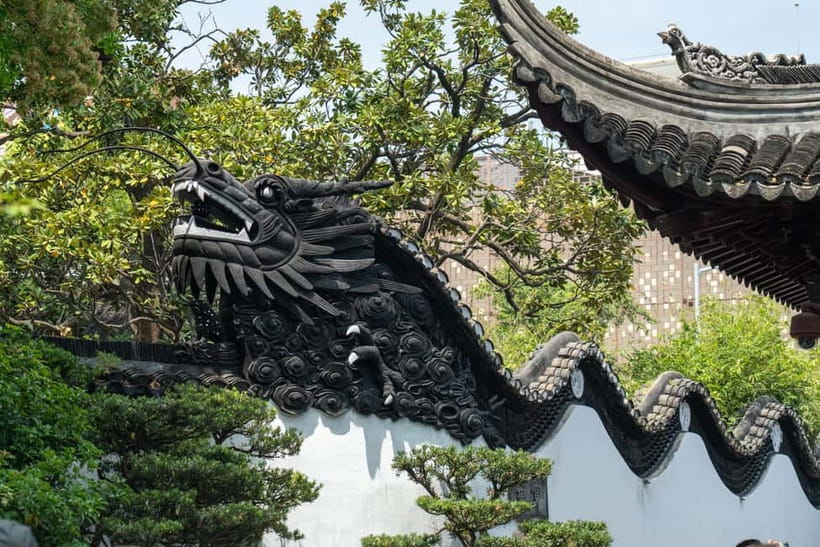
The tour ends at 古城公园 (Ancient City Park). This is a quiet landing spot compared with the temple and street intensity.
That final pause matters. Old-city tours can blur together if you don’t have an end point that feels like decompression. Finishing in a calmer park space makes it easier to sort what you learned—zodiac themes, Taoism and folk religion basics, and how traditional medicine is presented culturally.
You’ll likely walk away with a clearer sense of the neighborhood layout too. That helps after the tour, when you’re deciding where to go next on your own.
Small group, English guide, and the value of questions
This is a live, English-speaking tour guide experience in a small group (up to 10). That combination is a big deal in Shanghai’s old areas, where details can fly past you if you don’t know what to ask.
The reviews’ themes line up with what you’d want operationally:
- A friendly group vibe (less awkward, more conversation)
- A guide who can answer questions clearly
- A pace that fits a 2-hour window
- A personal touch that makes the stories feel less like a lecture
You may even get a guide named Jie, described as prepared, engaging, and very comfortable in English. If that’s the guide you draw, you’ll probably feel especially comfortable asking follow-ups.
Who should book this Yuyuan and City God Temple tour?
Book this if you:
- Want a short, structured introduction to Shanghai’s old-city spiritual and cultural side
- Like walking tours where you ask questions and get answers
- Are curious about Taoism/folk religion and how the zodiac is presented in public culture
- Want a traditional medicine shop experience that includes a sampling moment
Skip it or reconsider if you:
- Need mobility-friendly routes (the tour isn’t listed as suitable for people with mobility impairments)
- Prefer long free time at a single site over a quick multi-stop loop
- Hate sensory experiences or herbal tasting, unless you can ask for alternatives before sampling
Price and logistics: what $2.36 buys you in real life
At $2.36 per person for a 2-hour guided tour, the headline price is almost secondary. The real value is the guide time and the cultural translation. You’re getting:
- A multi-stop route through Yuyuan’s old-city core
- Explanations of religious traditions and zodiac visuals
- A traditional medicine shop stop with herb sampling tied to the king of herbs
- Photo moments at attractive landmarks
- A small-group setting where questions are welcome
The main tradeoff is density. This isn’t a half-day where you can linger. It’s short on purpose, so you’ll want to treat it as your orientation tour—then build on it after with your own sightseeing.
Should you book this Yuyuan and City God Temple Old City tour?
Yes, if you want a compact, guided way to understand why Yuyuan feels like more than a pretty garden zone. The mix of street life, City God Temple explanations, zodiac visuals, scenic bridge views, and a traditional medicine tasting gives you several kinds of learning in just 2 hours.
No, if you’re looking for a slow, flexible walk with lots of downtime, or if mobility is a concern. Also, if you’re strongly opposed to herbal sampling experiences, you should check with the guide first before committing.
Overall, this is the kind of tour that works especially well as a first taste of Shanghai’s old-city culture—brief, focused, and guided in English.
FAQ
How long is the tour?
The duration is 2 hours.
Is the tour guided in English?
Yes. The experience includes a live tour guide in English.
How big is the group?
It’s a small group limited to 10 participants.
Where do I meet the guide?
You’ll meet at Yuyuan Garden station Exit 1 (豫园站1号口). The provided starting location also references 豫园站 3号口, so double-check your confirmation for the exact exit.
How do I get to the meeting point by metro?
Take Metro Line 10/14 to Yuyuan Garden metro station (豫园站) and use Exit 1.
What’s included in the tour?
The tour includes a 2-hour guided walk, immersion in history and local culture, Taoism and folk religion learning, traditional medicinal herb sampling, travel tips and personalized recommendations, and group photos at landmarks.
Can I cancel for a full refund?
Yes. It offers free cancellation up to 24 hours in advance for a full refund.
Is smoking allowed?
No. Smoking is not allowed.