REVIEW · ZHANGJIAJIE
Zhangjiajie: Mini Group Day Tour with Bailong Elevator
Book on GetYourGuide →Operated by TravelChinaGuide · Bookable on GetYourGuide
One elevator ride can make your day. This mini-group tour strings together the Bailong Elevator, Avatar-famous peaks, and the Natural Great Wall, all with a real guide to keep you moving. I love how efficient the routing feels, and I also like the small group size that helps you snag better photo moments. The main thing to weigh is weather and crowds, since visibility can drop fast and queues can happen.
I went for this kind of trip because Zhangjiajie National Forest Park is not intuitive at first glance. With hotel pickup (either near the East Gate in Wulingyuan or from downtown Zhangjiajie) and an English-speaking guide, you spend less time guessing and more time looking up at stone pillars. Guides like Amy, Phoenix, and Liz were specifically praised for upbeat explanations and pacing, but like any day tour, organization details matter when meeting points shift.
In This Review
- Key Things to Know Before You Go
- Zhangjiajie in One Day: why this mini-group setup makes sense
- Bailong Elevator at 335m: what you actually experience in 88 seconds
- Yuanjiajie Scenic Area: Qiankun Pillar, Hallelujah Mountain, and the “Avatar” moment
- Yangjiajie and the Natural Great Wall: nature’s version of engineering
- Tianzi Mountain: sunset timing and the Helong Park viewpoint system
- Getting around inside the park: eco-buses, walking, and cable car timing
- Price and value: what your $69 covers, plus the CNY 364 in entrance fees
- Lunch on your own: the spicy mountain reality and how to plan around it
- Guide quality and pacing: English help that saves time (and avoids chaos)
- Who this tour is best for (and who should reconsider)
- Should you book this Zhangjiajie mini-group day tour?
- FAQ
- What’s included in the tour price?
- Are entrance fees included?
- What’s the group size?
- Where do you get picked up?
- How long does the Bailong Elevator ride take?
- Is lunch included?
- How do you move between scenic areas?
- What should I bring?
- Is this tour suitable for wheelchair users or elderly travelers?
Key Things to Know Before You Go
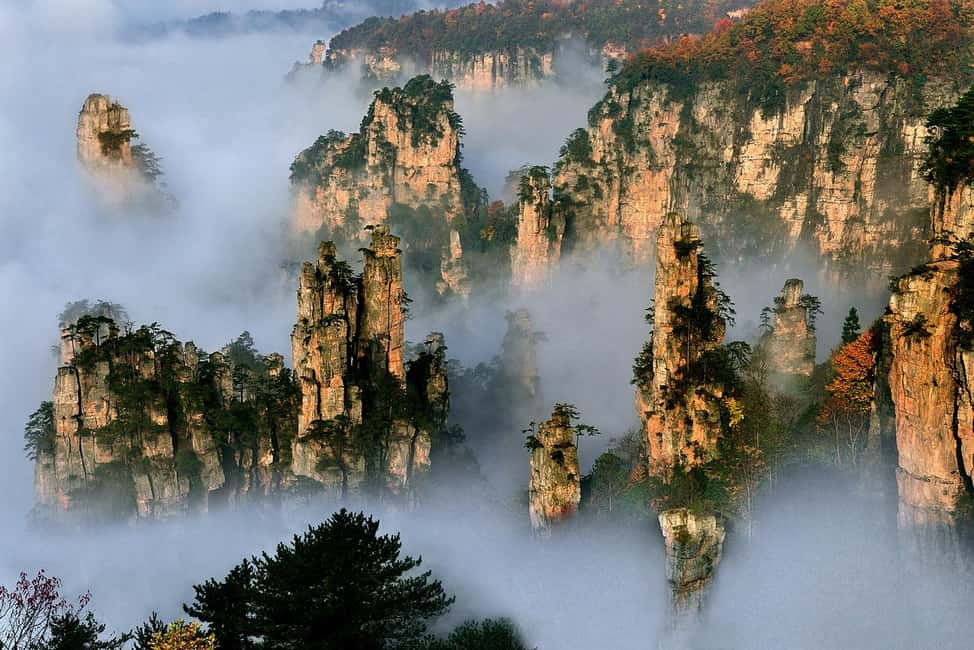
- Bailong Elevator in 88 seconds: 335 meters up, with a cliff-top view that hits immediately
- Yuanjiajie’s Qiankun Pillar: called Hallelujah Mountain because of Avatar
- Yangjiajie Natural Great Wall: uncarved peaks that line up like a defensive wall
- Tianzi Mountain sunset timing: best light is late day, especially with sea-of-clouds conditions
- Lunch is on your own: mountain food runs spicy, salty, and greasy, so plan a backup
- Small group around 12: easier logistics, still expect other tour groups on-site
Zhangjiajie in One Day: why this mini-group setup makes sense
Zhangjiajie is big. Even if you’re an efficient walker, trying to plan it solo can turn into a game of wrong turns and missed viewpoints. This tour solves that by focusing on the park zones that most people come for: Yuanjiajie, Yangjiajie, and Tianzi Mountain, plus the signature elevator and cable car.
I like that it’s built around “get you there fast, then explain what you’re seeing” rather than a long list of random stops. The group size is about 12 people, with occasional small overages, so you’re not stuck in a massive crowd the whole time. That matters for photos, because a few extra seconds alone at a viewpoint can be the difference between generic and memorable.
The trade-off is that you still share the main sights with other visitors. In peak seasons and during holidays, you should assume queuing and heavier traffic. If you’re visiting in a month where crowds are common, come with flexible expectations and treat sunset as a plan, not a guarantee.
You can also read our reviews of more tours and experiences in Zhangjiajie.
Bailong Elevator at 335m: what you actually experience in 88 seconds
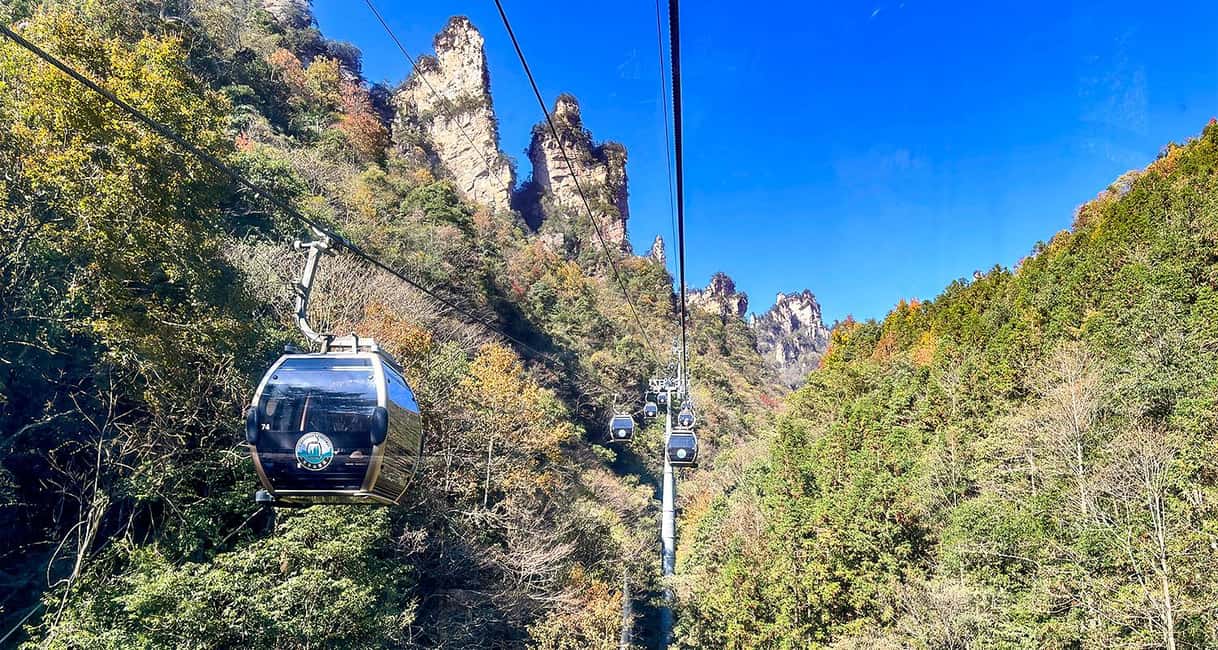
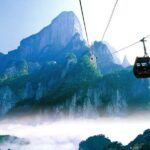
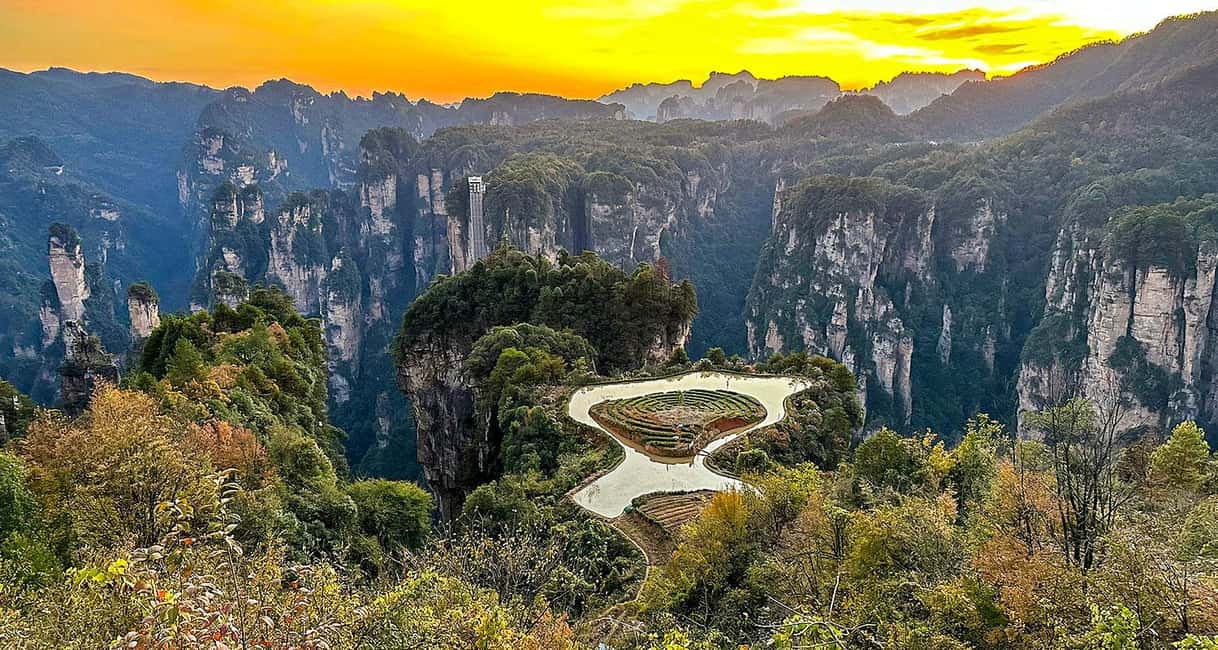
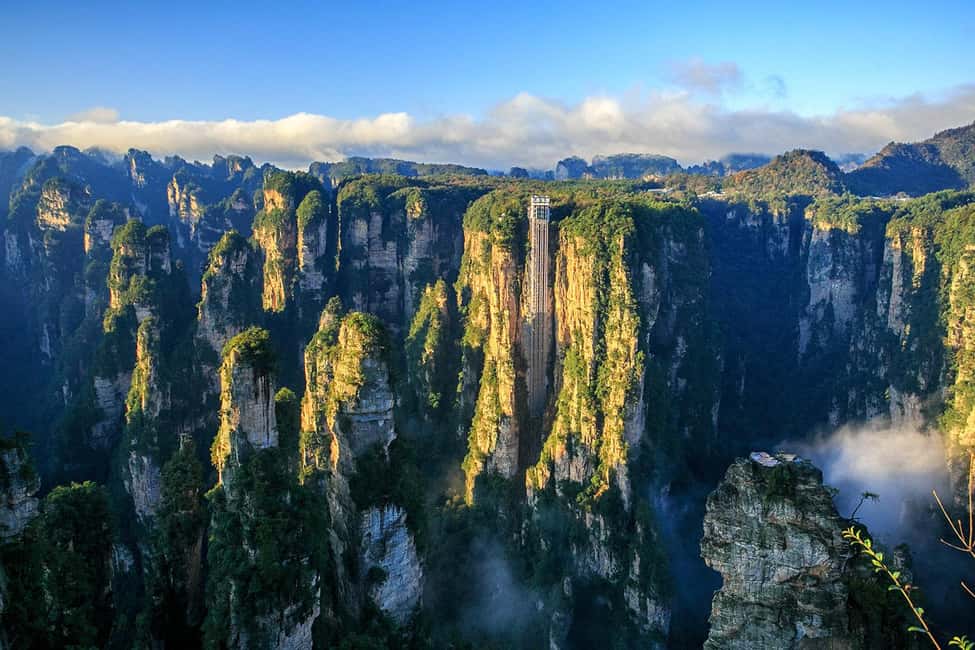
This is the headline for a reason. You start by taking an eco-bus to the lower station of Bailong Elevator from the park’s East Gate area. Then you ride the elevator up the cliff.
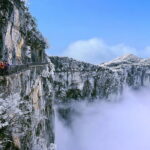
The ride is fast: 88 seconds covering 335 meters. But the timing doesn’t feel like “just a quick lift.” As you climb, the vertical karst pillars unfold in front of you. It’s the kind of moment that makes you forget to talk and just start shooting photos, even if your camera skills are rusty.
A couple practical notes to make the ride smoother:
- Stand ready before boarding so you don’t end up scrambling with your bag.
- Keep your camera accessible. The views change as you rise, and you don’t want to be fumbling during the best angles.
Also, eco-bus shuttles inside the park can feel a bit sporty. Nothing dangerous is promised here, but if you’re sensitive to sudden motion, hold onto the rail and settle in early.
Yuanjiajie Scenic Area: Qiankun Pillar, Hallelujah Mountain, and the “Avatar” moment
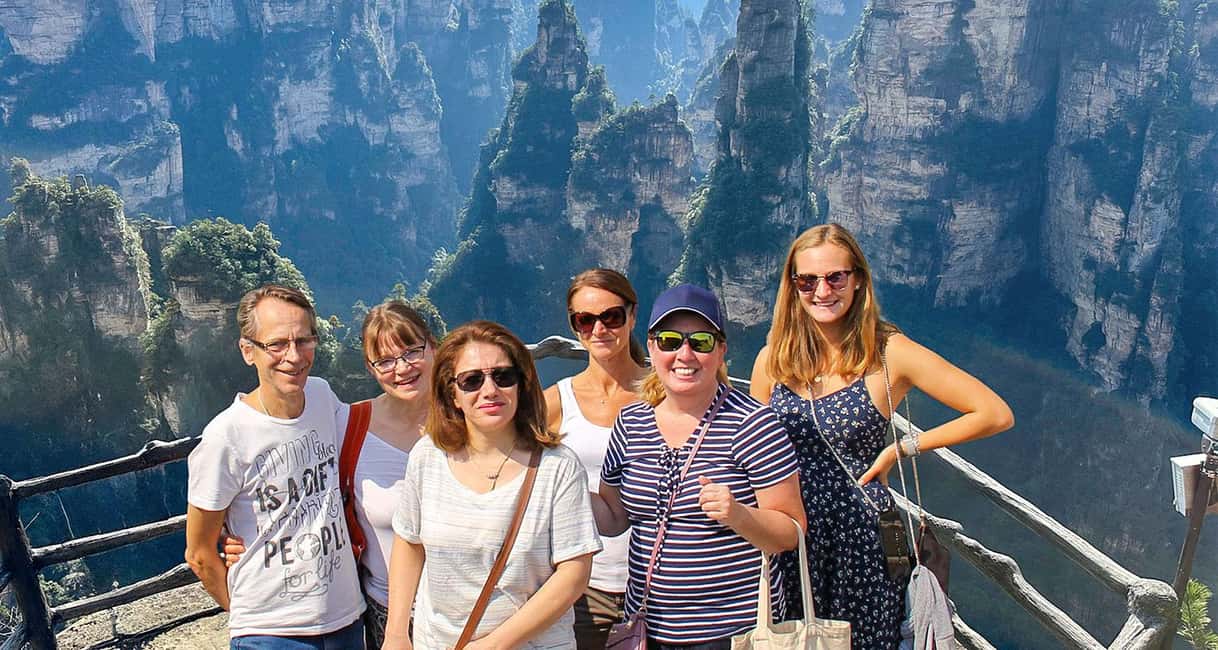
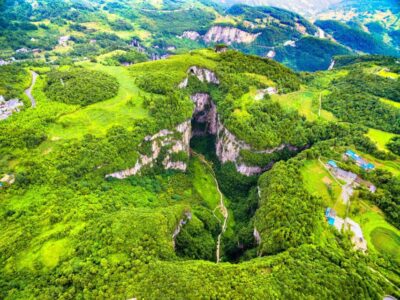
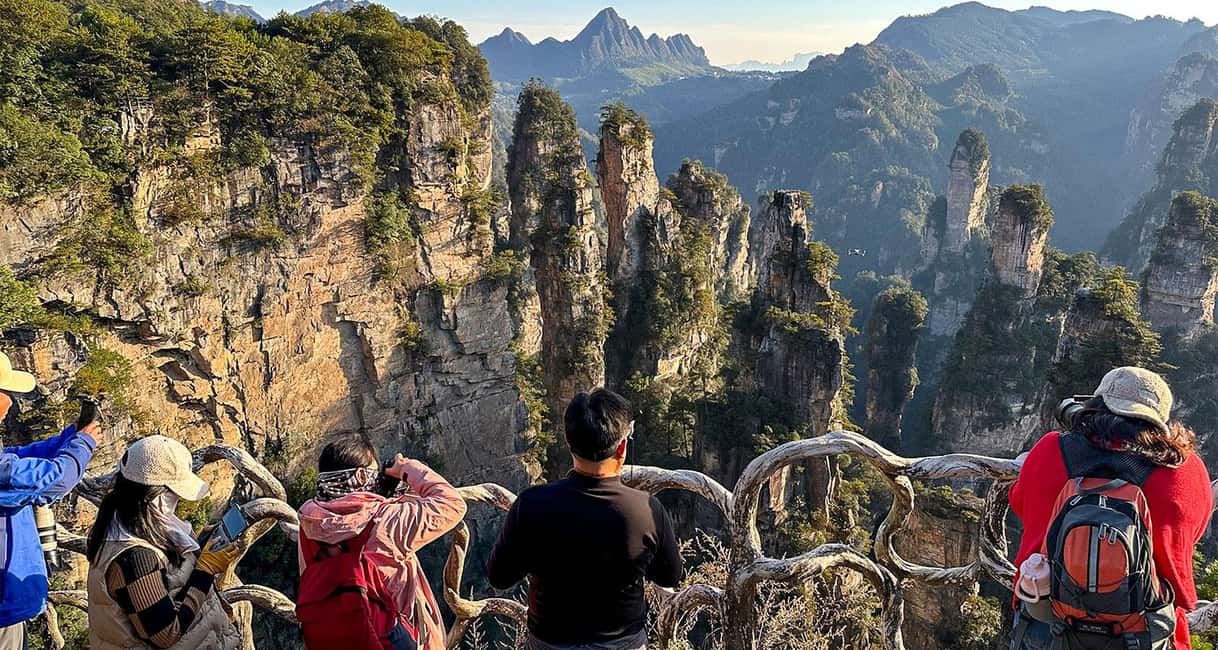
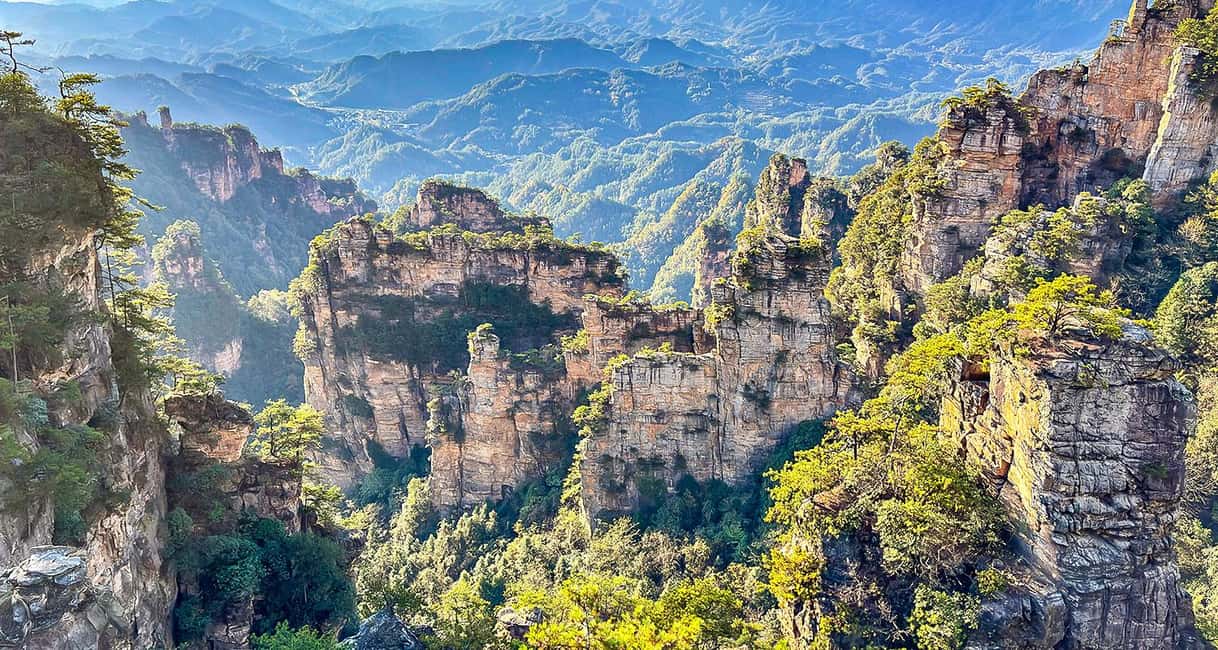
Once you step off the elevator, the tour heads into Yuanjiajie Scenic Area, where the famous karst “pillar forest” is the star. The names alone are worth paying attention to, because they tell you how the park got its global fame.
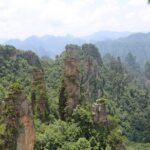
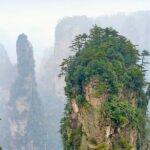
The key stop is the Qiankun Pillar, later renamed Hallelujah Mountain after Avatar became a hit. That name stuck because the shape and scale look so much like the movie’s world. Even if you don’t know the story, you’ll feel what visitors mean by it: the peak is huge and imposing, with a height over 1,000 meters.
From there, you’ll see other landmark formations including:
- Back Garden
- Enchanting Platform
- No.1 Bridge under Heaven, a naturally formed stone bridge connecting two peaks
What makes this part valuable is the way the formations cluster. It’s not one “wow” object; it’s a whole set of views that work together. If you’re patient and keep your eyes moving, you’ll start noticing different shapes and silhouettes from slightly different angles.
The downside: this is also where crowds want to stop at the same time. Even in a small group, you might not get long stretches of solitude. If you’re chasing that empty-view feeling, keep your expectations realistic and use the guide’s timing to your advantage.
Yangjiajie and the Natural Great Wall: nature’s version of engineering
In the afternoon you shift to Yangjiajie Scenic Area. This zone is described as the most recently developed of the park’s four scenic areas, and the terrain feels a bit different from Yuanjiajie.
Instead of isolated pillars, you get continuous peaks. That texture matters because it changes how your brain reads the scenery. When you look at the Natural Great Wall, it clicks as a system, not just random rocks.
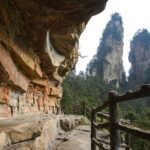
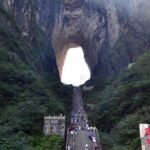
The Natural Great Wall is made of uncarved stone peaks arranged together. From a distance, it can look like the long, defensive line of the historical Great Wall. But up close, it’s clearly something else: a natural formation that just happens to resemble architecture. That’s why I like this stop. It’s a reminder that the park’s “design” is accidental and still impressive.
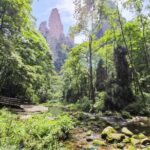
You’ll also have thick forests and small streams in the mix, which helps break up the rock-heavy feel of the day. If the earlier scenes made you think about shape and height, Yangjiajie adds depth and texture. It’s often the kind of viewpoint where you can slow your pace for a moment and breathe.
Tianzi Mountain: sunset timing and the Helong Park viewpoint system
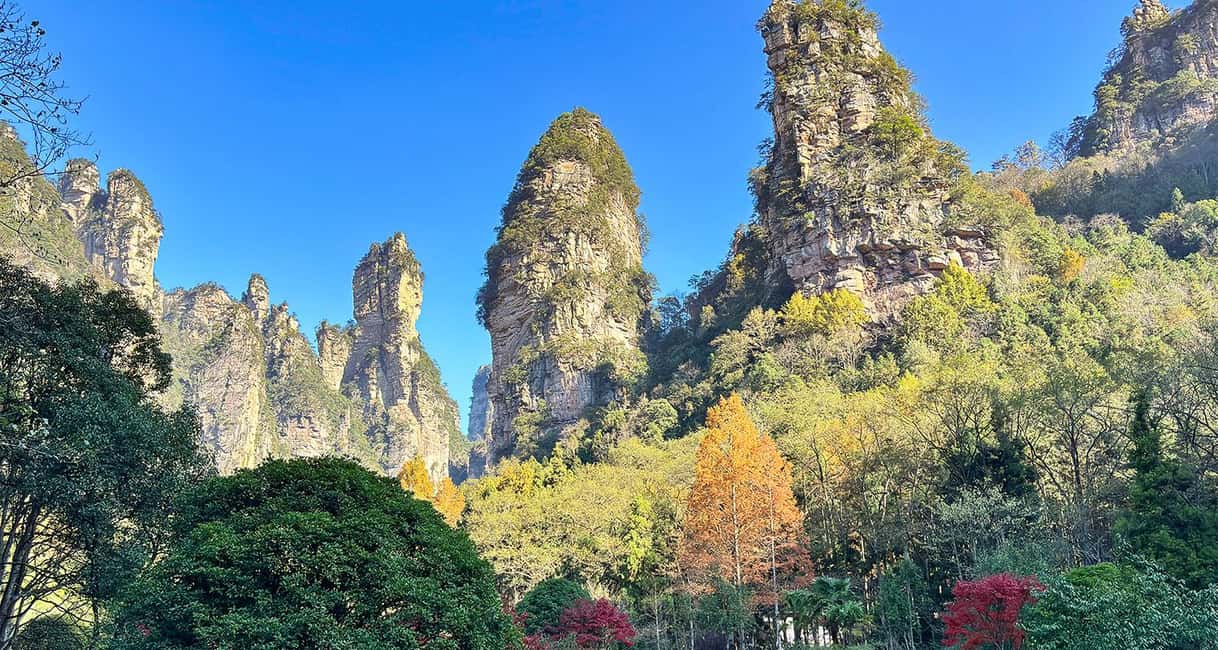
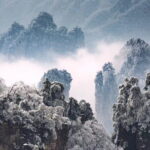
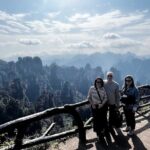
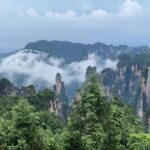
After Yangjiajie, the tour heads toward Tianzi Mountain with eco-bus travel of about 30 minutes. This is where the “stone pillars kingdom” feeling really takes over. You’re surrounded by thousands of pillars rising toward the sky, and the scale can be hard to process on a single daytime walk.
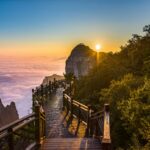
This stop is best late day. The view here is said to shine at sunset, and the route often attracts photographers hoping for a sea of clouds. Even if you don’t get dramatic cloud cover, the lighting shift can still make the pillars look sharper and more three-dimensional.
A highlight is Helong Park, with five viewing platforms built for different angles. One of the best-known views there is the Imperial Brush Peaks, named because the shapes resemble writing brushes. The platform setup matters because it encourages you to look from multiple sides rather than locking onto one “best” shot and missing the rest.
If time and weather allow, you may also see:
- Flower Fairy Peaks
- Dianjiang Terrace
The visit ends with a cable car descent. That cable car is a nice “finish line.” After hours of steps and standing still for photos, it’s a relief to get off your feet and let the day close out smoothly.
The real consideration here is weather. If fog or heavy rain rolls in, you can lose the layered depth that makes these views special. In that case, your best strategy is patience and focusing on what’s still visible, rather than forcing the sunset into the same dramatic outcome you expected.

Getting around inside the park: eco-buses, walking, and cable car timing
This tour is built around park transport and short-to-medium walking bursts. You’ll ride eco-buses to move between scenic areas, then use the cable car at the end of Tianzi Mountain.
That matters because Zhangjiajie isn’t the kind of place where you can simply “power through” on foot without risking fatigue. The tour’s routing keeps you efficient, and it also reduces the chances you’ll miss the timing windows that match best light and viewpoint access.
A realistic expectation:
- Some parts involve waiting and walking between viewpoints.
- Eco-bus shuttles can feel a bit bumpy or quick in turns.
- At peak times, you may queue near major attractions.
Comfort planning is part of the success here. Wear comfortable shoes, and try not to pack your bag like it’s a camping trip. A small camera setup is easier when you need to move quickly between spots.
If you’re prone to motion sickness, this isn’t necessarily a deal-breaker, but I’d take it seriously. Sit where you feel most stable and keep your eyes on the horizon if you can.
Price and value: what your $69 covers, plus the CNY 364 in entrance fees
The listed price is $69 per person, and what you’re paying for is the structure: pickup and drop-off, an English-speaking guide, and an air-conditioned vehicle for the day. That’s the value piece, because it saves you from navigating the park’s logistics alone.
Entrance fees are not included in the base price. Instead, the tour reserves tickets in advance, and you pay when meeting your guide. The total entrance fees are CNY 364 per person, broken down as:
- Zhangjiajie National Forest Park: CNY 227
- Bailong Elevator: CNY 65
- Tianzi Mountain Cable Car: CNY 72
So the real cost is your $69 plus CNY 364. Whether that feels worth it depends on your travel style. If you want efficiency, English support, and fewer navigation mistakes, this is a reasonable package. If you’d rather buy tickets yourself and slow travel more flexibly, you might compare costs and consider self-guided planning.
One more thing: the tour has no shopping stops. That keeps your day focused on scenery rather than detours. For me, that’s part of the value equation because it protects time at the viewpoints you actually came for.
Lunch on your own: the spicy mountain reality and how to plan around it
Lunch is at your own expense. Food is available in the mountain area, but prices can be higher once you’re deep in the park.
The practical caution is about taste. The food is described as more spicy, salty, and greasy, which might not suit everyone. If you’re sensitive to heavy flavors or your stomach doesn’t love oily meals on a travel day, you’ll want a strategy.
My favorite workaround is simple:
- Have a hearty breakfast at your hotel.
- Pack breads or snacks as a simple lunch backup.
That way, you don’t end up stuck waiting for the one thing you can tolerate. It also keeps your energy steady, which helps with the viewpoint walking and photo stops later.
Guide quality and pacing: English help that saves time (and avoids chaos)
This is where the day can go from smooth to stressful. With an English-speaking guide, you’re not just collecting facts. You’re getting the practical story behind what you’re seeing, plus help with the order of stops.
Specific guides were praised for being welcoming and fluent, and for pacing the day so you get enough time at major points without constantly feeling rushed. Amy was noted as awesome, Phoenix as welcoming and helpful for navigating a park that isn’t obvious at first, and Liz as optimistic and patient even when weather wasn’t great.
That said, one caution from the information you provided is that meeting point confusion can happen if directions are unclear. In one unhappy case, participants ended up in different places. I take that as a reminder to stay alert at transitions. When the group moves, keep close to your guide, and double-check your exact meeting spot before you’re separated by buses or queues.
If you’re lucky with your guide, you’ll feel confident the whole day. If you’re not, at least you can protect yourself by staying near the core group and asking where the next viewpoint is when in doubt.
Who this tour is best for (and who should reconsider)
This tour fits travelers who want one organized day to cover the biggest hits of Zhangjiajie without spending extra time figuring out transport, routes, and viewpoints. The mini-group size helps older teens, adults, and mixed-age groups stay together.
It’s not suitable for wheelchair users, and it’s also not suitable for people over 80 years. That makes sense because the day includes walking, eco-bus transfers, and viewpoint stairs or uneven terrain in scenic areas.
If you love photography, you’ll appreciate the system: elevator views first, then pillar clusters, then Great Wall angles, and finally sunset-style viewpoints at Tianzi Mountain. If you’re more into “learning the story,” the guide explanations about naming and landmark formations add real context.
If you’re visiting with a tight schedule, this day tour can be a strong use of time. But if you’re extremely weather-dependent in your preferences, keep in mind that fog or rain can reduce the dramatic depth you hoped for.
Should you book this Zhangjiajie mini-group day tour?
I’d book it if you want a guided, efficient way to see Bailong Elevator, Yuanjiajie’s Avatar fame, Yangjiajie’s Natural Great Wall, and Tianzi Mountain’s sunset viewpoints in one day. The value comes from convenience (pickup, transport, guide) plus the fact that it’s focused and doesn’t turn into a shopping day.
I might skip or adjust expectations if:
- you can’t handle crowds or queues during holiday travel
- weather is uncertain for your dates, and you’re chasing only perfect visibility
- you prefer a slow, unguided “wander and wait for your own moments” rhythm
If you do book, pack smart: comfortable shoes, sunscreen, and camera-ready timing. And when crowds hit, stay close, move when the group moves, and don’t fight the line if it’s taking forever. The park is impressive enough that you still win, even when the day feels busy.
FAQ
What’s included in the tour price?
Pickup and drop-off from hotels in Wulingyuan near the East Gate of Forest Park or from downtown Zhangjiajie, an English-speaking guide, and an air-conditioned vehicle are included.
Are entrance fees included?
No. Entrance tickets are reserved in advance, and you pay when meeting your guide. The total entrance fees are CNY 364 per person (CNY 227 for Zhangjiajie National Forest Park, CNY 65 for Bailong Elevator, and CNY 72 for Tianzi Mountain Cable Car).
What’s the group size?
The group size is about 12 people, with some groups possibly slightly above that (around 10% may exceed 12). Departures are guaranteed with three persons.
Where do you get picked up?
You’ll be picked up either from hotels in Wulingyuan near the East Gate of the Forest Park or from downtown Zhangjiajie. The exact pickup time is sent one day before your trip.
How long does the Bailong Elevator ride take?
The elevator ride takes 88 seconds to travel 335 meters to the cliff top.
Is lunch included?
No. Lunch is at your own expense, and food in the mountain area can cost more. It’s described as spicy, salty, and greasy, so having a snack plan helps.
How do you move between scenic areas?
You use eco-buses inside the park to reach the scenic areas, and you ride a cable car to go down from Tianzi Mountain.
What should I bring?
Comfortable shoes and a camera are recommended, plus sunscreen.
Is this tour suitable for wheelchair users or elderly travelers?
No. It is not suitable for wheelchair users, and it is also not suitable for people over 80 years.