REVIEW · GUANGZHOU
5-Hour Sai Kwan Walking Tour with Unique Food Tasting
Book on Viator →Operated by Janvi Off The Beaten Path Tours · Bookable on Viator
Five hours, and you’ll feel Guangzhou working.
This Sai Kwan walking tour strings together Cantonese food and neighborhood sights in a tight loop that’s great when you’re short on time. I like how the day starts with dim sum at a local spot, then moves into parts of the city that don’t usually make it into quick photo-only itineraries.
What also stands out is the human factor: you get Janvi and a guide who can adapt the pace to your interests, plus a hotel meet up for less hassle. The one thing to plan for is language volume and clarity—Janvi’s English is not perfect and he may speak softly, so you’ll want patience if the group is noisy.
In This Review
- Key highlights you’ll actually use
- Why a Sai Kwan walk is smart for your Guangzhou schedule
- Price and what $71.80 buys you in real life
- Meeting point, end point, and the 11:00 start
- Stop 1: Tianzi Wharf dim sum lunch that sets the tone
- Stop 2: Shamian Island for foreign concession history in a short window
- Stop 3: Qingping Medicine Market—traditional remedies you can see
- Stop 4: Shangxiajiu Pedestrian Street and dessert on your terms
- Stop 5: Liwan Lake Park, wet-market lanes, and a Taoist Temple visit
- The walking pace: what to expect and how to prep
- Customization and a private guide: where the tour earns its name
- Food tasting reality: how to plan for extra costs
- Language and hearing: one concern you can manage
- Who this tour suits best—and who might want a different option
- Should you book this Sai Kwan 5-hour food walk?
- FAQ
- How long is the Sai Kwan walking tour?
- Is this tour private or group-based?
- What time does the tour start?
- Are hotel transfers included?
- What’s included in the price, and what isn’t?
- Do the stops require paid admission tickets?
- Is it okay for kids, and who should avoid it?
Key highlights you’ll actually use
- Local dim sum lunch timing: a full hour at the start means you’re fueled before the walking.
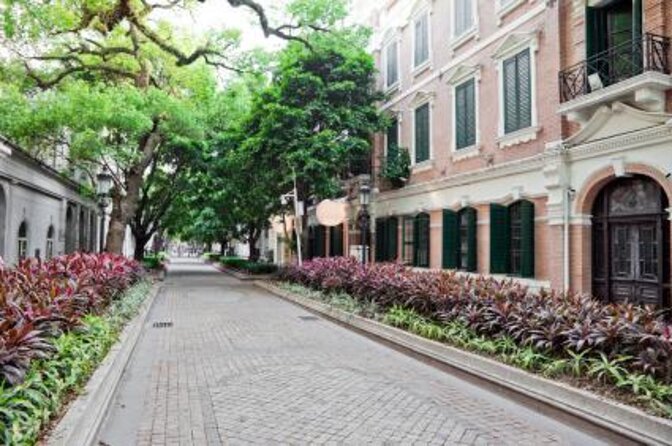
- Shamian Island without the tourist fog: a short stop paired with trade and opium-war context helps you read what you see.
- Qingping Medicine Market basics in plain language: you’ll look at traditional remedies and learn what they’re used for.
- Shangxiajiu desserts on the walk-through: an hour there makes it easy to sample without turning your whole day into shopping.
- Liwan Lake Park + old-town streets: you get both park time and everyday lanes, plus a Taoist Temple visit.
- Private group feel, not a crowded stampede: the tour is private, so your guide can adjust as you go.
Why a Sai Kwan walk is smart for your Guangzhou schedule
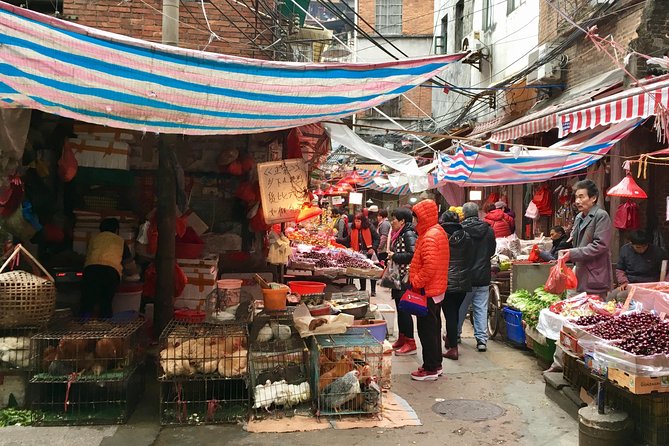
Sai Kwan is where Guangzhou shows its daily rhythm. Instead of racing from one landmark to another, this route mixes food with streets—so you get a sense of what people actually do between “big sights.” It’s also built for limited time: about 5 hours, with defined stops and smooth handoffs between them.
If you’re in Guangzhou for the first time, this kind of tour is a shortcut to orientation. You’ll leave with names of places you can later find on your own, plus context for what you saw—like why foreign concessions ended up where they did, and how the city treats traditional medicine as part of normal life.
You can also read our reviews of more tours and experiences in Guangzhou.
Price and what $71.80 buys you in real life
At $71.80 per person, you’re paying for more than walking. You’re paying for a guide who can connect the dots between Cantonese food, local markets, and the older city streets in a way that’s hard to replicate alone.
Here’s the practical side: your guide is included, along with hotel meet up and a small unique souvenir. What isn’t included is the extra spending—food and drinks are not included, and personal expenses are on you. That matters because part of the value here is tasting, and tastings can mean extra cost beyond the base price.
So how do you judge value? I’d look at this as a “guided day” cost. If you’d otherwise pay for a solo guide for history + food planning, plus taxis to reach scattered neighborhoods, this price can feel reasonable for the time it saves.
Meeting point, end point, and the 11:00 start
The tour starts at 68 Bei Jing Lu, Yue Xiu Qu, Guangzhou (510115) at 11:00 am. It ends at Zhongshanba station, on Metro Line 5, in Liwan District (510150 area).
This matters because it helps you plan your day around public transit. You don’t need to keep guessing where to jump out. You’ll finish near a station, which makes it easier to go on to lunch number two, shopping, or an afternoon viewpoint.
The tour runs in all weather conditions, so bring shoes you trust and dress for the day. It’s also not recommended if you’re pregnant or you have back problems, since it’s a walking format.
Stop 1: Tianzi Wharf dim sum lunch that sets the tone
Your first big bite is at Tianzi Wharf, where you’ll have dim sum lunch at a local neighborhood restaurant. You get about 1 hour here, and there’s no admission ticket included.
Why start here? Because Cantonese food works best when you’re not rushing. A full hour gives you time to order, taste, and settle your stomach before the walking begins. It also helps you learn the day’s “food language” with the guide—what you’re eating, and how Cantonese dishes often come in portions meant for sharing.
One heads-up: the tour does not include food and drinks, so treat lunch and any ordered tastings as additional spending.
Stop 2: Shamian Island for foreign concession history in a short window
Next is Shamian Island, where you’ll take a 30-minute walk. This stop is free of admission costs, and the guide explains the intrigue behind Canton’s older trade world and the opium war.
This is a good length if you want meaning without overdoing it. Shamian is the kind of place where streets, buildings, and layout tell stories. When someone frames those stories for you, your photos make more sense later.
The only drawback is time. With just half an hour, you won’t wander forever. You’ll want to keep your eye up—watch the streetscape, not just where your feet land.





Stop 3: Qingping Medicine Market—traditional remedies you can see
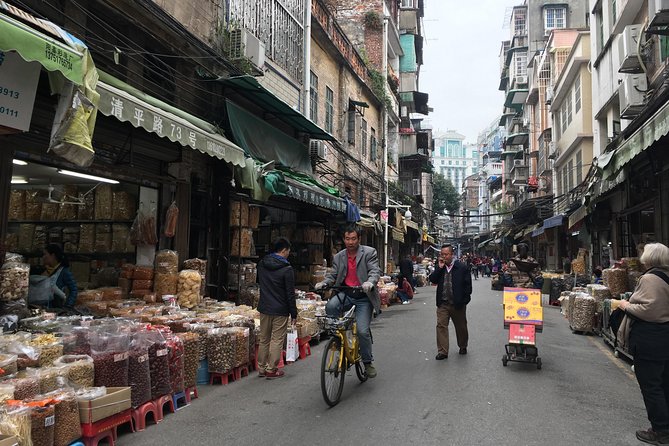
Then you’ll head to the Qingping Medicine Market for about 30 minutes. It’s also a free stop, and the focus is on traditional Chinese medicine trading—learning how its effects are understood in that context.
This part is less about buying souvenirs and more about seeing everyday healthcare culture. You’ll likely notice how many items are sold, and how traditional medicine is treated as something people actively use rather than something locked in a museum.
Practical tip: if you’re curious but also cautious (especially with anything that looks herbal-heavy), stick to asking what things are for and how they’re commonly used. You can decide later if something is worth adding to your bag.
Stop 4: Shangxiajiu Pedestrian Street and dessert on your terms
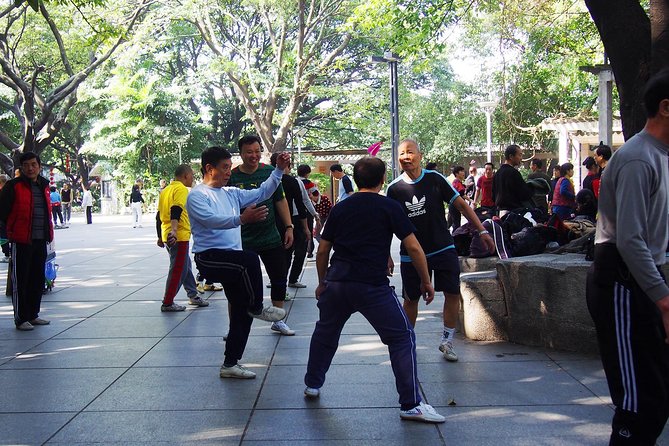
From the medicine market, the route moves to Shangxiajiu Pedestrian Street for about 1 hour, with no admission ticket required. The goal here is easy: walk the street and try local dessert.
This is your chance to swap “market learning” for “street tasting.” It’s also a good moment to slow down a bit. Pedestrian areas often mean more people, more noise, and more choices—so having the guide in the lead helps you avoid getting stuck in decision fatigue.
Since food and drinks aren’t included, you’ll pay for dessert separately. Still, this stop is worth it because you’re sampling the city’s sweeter side without turning the whole day into a shopping mission.
Stop 5: Liwan Lake Park, wet-market lanes, and a Taoist Temple visit
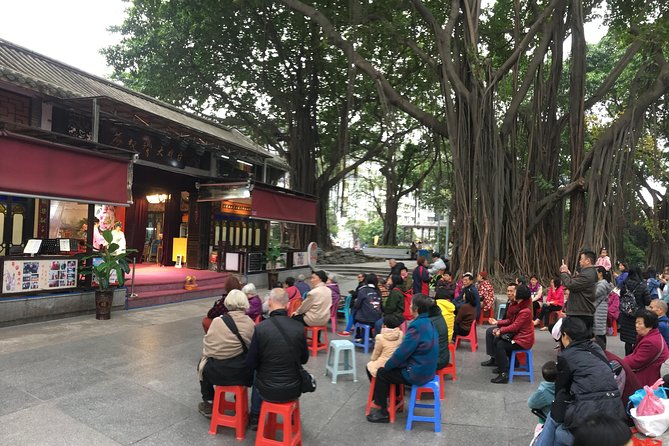
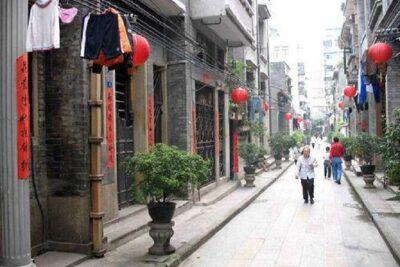
The longest stop is Liwan Lake Park, with about 2 hours plus walking through quaint old-town streets. The tour also includes time off the main paths to see local life around a wet market and the park area, then you visit a Taoist Temple.
Why does this work so well? Because it feels like Guangzhou breathing. Markets and small lanes show you how people live day to day—what they buy, how they talk to vendors, and what daily life looks like when tourists aren’t in charge.
The Taoist Temple component adds a cultural layer, but it’s handled inside a normal sightseeing flow rather than making it a stand-alone “temple day.” That’s a good pacing choice if you want variety in one afternoon window.
A practical note: bring water or plan to grab it when you have a break. You’ll likely do enough walking that you’ll appreciate a pause before the temple part and again after.
The walking pace: what to expect and how to prep
This is a walking tour with timed stops, and while the itinerary is customizable to your interests, the overall structure stays the same. That means you’ll get a lot packed into five hours, including a sit-down lunch at the start.
If you want this day to feel enjoyable, show up with:
- comfortable walking shoes you can wear in wet conditions (since it runs in all weather)
- a small water plan (because drinks are not included)
- a light mindset about spending (food costs are on you)
If you’re sensitive to noise or need clearer audio, you might want to be upfront with the guide. One review note that Janvi can speak softly means you may need to position yourself where you can hear best, or ask for repetition.
Customization and a private guide: where the tour earns its name
This is a private tour, meaning it’s just your group. That changes the tone right away. Instead of waiting for others to catch up or forcing everyone to follow one rigid script, Janvi can adjust the route and timing to match what you care about most.
It also helps with food. Cantonese cuisine can be a lot at once, especially if you’re not sure what to order. A private guide can help you aim for variety without you feeling like you’re guessing.
You’ll also get a sense of local life that’s hard to recreate with a guidebook. The tour doesn’t just point at places—it explains how people lived, traded, and handled everyday needs.
Food tasting reality: how to plan for extra costs
Even though the tour is built around unique Cantonese tastings, the base price does not include food and drinks. So budget for your meals and any tastings you choose to do during the day.
The most helpful way to plan is to treat the included parts as “the map and the guide,” and treat food as “your orders.” The upside is that you’re not locked into set meals. You can likely choose items that match your tastes, and the guide can steer you toward options that make sense.
If you have dietary limits, this is where customization can matter most. Tell Janvi what you can and can’t do before you order, so you don’t waste time arguing over menus mid-walk.
Language and hearing: one concern you can manage
Two small issues show up in the feedback: Janvi’s English isn’t perfect, and he may speak more softly than you’d like. That doesn’t automatically ruin the tour, but it does mean you’ll get the best experience if you:
- ask short questions
- stay close to the guide when he’s explaining something
- don’t be afraid to request clarification when you miss a detail
If you’re traveling with someone who speaks more Chinese than you do, that can also help. But even if not, the stops are physical and the food is concrete—so you can still enjoy the route even when not every word lands.
Who this tour suits best—and who might want a different option
This fits you if:
- you’re a first-time visitor who wants a structured day in Sai Kwan
- you want Cantonese food plus neighborhood context, not just landmarks
- you like the idea of seeing markets and everyday streets with guidance
- you want a private guide and a smooth hotel meet up
It may be less ideal if:
- you’re expecting a tour where everything is fully included (food is not included)
- you need a very loud, easy-to-hear guide without repetition
- you have mobility concerns, since it’s a walking format
- you’re not comfortable with market-style sights and wet-market environments
Should you book this Sai Kwan 5-hour food walk?
I’d book it if you want a practical, taste-first introduction to Guangzhou that mixes history and real street life in one loop. The strongest reasons are the dim sum start, the focused stops that are easy to understand on foot, and the private, customizable feel that helps the day stay comfortable.
I’d skip it (or consider a different style tour) if you hate extra spending or you want fully included meals. Also, if you struggle with soft-spoken guides or you need very precise English, go in with the expectation that you may need to ask for repetition.
Overall, this is one of those “value comes from time saved” experiences. It’s not just about eating; it’s about learning how Guangzhou makes daily life out of food, markets, and older neighborhoods.
FAQ
How long is the Sai Kwan walking tour?
The tour lasts about 5 hours.
Is this tour private or group-based?
It’s a private tour/activity, meaning only your group participates.
What time does the tour start?
The start time is 11:00 am.
Are hotel transfers included?
A hotel meet up is included, and pickup is offered. The information also notes central Guangzhou hotel transfers are available for hassle-free experience.
What’s included in the price, and what isn’t?
Included: local guide, hotel meet up, and a unique souvenir. Not included: transportation to/from attractions, food and drinks, and personal expenses.
Do the stops require paid admission tickets?
Some stops are free, and one lunch stop does not include admission tickets. In general, the tour information lists admission tickets for stops as free or not included, with Tianzi Wharf lunch specifically not included.
Is it okay for kids, and who should avoid it?
Minimum age is 15, and children must be accompanied by an adult. It’s not recommended for pregnant women or participants with back problems.
If you want, tell me your hotel area and whether you’re more interested in food, history, or markets, and I’ll suggest how to plan the rest of your day around the 11:00 am start.