REVIEW · GUANGZHOU
All Inclusive Kaiping Diaolou Heritage Private Day Trip from Guangzhou
Book on Viator →Operated by SilkRoadTrips · Bookable on Viator
That watchtower silhouette will get your attention fast. This private day trip takes you from Guangzhou into Kaiping’s countryside to see diaolou (multi-story watchtowers) and the villages built around them, with a private guide and time to look closely inside and from the rooftops. I also love how the stop plan mixes village views with garden wandering, especially the calm beauty of Li(y)uan Garden.
One thing to plan for: the drive eats time. You’re looking at roughly 2 hours each way, so the day feels full but not slow and leisurely.
In This Review
- Key reasons this Kaiping day trip works
- Why Kaiping’s diaolou feel different from typical sightseeing
- The morning start: hotel pickup and a realistic travel day
- Zili Village watchtowers: UNESCO views you can actually walk through
- Liyuan (Li) Garden in Kaiping: birdcage pavilion and slow walking time
- After lunch: Ma-Xianglong Village and Jingjiangli diaolou homes
- Lunch, tickets, and what “all-inclusive” really means here
- Private guide time: what you gain beyond a photo tour
- Comfort tips for gardens, villages, and watchtower stairways
- Who this tour suits best (and who should think twice)
- Should you book this Kaiping diaolou day trip from Guangzhou?
- FAQ
- What time does the Kaiping diaolou day trip start?
- How long is the day trip from Guangzhou?
- Is hotel pickup and drop-off included?
- What places are visited on the tour?
- Are entrance fees included?
- Is lunch included?
- Do I get bottled water during the tour?
- Is this a private tour?
- Is the tour suitable for most travelers?
Key reasons this Kaiping day trip works

- Zili Village diaolou (UNESCO-listed in 2007): strong preservation plus memorable watchtower views
- Liyuan (Li) Garden time: walkable gardens with canals, bridges, and the birdcage-shaped pavilion
- Multiple village types: flood-refuge and fort-style towers, plus old houses spread among bamboos
- Door-to-door convenience: hotel pickup/drop-off and a private air-conditioned vehicle
- All-in basics included: lunch, entrance fees, bottled water, and tickets on your phone
- Personal pacing: a private guide who can explain the why behind what you’re seeing
Why Kaiping’s diaolou feel different from typical sightseeing
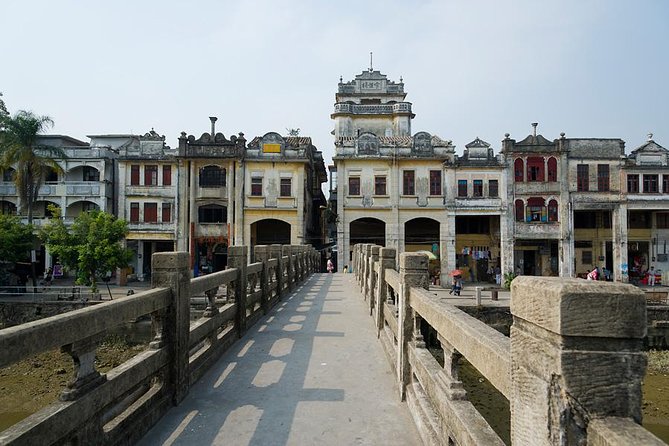
Kaiping diaolou aren’t just pretty architecture. They were built to do jobs: flood refuges, forts, and residences, and later towers used for watching for trouble like bandits. That practical purpose is what makes them feel real, not staged.
You’ll also notice a design mix that doesn’t happen in every Chinese heritage site. The oldest diaolou date back to the Ming dynasty era (14th to 17th centuries). Over time, especially in the late 19th and early 20th centuries, returning overseas Chinese and migrant networks influenced the style. In some towers, you’ll see Western-inspired touches layered onto traditional forms. That blend is a big reason this day trip gets people talking.
If you like architecture with a story you can actually picture—where families lived, protected themselves, and watched the horizon—this is the kind of tour that pays off fast.
You can also read our reviews of more tours and experiences in Guangzhou.


The morning start: hotel pickup and a realistic travel day
The day begins with an 8:00 am start from your Guangzhou hotel area. You’ll ride in a private, air-conditioned vehicle into rural Guangdong, which matters because Kaiping’s charm is tied to getting out of city traffic.
Here’s the reality check: the drive is about 2 hours each way, so you won’t be dropping in and out like a quick city walk. The upside is that leaving early helps you beat larger group arrivals at the main sights. It also gives you a calmer start for the day once you reach Zili Village.
Once you’re in the countryside, the tour timing is built around short, focused blocks at each site—good for keeping energy up when you’re walking gardens and looking for good angles on tower exteriors. The total time runs around 8 to 9 hours, depending on conditions.
Zili Village watchtowers: UNESCO views you can actually walk through
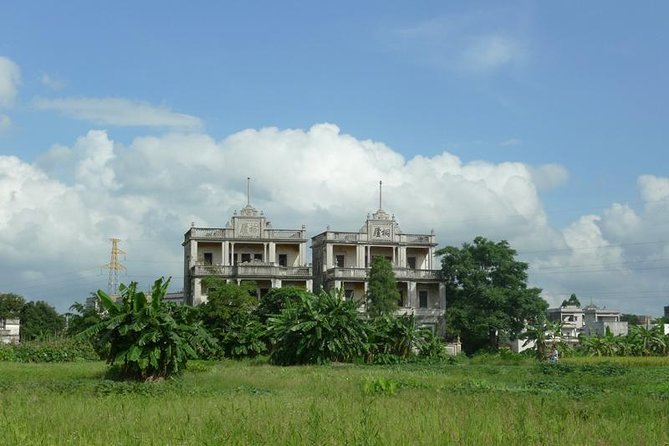
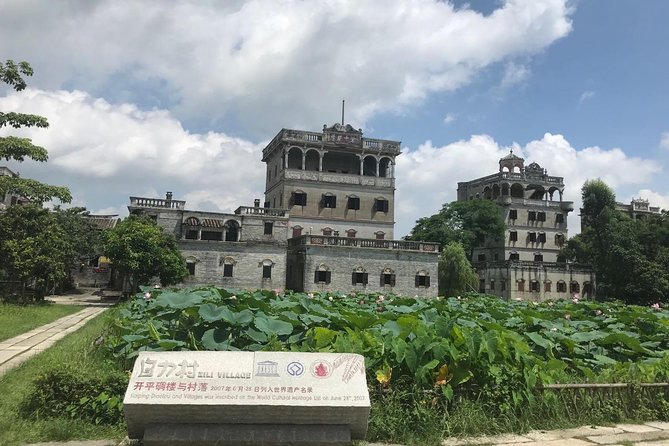
Zili Village is the headline stop. It’s one of the most well-preserved diaolou villages and it was listed by UNESCO in 2007. When you arrive, you’re not just looking at watchtowers from a distance. You’ll have time to go inside and then get that extra perspective from the rooftops.
What I like about Zili is the way it shows the different diaolou roles. The towers here include styles that match the three main historical purposes: communal refuges built by multiple families, residential fortresses built by individual families, and watchtowers meant to alert locals quickly.
Also pay attention to the “returning migrant” design influence. In some towers, returning overseas Chinese incorporated Western-inspired features. You may not spot every detail in one pass, but the overall feel is often unmistakable: different proportions, different decorative logic, and a clear mix of old local building needs with outside ideas.
If climbing is part of the experience for your group, you’ll likely get rewarded with wide views over the village and surrounding fields. That rooftop angle is the kind of photo you can’t fake with a postcard.
Liyuan (Li) Garden in Kaiping: birdcage pavilion and slow walking time
Between watchtower intensity and the next village stop, you’ll get a breather at Li(y)uan Garden, sometimes called Li Garden. This is the part of the day where you can breathe.
What makes Liyuan Garden special is that it’s not just a pretty background. The garden includes designed highlights like a birdcage-shaped pavilion, plus bridges and canals. You’ll meander through the paths at an easy pace, which is helpful if your legs are starting to feel the morning walk and any stair climbs.
This garden stop is also a good contrast to diaolou. Towers are about defense, visibility, and survival. The garden is about taste, leisure, and refined domestic life. Seeing both in one day helps you understand why these towers weren’t only military structures. They were tied to family life and long-term residence.
My practical advice: wear comfortable shoes and take it slow here. If you rush the garden, you miss the way the canals and walkways guide your sightlines between buildings.
After lunch: Ma-Xianglong Village and Jingjiangli diaolou homes
Lunch comes first, then the tour heads onward to quieter village areas.
Ma-Xianglong Village is known for old houses spread out among green bamboos. That setting does a lot for the feel of the day: you get a calmer, more nature-linked atmosphere after the dense watchtower cluster in Zili. It’s the kind of place where you can look at home layouts and street rhythms rather than only tower height.
Then there’s Jingjiangli (锦江里) diaolou group, where you’ll view older houses and see how the design choices fit into everyday village life. This stop is more about looking than climbing for thrill. If you’re the type who loves architecture details, you’ll probably enjoy comparing what you see here with the more famous Zili towers.
One more thing: because these stops are spread out, the village sections can feel more like a day of slow observation rather than a checklist. That makes the day feel fuller, even with the 8–9 hour limit.





Lunch, tickets, and what “all-inclusive” really means here
This tour calls itself all inclusive, and the included items are the ones you’d rather not juggle:
- Lunch
- Entrance fees
- Hotel pickup and drop-off
- Transport by private vehicle
- Bottled water
- Mobile ticket
Value is where private tours can be a mixed bag, so I’m glad this one includes the stuff that usually adds friction. When entrance fees and lunch are handled, you avoid the annoying “where do we pay now?” moments. You also get a smoother flow when the day is already packed with walking and rooftop viewing.
At $269 per person, it’s not a budget excursion. The best way to judge it is whether you want a private vehicle and guide for a full day out of Guangzhou, rather than assembling your own transport and then trying to coordinate entrances and timing.
If you’re a couple or a small group, or you just want one reliable plan with minimal hassle, this price starts to make more sense. If you’re traveling solo with a tight budget, you might weigh whether you’re paying for the convenience of a private setup versus going more DIY.
Private guide time: what you gain beyond a photo tour
A big benefit here is that you have a private guide shaping the visit. That matters because diaolou history isn’t obvious just by looking. You’ll hear why these towers were built, how they functioned, and how different eras and family structures changed the architecture.
The tour’s explanation of tower types (communal refuges, residential fortresses, and alert towers) helps you look with purpose. Instead of counting floors, you’ll start noticing how design relates to safety, visibility, and daily living.
This is where the private format shines. If you ask a question, you don’t have to wait your turn. If you want an extra minute at a viewpoint, you can generally get it without a crowd pushing you along.
Comfort tips for gardens, villages, and watchtower stairways
You’re mixing gardens, village walks, and tower access. That means your comfort needs to cover a few bases:
- Shoes matter: you’ll do walking on garden paths and village areas, plus stairs if you go up to rooftops
- Plan for warm weather: it’s an outdoor day, and you’ll move between sites before and after lunch
- Use the bottled water: it’s included for a reason, and it’s easier than finding it mid-walk
- Bring a light layer: mornings can feel cooler, and air-conditioned vehicle rides can change how you feel between stops
Also, since it’s a private tour, you might get a bit more flexibility in pacing. Still, keep in mind the day is structured around multiple stops with entry included.
Who this tour suits best (and who should think twice)
This day trip is a strong match if you:
- love architecture with context, not just scenery
- want UNESCO-listed Zili Village without doing the planning yourself
- prefer a private guide who can explain why diaolou were built that way
- want an escape from Guangzhou that still feels tightly organized
It may feel less ideal if you:
- hate long car rides and would rather spend the whole day walking locally
- want a low-structure tour where you can roam for hours on your own (this is planned with set stops)
The route is built around seeing key heritage areas in one go. That’s great for first-timers. If you’re already deep into Kaiping research, you might want more time at a single village. But for most people, this plan hits the major “you should see this” pieces.
Should you book this Kaiping diaolou day trip from Guangzhou?
I’d book it if you want a confident one-day plan that handles transportation, entrance fees, and lunch while giving you real time in diaolou villages—especially Zili Village and the garden stop at Li(y)uan. The price may look steep at first glance, but the included essentials and private setup reduce the hassle factor that DIY travelers often underestimate.
I’d be cautious if you’re very sensitive to driving time. The countryside beauty is worth it, but you should go in knowing the 2-hour-per-way travel is part of the deal.
One last practical note: cancellation is free up to 24 hours before the experience start time, which gives you some flexibility if your Guangzhou schedule shifts.
FAQ
What time does the Kaiping diaolou day trip start?
The tour starts at 8:00 am.
How long is the day trip from Guangzhou?
The duration is about 8 to 9 hours.
Is hotel pickup and drop-off included?
Yes. Hotel pickup and drop-off are included.
What places are visited on the tour?
You’ll visit Zili Village, Li(y)uan Garden, and Ma-Xianglong Village, plus a diaolou group at Jingjiangli.
Are entrance fees included?
Yes. Entrance fees are included for the tour stops.
Is lunch included?
Yes. Lunch is included.
Do I get bottled water during the tour?
Yes. Bottled water is included.
Is this a private tour?
Yes. It’s a private tour/activity, with only your group participating.
Is the tour suitable for most travelers?
The information provided says most travelers can participate.