REVIEW · BEIJING
Beijing Culture Event: Tea Ceremony, Music Show, Calligraphy
Book on GetYourGuide →Operated by Cultural Tours China · Bookable on GetYourGuide
Six arts, one calm morning in Beijing. In just 2.5 hours, you get a hands-on Tea Ceremony and a guided Guqin music experience inside certified spaces that are described as closed to the general public. I particularly liked learning the practical six-step method and hearing the Guqin performed in a way that made the instrument feel like something you can actually understand, not just watch.
The downside: the class-style parts are short, so you’ll leave with a taste (and a small piece of practice), not a full mastery of tea brewing or calligraphy. Still, it’s a well-packed introduction that’s hard to replicate on your own.
What makes it work is the teaching setup: a bilingual guide (Chinese/English) with academic-level background support, plus a small group limited to 8 people, which keeps the pace friendly. You’ll also get hanfu rental and a photo session, so you’re not only learning, you’re doing it in the right mood.
In This Review
- Key things to know before you go
- A 2.5-hour Beijing arts bundle: tea, Guqin, and calligraphy in one visit
- The full sequence: what each chapter feels like
- 1) Tea Ceremony: learning the six steps and what tea should smell like
- 2) Guqin performance: hearing 3,000 years in one instrument
- 3) Guqin learning: trying a simple melody yourself
- 4) Calligraphy: from character evolution to writing your own
- 5) Traditional attire and ritual: hanfu dressing and honoring your teacher
- 6) Deep cultural insight from a bilingual expert (academic-level background)
- Price and value: is $79 per person fair for this much practice?
- Where you meet and how to keep it stress-free
- Tea Ceremony details: what you should pay attention to
- Guqin concert and class: listening with context, then making a note
- Calligraphy and hanfu: leaving with something personal
- Who this experience suits best (and who should rethink it)
- A real-world tip: how the team helps you find your way
- Should you book this Beijing Tea Ceremony, Guqin Show, and Calligraphy experience?
- FAQ
- How long is the experience?
- How much does it cost?
- Where do we meet?
- Is transportation included?
- What’s included in the price?
- What should I wear?
- Do I need to bring a camera?
- What languages are offered?
- Is it a small group?
- Is it wheelchair accessible?
Key things to know before you go
- Six-Step Tea Art: you learn the process, then notice aroma, color, and flavor differences across multiple tea types.
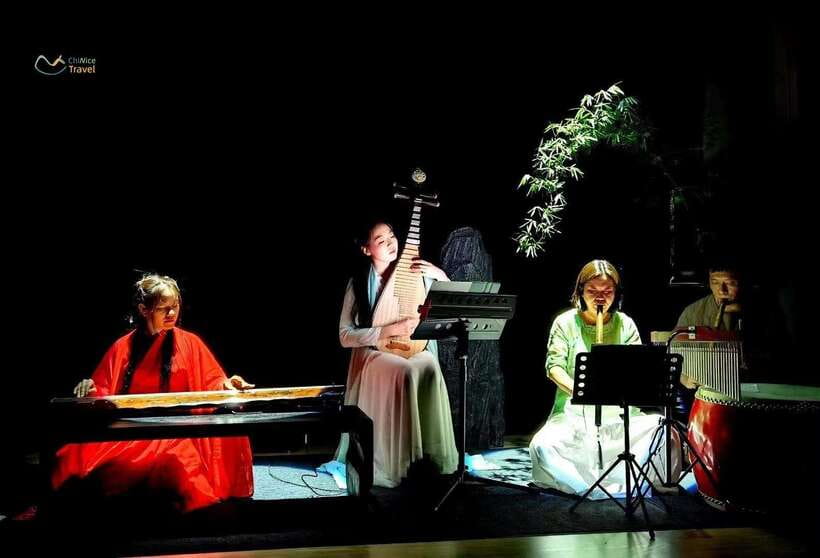
- Guqin performance plus a short class: you hear a national-level heritage master, then try a simple melody yourself.
- Calligraphy with real brush-and-ink technique: you write your own meaningful symbol with guidance.
- Hanfu dressing and a traditional ritual: you participate, not just pose in costume.
- Small group pacing (max 8): more attention during the hands-on parts than a big show.
A 2.5-hour Beijing arts bundle: tea, Guqin, and calligraphy in one visit
If you only have a short window in Beijing and you want culture that feels specific (not generic), this format is a smart choice. You’re not picking between tea and music and writing; you’re getting all three, plus hanfu and a guided cultural story, in one 2.5-hour block.
The biggest value here is that the experience is designed around doing. Tea isn’t just a demonstration; you follow steps. Guqin isn’t just background music; you get a class moment. Calligraphy isn’t just watching ink dry; you write.
And because it’s a small group, the pacing doesn’t feel like you’re being shuffled through. This is the difference between a performance you watch and an art tradition you participate in.
You can also read our reviews of more tours and experiences in Beijing.

The full sequence: what each chapter feels like
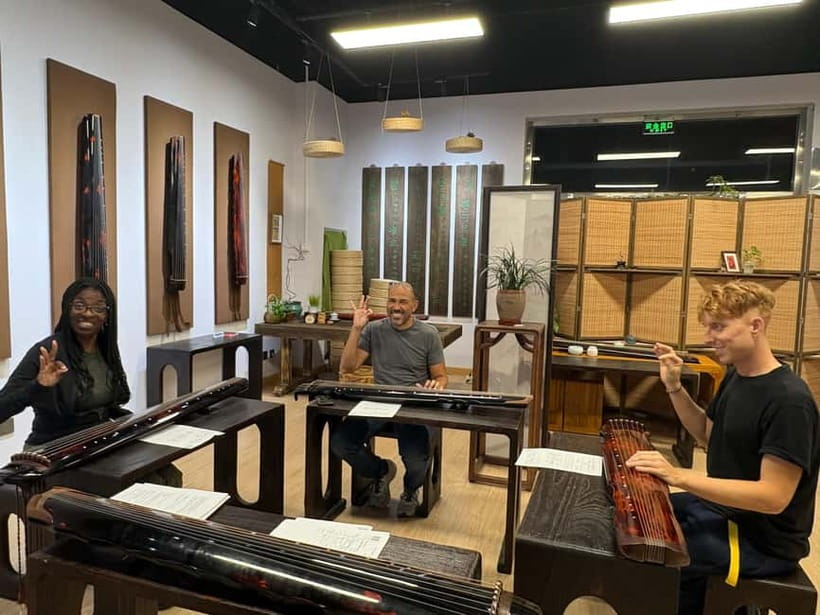
This event runs like six parts in one continuous experience. Each piece has a performance element and at least one interactive moment, so you’re constantly switching modes: listen, try, ask, and then make something small but real.
Here’s what to expect, in plain terms.
1) Tea Ceremony: learning the six steps and what tea should smell like
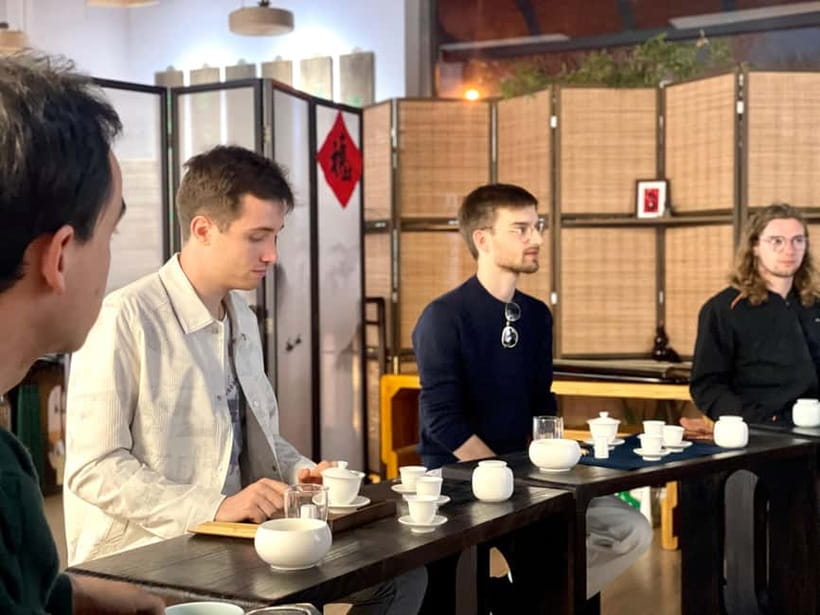
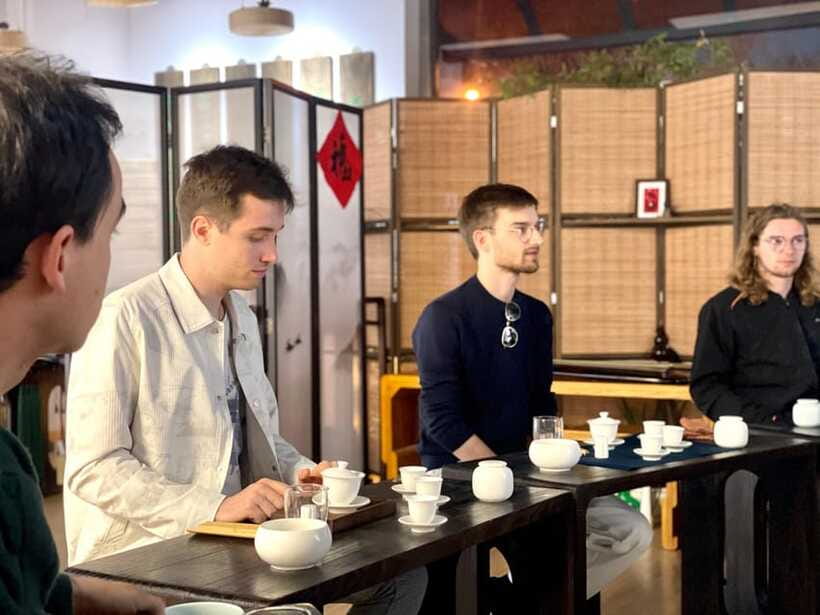
You’ll watch a tea master perform a traditional ceremony and then learn the Six-Step Tea Art process. The practical part is important: you’re not only told what to do, you’re guided through it step-by-step using porcelain tea ware.
The tasting focus is also built in. You learn how different teas show up through aroma, color, and flavor—specifically red, green, and floral teas. This turns tea from a vague drink into something you can actually read with your senses.
A good way to prepare mentally: during the tea steps, don’t just go through motions. Pay attention to how the smell changes as the tea moves through each stage.
2) Guqin performance: hearing 3,000 years in one instrument
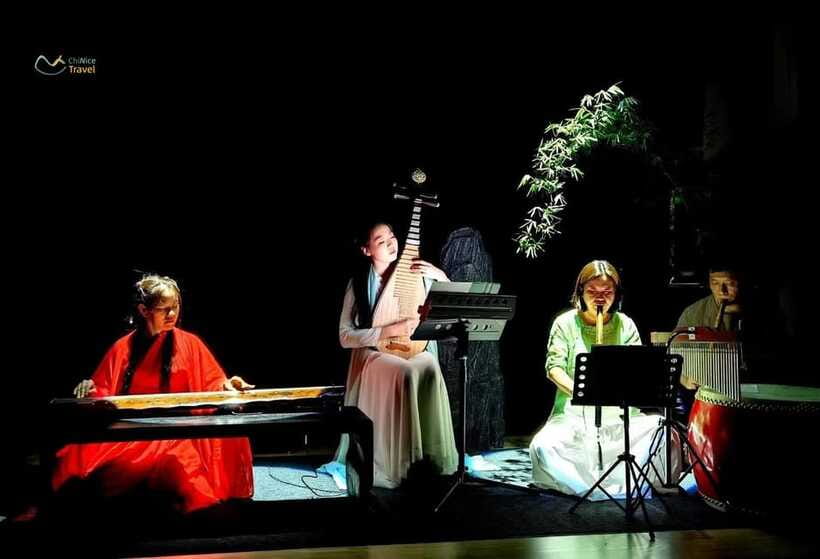
Next comes the Guqin. This is where the event leans into heritage in a very direct way: a national-level Guqin master performs on the ancient instrument.
You’ll hear why the Guqin is often compared to the giant panda of musical instruments—rare, treasured, and symbolic in Chinese cultural history. The event also emphasizes that the Guqin’s meaning connects with the rhythm of Chinese characters, which helps you listen differently.
Even if you don’t read music, you can still follow the mood and pacing. The goal isn’t to teach theory. It’s to help you experience the sound as something old and intentional.
3) Guqin learning: trying a simple melody yourself
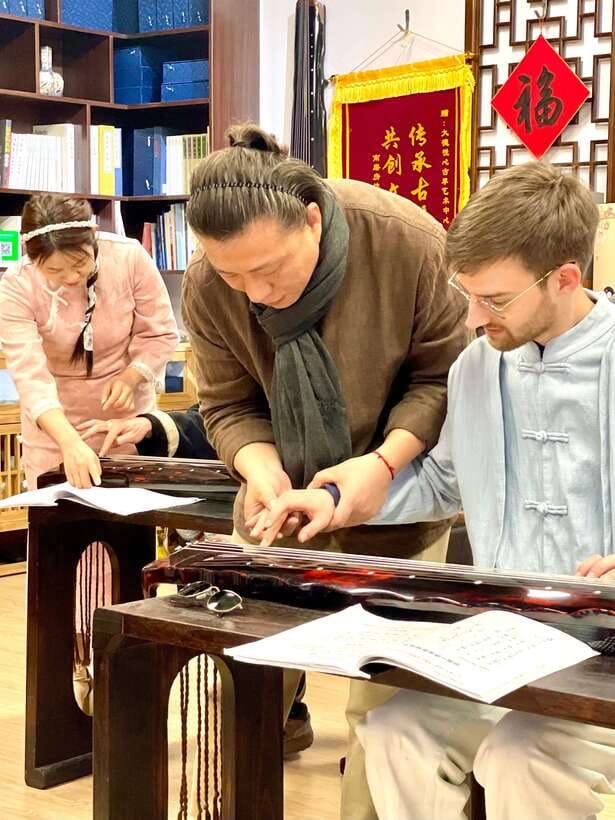
After listening, you get a guided Guqin class moment. You learn how to pluck a simple melody, with patient instruction from a tutor who is tied to the master/performance team.
This is the part many people underestimate, but it’s often the most memorable. You don’t need to be musical. You just need to follow directions, and the instructor helps you get a playable outcome.
If you’re curious, ask for help on how to position your hands and how lightly you need to pluck. Small corrections make a big difference on string instruments.

4) Calligraphy: from character evolution to writing your own
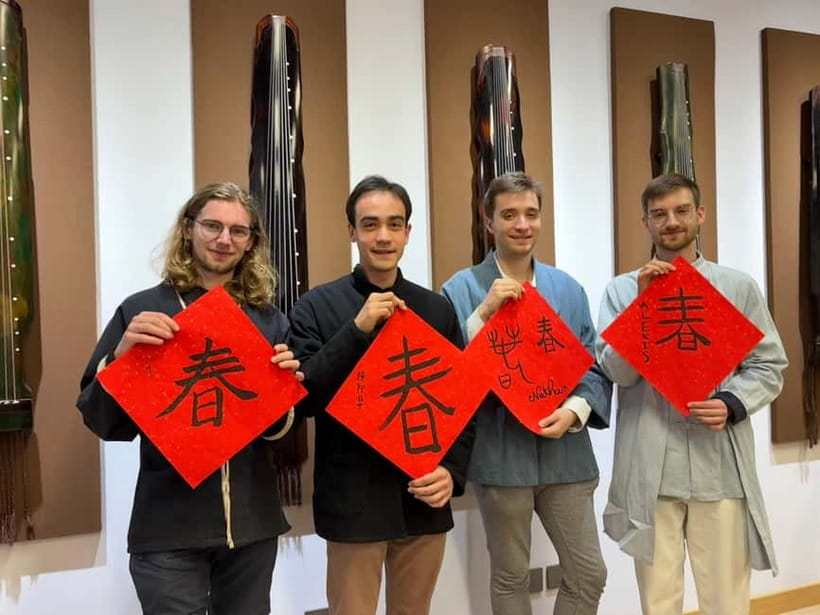
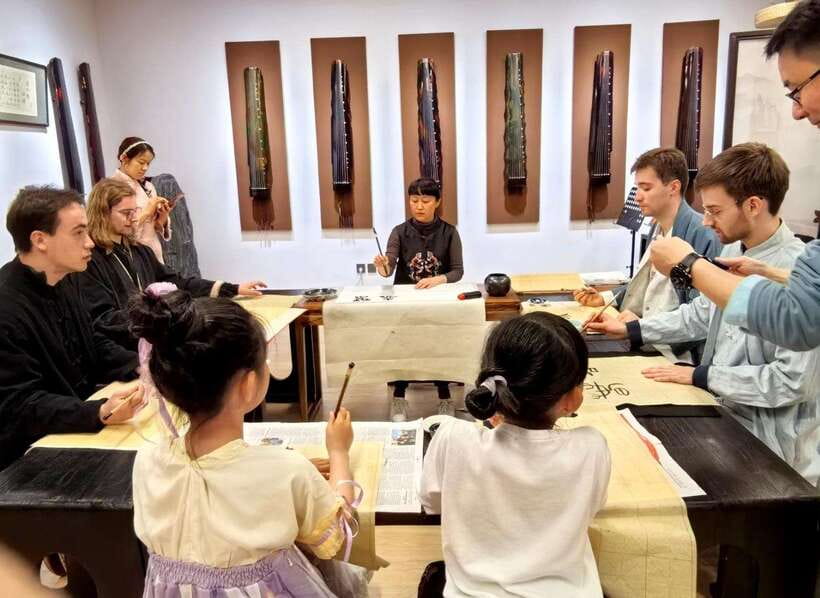
Then you move to calligraphy. You’ll get an introduction to how Chinese characters evolved—from ancient pictographs through traditional styles—and then you try writing with brush and ink.
Your hands will do the work here. You’ll write your own meaningful symbol, guided by the instructor, so you leave with something personal rather than a souvenir booklet.
Pro tip: calligraphy feels intimidating until you realize it rewards calm, repeated strokes. Go slow. It’s okay if your first attempt isn’t perfect.
5) Traditional attire and ritual: hanfu dressing and honoring your teacher
A big part of why this feels like a real cultural setting is the hanfu rental. You dress for the ceremony and then participate in a traditional ritual honoring your teacher.
This isn’t only photo-friendly. It helps you understand how these arts are practiced with ceremony and respect. For many people, that shift in atmosphere is what turns the event from educational to meaningful.
Wear comfortable clothes for dressing time. Hanfu can be a little tricky if you’re in tight or overly layered outfits.
6) Deep cultural insight from a bilingual expert (academic-level background)
Between the arts, the guide provides context. You’ll be accompanied by a bilingual cultural expert with a Master’s degree in History and Sociology.
This matters because you’re not just learning steps; you’re learning what the objects and actions symbolize. The guide explains hidden layers of meaning behind movements, objects, and sound.
If you like your cultural experiences explained clearly (without turning it into a lecture), you’ll likely appreciate this approach.
Price and value: is $79 per person fair for this much practice?
At $79 per person, this sits in the mid-range for Beijing “culture experiences.” The best way to judge it isn’t just the cost—it’s the amount of structured instruction you get.
You’re paying for:
- A small-group setting (max 8)
- A tea ceremony taught step-by-step with porcelain teaware
- A Guqin performance plus a short Guqin class
- Calligraphy instruction with brush-and-ink practice
- Hanfu rental and a traditional ritual component
- Photoshooting and included original souvenirs
- A bilingual guide with strong academic background
Also, transportation isn’t included, and meals aren’t included. So you’ll likely add a transit buffer and plan for what you’ll eat before or after.
Where the value really lands: if you want tea + music + writing all in one morning/afternoon, and you want hands-on teaching inside a more controlled, certified environment. If you only want one part (say, just tea), it might feel like you’re buying extra. But as a first-timer package of Chinese arts, it’s very efficient.
Where you meet and how to keep it stress-free
You’ll meet at Huagong Station, Line 7, Exit C. The meeting point is about 30 minutes away from the Temple of Heaven area, depending on how you’re getting there.
The experience ends back at the same meeting point, which helps you avoid the “now how do I get back?” problem.
A few practical tips to make this easy:
- Arrive 10 minutes early so you’re not rushed when dressing and preparations begin.
- Bring your camera if you want photos during the photo session and ceremony.
- Dress in comfortable clothes for hanfu dressing time.
If you’re navigating Beijing transit, keep it simple: get to the Line 7 corridor, then use Exit C. Having the exact exit matters more than people expect.
Tea Ceremony details: what you should pay attention to
The tea part is built around the Six-Step Tea Art method. That means you’re practicing a sequence, not repeating random motions. The porcelain tea set matters because the event is designed around how tea changes in your experience from step to step.
Here’s what to watch for during tea:
- Aroma shifts: smell is usually the fastest way to notice differences.
- Color changes: different teas show in different hues.
- Taste layering: you’ll notice how flavor evolves rather than arriving all at once.
And yes, you’ll get water/tea included, so you’re not expected to buy refreshments mid-session.
If you’ve had tea before but never learned technique, this is a good place to start. You’ll leave with a better sense of what makes tea quality feel different, even when the teas are familiar.
Guqin concert and class: listening with context, then making a note
The Guqin performance is the emotional centerpiece for many people. You’re told directly that the Guqin has deep symbolic standing in Chinese culture, and you’ll hear it performed by a heritage master.
What makes the experience more than a show is the built-in learning. You’re guided through a simple melody, so you’re not only a spectator. You get a small moment of participation.
A helpful mindset: don’t judge yourself by how quickly you can play. The goal is communication with the instrument—calm, controlled plucking and a sense of timing. If you can follow instructions and stay relaxed, you’ll do better than you think.
Also, because the guide provides cultural meaning, you can connect the sound to how Chinese characters and rhythm are discussed in the experience. That context helps your listening click into place.
Calligraphy and hanfu: leaving with something personal
Calligraphy is one of those arts where practice beats talent. You start with an overview of character evolution and major traditional styles, then you try brush and ink for yourself.
Your takeaway is not just a lesson—it’s a written symbol you create with meaning. That makes it practical to remember: you can look at your symbol later and recall the session that shaped it.
The hanfu element adds a second layer. It’s not only costume; it’s part of the ceremony atmosphere. You dress in traditional attire and participate in a ritual honoring your teacher, which gives the calligraphy practice a sense of continuity rather than isolated activities.
Don’t overthink outfit choices—just remember comfortable clothing for dressing time. You’ll be glad you did when you’re getting set up and adjusting fabric.
Who this experience suits best (and who should rethink it)
This event works especially well if you:
- Want a compact intro to multiple Chinese arts in one visit
- Enjoy hands-on learning, even if you’re a beginner
- Like small groups and clear guidance
- Want a culture-focused activity that’s also photo-friendly
It might be less ideal if you:
- Only care about one specific element (tea only, for example)
- Want long practice time or advanced coaching
- Prefer fully independent sightseeing rather than structured teaching
The best match is usually a curious first-timer who wants authenticity and structure without spending hours trying to assemble everything alone.
A real-world tip: how the team helps you find your way
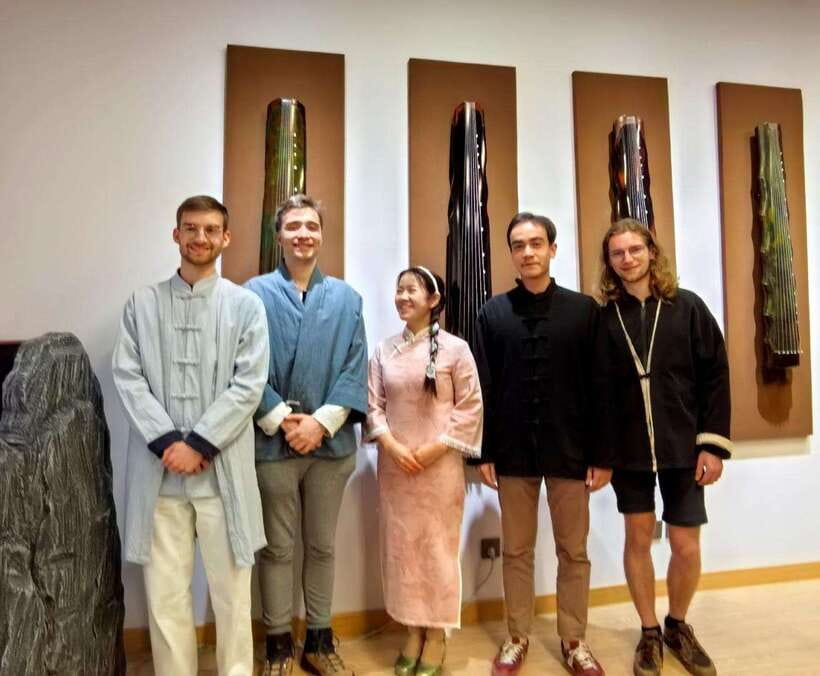
The meeting is straightforward on paper, but Beijing metro exits can confuse even experienced travelers. In one example, a team member named Sylvia met at the metro entrance to help people locate the art center easily.
That kind of handoff matters because it reduces stress before you even start the cultural parts. If you’re worried about transit, plan to arrive early and confirm you know the exact route to Exit C.
The team also asks in advance about allergies so tea can be catered appropriately. If you have food or tea sensitivities, mention them during booking or communication so you’re not improvising.
Should you book this Beijing Tea Ceremony, Guqin Show, and Calligraphy experience?
Book it if you want an efficient, hands-on cultural program with real teaching moments. The combination of tea ceremony technique, Guqin performance plus practice, and calligraphy with brush-and-ink writing gives you a well-rounded snapshot of Chinese arts in one sitting.
Skip it only if you’re searching for a long, deep training course in one discipline. This is a short, guided experience, and it’s meant to be a strong introduction rather than a multi-day immersion.
If your goal is memorable, authentic, and structured learning in a small group, this is one of the more practical ways to spend a couple hours in Beijing.
FAQ
How long is the experience?
It runs for about 2.5 hours. Starting times vary, so check availability for the schedule.
How much does it cost?
The price is $79 per person.
Where do we meet?
You meet at Huagong Station, Line 7, Exit C.
Is transportation included?
No. Transportation to and from the venue is not included.
What’s included in the price?
Included items are water/tea, ticket to the show, hanfu rental, photo shooting, Guqin class, a professional guide/tutor connected with the Guqin master performance, and original souvenirs.
What should I wear?
Wear comfortable clothes for the hanfu dressing session.
Do I need to bring a camera?
Bringing your camera is advised for the photo shoot.
What languages are offered?
The experience is guided in Chinese and English.
Is it a small group?
Yes. The group is limited to 8 participants.
Is it wheelchair accessible?
Yes, it is wheelchair accessible.