REVIEW · BEIJING
Beijing: Imperial Cuisine Experience & Cultural Performance
Book on GetYourGuide →Operated by PidanTravelAgency · Bookable on GetYourGuide
Royal food, minus the costume stress. At the Yuxiandu Imperial Cuisine Museum in Beijing, you get a museum trip that stays connected to the table, plus a staged cultural performance in a palace-style setting.
I like the way the museum frames Chinese imperial cuisine as a long, step-by-step evolution, from ancient times through the Qing Dynasty. I also love that the meal isn’t just dinner-theater; it’s built around classic court flavors and presentation.
One thing to weigh: the $137 price on the booking platform can sting, and your ticket does not include any traditional costume or makeup transformation—so go in wanting a great meal and show, not a full dress-up experience.
In This Review
- Key Points to Know Before You Go
- Step Into Yuxiandu’s Five-Thousand-Year Imperial Food Timeline
- The Royal-Style Banquet: What You Eat and Why It Works
- Timing That Actually Matters: Check-In and Show Start Times
- The Cultural Performance: Costumes, Music, Dance, and Court Mood
- Included vs. Not Included: Set Your Expectations
- Value for $137: Is It Worth the Price?
- Who This Beijing Dinner Show Is Best For
- The Practical Stuff: How to Make It Smooth
- Should You Book the Yuxiandu Imperial Cuisine Experience?
- FAQ
- How long is the Yuxiandu Imperial Cuisine Experience?
- What’s included in the ticket?
- Are traditional costumes and makeup transformation included?
- What time should I arrive for the lunch performance?
- What time should I arrive for the dinner performance?
- Do I need the QR code from the booking page to enter?
- Is it suitable for young children?
Key Points to Know Before You Go
- Five-millennia food story, museum first: you’ll see how royal dishes evolved across dynasties.
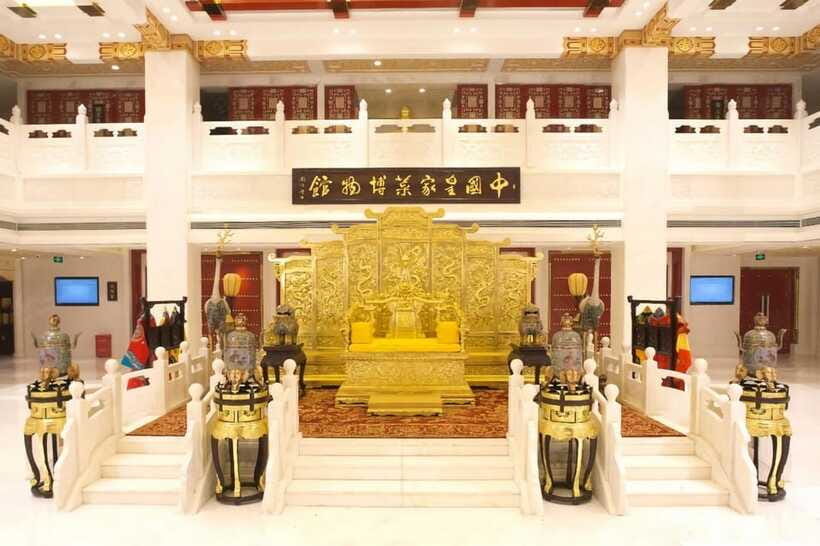
- A palace-style banquet setting: your meal is designed to feel like dining in an ancient court.
- An organized dinner-with-performance flow: you check in, eat, then head into the show space on schedule.
- Court-themed dishes you’ll actually taste: roast duck with jujube wood, sea cucumber and fish maw, longevity noodles.
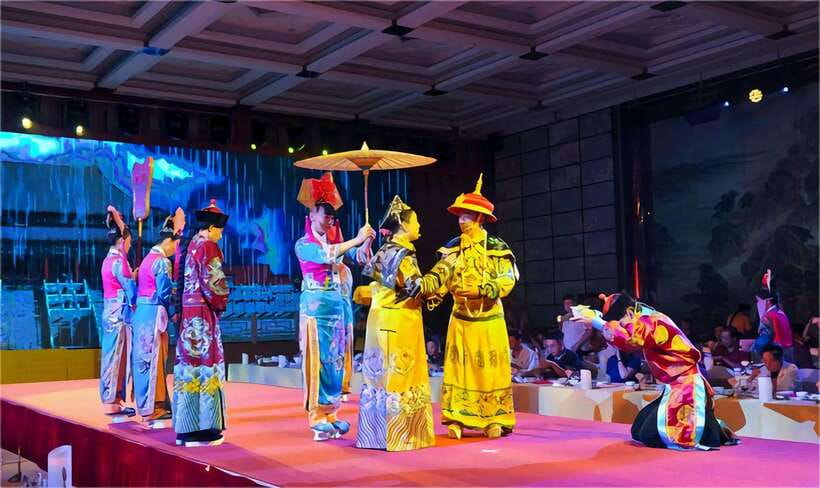
- The show is a major highlight: traditional costumes, music, dance, and court mood are part of the appeal.
- Platform tickets work a bit differently: your QR code isn’t the real entry pass—your actual ticket arrives by email.
Step Into Yuxiandu’s Five-Thousand-Year Imperial Food Timeline
Yuxiandu Imperial Cuisine Museum (in Beijing’s Haidian District, near Sijiqing Bridge) is built around one idea: imperial food is not random. It’s a system—ingredients, tools, rituals, and rank—changing across centuries.
What I find genuinely useful is that the museum doesn’t treat food as decoration. It presents the development of Chinese royal dishes from ancient times through the Qing Dynasty, with exhibits that connect what’s on a plate to what it meant for the court. You’ll move through displays explaining the dishes and the people behind them, including stories about famous royal chefs and how their work fit court life.
The museum’s artifact collection is described as over one thousand precious historical items. That includes dining utensils and valuable documents. In a place like this, that matters. You’re not just seeing photos of antiques—you’re seeing the kind of objects that explain why court meals looked and tasted the way they did.
This also helps you enjoy the meal more. Before dinner, you’re picking up context: luxury ingredients, refined preparation, and how a royal banquet could communicate power and ceremony.
You can also read our reviews of more tours and experiences in Beijing.

The Royal-Style Banquet: What You Eat and Why It Works
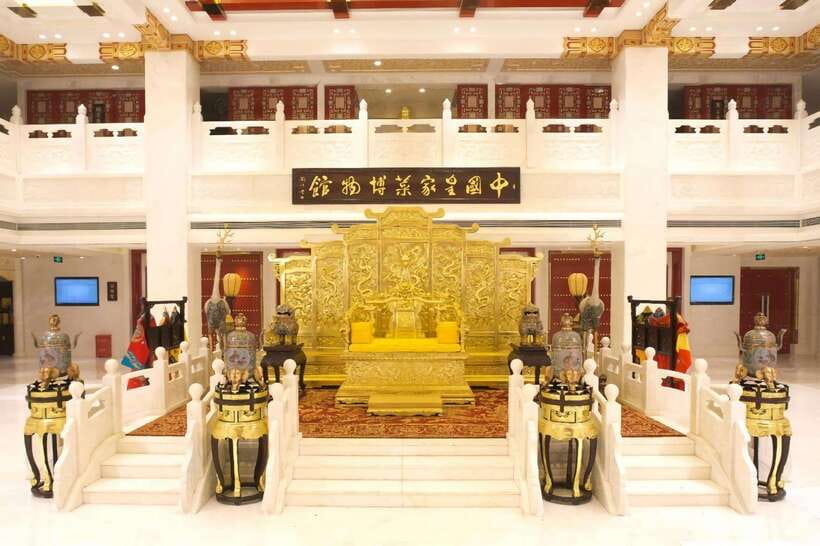
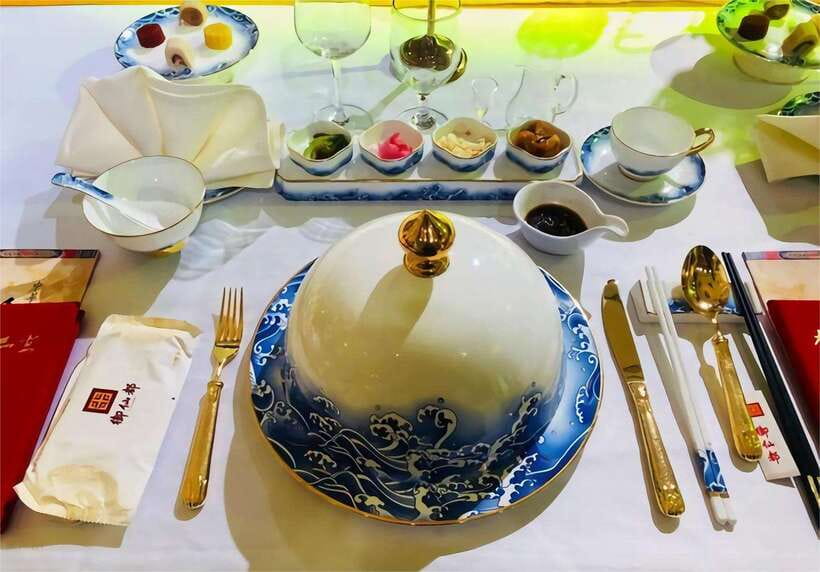
Your ticket includes the meal, and the restaurant setting is intentionally palace-like. The goal is simple: you’re not eating in a generic dining hall. You’re eating in a designed environment that echoes an ancient royal interior, so your senses stay “in theme” while you taste the lineup.
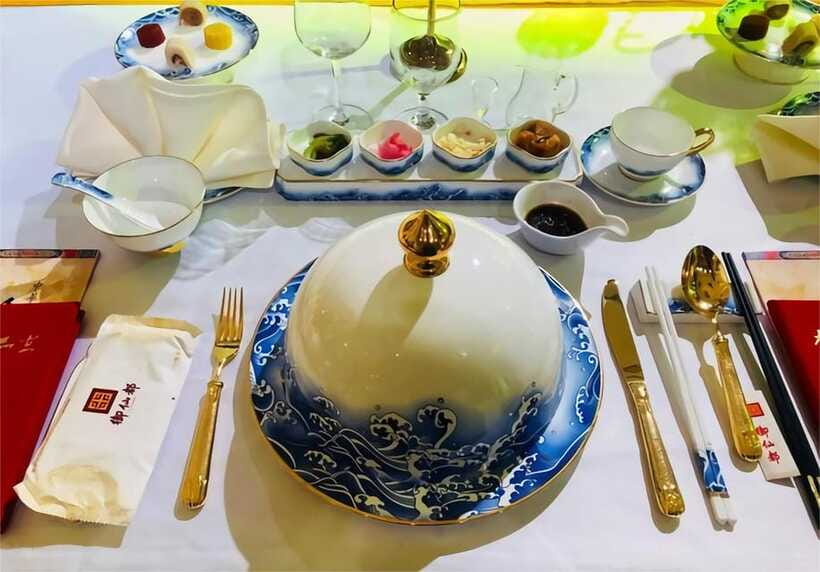
The menu is structured with snacks and then a sequence of courses. Here’s what’s listed for your meal:
- Appetizer platter
- Braised sea cucumber with fish maw in casserole
- Marinated tofu and bamboo shoots
- Roast duck with jujube wood
- Chinese cabbage in soup
- Roasted lamb
- Longevity noodles with poached eggs
- Deep-fried dough sticks (youtiao) with milk
- Yogurt filled with honey
What you’ll like about this list is the mix. You’re not only getting one style of Chinese food. You’ll hit several classic flavors: rich braising, fragrant roast notes, comforting noodle dishes, and a breakfast-style component with youtiao and milk. For a first taste of imperial cuisine, it’s a practical range.
It also helps that some dishes come with obvious “court ingredient” signals. Sea cucumber and fish maw have a reputation for being highly prized in Chinese luxury cuisine. Jujube wood for the duck is another clue that the flavor story is part of the tradition, not just marketing.
One more thing: meals like this move on schedule. Your best strategy is to eat confidently at each course pace, then settle into the rhythm. Don’t assume you’ll be sitting around deciding what to do next for an hour.
Timing That Actually Matters: Check-In and Show Start Times
This experience runs about 3 to 4 hours, and the schedule is tight enough that arrival timing is worth your attention.
There are two sittings, one for lunch and one for dinner:
- Lunch: ticket checking at 11:38 AM, performance starts 12:10 PM
- Dinner: ticket checking at 6:28 PM, show starts 6:50 PM
That means you should plan to be in the hall before the checking time window ends. The most practical move is arriving a few minutes early. It gives you time for queues, seating, and any small surprises that happen when groups check in at once.
Also, note this key ticket detail: the QR code you might generate on the booking platform is not your entry pass. Your real ticket is sent to you by email. So, before you head out, check your inbox and make sure you have the email ticket ready.
If you’re the type who hates being rushed, pick the sitting where your day is least chaotic. Timing pressure is real when a performance follows immediately after the meal.
The Cultural Performance: Costumes, Music, Dance, and Court Mood
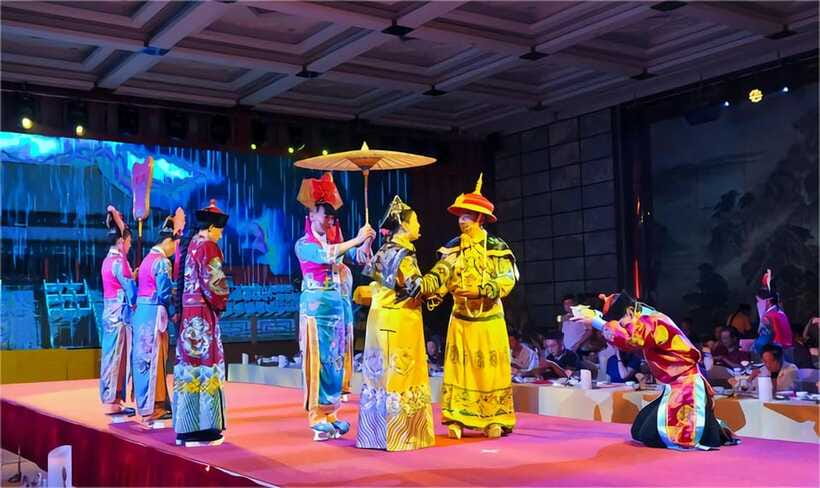
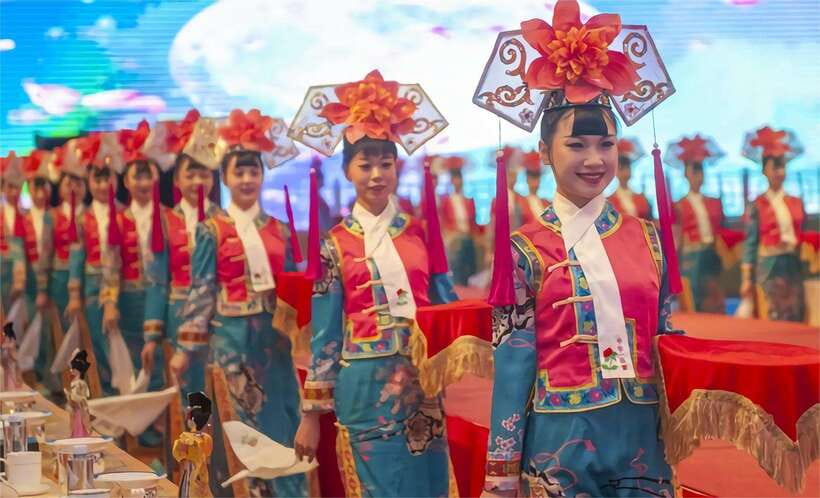
Your ticket includes the performance, and it’s not treated like background entertainment. The show is staged as a historical cultural performance with traditional costumes, music, and dance. Colors and visual design are part of the effect, and the court theme matches what you just ate.
This is one of the most praised aspects for a reason. The meal gives you the flavor story, then the performance gives you the atmosphere story. You get both the sensory side (food) and the storytelling side (performance).
What’s smart here is that you’re seeing the culture as performance art rather than just walking through rooms of artifacts. Even if you’re not fluent in Chinese, you can still track the mood through music, movement, and costume design.
If you’re only in Beijing for a short time, this added show time can be a good deal. You’re spending a chunk of your day in one place, and you’re getting more than a standard restaurant experience.
Included vs. Not Included: Set Your Expectations
Your package includes:
- Meal
- Performance
Your package does not include:
- Traditional costume
- Makeup transformation
So if you’re picturing a full dress-up experience, you’ll need to know upfront that you won’t get that included. That’s not a deal-breaker, but it changes the vibe. Think “royal banquet and court-themed show,” not “I’ll transform into a historical character.”
Also, kids under 2 years old are not suitable, and the venue is listed as wheelchair accessible. If you’re planning around family needs or mobility, that’s good to know early.



Value for $137: Is It Worth the Price?
Price is where you should do a quick reality check before you book, because $137 per person is not cheap.
Here’s how I’d judge value for this specific experience:
- You’re paying for two parts in one ticket: a structured meal plus a cultural performance. If you were to buy these separately, the convenience usually saves time, and sometimes money too.
- You’re getting context first via the museum’s imperial cuisine timeline and artifacts. That isn’t just decoration; it helps you understand why the dishes are what they are.
- The meal is a “set” banquet: multiple courses are included, not a single dish. That increases the chance you’ll leave satisfied even if you’re not sure what imperial cuisine will taste like.
- The palace-style setting adds to the experience. It’s harder to judge objectively, but the staged atmosphere is part of why people remember this more than a normal dinner.
One caution: platform pricing can feel high. If you find an option with the same show and meal at a lower cost through other channels, it may be worth comparing. But don’t compare only the price—compare what exactly is included in the ticket.
Who This Beijing Dinner Show Is Best For
This experience is a great fit if you want culture without over-planning.
You’ll likely enjoy it if:
- You like your Beijing evenings structured and easy to execute
- You want a taste-focused introduction to imperial Chinese cuisine
- You enjoy performances with strong visual design—traditional costumes, music, and dance
- You appreciate a museum stop that actually connects to what you eat next
You might think twice if:
- You don’t care about staged shows and only want food
- You’re hunting for a DIY, wandering-at-your-own-pace museum day
- You expect a costume/makeup transformation as part of the ticket (it’s not included)
The Practical Stuff: How to Make It Smooth
A few tips that can save you stress:
- Arrive early to checking time (a few minutes helps). The schedule is fixed, and the performance starts right after the meal window.
- Use your email ticket, not the QR code from the booking site page. Confirm it before you go.
- Go in hungry, but pace yourself. It’s multiple courses, and you’ll likely want to enjoy everything rather than rush through.
- Dress comfortably for a museum + meal + seated performance. You’ll be in one place for a few hours.
- If you have strong dietary needs, you should double-check in advance, since the menu is listed as a set lineup.
This is the kind of activity where good planning makes the difference between a fun night and a rushed one.
Should You Book the Yuxiandu Imperial Cuisine Experience?
I think you should book if you want a clean, one-ticket way to experience Beijing court culture: museum context, palace-style banquet, and a performance with traditional costumes, music, and dance. At $137, it’s best viewed as a combined cultural evening rather than just a restaurant meal.
Skip it only if you’re expecting included costume/makeup transformation, or if you dislike paying premium prices through a booking platform and would rather compare other options before committing.
If you’re doing Beijing in a hurry and want one memorable, themed night that pairs food with performance, this is a solid choice.
FAQ
How long is the Yuxiandu Imperial Cuisine Experience?
The experience runs about 3 to 4 hours.
What’s included in the ticket?
It includes the meal and the cultural performance.
Are traditional costumes and makeup transformation included?
No. Traditional costume and makeup transformation are not included.
What time should I arrive for the lunch performance?
Lunch ticket checking is at 11:38 AM, and the performance starts at 12:10 PM. Arrive a few minutes early so you can handle queues and seating.
What time should I arrive for the dinner performance?
Dinner ticket checking is at 6:28 PM, and the show starts at 6:50 PM. Arrive a few minutes early to get seated in time.
Do I need the QR code from the booking page to enter?
No. The QR code generated on the platform is not the actual ticket. Your real ticket is sent to you by email, so check your inbox.
Is it suitable for young children?
Children under 2 years old are not suitable.