REVIEW · BEIJING
China eSIM (3-30 days. Up to 60GB)
Book on Viator →Operated by Xplori · Bookable on Viator
Your phone can stay online without SIM hunting. This China eSIM for Beijing keeps you connected with local-rate 4G/5G data and lets you activate from a QR code after you order. You get a choice of 3 to 30 days, so it fits everything from a short trip to a longer stay.
I love the easy activation flow: delivery by email, scan the QR code, and you are connected within minutes. I also like the value at about $5, since it can be cheaper than airport SIMs and spares you the language-and-line scramble.
The only real catch is the phone requirement. If your device does not support eSIM, you will be stuck, and after the high-speed data cap you switch to slower 3G.
In This Review
- Key highlights before you buy
- How the China eSIM arrives (and why that matters in Beijing)
- The phone compatibility check you should not skip
- Activation in minutes: the QR code approach
- What connectivity feels like in Beijing and on the move
- Data speed rules: the cap, the 3G switch, and how to plan
- Picking 3 to 30 days: match the plan to your schedule
- Price and value: $5 is cheap, but only if it fits your needs
- Support and the end of your package
- Who should book this eSIM for China?
- Should you book this China eSIM?
- FAQ
- How long does the China eSIM last?
- How do I get the eSIM after booking?
- How do I activate the eSIM?
- Do I need an eSIM-capable phone?
- What speeds do I get, and what happens after I use the data allowance?
- Does it work beyond Beijing?
- Can I cancel and get a full refund?
Key highlights before you buy
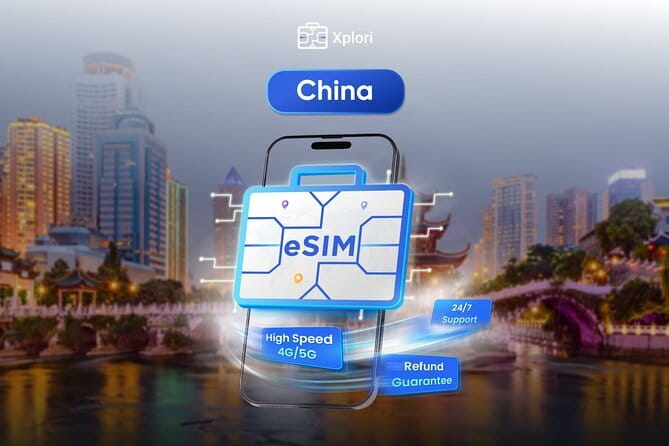
- Email delivery plus QR activation: no shipping, no counter lines, no SIM swapping
- 4G/5G local-rate data (where available): you can use maps and apps without roaming drama
- 3 to 30 days options up to 60GB: pick the length that matches your trip
- High-speed cap then 3G: faster data stops at your chosen allowance
- Works for moving beyond Beijing: connectivity has held up from Beijing to other cities
- Remote support from Xplori: help is available by email if you get stuck
How the China eSIM arrives (and why that matters in Beijing)
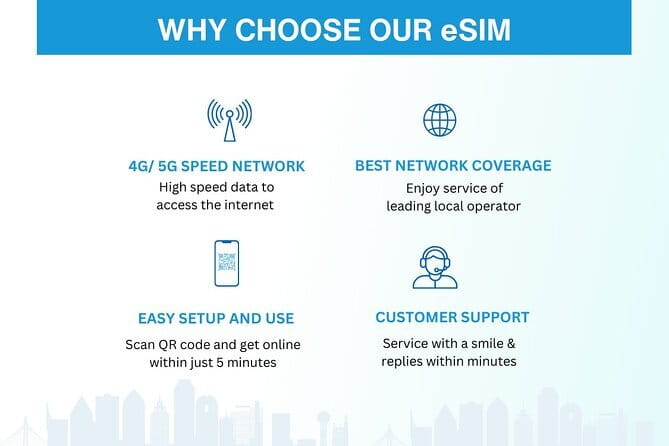
This is a purely digital product. Instead of getting a SIM card in the mail or meeting someone at a counter, you get the eSIM package sent to your email. Inside that email is what you need to activate—scan the QR code—and you can be online within minutes.
For a trip that starts in Beijing, that removes one of the most annoying airport rituals: standing around while you try to explain data plans with hand gestures. With an eSIM, you are basically doing the work before you land, which means you can get your bearings fast. That matters in Beijing, where you’ll likely be flipping between maps, translations, tickets, and ride-hailing.
Price-wise, the offer is positioned as cheaper than buying at the airport. At around $5 per person, that makes it an easy add-on, especially if you have a group and you all want the same simplicity.
You can also read our reviews of more tours and experiences in Beijing.



The phone compatibility check you should not skip
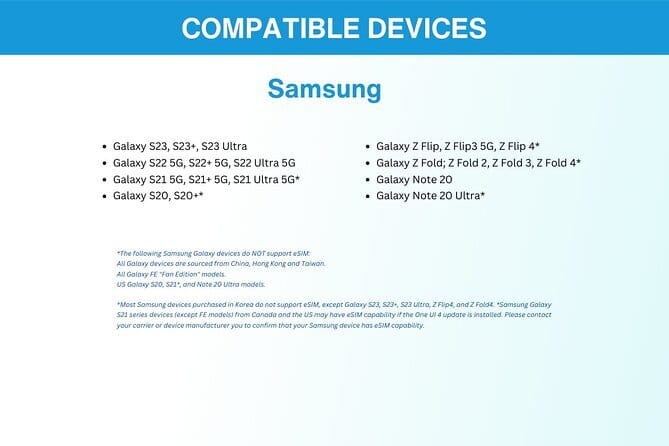
Before you assume you are good to go, check eSIM support. The listing is explicit about which phones work: iPhone XS and later, Pixel 3 and later, and Samsung S20, S21, and Fold.
If your phone is older, or if it uses a SIM-card-only design, this won’t magically work. You will want to double-check before you leave. If you are unsure, the provider says to contact them in advance.
One practical tip: do not wait until the moment you are stepping off the plane. If you discover you cannot use eSIM, your best options at that point are usually more expensive, more stressful, and more complicated.
In short: if your phone supports eSIM, you get freedom. If it doesn’t, you lose the main advantage.
Activation in minutes: the QR code approach
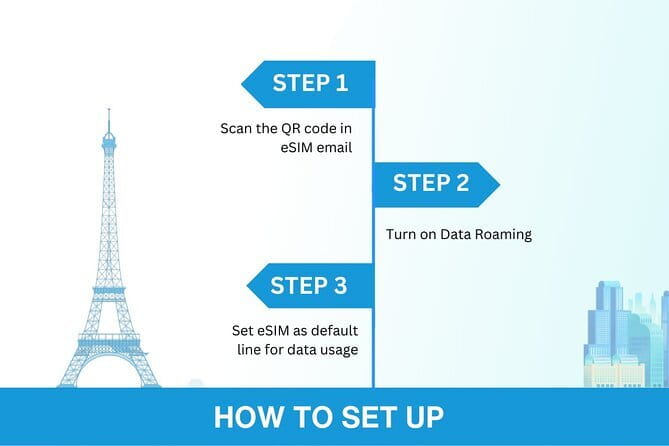
Once you place the order, you receive the eSIM delivery by email. The activation steps are straightforward: scan the QR code, activate the eSIM profile, and you should be connected within minutes.
A smart strategy is to add the eSIM profile before you travel, then turn it on after you arrive. One real-world approach mentioned is adding the eSIM on the iPhone before departure, then switching it on once you reach the destination so the internet is ready when you land. That cuts down the time you spend trying to troubleshoot settings mid-flight.
You do not need a meetup, and there is no physical handoff. That makes the process feel more like setting up an app than doing telecom chores.
Just remember: turning on the eSIM at the right time is part of the flow. If you forget, you can end up staring at a phone that is technically configured but not actually active.
What connectivity feels like in Beijing and on the move

The eSIM is built for 4G/5G data (where available) during your trip at local rates. In other words, you are not buying a token that only works at certain times of day. You’re buying mobile data you can actually use to plan your day and navigate.
In terms of real performance, the feedback you can rely on is mixed-but-positive:
- Some experiences describe strong connection traveling from Beijing to other cities.
- Others call the connection okay, not always rock-solid, but still worth it because the price is low.
So here is the balanced advice I’d give you: treat it as a dependable baseline for maps, messaging, and regular app use, not as a guaranteed unlimited-speed experience everywhere at all times. Mobile data can vary by neighborhood, building density, and network conditions.
Still, the big win is that you can stay online while you move around. The point is to avoid the constant question of whether you can find your next bus stop, translate signs, or pull up your tickets.
Data speed rules: the cap, the 3G switch, and how to plan

This is the part that decides whether the eSIM fits your travel style: high-speed data is capped, and after that your speed drops to 3G.
The service is offered as an eSIM with a mobile data package for the duration you select. The overall product positioning is up to 60GB, but your chosen plan length determines your actual allowance.
What does that mean for your day-to-day use?
- If you use data for navigation, messaging, and basic app browsing, the high-speed portion usually lasts well.
- If you stream video, do heavy social uploads, or rely on mobile gaming, you may hit the cap sooner. One set of feedback mentions smooth browsing, streaming videos, and gaming without lag, which suggests the early high-speed period can be genuinely fast.
After the cap, 3G may still keep you connected, just slower. That is often enough for maps and messaging, but it can feel frustrating for anything data-hungry.
My recommendation: decide what you need data for.
- Light user: go shorter (3 to 7 days) if that matches your trip.
- Heavy user: choose a longer duration so your allowance is larger.






Picking 3 to 30 days: match the plan to your schedule

The eSIM comes with options for 3 to 30 days, so you can align it with how long you’ll be in China. If your Beijing portion is only a few days and you mostly rely on Wi-Fi at hotels, the short option can make sense.
If your trip is longer—or if you plan to be out all day with maps and apps—an extended plan is usually a better fit. Even if you do not use data constantly, a longer package gives you more headroom if you suddenly start using your phone for more than you planned.
Also think about your trip rhythm:
- Busy sightseeing days = more navigation and more data use.
- Rest days = less strain on your mobile allowance.
- Overnight travel or long rides = more dependence on your phone.
This is one of those travel choices where you can save money by picking the shorter plan, but you should not gamble if you know you’ll be streaming or uploading constantly.
Price and value: $5 is cheap, but only if it fits your needs
At about $5 per person, the value here is strong. The eSIM is positioned as a way to pay less than airport SIMs while avoiding language barriers and time spent on setup.
That’s the key: you are not only buying data. You are buying reduced friction.
If you have ever bought a SIM at an airport, you know the drill—finding the right counter, waiting your turn, arguing about plans, and then realizing something is not set up the way you expected. With an eSIM, that friction drops dramatically.
That said, price only feels like a bargain if:
- your phone supports eSIM,
- you activate it correctly from the QR code,
- and your data needs match the speed cap and duration.
If you do not meet those three, even a cheap plan becomes an expensive mistake.
So treat the low price as a benefit for people who want to plan ahead. If you are the type who forgets to check compatibility until the last minute, you may want to build in extra buffer time or consider a backup option.
Support and the end of your package

This product includes remote customer service via email from the provider. If you run into activation issues, that’s your lifeline.
Because it is delivered by email and activated by scanning a QR code, you can also expect fast troubleshooting compared to “wait for shipping” problems. You still need to have your phone ready and supported, but at least you are not waiting for a package.
Your eSIM includes mobile data access for the duration you selected. When that time ends, your package is over. So if you are traveling right up to the edge of your selected dates, make sure your plan length matches your actual trip.
Who should book this eSIM for China?
I’d book this if you want:
- easy setup with QR code activation
- a no-fuss way to use maps and apps from the moment you land
- the ability to handle a multi-day stay without hunting for physical SIM cards
- a budget-friendly option around $5 that still supports real-world web use
It’s also a good choice if you are traveling with friends or family and you do not want everyone sharing one hotspot.
If you are a true low-data user and you will rely mostly on hotel Wi-Fi, a shorter plan may be enough. If you stream a lot or upload constantly, you’ll want to pay attention to the high-speed cap and choose the option that gives you enough allowance.
Should you book this China eSIM?
If your phone supports eSIM and you can activate from your email QR code before or right after you land, I think this is a smart buy. The main reason is simple: it removes the airport stress, gives you connectivity quickly, and costs far less than the usual telecom scramble.
I would not book it if you’re unsure about eSIM compatibility, because that is the one obstacle that can’t be fixed at the airport without extra hassle. Also, if you depend on heavy streaming or gaming for many days, be realistic about the high-speed cap and the 3G speed shift afterward.
If you want a practical, low-cost way to stay connected in Beijing and beyond, this is an easy yes—as long as your phone is ready.
FAQ
How long does the China eSIM last?
You can choose a plan for 3 to 30 days, depending on the length of your trip. Your eSIM includes mobile data access for the duration you selected.
How do I get the eSIM after booking?
The eSIM is delivered to you by email, including the information you need to activate it. There is no physical pickup or meetup.
How do I activate the eSIM?
After you receive the email, you scan the QR code to activate the eSIM profile. The plan says you can be connected within minutes.
Do I need an eSIM-capable phone?
Yes. The listing specifically mentions iPhone XS and later, Pixel 3 and later, and Samsung S20/S21/Fold. If you are unsure, you should contact the provider in advance.
What speeds do I get, and what happens after I use the data allowance?
You get 4G/5G (where available) data. High-speed usage is capped at the mentioned amount, and after that the speed switches to 3G.
Does it work beyond Beijing?
The connection is described as working from Beijing to other cities during a trip, so you can plan on using it while moving around within China.
Can I cancel and get a full refund?
Yes. Cancellation is free, and you can cancel up to 24 hours in advance for a full refund. If you cancel less than 24 hours before the start time, you will not get a refund.