REVIEW · BEIJING
China’s Favourite Street Food Cooking Workshop
Book on Viator →Operated by Our Beijing · Bookable on Viator
Jian bing tastes different when you make it. This private Beijing street-food workshop is built around jian bing, starting with a quick story about where it comes from, then moving straight into hands-on cooking with your instructor’s help. You get a mobile ticket, a focused 1.5-hour class, and a class layout that’s all about getting your hands dirty and your appetite fed.
What I like most is how hands-on it stays. You’re not stuck watching from the sidelines, because you can make the batter and cook on the pan yourself. Second, I love the variety of choices for fillings and flavors—you can go traditional savory, or go sweet with options like chocolate and banana.
One consideration: at $80 for about 90 minutes, this is a value play only if you want the coaching time and the customization. If your main goal is just to eat jian bing quickly, you might get more sheer food time from street stalls.
In This Review
- Key things that make this workshop worth your time
- From Hutong street corners to your own jian bing
- Getting started: Shi Que Hu Tong meeting point
- How the 1.5-hour class actually runs
- Fillings are the real fun: savory classics and sweet twists
- Why the private format feels more satisfying
- Instructor Dom and the story-technique combo
- Price and value: $80 for a hands-on private meal class
- Who should book this Beijing street-food workshop
- Practical tips before you go
- Should you book this jian bing workshop or skip it?
- FAQ
- How long is the China’s Favourite Street Food Cooking Workshop?
- How much does the Beijing jian bing workshop cost?
- Is this workshop private?
- Where do we meet for the workshop?
- Do we end back at the same place?
- What do I learn to make?
- Can I choose different fillings, including sweet options?
- Do I get a mobile ticket?
- What if plans change and I need to cancel?
- Is it easy to reach using public transportation?
Key things that make this workshop worth your time
- Private class for your group: you get instructor attention instead of sharing time with strangers.
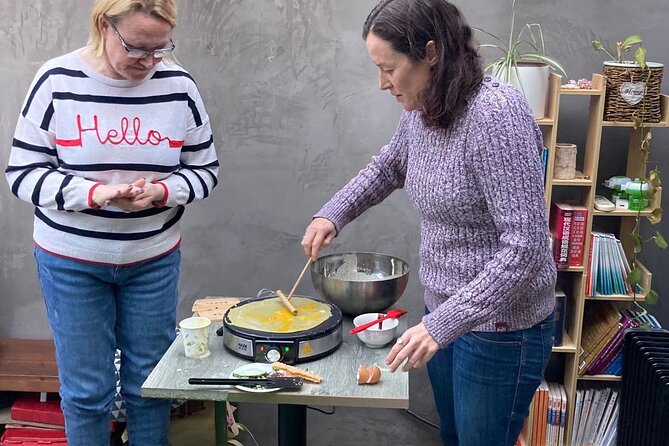
- You cook, you don’t just watch: batter-making and pan cooking are part of the fun.
- Fillings range from savory to sweet: think classic flavors plus dessert-style combos.
- History is taught in a story-driven way: the instructor’s explanation helps the technique stick.
- You can leave with practice-ready knowledge: you’ll learn an approach you can repeat at home.
From Hutong street corners to your own jian bing
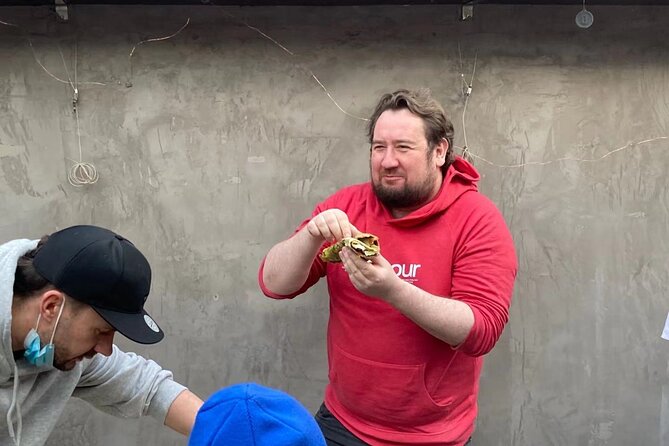
Beijing street food has a special rhythm: quick, hot, and made for people who are hungry now. This workshop takes that same idea and slows it down just enough for you to learn the mechanics. You start by learning where this favorite street snack comes from, then you move into making your own creations with the help of the instructor.
The best part is that the experience doesn’t treat you like a tourist holding a camera. You’re there to make jian bing from scratch, experiment with fillings, and build flavors that match what you actually like. The goal isn’t to memorize a script. It’s to pick up the technique so you understand what you’re doing when you put ingredients on the pan.
The tone is also practical. It’s not an academic food lecture. It’s a workshop that aims for good results and good eating, so you finish with a clearer sense of how jian bing is put together and how you can customize it.
You can also read our reviews of more tours and experiences in Beijing.



Getting started: Shi Que Hu Tong meeting point
You meet at 10 Shi Que Hu Tong, Dong Cheng Qu, Bei Jing Shi, China 100010. That address puts you in the Hutong area, which is fitting, since jian bing is closely tied to street life in Beijing. The good news is that it’s listed as being near public transportation, so you should be able to reach the meeting point without a long taxi hunt.
Because you’re in a narrower neighborhood, I’d plan to arrive a touch early. Even with public transport nearby, the last stretch can take a minute while you confirm you’re at the right spot. If you’re juggling it with other Hutong plans, treat this as a dedicated activity block rather than something to squeeze in at the last second.
The session ends back at the meeting point, so you don’t need to puzzle out a separate drop-off location. For a short class, that simplicity matters.
How the 1.5-hour class actually runs
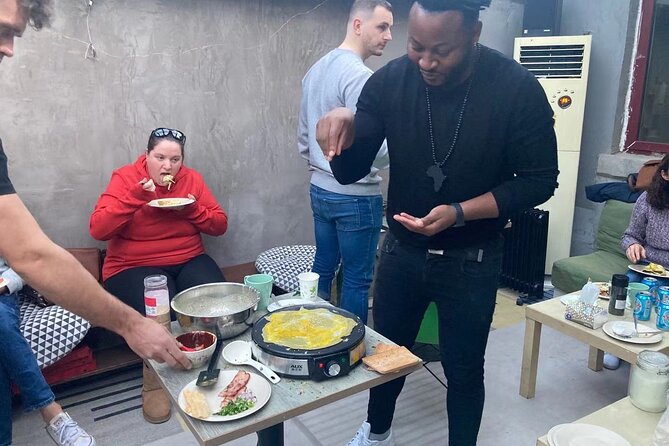
The workshop lasts about 1 hour 30 minutes, with the experience ending where you start. While the exact minute-by-minute schedule isn’t spelled out, the flow is clear: explanation first, then hands-on cooking, then tasting and experimenting.
You begin with context—learning where Beijing’s favorite street snack comes from. Then the instructor shifts into technique, showing you how jian bing is made and where the key steps happen. One participant described it as an entertaining history story followed by a clear method, and that matches the way the workshop is framed: you get the background and the practical steps, not just one or the other.
After the demo, you go to work. The class is designed so you can make the batter/dough and cook on the pan yourself. That hands-on approach is what makes the time feel worth it. You’re not waiting for someone else to do the interesting part.
Then you personalize. You try different flavors and fillings, building variations as you go. You’re basically learning how street vendors get variety without changing the whole process—swap fillings, adjust your choices, and keep the base method.
Fillings are the real fun: savory classics and sweet twists
Jian bing is famous for being adaptable. This workshop leans hard into that idea by letting you try different fillings and flavors, so your jian bing doesn’t have to be a one-note experience.
On the savory side, you can go with traditional options. On the sweet side, you can experiment with flavors like chocolate and banana, which is a fun contrast to the usual eggy, savory street-food vibe. That matters because it keeps the workshop from feeling like a single “correct” answer.
I like that the class frames this as learning to make jian bing with ease. Once you get the base technique, your fillings become a playground. Sweet-to-savory switching also helps if you’re coming with mixed preferences in your group—one person can keep it classic while another goes for the dessert route.
In practice, you’ll likely taste your own creations as you make them. That tasting-by-doing format is one reason this feels more like a cooking class than a simple food demo.
Why the private format feels more satisfying
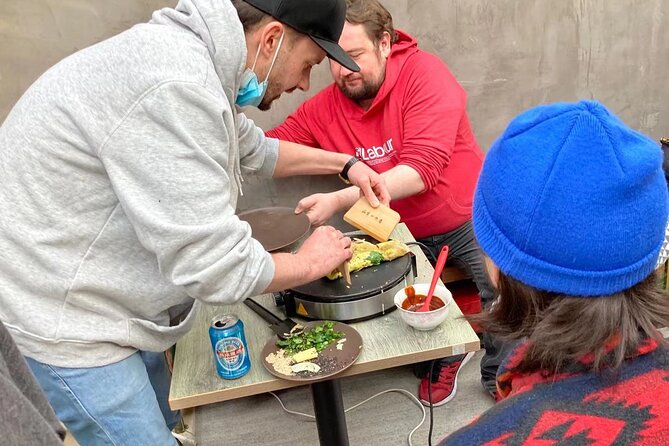
This is a private tour/activity, meaning only your group participates. That changes the whole vibe. In a shared class, you often end up waiting your turn for attention. Here, you get help when you need it, with less time lost to logistics and more time spent practicing.
You also get personalized guidance. If you’re new to cooking or you’re the type who wants to ask questions as you go, the private format supports that. If you’re traveling with kids, it’s also easier to keep everyone engaged when the session isn’t split across unrelated groups.
Private doesn’t just mean comfort. It means feedback. When you’re cooking on a hot pan and building batter technique, small corrections help. A private setup makes those corrections easier to receive in real time.





Instructor Dom and the story-technique combo
The instructor named Dom is specifically mentioned in multiple accounts for teaching both history and technique. That’s important because it connects the why to the how. You’re not just learning steps; you’re learning the context behind why this street food became a favorite.
A story-driven history also makes the session feel lighter. Food classes can turn dry fast if they focus only on “do this, then that.” Here, the history part is presented in an entertaining way, which makes the hands-on part easier to follow.
Dom is also described as being there to help when needed. That’s exactly what you want in a workshop like this. Cooking can be fiddly, and jian bing is best learned by doing. Having the instructor ready for questions makes your first attempts more successful.
Price and value: $80 for a hands-on private meal class
$80 for about 1 hour 30 minutes puts this in the “pay for coaching” category. It’s not a low-cost street food stop. You’re paying for the instructor’s time, the private setup, and the fact that you get to make and cook multiple jian bing variations with guidance.
So the value question is simple: do you want to learn, or do you just want to eat? If you want to eat, street carts can be cheaper. If you want to learn the technique and customize fillings, this is a focused use of time.
Also, private experience tends to cost more because it’s not shared. You avoid the bottleneck effect where you spend half the class waiting. That’s a real value point in a cooking format where practice time is the product.
One more possible value bonus: some participants reported receiving ingredients to take home. That can extend the usefulness of the class beyond the 90 minutes. If you’re thinking ahead to making jian bing later, ask what (if anything) you’ll be given to continue at home.
Who should book this Beijing street-food workshop
This workshop fits best if you fall into any of these groups:
- You love food and want a skill, not just a snack.
- You want a kid-friendly activity that still includes real cooking, not just watching.
- You’re traveling with friends or family who have different taste preferences and want both savory and sweet options.
- You’re a Beijing first-timer who wants an authentic street-food flavor but prefers a guided, less-chaotic way to learn.
If you’re cooking-shy and you fear you’ll get lost in steps, a private instructor helps a lot. If you’re already an experienced home cook, you’ll probably appreciate the structured technique and the instant flavor experimentation.
If you’re short on time and you only want a quick bite, you may prefer street-food hopping instead. But if you’re building your Beijing trip around culture you can taste and repeat later, this is a strong choice.
Practical tips before you go
Here are the small things that can make a big difference with a cooking workshop:
- Wear clothes you’re okay getting a little messy. Even if it’s controlled, you’re making batter and cooking.
- Come hungry enough to enjoy the food you make. The point of the class is both learning and tasting.
- If you have sweet preferences or mixed tastes in your group, go in excited about trying both traditional savory and sweet options.
- Use the mobile ticket when you arrive. It’s listed as a mobile ticket experience.
- Since it’s near public transportation, build time for the last walk to the Hutong meeting point.
Service animals are allowed, which is helpful if you travel with one. That kind of clarity makes planning easier.
Should you book this jian bing workshop or skip it?
If you want a memorable Beijing food experience that’s more than tasting, I’d book it. The combo of hands-on cooking, private attention, and filling variety makes it feel like you’re leaving with something useful, not just something eaten.
Skip it if $80 for 90 minutes feels too steep for your travel style, or if you’d rather spend your time hunting down street stalls on your own. Also, if you dislike sweet flavors and don’t want to customize at all, you might not use the workshop’s biggest strength.
But if you like the idea of becoming your own jian bing chef for an afternoon, this workshop is an easy yes.
FAQ
How long is the China’s Favourite Street Food Cooking Workshop?
It lasts about 1 hour 30 minutes.
How much does the Beijing jian bing workshop cost?
The price is listed as $80.
Is this workshop private?
Yes. It’s a private experience, and only your group participates.
Where do we meet for the workshop?
You start at 10 Shi Que Hu Tong, Dong Cheng Qu, Bei Jing Shi, China 100010.
Do we end back at the same place?
Yes. The activity ends back at the meeting point.
What do I learn to make?
You learn how to make jian bing from scratch, with the option to add a variety of fillings and flavors.
Can I choose different fillings, including sweet options?
Yes. You can try different flavors and fillings, including both traditional savory and sweet options such as chocolate and banana.
Do I get a mobile ticket?
Yes. The experience includes a mobile ticket.
What if plans change and I need to cancel?
Free cancellation is available up to 24 hours in advance for a full refund.
Is it easy to reach using public transportation?
It’s listed as being near public transportation. Service animals are also allowed.