REVIEW · BEIJING
Chinese Kung Fu Experience Class in Beijing
Book on GetYourGuide →Operated by Beijing Sanfeng Tai Chi Club · Bookable on GetYourGuide
Kung fu in Beijing feels more grounded than you’d expect. You get a qualified Kungfu master, clear English-speaking instruction, and training in the calm setting of the Temple of Heaven gardens. One watch-out: in at least one class, the instructor demonstrated a punch up close without warning, so it pays to tell them your comfort level before you practice.
In 1.5 hours, you’ll work on practical basics: stances, kicks, punches, a five stance fist form, plus joint-locking and self-defense style techniques. It’s a private group experience, so you’re not stuck watching from the sidelines. If you’re looking for a culture-meets-movement activity (not just photos), this class is a strong fit.
In This Review
- Key highlights
- Why Kung Fu Here Feels Different Than a Stage Show
- Getting There: The Temple of Heaven East Gate Meeting Point
- The 1.5-Hour Class Flow: Stances, Form, and Technique
- What You Actually Learn: Five Stances and the Point of Good Form
- Joint-Locking and Self-Defense: Learn the Intention, Not the Threat
- Price and Value: Is $68 Reasonable for 1.5 Hours?
- Who This Class Suits Best (And Who Should Skip It)
- What to Bring (So You Don’t Feel Rushed)
- Should You Book This Beijing Kung Fu Experience?
Key highlights
- Master Eric’s patient coaching for beginners and curious travelers
- Temple of Heaven East Gate setting with a peaceful, scenic class location
- Five stance fist form practice focused on building correct basics
- Joint-locking and self-defense fundamentals taught in a simple, learnable way
- English and Chinese instruction so you can actually follow along
- A tight 1.5-hour session that works well as an afternoon or morning add-on
Why Kung Fu Here Feels Different Than a Stage Show
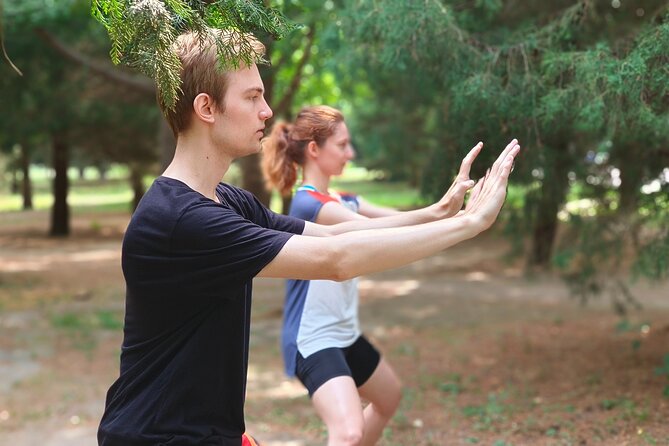
Chinese Kung Fu 功夫 is popular worldwide because of movie stars and action cinema. But in a real training setting, it’s usually about more than fighting. The heart of Kung Fu is also moral cultivation, body building, and aesthetic appreciation. In other words, you’re not just learning to move. You’re learning discipline, control, and how posture and focus affect what your body can do.
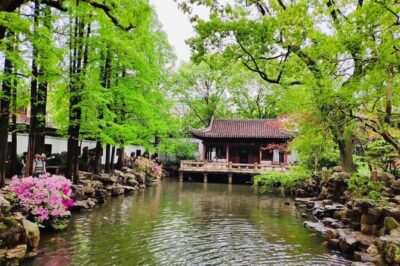
This class is held in the gardens at the Temple of Heaven area, which changes the mood fast. Instead of a gym-like environment, you’re in a calmer outdoor space where you can hear birds and feel the pace slow down. That matters because Kung Fu basics depend on repetition: stance alignment, controlled power, and learning what your body is supposed to feel like.
Another good sign is the teaching setup. The class includes an English-speaking instructor (and Chinese as well), and the overall experience is structured for beginners. You’ll be guided through foundational movements like stances, kicks, and punches, then brought into form work and a few technique categories. If you’ve only ever seen martial arts on screens, this format helps you connect the dots between what you watch and what it actually takes to do.
You can also read our reviews of more tours and experiences in Beijing.


Getting There: The Temple of Heaven East Gate Meeting Point
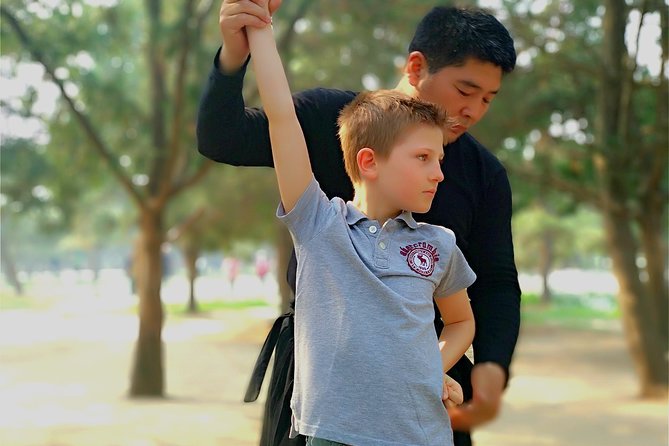
Logistics are simple, but you’ll want to plan for them because transportation isn’t included.
You meet at the ticket office of the Temple of Heaven east gate 天坛东门售票处. For transit, take subway line 5 and get off at Tian Tan Dong Men Station. Exit A, then walk about 50 meters to the East Gate area.
A few practical tips that save time:
- Arrive a little early so you can find the exact ticket office without rushing.
- Wear clothing that doesn’t fight you while you practice. Comfortable clothes are required, but you’ll feel much better if you also choose something that lets you bend, stretch, and move freely.
- Since this is a short 1.5-hour class, don’t schedule it right after a long museum sprint. Give yourself buffer time.
The 1.5-Hour Class Flow: Stances, Form, and Technique
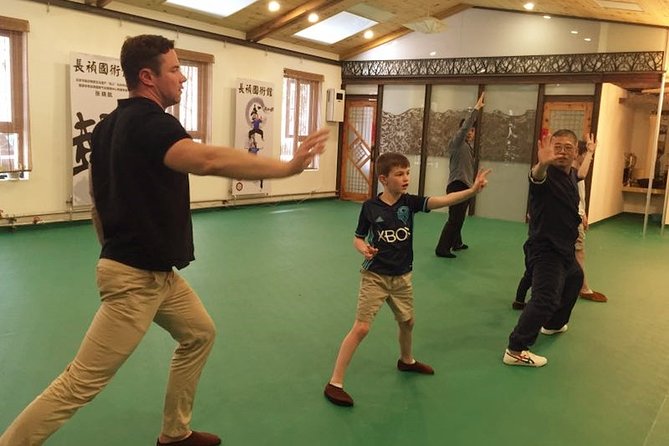
This experience is designed to fit into a single focused block. The total time is 1.5 hours, and the structure follows a logical progression: build basics first, then put them into a recognizable set, then add a few technique categories.
Here’s what you can expect during the session:
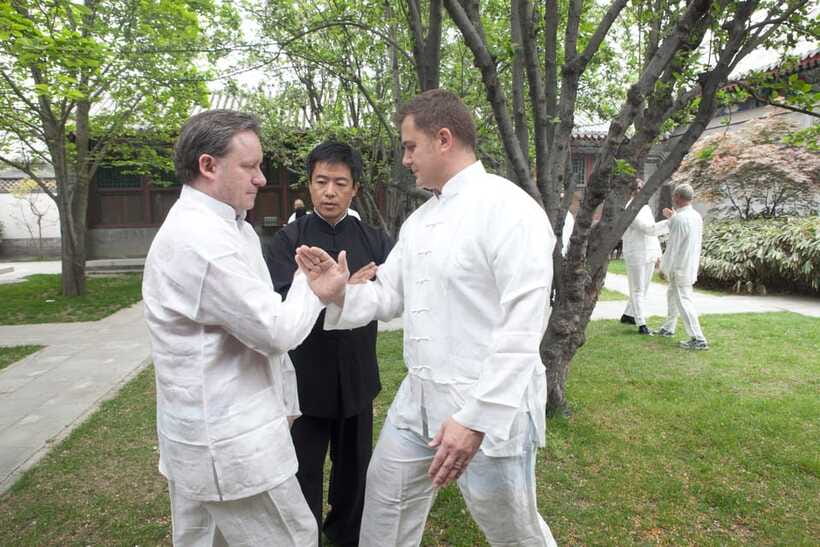
- Basic Kung Fu training: stances, kicks, and punches. This is where you learn how weight shifts, where your feet go, and how your upper body stays coordinated.
- Five stance fist form: you’ll practice a short form built around five stance positions. Form work is often where beginners start to feel like they’re doing real martial arts, not just guessing moves.
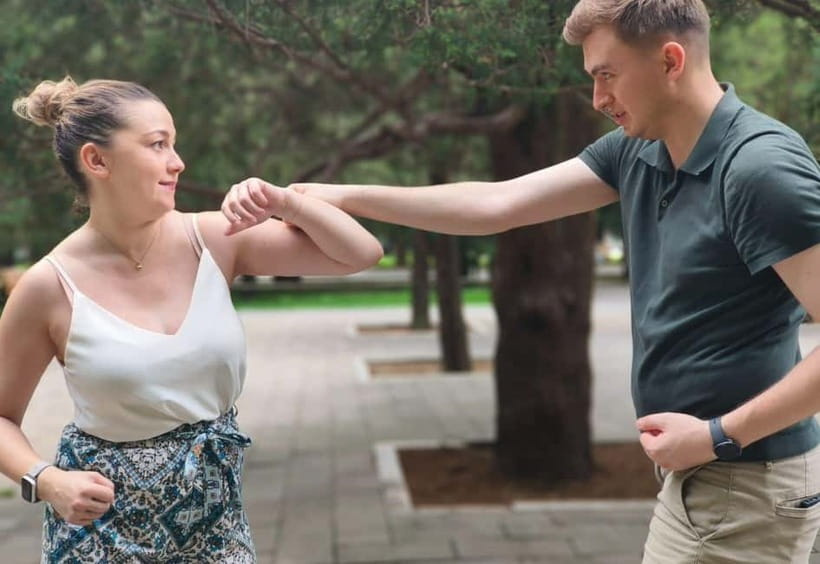
- Joint-locking techniques: these are included as a key section. They’re typically taught in a way that emphasizes control and safe application rather than showy impact.
- Self-defense techniques: you’ll cover basic defensive ideas, guided by the instructor so you can understand the intention behind the movement.
The standout value here is that you’re not just watching. You’re actively moving through several categories of Kung Fu in a short time. That’s especially helpful if you’re traveling and don’t want a multi-day course.
One more practical note: because the class is hands-on, you should expect occasional close demonstrations. One person’s experience included an instructor demonstration of a punch delivered close to their body without a clear heads-up. If you’re training with kids or you’re simply cautious, say so early. You can ask for a quick warning before they demonstrate anything on you, and that helps everyone learn with less surprise.
What You Actually Learn: Five Stances and the Point of Good Form
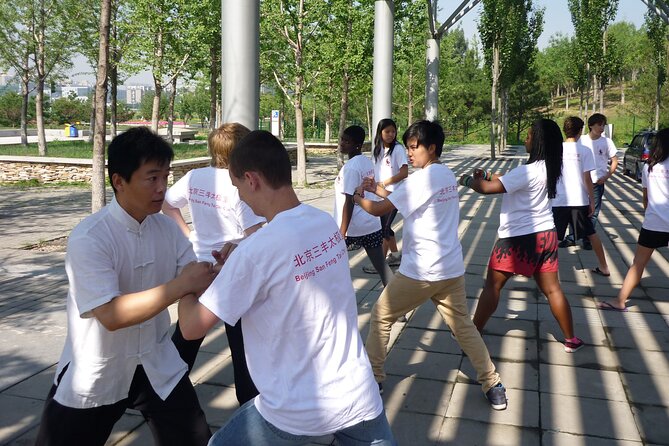
The phrase five stance fist form sounds technical, but for you as a beginner traveler, it’s a gift. Forms are how Kung Fu turns scattered movements into a repeatable system. Instead of random kicks and punches, you’ll learn how stances connect into a sequence.
During the stance-and-form portion, pay attention to three things that matter in almost every style:
- Foot placement and balance: your stance isn’t decoration; it’s your foundation.
- Weight shifting: clean technique comes from transferring weight properly.
- Upper-body control: even basic punches and strikes need coordination, not just arm motion.
You’ll also get some context for internal and external concepts, not in a textbook way, but as practical cues while practicing. That helps if you’ve only learned movement by copying what you see. Even a small introduction to the internal side (breath, focus, steadiness) can make the external movements feel more stable.
And since the instructor is bilingual (English and Chinese), you’ll likely be able to ask questions when something feels off. That’s a real advantage. Kung Fu isn’t complicated because it’s impossible. It becomes confusing when you can’t confirm what the teacher means by a cue.
Joint-Locking and Self-Defense: Learn the Intention, Not the Threat
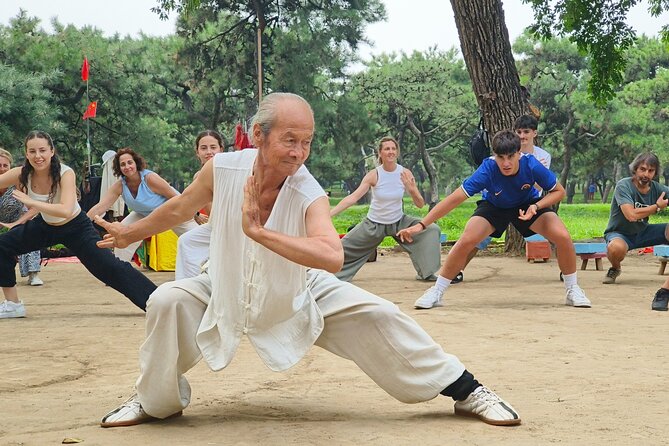
The joint-locking and self-defense parts are often what make martial arts classes feel exciting. But they’re also the sections where it’s easiest to get overconfident if you don’t understand the intent.
In this class, joint-locking is presented as part of the learning pathway, alongside stances and the form. You should treat these parts as basics you can build on later. Focus on:
- Control over force
- Positioning and leverage
- Staying aware of safety boundaries
Self-defense here is also presented as fundamentals. That’s exactly what you want as a short introductory class. The goal isn’t to become a fighter in 1.5 hours. The goal is to understand the mechanics and mindset: how technique aims to control rather than just attack.
Because there’s hands-on instruction, speak up if you have limits. If you prefer light contact, slower movement, or you want the instructor to demonstrate first without striking close to your body, say that at the beginning. You’ll get a better experience, and you’ll practice more confidently.




Price and Value: Is $68 Reasonable for 1.5 Hours?
At $68 per person for 1.5 hours, this is not a bargain-basement activity, but it also isn’t overpriced for what you’re getting.
Here’s the value breakdown based on what’s included:
- The kungfu class fee is included.
- You have access to a qualified master teaching basics.
- The instruction is available in English and Chinese, which raises the effective value for international travelers.
- The setting is a meaningful one: Temple of Heaven East Gate gardens, not a random corner studio.
What’s not included matters too. Transportation, food and drinks, and gratitude aren’t part of the price. Plan to handle those separately. If you’re doing this as part of a day at Temple of Heaven, you can keep costs under control by bringing a snack or planning a nearby meal afterward.
In short, I’d call this a solid value if you want:
- a structured introduction to Kung Fu fundamentals,
- real teacher guidance,
- and a memorable cultural setting.
If you’re mainly looking for a passive cultural show, you might find this more active than you planned. But if you want to move, learn, and leave with something you can practice later, it makes sense.
Who This Class Suits Best (And Who Should Skip It)
This experience is best for travelers who want hands-on learning and clear coaching. It’s especially good if you’re:
- a complete beginner who wants basics taught step-by-step,
- a visitor who likes cultural activities tied to historic sites,
- traveling with kids who are energetic and can follow instruction (one class experience included learning a basic form with children).
You should also keep one restriction in mind: it’s not suitable for pregnant women. If that’s your situation, choose another activity that fits your needs.
For everyone else, it’s a smart way to break up sightseeing. A lot of Beijing experiences are walking-heavy. This one gives you a different kind of physical engagement while staying culturally grounded.
What to Bring (So You Don’t Feel Rushed)
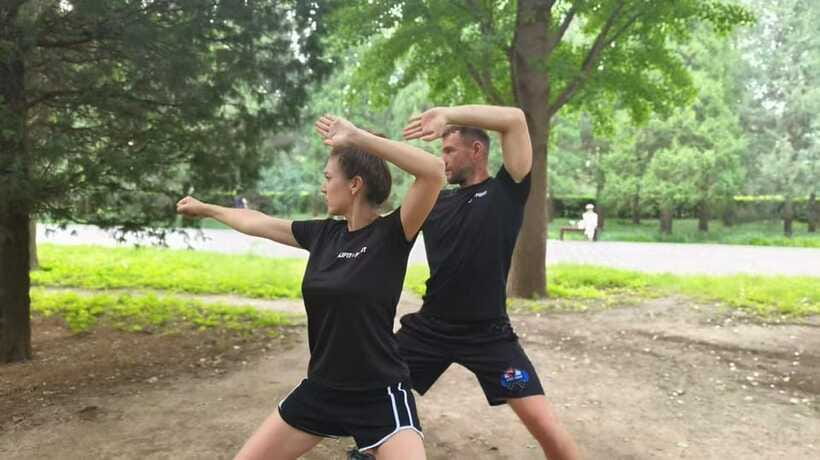
The only explicit requirement is comfortable clothes. That’s good news because you don’t have to buy a uniform or special gear.
My practical packing advice:
- Choose clothing that moves easily and won’t ride up when you practice stances.
- Avoid anything that’s too bulky or likely to snag.
- If you’re sensitive to surprise contact, say so before practicing. You’ll get a smoother session.
The class is short, so you don’t need a whole kit. Just make sure you can move without thinking about your outfit.
Should You Book This Beijing Kung Fu Experience?
I think you should book it if you want a beginner-friendly introduction with real instruction, bilingual support, and a setting that feels connected to Chinese culture. The strongest reasons to go are Master Eric’s patient style, the Temple of Heaven garden location, and the fact that you learn core elements like stances, a five stance fist form, and joint-locking and self-defense fundamentals in just 1.5 hours.
I’d hesitate only if you’re extremely sensitive to physical demonstrations or you dislike any chance of close-contact instruction. In that case, message or ask upfront about how demonstrations are handled, and request a heads-up before anything is applied to you.
If you do want a practical, memorable way to experience Kung Fu in Beijing, this is a good call.