REVIEW · CHONGQING
Chongqing 1941 theatre: Tea Art Performance with Folk Art
Book on GetYourGuide →Operated by 成都环球国际旅行社有限公司新都第三分公司 · Bookable on GetYourGuide
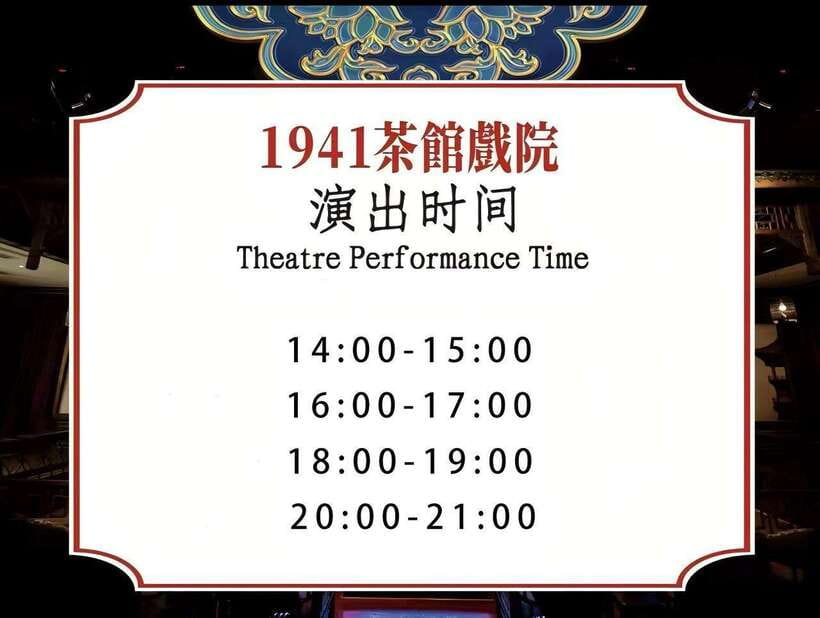
Tea and theatre share the same stage. In Chongqing 1941 Theatre, you get a 45-minute dose of folk artistry, starting with tea and quickly turning into Sichuan drama, music, and showmanship.
I love the format because it’s hands-on in spirit: you’re seated, your tea arrives as part of the ritual, and the performance keeps feeding you little moments of craft and sound. I also love the variety, especially the shift from Long Mouth Pot Tea Art into performances like pipa and Quyi money-board storytelling.
One catch: timing matters. Tea is part of the included experience, but if you’re late, the covered bowl tea may not be served. Also, the show is in Chinese, so you’ll lean more on movement, music, and visuals than full spoken narration.
In This Review
- Key takeaways before you go
- Chongqing 1941 Theatre: a compact 45-minute tea and folk-art program
- Getting in: Yutian Building meeting point and arriving early
- Tea ritual basics: covered bowl Gaiwan-style tea and a snack
- Long Mouth Pot Tea Art: 1.2-meter teapot drama
- Sichuan drama Human Good and kung fu on the same stage
- Face-changing makeup and the magic-like rotation effect
- Pipa performance: why the sound clicks in a theatre room
- Quyi Money Board: singing and storytelling you can still follow
- Price and logistics: how $31 stacks up for a short show
- Best seats, interaction, and the photo moment
- Who this experience fits (and who may prefer something else)
- Should you book Chongqing 1941 Tea Art Performance?
- FAQ
- How long is the Chongqing 1941 theatre tea art performance?
- What’s included in the ticket price?
- Is tea provided if I’m late?
- Is the show indoors, and is it wheelchair accessible?
- Where do I meet for the experience?
- What language is used during the performance?
- Can I cancel for a full refund?
Key takeaways before you go
- Long Mouth Pot Tea Art: watch a 1.2-meter teapot style tea performance up close
- Sichuan drama Human Good with kung fu: stage action and athletic movement drive the story
- Pipa performance: a layered, sonorous sound that feels more physical live
- Quyi Money Board: singing and storytelling that still lands even if you don’t catch every line
- Face-changing makeup: you may see the dramatic transformation effect performed in the same rotation
- Covered tea + snack: simple, included comfort while the show builds momentum
Chongqing 1941 Theatre: a compact 45-minute tea and folk-art program
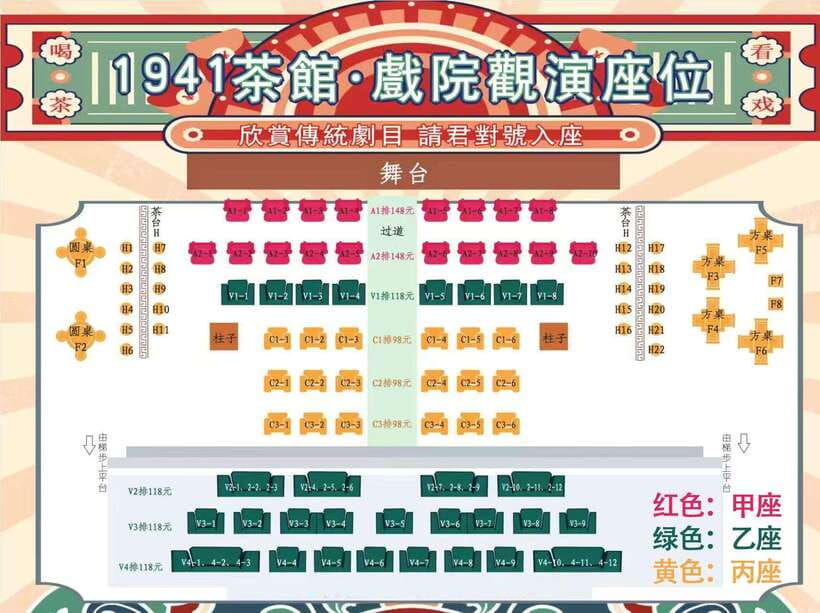
Chongqing 1941 Theatre is built for a short attention span in the best way. The whole experience is about 45 minutes, indoors, and paced like a mini variety show where different Chinese performance arts rotate back-to-back. You’re not sitting through a long opera or a textbook lesson. You’re watching craft and performance techniques presented as entertainment you can actually enjoy even with limited language.
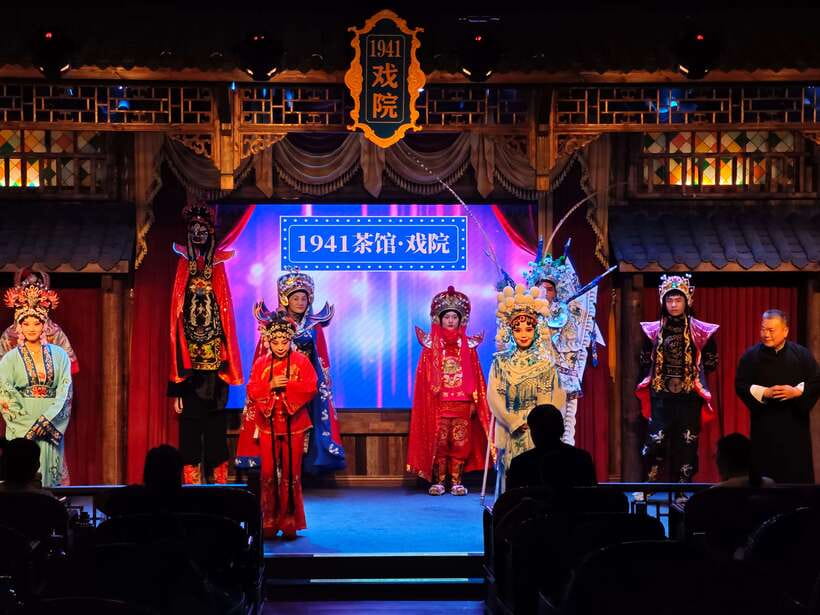
The biggest value here is that tea and performing arts aren’t separate things. The show uses tea as a constant thread, and then the stage keeps switching gears: drama-style performance with kung fu, music with a pipa, and storytelling via Quyi money board. If you like culture that comes with motion, sound, and visual payoff, this format fits.
You can also read our reviews of more tours and experiences in Chongqing.


Getting in: Yutian Building meeting point and arriving early
Your meeting point is specific: the Yutian building garage entrance next to the time elevator to the 8th floor. It’s not hard, but it is easy to miss if you arrive late or wander around waiting for the room to fill.
Arrive 30 minutes before the start time. That isn’t just about logistics. The tea moment is part of the included experience, and the theatre timing can be strict. If you’re even a bit behind, you risk losing the tea portion. And since the show is indoors, there isn’t much to do while waiting except get settled.
You’ll also hear Chinese spoken on-site. A Chinese host/greeter is part of the experience, so if you ask a quick question, you can usually get straightforward guidance.
Tea ritual basics: covered bowl Gaiwan-style tea and a snack
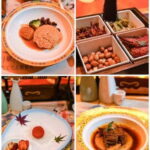
The included experience starts with tea delivered in a covered-bowl style. The tea is described as Gaiwan tea from Chongqing, and that matters because Gaiwan-style brewing is all about control. Tiny timing changes change flavor. You’re watching a performance, but the theatre keeps bringing you back to the sensory base: warmth, aroma, and a small snack during the rotation.
The snack is included with your ticket, but it’s simple. One helpful detail from recent experience: it’s often nuts or something similar, so it’s not the kind of food that replaces a full meal. If you’ve skipped lunch, eat first or bring a little patience and expect crunch, not comfort food.
Most importantly: if you’re late, the tea may not be provided. That’s the one part of the show you should treat like a timed ticket inside your ticket.
Long Mouth Pot Tea Art: 1.2-meter teapot drama
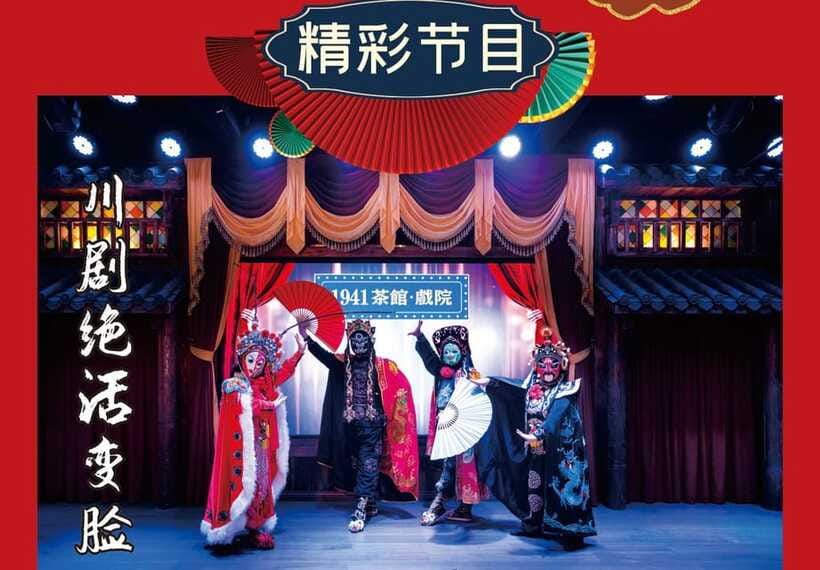
One of the signature moments is Long Mouth Pot Tea Art featuring a 1.2-meter long teapot. This is the part that makes the theatre feel like a special venue instead of a generic show.
What you’ll like is the physical scale. A long spout means the movement has to be precise. The trick is visual and kinetic, and tea becomes the prop that shows control, timing, and showmanship. You get to watch how performers manage distance and angle while keeping the presentation elegant.
Even if you don’t know the tea technique, you’ll understand what’s happening from the way the room watches and waits for the next pour. It’s a nice break from the heavier drama segments, too. Think of it as a reset: craft first, then action, then music.
Sichuan drama Human Good and kung fu on the same stage
Then the show shifts into more dramatic performance energy with Sichuan drama Human Good combined with kung fu. This is where movement becomes storytelling. Kung fu choreography does what spoken dialogue can’t: it carries tone, tension, and pacing through action.
In a short show like this, you don’t get a full legend. Instead, you get a highlight version of style. The payoff is watching a traditional drama framework paired with athletic performance. It’s not just martial arts for the sake of tricks. It’s staged to feel like theatre, with character-like energy and rhythm.
If you’re visiting Chongqing and want something unmistakably Sichuan, this segment is the main reason to choose this show over a generic cultural evening. You’ll feel the style even if you don’t follow every spoken line.



Face-changing makeup and the magic-like rotation effect
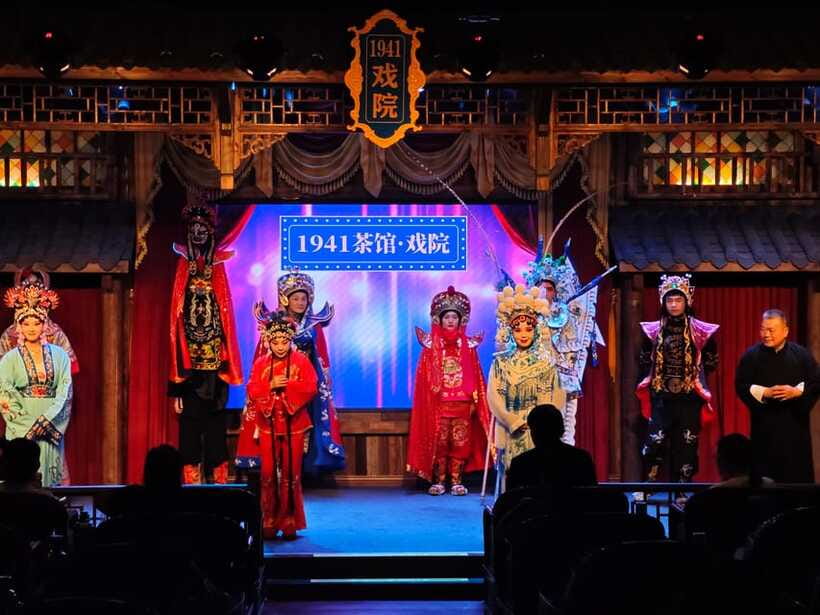
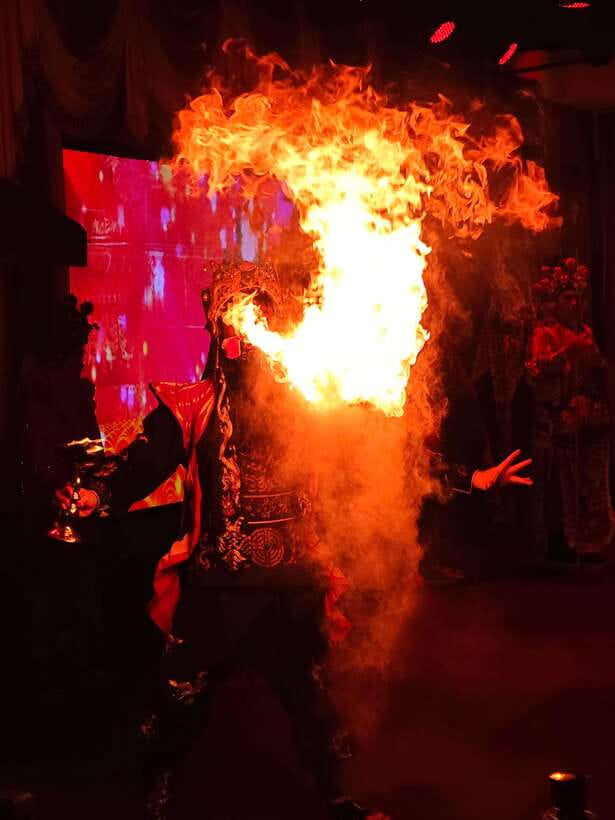
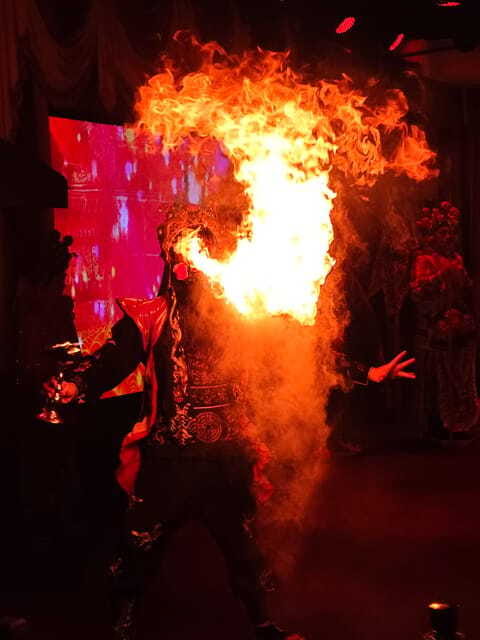
One of the most striking visual elements in the program can be the face-changing effect associated with Chinese folk performance traditions. The result is dramatic: you see facial makeup transformation up close during the rotation.
This is one of those moments that works on two levels. First, it’s simply impressive. Second, it changes how you watch the whole show. After a face-changing segment, your attention heightens for the next act, because you start noticing quick transitions and theatrical timing.
Even with limited language understanding, these visual effects are “readable.” It’s one of the reasons the show can still feel satisfying for non-Chinese speakers. You’re guided by stagecraft, music cues, and pacing.
Pipa performance: why the sound clicks in a theatre room
A pipa performance is included, and this is one of the best ways to spend 10 or 15 minutes in a small indoor venue. The pipa’s sound can be bright and expressive, but live performance adds a layer of presence. Notes feel sharper, and the rhythm feels more deliberate than recordings.
I like pipa in a setting like this because it balances the show’s kinetic segments. After kung fu and quick transitions, music gives you a different kind of “watching.” You’re not tracking movement only. You can relax your eyes and let the sound carry you.
Also, theatre pacing matters. A well-timed pipa segment gives you a breather without ending the momentum.
Quyi Money Board: singing and storytelling you can still follow
Quyi Money Board is another included act, pairing singing and storytelling. Quyi is a broad folk genre, and the money-board style uses voice and rhythm to shape the narrative.
Can you follow every line in Chinese? Not guaranteed. The show doesn’t position itself as a language class. But you can still enjoy it because storytelling here relies on voice inflection, timing, and audience attention cues.
If you want an evening that feels authentic without requiring heavy homework, Quyi works well. It’s the human side of the evening: personality, vocal performance, and rhythm.
Price and logistics: how $31 stacks up for a short show
The listed price is $31 per person. For a 45-minute indoor show, you might wonder if that’s too much. Here’s how I’d judge the value.
You’re paying for:
- Multiple distinct performance styles in one program (tea art, Sichuan drama with kung fu, pipa, Quyi, plus visual craft moments)
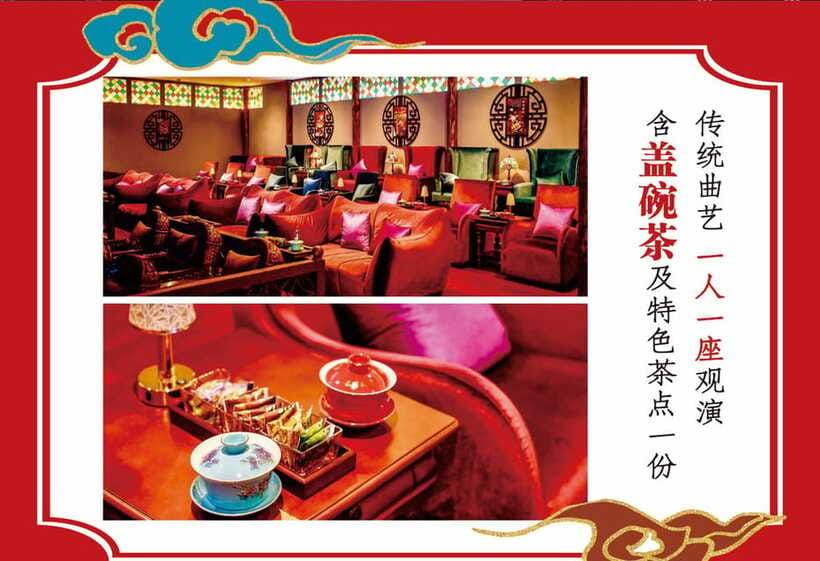
- A tea ritual experience with covered bowl tea included
- A snack included with the ticket
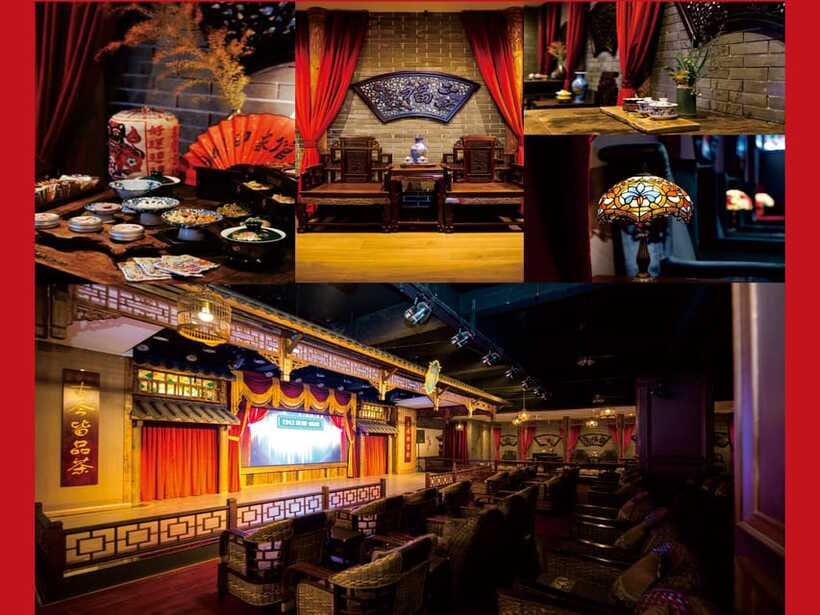
- A theatre setting that keeps the program tightly staged
Where the value can wobble: the show is short, so you need to like variety and folk performance formats. If you came only for one act, like kung fu, you may wish the program were longer. Also, if your focus is learning rather than watching, the time might feel brief.
A practical money tip: one recent buyer found it was much cheaper to buy the ticket at the location than through an online purchase, saving a large amount. That doesn’t mean the online price is always wrong, but it does suggest you should compare if you’re flexible. If you’re already nearby, it’s worth checking the in-theatre ticket price before locking in.
Best seats, interaction, and the photo moment
The show can be interactive depending on where you sit. One detail that stood out: people who sit closer to the front can get more direct attention from performers. The staff greet you, seat you, then bring over tea items as the show starts.
There’s also often a photo moment after the performance. Take it seriously. In short cultural shows, the end can feel like a quick transition, and that photo opportunity becomes part of the memory. If you’re camera-ready, you’ll enjoy the “wrap-up” feeling instead of rushing.
If you’re traveling with friends, sit together if possible. The show moves fast, and it’s easier to enjoy when you can react with the people you came for.
Who this experience fits (and who may prefer something else)
This show fits you if:
- You like folk performance variety more than a single long story
- You enjoy tea culture as part of the experience, not just as a background detail
- You want something indoor, structured, and easy to plan around
- You’re curious about Sichuan-flavored stage arts like kung fu drama
You might choose something else if:
- You want long-form theatre or deep historical context
- You need extensive spoken narration in English or another language (the show is in Chinese)
- You’re likely to arrive late, since tea service can be affected by timing
Because it’s indoors and compact, it’s also a practical pick when weather or travel energy is unpredictable.
Should you book Chongqing 1941 Tea Art Performance?
If you want a quick, theatre-style night in Chongqing where tea art is part of the show and the stage jumps between Sichuan drama, music, and storytelling, I think it’s an easy yes.
Book it if you’re comfortable with a variety format and you can arrive early enough to catch the tea. If you’re sensitive to price, compare the $31 option with the in-location ticket price before committing. And if Chinese language is a concern, don’t worry too much: the program carries you with visual effects, kung fu movement, and musical performance.
My only hesitation is simple. If your expectations are for a long cultural immersion or a detailed explanation of everything, this won’t match that. But if you want a clean, entertaining cultural evening with real craft on display, Chongqing 1941 Theatre does the job.
FAQ
How long is the Chongqing 1941 theatre tea art performance?
It runs for about 45 minutes.
What’s included in the ticket price?
You get the traditional performance ticket, plus covered bowl tea and a special snack per person.
Is tea provided if I’m late?
Tea will not be provided if you are late.
Is the show indoors, and is it wheelchair accessible?
Yes, it’s indoors, and the activity is wheelchair accessible.
Where do I meet for the experience?
Meet at the Yutian building garage entrance next to the time elevator to the 8th floor.
What language is used during the performance?
The show is in Chinese.
Can I cancel for a full refund?
Yes. You can cancel up to 24 hours in advance for a full refund.