REVIEW · CHENGDU
Dujiangyan irrigation+Mt. Qingcheng or Panda Park Day Tour
Book on Viator →Operated by Real China travel · Bookable on Viator
Two UNESCO stops and pandas in one long day. I like how this tour pairs the working Dujiangyan irrigation system with real panda time at the Dujiangyan panda base. The drawback is simple: you’ll pay extra for entrance tickets and you may want the Qingcheng cable car for a less-hike hike.
I also like the human touch here. English guides like Ora and Victor are named in feedback, and both are described as staying with you all day and answering questions on the spot. You’re riding in a private air-con car with pickup and bottled water, which keeps the day focused instead of turning into Chengdu traffic roulette.
In This Review
- Key highlights
- Mt. Qingcheng vs Dujiangyan Panda Park: Pick your morning mood
- Mt. Qingcheng: Forest air, oxygen-bar vibes, and the cable car decision
- Dujiangyan Panda Park: Better odds for calm panda viewing
- Rongchuangmao: A short, fun break with a Hogwarts-style bookstore
- Dujiangyan Irrigation System: UNESCO water engineering that still works
- Price and what you’re really paying (plus the extras)
- The English guide factor: why Ora and Victor mattered
- Getting the most out of a 9 to 10 hour day
- Who this tour suits best (and who might not)
- Should you book the Dujiangyan + Mt. Qingcheng + Panda Park day tour?
- FAQ
- How long is the Dujiangyan + Mt. Qingcheng or Panda Park day tour?
- Is pickup included?
- Is this a private tour?
- What’s included in the tour price?
- What entrance fees are not included?
- Is the cable car included for Mt. Qingcheng?
- Is lunch included?
- What fitness level is required?
- How does booking and cancellation work?
- How early should I book?
Key highlights
- Quiet panda base at Dujiangyan instead of the busier panda options in central Chengdu
- Mt. Qingcheng forests with a short list of nature breathing breaks and a clear plan for downtime
- UNESCO Dujiangyan irrigation system that still serves Sichuan after centuries
- Rongchuangmao shopping stop with a Hogwarts-style bookstore for quick photos and lunch if you want
- English guide service (with guide admission fees included on the main tour options)
- Private tour setup so you’re not sharing a day with strangers you’d rather not meet
Mt. Qingcheng vs Dujiangyan Panda Park: Pick your morning mood
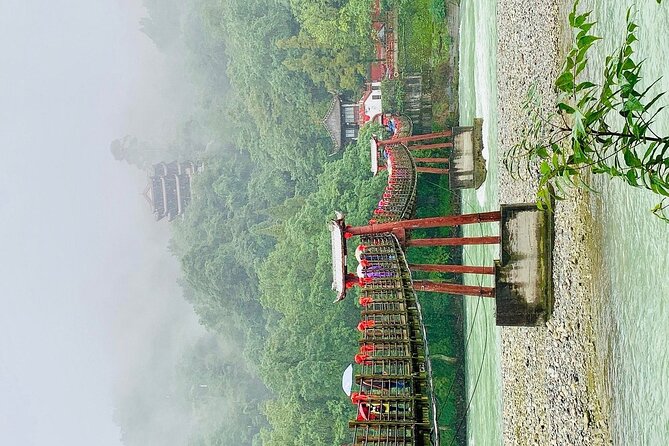
This is set up as a day built around two themes: nature with an actual forest climb, or pandas with a calmer vibe. In one version, you start with Mt. Qingcheng, often described as the No. 1 mountain in western Sichuan, where about 98% of the area is covered by forest. In the other, you start with Dujiangyan Panda Park for panda viewing with fewer crowds.
Either way, the afternoon is about the same big takeaway: the Dujiangyan irrigation system, recognized as UNESCO natural and cultural heritage. That pairing makes the day make sense. You get the “what the land looks like” feeling from the mountain, then you get the “how humans engineered this landscape and kept it working” feeling from the irrigation system.
Here’s the practical choice you should make:
- If you want more movement and nature time, lean toward the Mt. Qingcheng morning.
- If you care most about seeing pandas (including giant pandas and red pandas) without fighting the largest crowds, lean toward the Dujiangyan Panda Park morning.
You can also read our reviews of more tours and experiences in Chengdu.
Mt. Qingcheng: Forest air, oxygen-bar vibes, and the cable car decision
Mt. Qingcheng is famous for being extremely green and forest-heavy, and the tour frames it as a natural oxygen break. You’ll be there for about 3 hours, and you’ll want to plan for walking on uneven paths. The tour also asks for moderate physical fitness, so bring comfortable shoes and expect some stairs and gentle climbs.
One key cost decision is the cable car. It’s not included (listed at USD 9 per person), which means you can choose based on your energy level and how much walking you want to do. If you’re trying to keep the day from turning into an endurance test, the cable car is an easy way to manage the total effort.
The best part of Qingcheng on a day like this is pacing. You’re not trying to speed-run every temple corner. The guide keeps the day moving, and you get that forest atmosphere without adding a second full hike. That matters because you still have pandas and the irrigation system later.
Dujiangyan Panda Park: Better odds for calm panda viewing
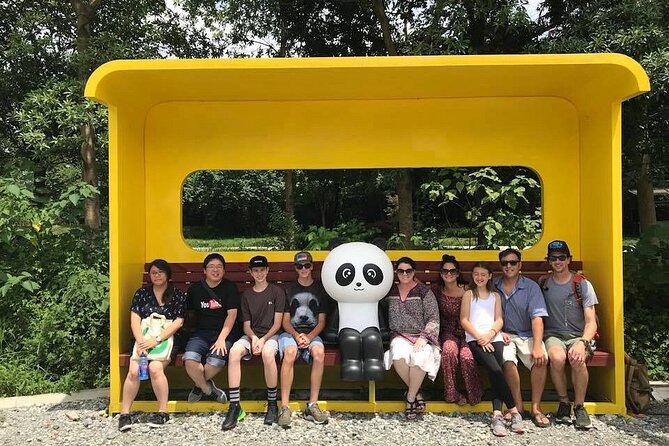
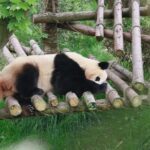
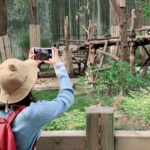
Dujiangyan Panda Park is the panda portion that’s built for people who want pandas without the biggest crowds. It’s also positioned as quieter than the well-known panda center in Chengdu downtown, which can be crowded, especially when it’s the main option people flock to.
You’re scheduled for about 3 hours here, and you’ll usually get chances to see giant pandas and red pandas. The tone from feedback is practical: it’s easier to spot pandas when you’re not packed in with a constant flow of tour groups.
A specific detail that stood out: a panda named Lele, noted as a Singapore-born panda, came up in feedback from the day. Even if you don’t recognize individual pandas, the guide’s help here is what turns it from a generic zoo stop into a real panda visit. You’ll learn what to look for and how panda behavior tends to change across the day.
If you care about getting photos, this is also one of the better stops. You can actually move, rather than being forced into a single line-of-sight.
Rongchuangmao: A short, fun break with a Hogwarts-style bookstore
After your morning mountain or panda time, you head to a shopping mall stop called Rongchuangmao. It’s only 30 minutes, so treat it as a breather, not a shopping spree.
The mall is known for a Hogwarts School–style bookstore, which gives you quick photo opportunities in a themed setting. It’s listed as free admission, and the time window is short enough that you can just pop in, get a few pictures, and move on.
You also have an option to grab lunch there if you prefer, since lunch is not included in the tour cost. Budget about USD 5 per person for a simple meal, as listed. If you’d rather eat your own planned food, that’s usually workable too, but you’ll want to keep the timing tight since the irrigation system is the afternoon anchor.
Dujiangyan Irrigation System: UNESCO water engineering that still works
This is the big finish, and it’s the part that makes the day feel bigger than a standard animals-and-temples outing.
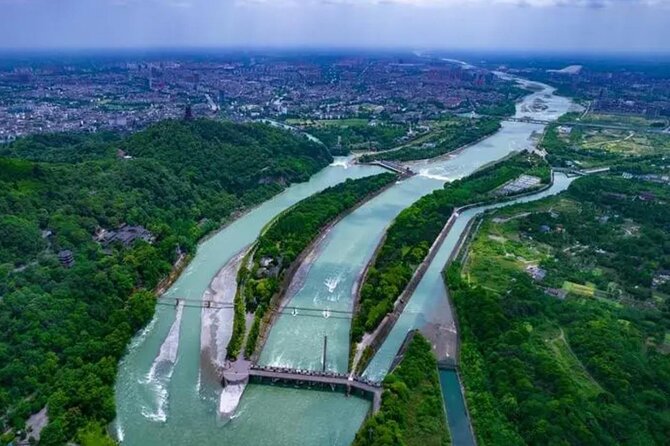
You’ll spend about 3 hours at the Dujiangyan irrigation system, also part of UNESCO natural and cultural heritage. The tour description emphasizes that it’s an older man-made irrigation system that has benefited Sichuan for nearly 2300 years. That “still in use” piece is the reason this stop is so satisfying. You’re not looking at an abandoned monument. You’re learning about a system that continues to do its job.
In plain terms, this is where the guide’s storytelling matters most. You’ll want someone to point out how water management changed what could be grown and lived on in this region. One of the highlights in feedback is exactly that: seeing a water management system that’s lasted for ages and still does its work today.
This is also a good counterbalance to the day’s earlier stops. Mt. Qingcheng leans natural and forest-focused. The pandas are animal-focused. The irrigation system is human-focused, but in a way that feels practical rather than abstract.
If you only have one day, this UNESCO pairing is strong value because it gives you two different ways of understanding Sichuan: how nature shapes life, and how people shaped the water to keep life going.

Price and what you’re really paying (plus the extras)
The tour price is USD 90 per person for about 9 to 10 hours. It’s described as private, and it includes pickup and a private air-con car. There’s also a mobile ticket component, which helps reduce hassle on the day itself.
What’s included:
- English guide service (for the main tour options, guide admission fees are included too)
- Private car with air-con
- 1 bottled water per person per day
- Government tax
What’s not included:
- Lunch, about USD 5 per person
- Cable car on Mt. Qingcheng, USD 9 per person
- Entrance fees:
- Dujiangyan Panda Park: USD 8 per person
- Mt. Qingcheng: USD 11 per person
- Irrigation park: USD 11 per person
So plan for additional ticket costs if you do all included sites. Using the listed amounts, that’s roughly:
- USD 30 for entrances to panda park, Mt. Qingcheng, and the irrigation system
- plus USD 9 if you take the cable car
- plus lunch (listed estimate around USD 5)
That puts the all-in day closer to the mid–USD 120s per person if you use the cable car and eat locally. The value question comes down to what you want from the day:
- If you want a guided, logical route with an English-speaking person managing timing and context, the base price plus entrance fees can feel fair.
- If you’re the type who can navigate transit well and doesn’t care much about commentary, you might find a cheaper DIY route. But you’d lose the clean structure of this day.
One more factor: average booking is listed at about 56 days in advance. That’s a hint this isn’t a last-minute casual thing. If you have tight dates, book earlier rather than gambling.
The English guide factor: why Ora and Victor mattered
A lot of tours promise English. This one earns its reputation because the guide is the difference between seeing places and understanding them.
In feedback, Ora is praised for staying with the group the whole day and explaining things in English. Victor is praised for answering questions not just about what you’re seeing now, but also about history and how things changed. That kind of Q and A is exactly what you want at Mt. Qingcheng and the irrigation system, because both are easier to appreciate when you know what the parts mean.
It’s also worth noticing that the operator frames this as a team that held onto experienced English guides after a rough few years for tourism. Translation: you’re not just getting a driver with a basic script. You’re paying for someone who can guide the day in real language.
If you’re the type who likes asking why a place was built a certain way, or what a term means on a sign, this tour style fits you well.
Getting the most out of a 9 to 10 hour day
Long day trips can feel like a blur. The good news is this one is built to avoid that as much as possible.
Key practical pieces:
- You get pickup and a private ride, so you’re not stitching together multiple transit legs.
- The stops are timed in chunks: about 3 hours for Mt. Qingcheng or pandas, then a short 30-minute mall pause, then about 3 hours at the irrigation system.
- You have water on board, and bottled water is listed, which helps keep you steady during walking and stops.
What you should plan for:
- Wear shoes you trust on stone paths. Mt. Qingcheng asks for moderate fitness and you’ll be walking.
- If you’re sensitive to stairs, consider the cable car option at Qingcheng.
- Bring a light layer. Forest areas can feel cooler than the city, even in warm seasons.
- Budget time for photos at Rongchuangmao, but don’t treat it like a second attraction. The schedule is built for the afternoon UNESCO stop.
The day is best when you go in with the right mindset: not trying to collect every view, but collecting the stories behind the place.
Who this tour suits best (and who might not)
This tour is a strong fit if you want:
- A one-day plan from Chengdu that covers pandas plus UNESCO water engineering
- English guidance that helps you understand what you’re seeing
- A calmer panda experience at Dujiangyan Panda Park
- A structured day with private transportation and pickup
It might be less ideal if you:
- Hate paying separate entrance fees (they’re clearly listed as not included)
- Want a purely hands-off experience with no walking at all (the moderate fitness note matters)
- Prefer lots of time to shop or linger indoors (the mall stop is only 30 minutes)
Should you book the Dujiangyan + Mt. Qingcheng + Panda Park day tour?
If you’re making just one day trip from Chengdu and you want it to feel meaningful, I’d book it. The combination of pandas, forest nature, and the Dujiangyan irrigation system is a rare mix that teaches you the region in two different ways.
I’d especially book if:
- You care about a quieter panda visit and easier viewing.
- You like having an English guide who can answer questions as you go.
- You’re excited by practical UNESCO sites, not just photo-stop landmarks.
If your budget is tight and you don’t care about guidance, you might choose a DIY approach. But if you value clean logistics, English explanations, and a single-day route that actually flows, this is a solid choice.
FAQ
How long is the Dujiangyan + Mt. Qingcheng or Panda Park day tour?
It runs about 9 to 10 hours.
Is pickup included?
Yes, pickup is offered.
Is this a private tour?
Yes. It’s a private tour/activity, and only your group participates.
What’s included in the tour price?
Included are an English guide service (for the main tour options), a private air-conditioned car, 1 bottled water per person per day, and government tax.
What entrance fees are not included?
Not included are entrance fees for Dujiangyan Panda Park (USD 8), Mt. Qingcheng (USD 11), and the irrigation park (USD 11).
Is the cable car included for Mt. Qingcheng?
No. The cable car costs USD 9 per person and is not included.
Is lunch included?
No. Lunch isn’t included, and it’s listed as approximately USD 5 per person.
What fitness level is required?
The tour says you should have a moderate physical fitness level.
How does booking and cancellation work?
Confirmation is received at booking time, and you can cancel for a full refund if you cancel at least 24 hours before the start time.
How early should I book?
The average booking time is about 56 days in advance, so it’s smart to reserve ahead of your dates.