REVIEW · CHENGDU
Jinjiang Theater:Eight-Face Changing-Legendary Sichuan Opera
Book on GetYourGuide →Operated by SUKHA Travel · Bookable on GetYourGuide
Face-changing in Chengdu is a must-see. At Jinjiang Theater, you can watch the world’s first eight-face changing Sichuan opera, with a cup of Gaiwan tea as part of the experience.
I like how the show doesn’t treat face-changing as a one-trick moment. It strings it together with core Sichuan opera skills—singing, recitation, movement, martial arts, and those flashy special techniques—so you get a full taste of the art. I also like that the complimentary tea is built in, not tacked on as a separate plan.
One thing to keep in mind: your seats are randomly assigned within the ticket area, and you must enter with your email QR code and seat number.
In This Review
- Key highlights worth planning around
- Why Jinjiang Theater is the easy choice for your first Sichuan opera
- Your email QR code and seat number: the real “check-in”
- The story thread: Little Sanqing and the birth-place of the art
- What you’ll see on stage in real order and real categories
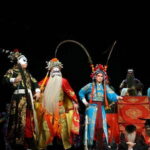
- Sichuan opera excerpts that set the tone
- Hand shadow and martial-style physical skills
- Fire and lanterns: the special skills center stage
- Puppet and character-focused scenes
- The face-changing centerpiece and the build-up
- Dance and stylized movement wraps it up
- Why the “all-in-one” format is good for most visitors
- Tea day-of: how the included pickup works and why it matters
- Stage spectacle tips: how to watch without getting lost
- Who should book this Sichuan opera show (and who might think twice)
- Price and value: what you’re really paying for at $20
- Should you book Jinjiang Theater’s eight-face changing show?
- FAQ
- FAQ
- Where is Jinjiang Theater located?
- How long is the performance?
- How much does the ticket cost?
- Do I need my email QR code to enter?
- When can I get the complimentary tea?
- Is my seat assigned, and is it random?
- Are video recordings allowed during the show?
- Is food allowed inside the theater?
- What languages are available?
- Is alcohol allowed?
Key highlights worth planning around
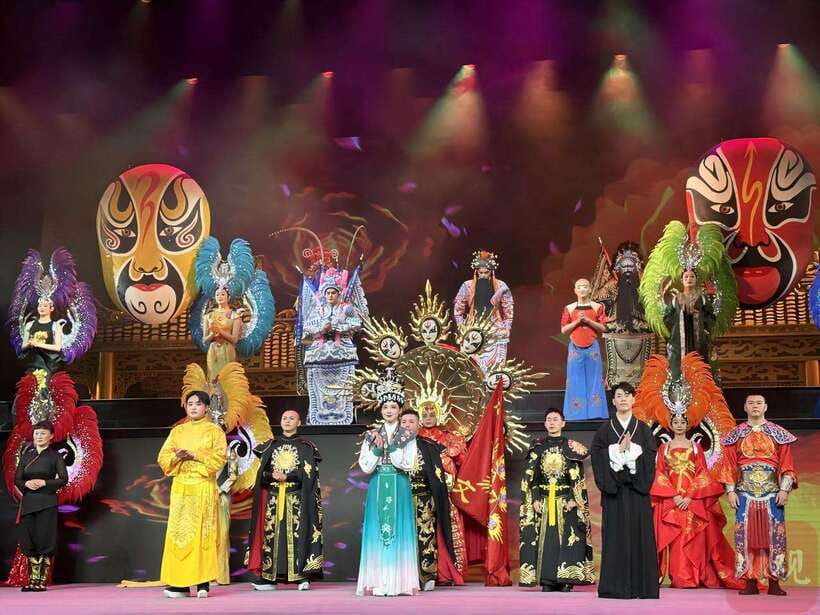
- World’s first eight-face changing: the centerpiece skill, presented as part of a larger Sichuan opera performance.
- Complimentary Gaiwan tea: included before the show at Yuelai Tea House next to the theater.
- A story with names you’ll remember: Little Sanqing, Little Huanhua, and Young Master Ma drive the plot.
- Opera basics plus circus-grade skills: fire breathing, hidden knife, umbrella kicking, drum kicking, and more.
- A multi-part program: excerpts, acrobatics, shadow/puppet elements, and multiple costume-and-dance segments.
- Central location near Tianfu Square: easy to pair with other sightseeing.
Why Jinjiang Theater is the easy choice for your first Sichuan opera
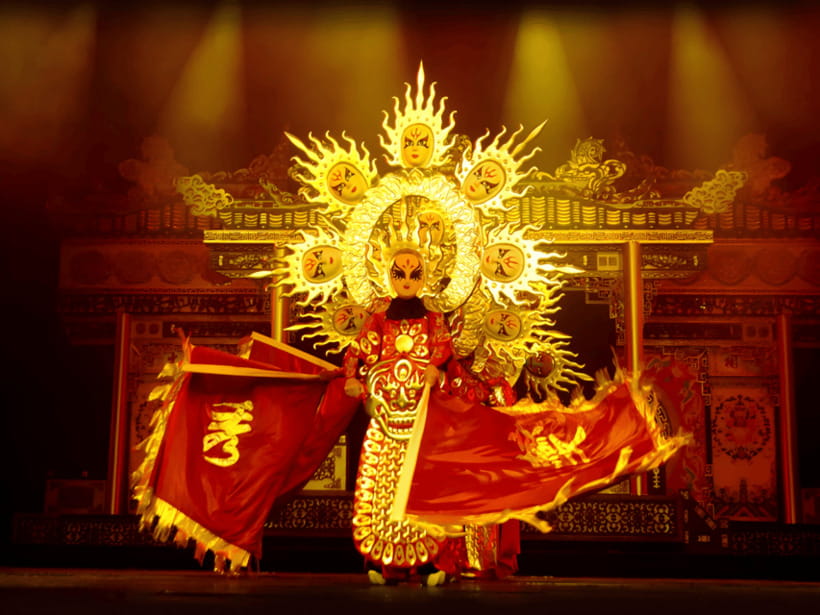
Jinjiang Theater sits in the Chengdu center—near Tianfu Square—so you’re not burning time on long rides just to get to the performance. The show itself is about 70 minutes, which is a good length for a first night. You get a complete arc of story and spectacle without feeling like you’ve committed your whole evening.
The other big reason this feels like good value: the ticket includes a reserved seat plus a complimentary bowl of Covered Bowl Tea at Yuelai Tea House right beside the theater (you pick it up about one hour before the start). At $20 per person, it’s the kind of ticket that works well when you want something classic without turning it into a logistics project.
Also, the performance runs in Chinese and English (host or greeter listed as both languages). Even if you don’t speak Chinese, you’re still watching a visual language made of voice, movement, and stagecraft.
You can also read our reviews of more tours and experiences in Chengdu.

Your email QR code and seat number: the real “check-in”
Here’s the practical part that can make or break your night. After you book, you need to check your email for three things:
- the ticket serial number
- the QR code
- your seat number
Without the QR code/seat info, you cannot enter the theater. If it isn’t in your email, contact the service provider listed for the experience. Plan to check that message well before showtime, not ten minutes before you arrive.
Seats are randomly assigned within the designated ticket area. That means you don’t pick a perfect view in advance. Still, it’s built into the ticket you buy—so you’re guaranteed access, you just won’t control where you land within the area.
Timing tip that actually helps: because the tea pickup is one hour before, you’ll want to arrive with a buffer. Walking from the tea house to the theater is simple, but you’ll feel calmer if you’re not sprinting.
The story thread: Little Sanqing and the birth-place of the art
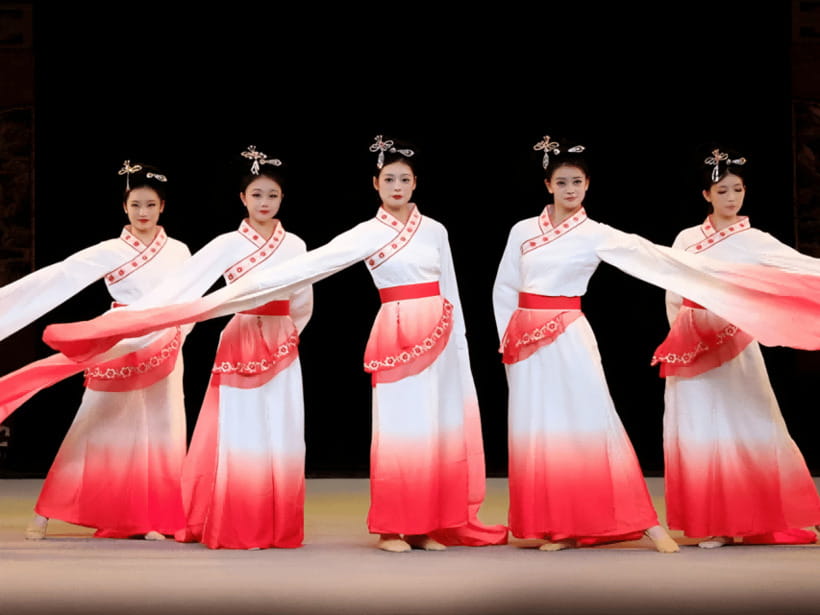
The show ties everything together with a narrative about how the face-changing tradition develops. The story is set at Sanqinghui in Chengdu, which is described as one of the birthplaces of Sichuan opera—also the area where Jinjiang Theater is located today. That connection matters because it shifts the experience from just watching tricks to seeing how the craft gets taught, tested, and perfected.
The main character is Little Sanqing, an opera student who practices hard through adversity. His master chooses him as a disciple, and he’s also drawn into a romance with Little Huanhua. Then the plot turns dark: Young Master Ma forces Huanhua away and orders men to burn Little Sanqing’s face with fire. After that, Little Sanqing can’t rely on his own features anymore, so he wears a mask and lives in hiding—secretly honing the skills that later become legendary.
The payoff is the eight-face changing technique—presented as something Little Sanqing perfects through hardship, until it lands as a smooth, single performance moment rather than a random special effect. The story ends with Huanhua finally finding him again, and the pair bringing brilliance back to the Sichuan opera stage. It’s a plot about training, loss, and craft, with a romantic thread to keep it human.
What you’ll see on stage in real order and real categories
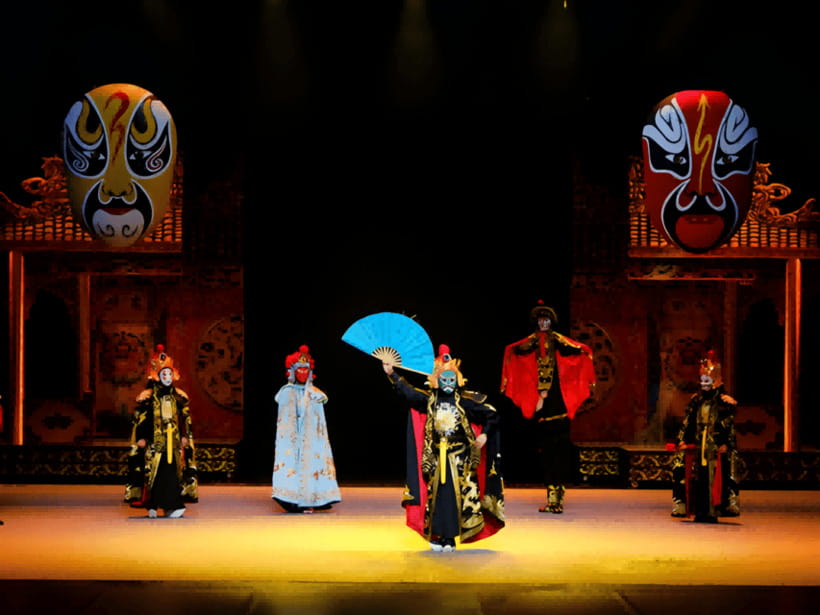
This performance doesn’t rely on one discipline. It’s structured in segments, mixing Sichuan opera excerpts, acrobatics, puppet/shadow elements, and special skills. That mix is what makes it work for both kids and adults: you get variety fast, and the show keeps changing visual gears.
Here’s the program flow as it’s listed, plus what each piece is doing for the overall show:
Sichuan opera excerpts that set the tone
- The Three Heroes Fight Lü Bu
This excerpt is one of the big-name fights in the Sichuan opera world. It signals right away that you’re watching more than stage effects—you’re watching performance technique, including stylized movement and dramatic acting.
- Releasing Pei
Another opera segment that keeps the tone anchored in singing/recitation style before the show shifts into more acrobatic and specialty moments.
- Red Plum Pavilion
This adds a calmer, more lyrical feel, especially for those who want some character emotion between the heavier action sections.


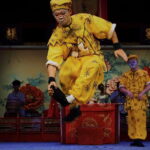
Hand shadow and martial-style physical skills
- Hand shadow art
This gives you the shadow-puppet style element in a way that fits the Sichuan opera stage tradition. If you like visual storytelling without dialogue, this kind of segment is usually the one you keep thinking about after.
- Umbrella kicking
Another acrobatics-style action beat. It’s one more reminder that the show’s “opera” label includes martial arts energy and athletic choreography.
- Hidden knife
Listed as a Sichuan opera specialty. This is the kind of trick that relies on timing and misdirection as much as athleticism.
- Multi-person drum kicking
A group acrobatic segment that pushes the spectacle and crowd energy. Even without perfect language comprehension, your brain registers synchronization and risk.
Fire and lanterns: the special skills center stage
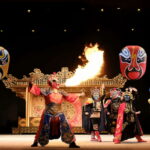
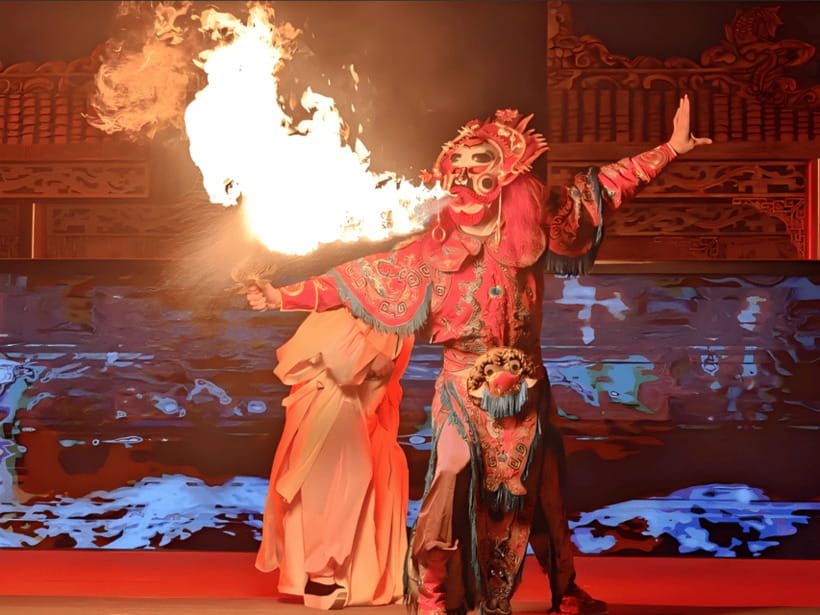
- Fire breathing
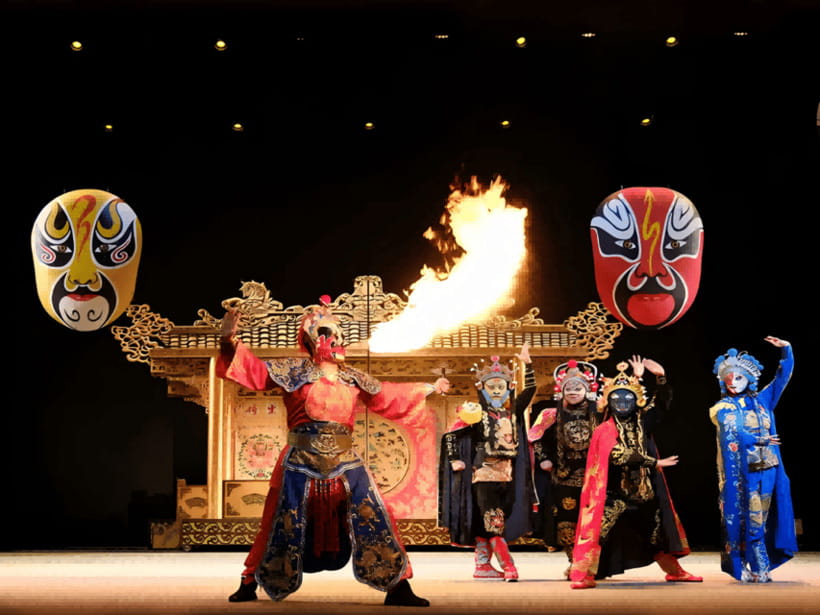
This is one of the most attention-grabbing Sichuan opera specialties listed. It’s high impact and very visually direct, which makes it a great moment for first-time viewers.
- Rolling Lantern
Paired with the rest of the specialty beats, this adds stage imagery and rhythm. It also helps break the show into manageable “chapters” so you don’t just get one long action streak.
Puppet and character-focused scenes
- Puppet show: The Beauty of Life
This is another different storytelling mode, so you get relief from constant live martial energy while still watching performance craft.
- Showcased roles: Xiao Sheng (young male) and Xiao Dan (young female) excerpts
The description highlights that the show includes elements showcasing those roles, which matters because Sichuan opera isn’t just about what happens—it’s also about how characters move, sing, and express themselves.
The face-changing centerpiece and the build-up
- Face-changing (listed as a specialty)
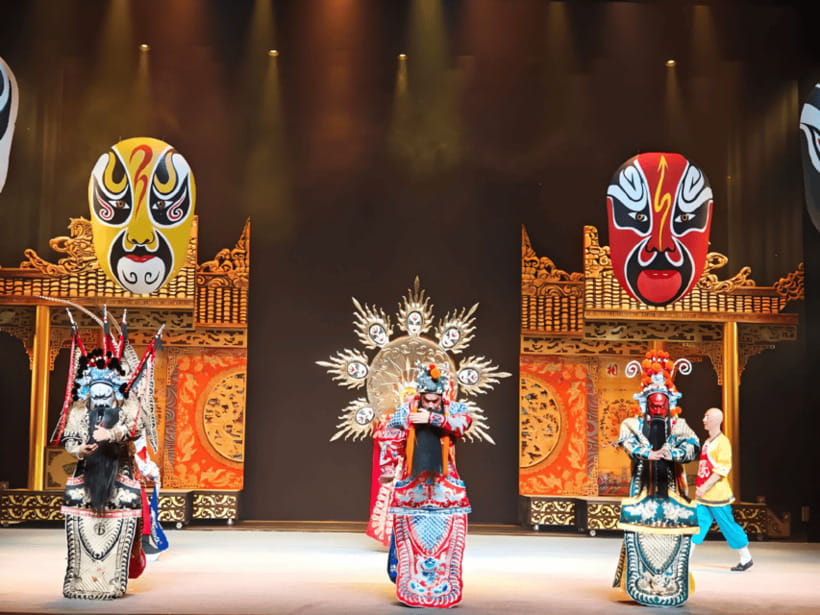
- Exclusive skill: eight-face changing
- Three costume changes
This section is where the show earns its ticket. The face-changing is the signature Sichuan opera skill, and then eight-face changing is presented as the exclusive highlight. The three costume changes around it help show how the character shifts don’t only happen on the face—they show up in posture, style, and stage presence too.
Dance and stylized movement wraps it up
- Traditional fashion show
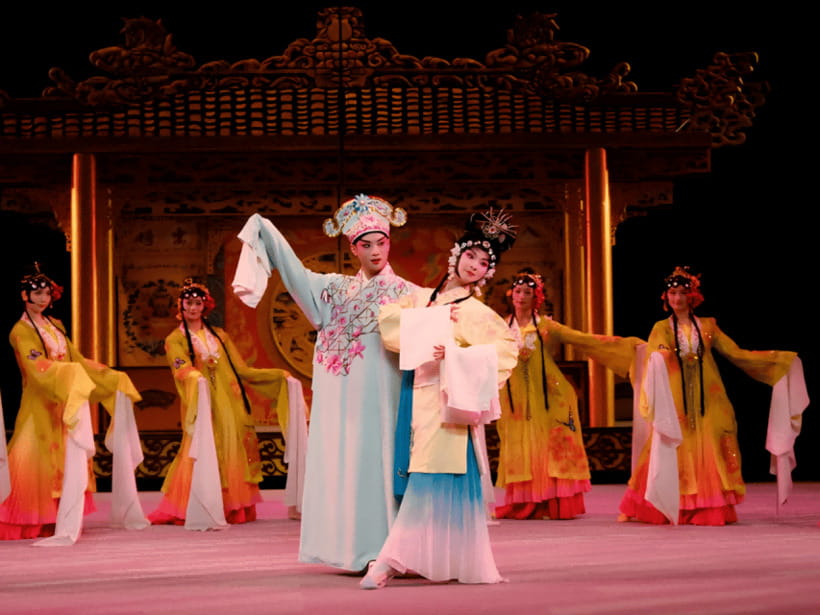
- Water sleeve dance
- Ghost immortal dance
These dance segments bring the performance back into visual beauty. Water sleeve dance is a classic for creating motion trails and drama. The ghost immortal dance adds a more stylized, theatrical feel to close the show, so your last memory is about movement and atmosphere—not only tricks.
Why the “all-in-one” format is good for most visitors
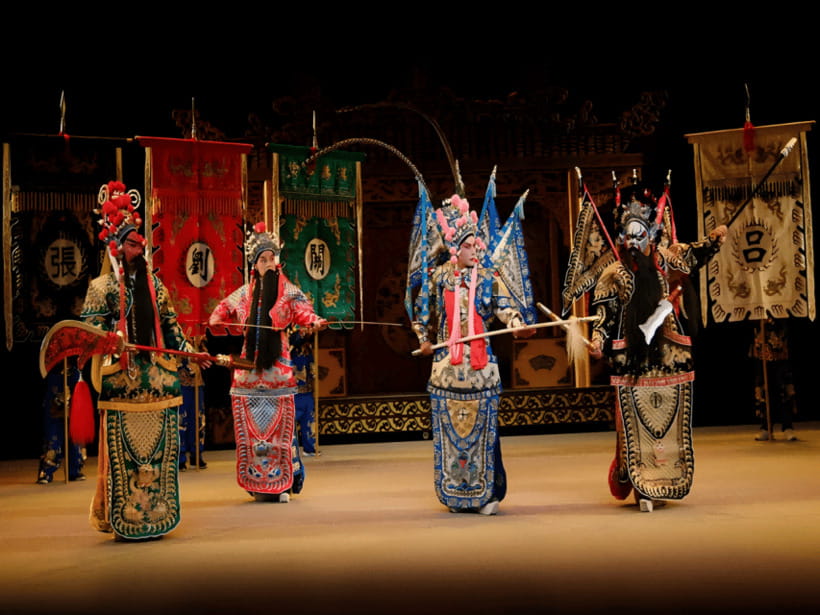
Sichuan opera has layers: singing, recitation, movement, martial arts, and special skills like face-changing, fire breathing, and stylized character techniques. If you try to see only one piece, you can miss the bigger point.
I like this format because it’s designed to teach through entertainment. The show includes multiple segments—from opera excerpts to shadow/puppet moments—so you keep getting small introductions to different sides of the art. The description also says it uses a multi-angle, multi-perspective approach that increases the visual impact, which is exactly what helps kids and first-timers stay engaged.
And because the story thread runs through the performance—Little Sanqing training, hiding, and mastering eight-face changing—you’re not just watching random acts. You’re tracking progress. Even when the details are moving fast, the structure gives you something steady to hold onto.
Tea day-of: how the included pickup works and why it matters
The show includes a complimentary bowl of Covered Bowl Tea at Yuelai Tea House, located right next to Jinjiang Theater. You pick it up one hour before the performance begins. You just present your ticket’s serial number or QR code.
Why I think this is a nice touch: it gives you a soft landing before the loud, fast spectacle of Sichuan opera. You’re in the right place, you’ve already handled the key ticket credential, and you’re less likely to feel rushed.
The broader experience also includes traditional Gaiwan tea as part of the show concept. In practical terms, that means the theater night isn’t only about the stage. It’s about stepping into the setting, even for something as simple as tea time.
Stage spectacle tips: how to watch without getting lost
A few practical ideas help you enjoy this more, especially if you’re not fluent in Chinese opera.
First, treat face-changing as a moment you watch with your whole attention. The show is built to highlight it, and the story frames it as a skill Little Sanqing perfects over time.
Second, don’t worry if you can’t catch every line of story or dialogue. The performance categories listed—singing/recitation, movement, martial arts, and special skills—tell you that comprehension isn’t the only path. Your eyes get fed constantly: acrobatics, shadow/puppet scenes, fire breathing, and dance.
Third, remember the rules:
- No video recording
- No food in the theater
- No alcohol or drugs
So plan your evening to avoid last-minute stress at the entrance. If you’re the kind of person who forgets about rules until the last second, this is one you don’t want to test.
Who should book this Sichuan opera show (and who might think twice)
This is a strong choice if:
- you want the iconic Sichuan opera face-changing experience in a single 70-minute package
- you’re in Chengdu for a short time and want something central near Tianfu Square
- you like variety—opera excerpts plus acrobatics, puppets/shadows, and dance
- you’re bringing kids or you want something energetic without a long commitment
You might want to think twice if:
- you hate shows where your seat is randomly assigned and you’re very view-sensitive
- you planned to record everything for social media (the show forbids recording)
- you want a slower, lecture-style cultural experience rather than a fast-moving performance program
Price and value: what you’re really paying for at $20
At $20 per person, you’re paying for more than one effect. You’re buying:
- admission to Jinjiang Theater
- a reserved seat (even though it’s randomly assigned within the area)
- a structured 70-minute program with multiple segments
- a complimentary Covered Bowl Tea pickup
- the eight-face changing technique, presented as the centerpiece
That’s why this feels like good value for most visitors. You get the headline skill, but you also get enough variety—fire breathing, hidden knife, rolling lantern, puppet/shadow pieces, and dance—to make the ticket feel like a full show, not a quick demo.
Should you book Jinjiang Theater’s eight-face changing show?
I’d book it if you want your Chengdu trip to include a performance that’s both traditional and showy. The face-changing technique is the main draw, but the program is built to support it with opera excerpts, acrobatics, and dance so you stay entertained the whole time.
Book it especially if you like a plan that’s easy to slot into a day: the theater is central, the show is about 70 minutes, and the included tea pickup gives you a clear pre-show rhythm.
Skip it only if your priority is recording your experience or you’re picky about seat location. Otherwise, this is one of the most straightforward ways to experience Sichuan opera craftsmanship in a single night.
FAQ
FAQ
Where is Jinjiang Theater located?
Jinjiang Theater is at No. 54, Huaxing Street, Luoma City, Jinjiang District, Chengdu City, Sichuan Province, China (锦江剧场 锦江区华兴正街 54 号).
How long is the performance?
The duration is listed as 70 minutes. Starting times depend on availability.
How much does the ticket cost?
The price is listed as $20 per person.
Do I need my email QR code to enter?
Yes. You must check your email for your ticket serial number, QR code, and seat number. Without them, you cannot enter the theater.
When can I get the complimentary tea?
The ticket includes a complimentary bowl of Covered Bowl Tea at Yuelai Tea House one hour before the performance starts.
Is my seat assigned, and is it random?
Seats are randomly assigned within the designated ticket area, even though the ticket includes a selected seat.
Are video recordings allowed during the show?
No. Video recording is not allowed during the performance.
Is food allowed inside the theater?
No. Food is not allowed in the theater.
What languages are available?
The languages listed are Chinese and English.
Is alcohol allowed?
No. Alcohol (and drugs) are not allowed.
-and-terracotta-warriors-museum-400x267.jpg)