REVIEW · BEIJING
Houhai Hutong Tour: Rickshaw + Prince Gong & Soong Residences
Book on Viator →Operated by Discover Beijing Tours · Bookable on Viator
Beijing by rickshaw feels like time travel. This private Houhai and Shichahai lanes walk trades big-bus crowds for quiet courtyards, lake views, and two major historical stops: Prince Gong’s Mansion and Soong Ching-ling’s Former Residence.
I particularly like the mix of slow strolling and a short rickshaw ride that helps you cover real hutong lanes without rushing. The other standout is how the route threads culture together in a readable way: Qing-era noble life at Gong Wang Fu, then a calmer Ming/Qing garden setting at Song Qing Ling Guju, capped with scenic bridge and alley wandering. One thing to consider: entry to Prince Gong’s Mansion can be hit-or-miss during peak season because tickets may require advance reservation, and the tour may swap to the Drum Tower (Gulou) or another nearby option.
In This Review
- Key highlights at a glance
- Shichahai hutongs and Houhai: why this route works
- Price and logistics: what you’re paying for (and what you’re not)
- Pickup to Shichahai: starting where the crowds thin out
- Lotus Lane area and Huoshen Temple: the quiet start
- Gong Wang Fu (Prince Gong’s Mansion): Qing courtyards and big-admission energy
- Song Qing Ling Guju (Soong Ching-ling’s Former Residence): a calmer garden pause
- Yinding Bridge and Yandaixie Street: views plus an ancient lane stroll
- Houhai back lakes rickshaw ride: seeing hutongs from the inside
- Your guide: the difference between seeing and understanding
- Who should book this tour (and who might want a different one)
- What to bring and how to time your day
- Should you book the Houhai Hutong Tour with Rickshaw?
- FAQ
- How long is the Houhai Hutong Tour?
- How much does the tour cost?
- Is hotel pickup included?
- Is this tour private?
- What is included in the ticket price?
- What is not included?
- Do I need advance tickets for Prince Gong’s Mansion?
- Does the tour run in bad weather?
- What is the cancellation policy?
Key highlights at a glance
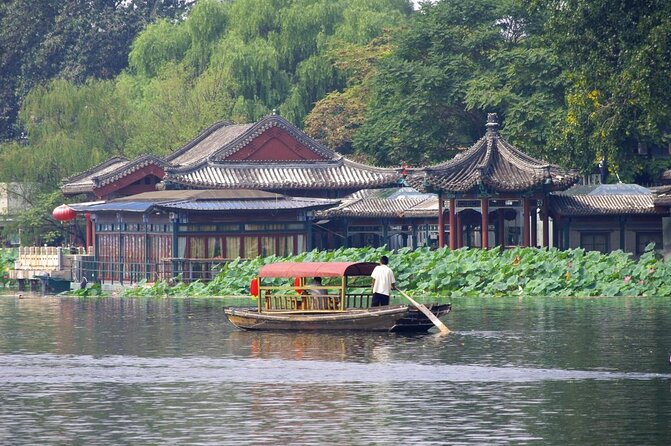
- Houhai lanes + siheyuan views from the rickshaw, not just from the sidewalk
- Prince Gong’s Mansion (Gong Wang Fu) with included admission
- Soong Ching-ling’s Former Residence with included admission and a garden-quiet mood
- Yinding Bridge for classic lake scenery and the historic marble-bridge shape
- Yandaixie Street for a short, easy walk through an ancient pedestrian lane
- Private guide-led pacing over 3–4 hours, with pickup included
Shichahai hutongs and Houhai: why this route works
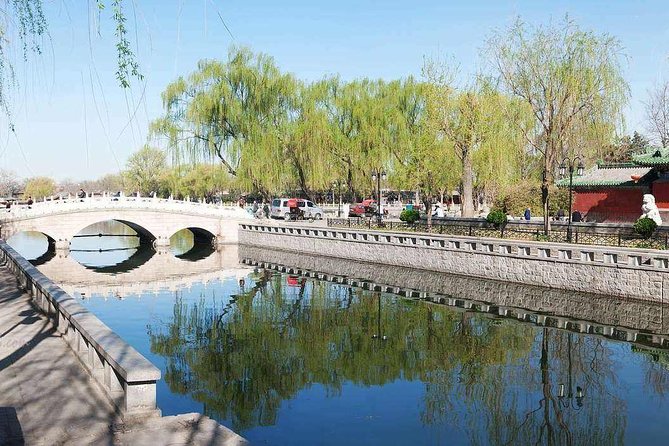
Shichahai and Houhai sit in an older pocket of Beijing, where the street grid loosens and the lanes start doing their own thing. That matters because hutongs are not just scenery. They are how old Beijing got built and how daily life used to move—by foot, cart, and later by a few practical modern shortcuts. This tour leans into that by pairing guided walking with a brief rickshaw segment through the “back lakes” area.
If you like history but hate feeling like you’re sprinting from plaque to plaque, the timing here is friendly. It’s designed for a comfortable rhythm: a bit of wandering, a couple of major indoor or courtyard stops, then outdoor sightseeing with views. You also avoid the common problem of spending your whole day in transportation mode; here, the route is focused around Shichahai’s immediate orbit.
Another small plus: the tour includes hotel pickup (within Beijing’s 3rd ring road), which helps you start calm instead of coordinating buses and taxis first.
You can also read our reviews of more tours and experiences in Beijing.

Price and logistics: what you’re paying for (and what you’re not)
The tour costs $129 per person and runs about 3 to 4 hours. That price isn’t just for entrance tickets. You’re also paying for a private guide, hotel pickup within the 3rd ring road, and a one-way transfer to Shichahai Lake. Add a 20-minute rickshaw ride and included admissions for both Prince Gong’s Mansion and Soong Ching-ling’s residence, and the value starts to make sense—especially if you’d otherwise pay guide time plus separate transport.
What’s not included is also clear, and it’s important for your day planning:
- Food and drinks (you’ll want a plan if your timing hits a meal)
- Hotel drop-off (pickup is included, return is not)
- Transportation back to your hotel
So if your hotel is outside the 3rd ring road, you may need to arrange your own return ride. Also, because pickup is only included for hotels within the 3rd ring road, double-check you’re in range before you book.
Pickup to Shichahai: starting where the crowds thin out
You begin with pickup from your downtown Beijing hotel and head toward Shichahai, described as quieter and farther from the busiest tourist flow. That’s a real advantage. Beijing’s best-known sites can feel intense. Here, the goal is to get you into an area where you can actually hear your guide and look around at street level.
On the way, you pause to admire two UNESCO-listed landmarks from outside: the Bell Tower (Zhonglou) and Drum Tower (Gulou) along Beijing’s Central Axis. The guide frames them as the old system that set the city’s daily rhythm. Even if you don’t go inside, this is a good “big picture” moment that helps you understand why central planning and later power symbols mattered.
Then you’re steered toward the Shichahai side, where hutong streets tighten into narrow lanes and courtyard walls start appearing at human scale.
Lotus Lane area and Huoshen Temple: the quiet start

The route’s opening mood is intentionally calm. You start around Lotus Lane and also include Huoshen Temple, described as a tranquil ancient shrine. This is the sort of stop that’s easy to overlook if you only chase the headline attractions, but it sets your expectations for the whole day: respect the pace, notice the small details, and don’t treat the area like one long photo stop.
Lotus Lane is where you’ll see the everyday side of the neighborhood, including quaint local shopfronts along the lane. The temple stop helps you switch from street energy to stillness. That contrast is what makes the rest of the tour feel more layered.
What to watch for here: the temple and lane areas reward slow looking. If you’re the type who keeps walking fast to “save time,” you might miss the point. Try to give this part a little extra attention.
Gong Wang Fu (Prince Gong’s Mansion): Qing courtyards and big-admission energy
Next comes Gong Wang Fu, billed as the largest and best-preserved Qing-dynasty noble residence. This is also the tour’s biggest “ticket” moment because admission is included for Prince Gong’s Mansion.
Inside, the focus is on the mansion’s scale: grand courtyards, traditional courtyard layout, and ornate carved details that you’d be hard-pressed to appreciate on your own without a guide. The tour description even notes that it’s often said to tell half of Qing history, which is a good way to frame why it’s worth spending time rather than breezing through.
Timing-wise, you should plan on about 1 hour here. That’s enough time to see the core courtyards and get context, but not so long that you feel stuck. The tradeoff is that you can’t expect an endlessly slow, museum-level pace.
The one real drawback is the entry risk. During peak tourist seasons, tickets for Prince Gong’s Mansion can require advance reservation, and the tour states it cannot guarantee entry. If the mansion is unavailable, the operator will arrange a visit to the Drum Tower (Gulou) or another nearby scenic spot as an alternative. In other words: you might still get a strong day, but your exact schedule could shift.

Song Qing Ling Guju (Soong Ching-ling’s Former Residence): a calmer garden pause
After the Qing noble mansion, you switch to Soong Ching-ling’s Former Residence, also with included admission. The description frames it as serene and garden-like, and it notes that the estate was once a royal garden of the Ming and Qing dynasties.
This stop is about atmosphere. Where the mansion emphasizes grandeur and official-era scale, the residence leans toward a softer walk through a garden environment. It’s also a good contrast for your brain: you get a chance to slow down after the more structured courtyard layout of Gong Wang Fu.
You’ll typically have around 1 hour here. That’s enough time to take in the garden setting and understand the site’s significance, without feeling hurried. If you like places where you can breathe between crowded sights, this is the one that often wins people over.
Yinding Bridge and Yandaixie Street: views plus an ancient lane stroll
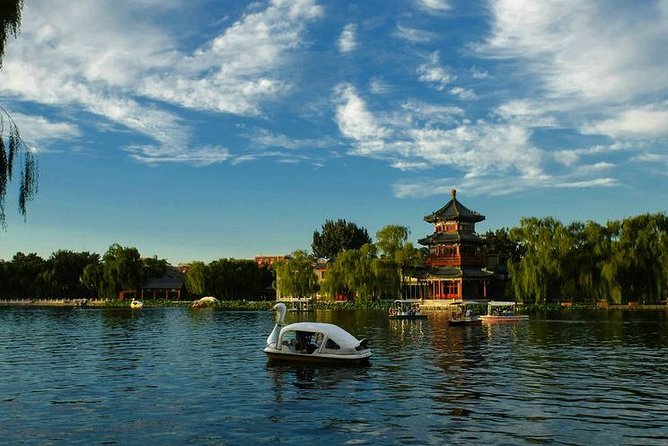
Between the major residences, you get two classic outdoor breaks.
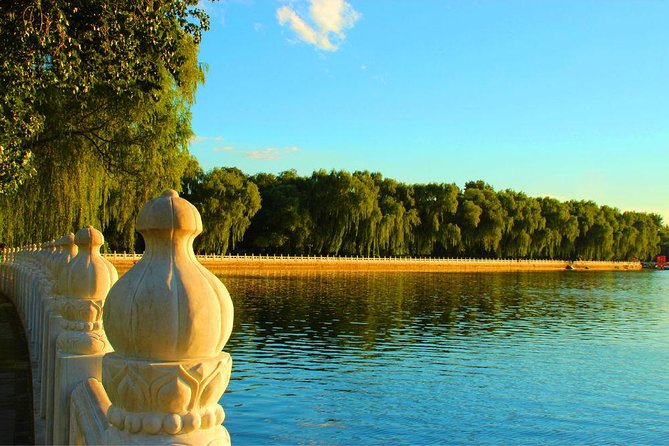
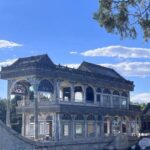
First, the tour passes Yinding Bridge, a historic white marble bridge shaped like an inverted silver ingot. It’s tied to the older “Eight Scenic Spots of Yanjing,” and the description mentions that Emperor Qianlong admired the sunset views over the lake. You won’t spend a full long stop here, but you’ll get a meaningful look at why this bridge became a scenic-name in the first place.
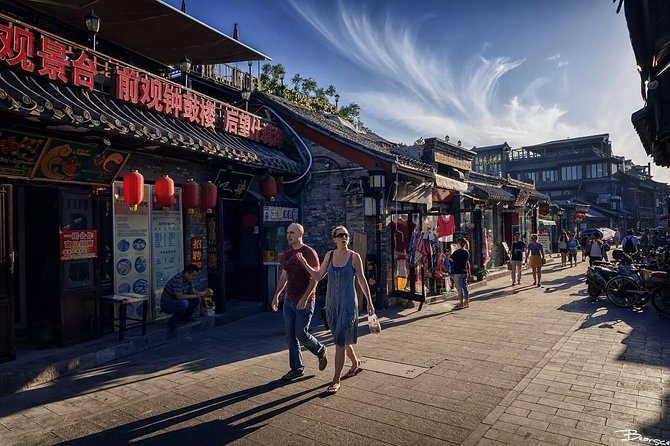
Next is Yandai Xie Street (listed as 232 meters), an ancient pedestrian lane. It’s described as one of China’s top historical and cultural streets, and it’s shaped like a tobacco pipe in layout. The history angle here is that it used to be an upscale commercial area for nobles.
You get about 30 minutes on this street. That time is short, but it fits the tour’s overall pacing: enough to walk through, feel the old-street rhythm, and reset before the rickshaw segment. If you want to shop or linger, plan to do that on your own afterward, because the tour time is designed to protect the rest of the itinerary.
Houhai back lakes rickshaw ride: seeing hutongs from the inside
The day’s fun, moving segment is the 20-minute rickshaw ride through Houhai’s back lanes. This is where you trade walking-only sightlines for a slightly higher, smoother view down narrow hutong corridors.
The route description emphasizes that you glide past siheyuan and ancient alleyways, letting you soak up the local transport feel rather than only standing still and looking. You’ll also get that “old Beijing still living” sensation that’s hard to replicate when you’re only on major streets.
This portion is included and typically runs around 1 hour total in the schedule, likely because it combines setup and riding time with a brief stroll component. The rickshaw segment is short by design, which keeps it comfortable and avoids the fatigue that can come from long periods of sitting or waiting.
Practical tip: bring comfortable shoes for the walking parts, and dress for weather. The tour notes it operates in all weather, so you’ll want a light rain layer just in case.
Your guide: the difference between seeing and understanding
A guided tour lives or dies on the person leading it. Here, that’s a strong point. One of the standout review comments praises Mike for being passionate about the Hutong area and for giving a better understanding of China through stories tied to what you see on the ground.
That matters because hutongs aren’t obvious at first glance. Without context, a courtyard wall is just a courtyard wall. With good explanations, you start noticing patterns—why lanes run the way they do, how old city layout shaped daily movement, and why certain landmarks mattered.
So if you book this, don’t treat it like a checklist. Ask your guide simple questions as you walk. When you get the history from a local-style story, the sights click faster.
Who should book this tour (and who might want a different one)
This tour is a smart fit if you:
- Want a private experience with a guide you can ask questions to
- Like a balanced day: one major mansion stop plus a quieter residence stop, not just nonstop sightseeing
- Prefer quieter neighborhoods like Shichahai and Houhai over the most crowded, big-ticket areas
- Enjoy hutongs and courtyard architecture enough to spend time actually walking them
You might consider another option if you:
- Must have guaranteed entry to Prince Gong’s Mansion during peak season, because the tour says it can’t ensure it
- Don’t want any outdoor walking, since the route includes street and bridge time plus hutong strolls
- Need a strict end point back at your hotel, since drop-off is not included
Also, if your priority is pure museum-style detail, this may feel more like a guided city-lane overview. But if you want something human-scale and scenic, it hits the sweet spot.
What to bring and how to time your day
The tour runs in all weather, so treat this like a walk-first experience.
- Wear comfortable walking shoes for the hutong and street portions
- Bring a light jacket or rain layer; conditions can shift even in short time windows
- If you’re sensitive to sun or cold, dress accordingly so you can actually enjoy the outside segments
For timing, remember the itinerary includes multiple sites with ticketing and a couple of guided segments (including Bell and Drum Towers exterior views and Yandaixie Street). The full 3 to 4 hours is designed to fit together, so try not to schedule your next big appointment immediately after pickup-based tours end.
Should you book the Houhai Hutong Tour with Rickshaw?
For most people who want a real feel for old Beijing without getting trapped in crowds, I’d recommend it. The biggest reason is the combination: you get hutong walking, a meaningful Prince Gong’s Mansion stop, the calmer garden mood of Soong Ching-ling’s Former Residence, and then a practical rickshaw ride through Houhai back lanes.
The main reason to pause is the Prince Gong entry uncertainty during peak season. If you travel in a high-demand time and that mansion is your non-negotiable, you should weigh that swap option (Drum Tower or another nearby scenic stop) against your priorities.
If you want a guided day that makes Shichahai feel understandable and not just scenic, this is strong value for the included guide time and admission fees.
FAQ
How long is the Houhai Hutong Tour?
It runs about 3 to 4 hours.
How much does the tour cost?
The price is $129.00 per person.
Is hotel pickup included?
Yes. Pickup is included for hotels within the 3rd ring road of Beijing.
Is this tour private?
Yes. It’s a private tour/activity with only your group participating.
What is included in the ticket price?
The tour includes a professional guide, hotel pickup, one-way transportation to Shichahai, a 20-minute rickshaw ride, and entrance fees to Prince Gong’s Mansion and Soong Ching-ling’s Former Residence.
What is not included?
Food and drinks are not included, and hotel drop-off plus transportation back to your hotel are also not included.
Do I need advance tickets for Prince Gong’s Mansion?
During peak tourist seasons, tickets for Prince Gong’s Mansion require advance reservation, and entry cannot be guaranteed. If entry isn’t possible, the tour provides an alternative such as the Drum Tower or another nearby scenic spot.
Does the tour run in bad weather?
Yes, it operates in all weather conditions, so dress appropriately.
What is the cancellation policy?
You can cancel for a full refund up to 24 hours before the experience starts. Cancellation less than 24 hours before the start time is not refunded.