REVIEW · CHENGDU
Jinjiang Theater: Eight-Face Changing-Legendary Sichuan Opera
Book on Viator →Operated by SUKHA Travel · Bookable on Viator
Face-changing lands fast. At Jinjiang Theater in Chengdu, you follow Little Sanqing’s climb to the eight-face changing moment, wrapped in full-on Sichuan opera action. I love how the show keeps shifting gears—from singing and martial bits to high-skill stage effects—so the pace never stalls.
The other thing I really like: the late-night power acts, especially the Fire Breathing and Rolling Lantern moments. One consideration: the show starts at 8:00 pm, so plan an unrushed dinner and give yourself time to get to the theater.
In This Review
- Key things to know before you go
- Jinjiang Theater near Tianfu Square: the setting that helps the show work
- The story of Little Sanqing: why the show feels more than a special-effects demo
- Face-changing night: from Sichuan opera excerpts to the eight-face moment
- Fire Breathing and Rolling Lantern: the high-impact acts (and how to watch them)
- Acrobatics between opera scenes: umbrella kicking and multi-person drum kicking
- Puppets, shadow art, and the Beauty of Life: a quieter change of pace
- Traditional costumes and dances: three costume changes plus water sleeve elegance
- Tea + timing: how to plan your evening around an 8:00 pm show
- Price and value: why $18 can feel like a steal for this much stagecraft
- Who should book this show—and who might want a different night
- Should you book Jinjiang Theater: Eight-Face Changing—Legendary Sichuan Opera?
- FAQ
- How much is the Jinjiang Theater Sichuan opera show?
- How long is the performance?
- What time does the show start?
- Where is the meeting point?
- Is face-changing included?
- What special acts are part of the program?
- Is there any food or drink included?
- Is the admission ticket included?
- What is the cancellation policy if weather is poor?
Key things to know before you go
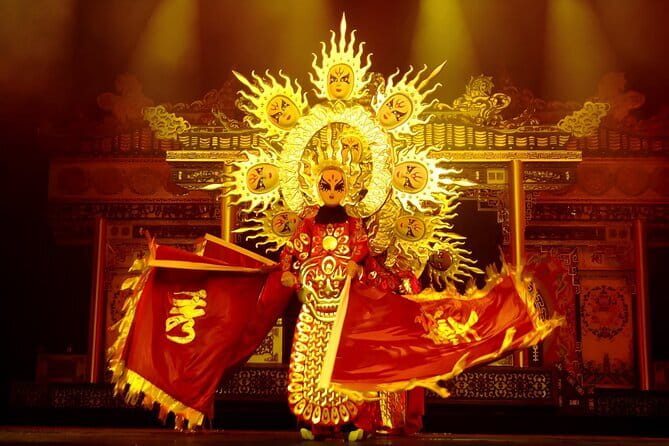
- Exclusive eight-face changing technique: the highlight skill tied to Little Sanqing’s story arc
- Fire Breathing + Rolling Lantern: two of the most adrenaline-heavy stage specialties in the program
- Acrobatics you can’t ignore: umbrella kicking and multi-person drum kicking show up between opera excerpts
- Face-changing plus costume spectacle: three costume changes and a traditional fashion show add visual variety
- A complete Sichuan opera package: singing, recitation, movement, martial arts, hand shadow art, and a puppet segment
Jinjiang Theater near Tianfu Square: the setting that helps the show work
Jinjiang Theater puts you in the right mood for Sichuan opera. You’re in Chengdu, not some themed room far from town, and the venue is near Tianfu Square—handy if you’re already exploring central areas before the performance. The experience also includes complimentary Sichuan Gaiwan tea, which is a small touch that makes the evening feel less like a ticketed stop and more like a night out.
The show is timed for the evening crowd: the start time is 8:00 pm, and the performance runs about 1 hour 10 minutes. That length matters. You get enough time to see multiple specialty acts and costume changes, but you’re also not committing to a half-day cultural marathon.
You can also read our reviews of more tours and experiences in Chengdu.


The story of Little Sanqing: why the show feels more than a special-effects demo
What makes this performance click is that it’s not only a list of tricks. The program follows Little Sanqing as he struggles and trains, then reaches a key turning point with the debut of the eight-face changing technique. Even if you don’t catch every word of the singing and recitation, the story structure gives you a clear “climb” through the night.
You also get a mix of performance styles, not just one. Expect excerpts and specialties that combine theatrical performance, martial arts-style movement, and stage stunts. That variety is a major part of the value: you’re watching a full Sichuan opera evening, not a single highlight loop.
Face-changing night: from Sichuan opera excerpts to the eight-face moment
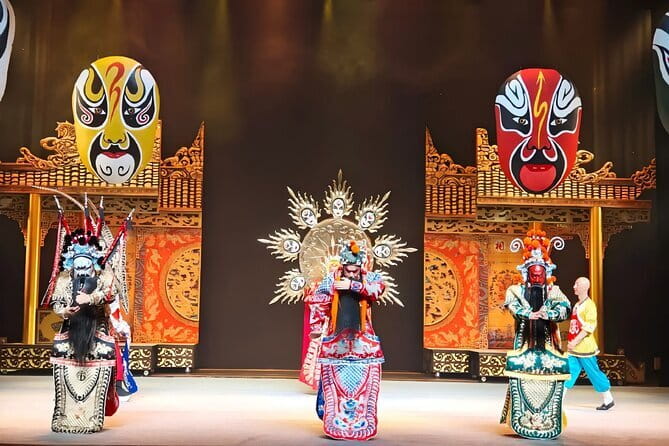
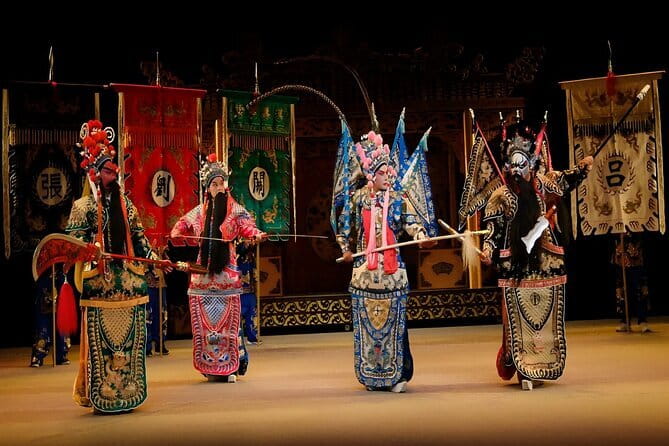
This is the part you came for, and it’s handled in a way that builds attention rather than dumping everything at once. The program includes traditional Sichuan opera excerpts such as The Three Heroes Fight Lü Bu and Releasing Pei. Interspersed throughout are specialties that keep tightening the focus on performance skill and timing.
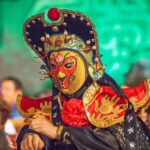
Then you hit face-changing, including the featured eight-face changing technique. In practice, what you’ll appreciate most is the contrast: face-changing is already dramatic, but the eight-face moment is the specific peak the show is organized around. The program also includes three costume changes, so even when you’re not watching the exact face-changing sequence, the costuming and transitions help keep the visual momentum.
Here’s a practical tip: don’t spend the whole time trying to “solve” how it happens. Let your eyes follow what’s happening onstage—where performers shift, how the music and rhythm guide attention, and when the stage effects land. The show is designed so your focus naturally locks in on each big beat.
Fire Breathing and Rolling Lantern: the high-impact acts (and how to watch them)
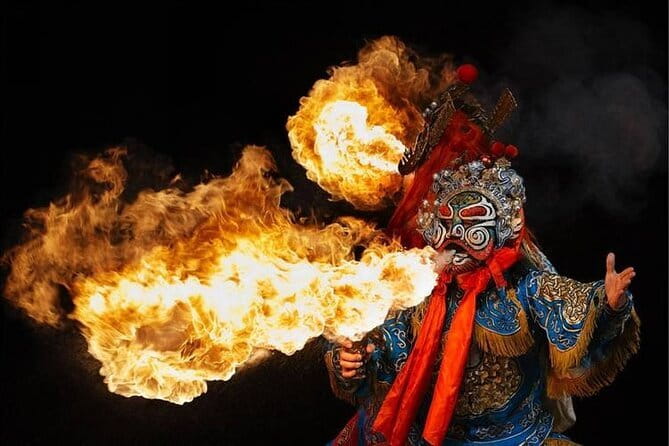
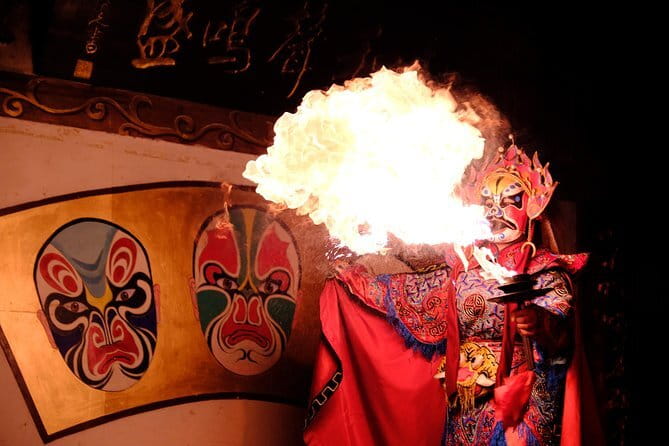
If you like dramatic stage effects, this program delivers. Fire Breathing appears as one of the Sichuan opera specialties, and the Rolling Lantern act is another major set piece. These two moments are the kinds of performances that make the whole room react—because they’re visual, intense, and clearly meant to create a “now you’re watching something rare” feeling.
What to do with that excitement? Stay seated, watch from your current angle, and don’t assume the show will slow down for you to settle in. The stunts are placed among other acts—hand shadow art, acrobatics, martial movement—so the night moves like a series of distinct scenes.
If you’re sensitive to intense stage effects, keep your comfort in mind. Fire-based acts can feel intense even from a safe seat, so it’s worth checking your own tolerance level before you commit.
Acrobatics between opera scenes: umbrella kicking and multi-person drum kicking
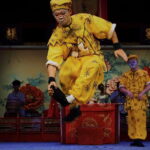
Sichuan opera here isn’t just vocal and costume work. You’ll also see acrobatics that take over the stage energy for short bursts that feel like a reset. One example is umbrella kicking, which adds that sharp athletic snap you associate with martial choreography. Another is multi-person drum kicking, where multiple performers create momentum around a rhythmic center.
These segments are important because they change what your brain expects. When you watch singing and recitation, your attention goes to tone and character. When acrobatics arrive, your attention shifts to body control and timing. That back-and-forth is part of why the evening stays entertaining from start to finish.



Puppets, shadow art, and the Beauty of Life: a quieter change of pace
Not every moment is nonstop spectacle. The program includes hand shadow art and a puppet show titled The Beauty of Life. These sections are a good breather, especially after the high heat of fire and the kinetic energy of acrobatics.
Why I think these acts matter for you: they remind you that Sichuan opera is a whole system of performance. You’re not only seeing one specialty. You’re watching a night where different traditional art forms share the spotlight, so the show feels fuller and less like one trick repeated.
Traditional costumes and dances: three costume changes plus water sleeve elegance
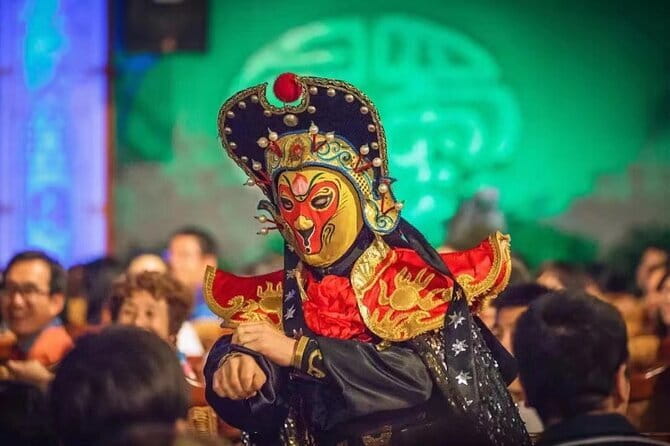
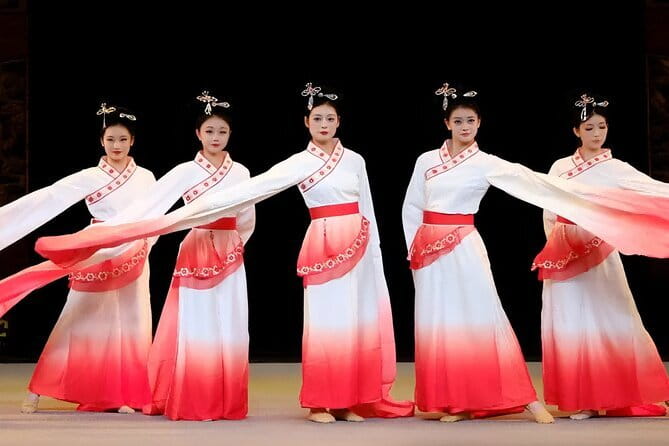
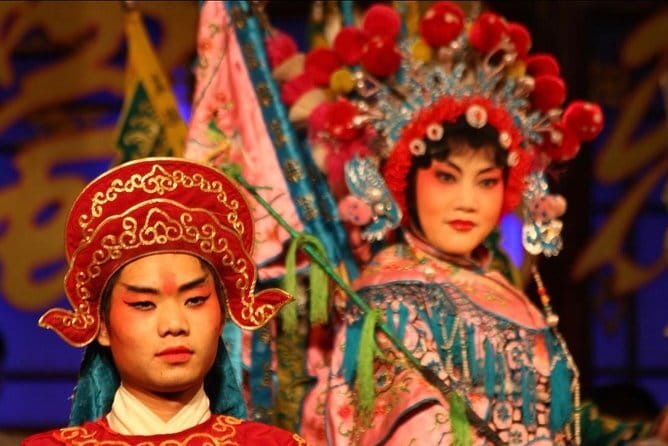
The show keeps going visually with three costume changes and a traditional fashion show. Then you get dance performances like the Water Sleeve Dance and Ghost Immortal Dance. These segments aren’t just decoration. They give the show a different rhythm—more graceful, more continuous in motion—after the sharper-edged action pieces.
Water sleeve style is especially satisfying if you like movement that looks controlled but alive. You’ll also enjoy the Ghost Immortal Dance if you’re drawn to dramatic character work and expressive staging. Even if you don’t know the exact character details, you’ll read the performance intent through posture, arm movement, and timing with the music.
Tea + timing: how to plan your evening around an 8:00 pm show
The show includes a complimentary cup of traditional Sichuan Gaiwan tea, which is a nice touch before the big acts begin. Since the performance starts at 8:00 pm, aim to be at the theater in enough time to settle in and get your tea without rushing.
The meeting point is at Jinjiang Theatre, 54 Hua Xing Zheng Jie, Luomashi, Jin Jiang Qu, Cheng Du Shi, Si Chuan Sheng, China, 610017. The good news: it’s near public transportation. That matters in Chengdu, where getting from one neighborhood to another is easier when you’re not relying on private rides.
If you’re pairing this with dinner, keep it simple. Choose something close to where you’re staying, then build in buffer time. You don’t want to sprint across the last blocks and miss the early scenes.
Price and value: why $18 can feel like a steal for this much stagecraft
At $18, this is one of those deals that feels fair because you’re getting a full program, not just a “highlight ticket.” For your money, you’re seeing a structured evening: opera excerpts, specialties, acrobatics, puppet and shadow art segments, plus face-changing and the eight-face peak. The show is also about 1 hour 10 minutes, so you get a dense experience without feeling trapped for too long.
The tea included also helps value. It’s not a huge expense item for most travelers, but it adds a sense of place. The best value isn’t only the price tag. It’s the fact that the evening covers multiple traditional performance styles in one ticket.
Who should book this show—and who might want a different night
This is a great fit if you want a practical, high-energy cultural experience in Chengdu. You don’t need to be an opera scholar. The program’s big moments—face-changing, eight-face changing, fire breathing, Rolling Lantern, and standout dance segments—do much of the explaining through performance.
Go for it if you’re traveling with family or friends. The variety helps different ages and tastes stay engaged, from the acrobatics to the costume and dance segments.
If you’re looking for something quiet and scholarly, this might not be your best choice. This show is built for stage impact: fast costume changes, strong specialty acts, and dramatic visual storytelling.
Should you book Jinjiang Theater: Eight-Face Changing—Legendary Sichuan Opera?
Yes, if your goal is a real Sichuan opera night with the face-changing peak as the centerpiece. The exclusive eight-face changing moment is the reason to choose it, and the rest of the program supports it with fire, lantern drama, acrobatics, costumes, and traditional dances. At $18 for about 1 hour 10 minutes, you’re paying for a full set of stage specialties, not just a single act.
Book it especially if you’ll be in Chengdu around central areas like Tianfu Square and you want something that’s easy to fit into an evening schedule. Just plan for the 8:00 pm start, and keep an eye on conditions since the experience requires good weather—if it’s canceled due to poor weather, you’ll be offered another date or a full refund.
FAQ
How much is the Jinjiang Theater Sichuan opera show?
The price is $18.
How long is the performance?
It lasts about 1 hour 10 minutes.
What time does the show start?
The start time is 8:00 pm.
Where is the meeting point?
Jinjiang Theatre, 54 Hua Xing Zheng Jie, Luomashi, Jin Jiang Qu, Cheng Du Shi, Si Chuan Sheng, China, 610017.
Is face-changing included?
Yes. The program includes face-changing and an exclusive eight-face changing technique.
What special acts are part of the program?
The program includes Fire Breathing and Rolling Lantern, plus acrobatics like umbrella kicking and multi-person drum kicking, hand shadow art, and more.
Is there any food or drink included?
Yes. You get a complimentary cup of traditional Sichuan Gaiwan tea.
Is the admission ticket included?
Yes, the admission ticket is included.
What is the cancellation policy if weather is poor?
The experience requires good weather. If it’s canceled due to poor weather, you’ll be offered a different date or a full refund. You can cancel for a full refund up to 24 hours in advance.