REVIEW · BEIJING
Mini Group: One-Day Jiankou to Mutianyu Great Wall Hiking Tour
Book on Viator →Operated by Trippest Travel · Bookable on Viator
The wild Great Wall is the point. This one-day small-group hike runs from Jiankou to Mutianyu, with an English-speaking guide who can explain the wall’s different restorations along the way, including guide Mr. Yu’s history talk on the drive.
It’s also a hands-on route: you’ll tackle ladders, pass watch towers, and walk a rugged spine before reaching the more orderly rebuilt section.
I love the door-to-door pickup and the air-conditioned ride that gets you to the trailhead without a logistics headache. I also like how the hike turns into a real lesson in restoration styles, since Jiankou feels wild and rough while Mutianyu is more carefully reconstructed.
One big consideration: this is not a casual walk. Expect steep climbs and ladders over about 10 km, so you’ll want solid hiking fitness.
In This Review
- Key highlights you’ll care about
- Jiankou to Mutianyu: the real reason to pick this route
- Pickup, drive time, and how the day is paced
- The Jiankou start: village steps, then your first big vertical moments
- Watch towers, rugged walls, and how ladders change the effort
- Mutianyu’s rebuilt section: when the Wall becomes easier to read
- Lunch in Xinshuangquan: plan for extra cost and real downtime
- Price and value: what you get for $195
- What to bring (and what to avoid) for a ladder-and-tower hike
- Weather, timing, and the Jiankou closure possibility
- Who this tour is for (and who should choose something else)
- Should you book the Jiankou to Mutianyu one-day hike?
- FAQ
- How long is the Jiankou to Mutianyu hike?
- Is lunch included in the price?
- Does the tour include hotel pickup and drop-off?
- Are cable cars included?
- What if Jiankou is closed temporarily?
- What group size should I expect?
Key highlights you’ll care about
- Jiankou-to-Mutianyu contrast: wild, uneven stone versus a reconstructed, visitor-focused walk
- Small-group feel (max 15): easier pacing than large buses
- English-speaking guidance: history and restoration context, with examples like Mr. Yu on the drive
- Watch towers + ladder sections: expect vertical moments, not just scenic strolling
- Admissions + transport included: you’re paying for guided access, not just a ticket and a ride
Jiankou to Mutianyu: the real reason to pick this route
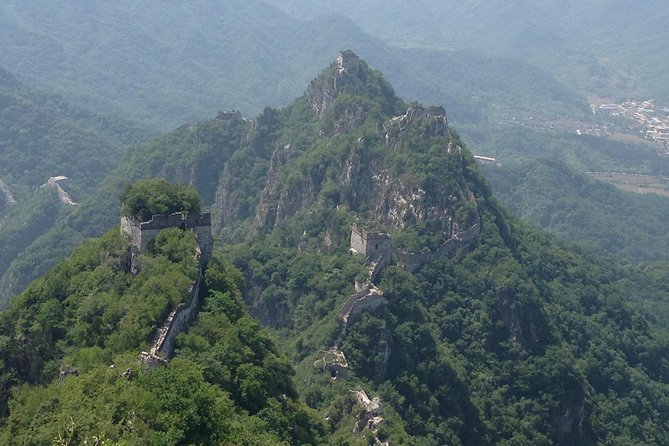
If your mental picture of the Great Wall is tidy stairs and crowds, this tour challenges it—in a good way. You start in Jiankou, known for a more rugged, less-polished feel, then you end at Mutianyu, where the wall is reconstructed and easier to navigate.
That shift is the heart of the day. Along the route, your guide helps you connect what you’re seeing with why different sections look different—how restoration choices change the wall’s texture, path conditions, and even how you experience the view from each tower.
This is also the kind of Great Wall day where your body is involved. You’re not just looking out from one platform. You’re climbing, stepping, and working your way across a stretch that rewards steady pace. If you want a Wall hike that feels like a challenge, this fits.
You can also read our reviews of more tours and experiences in Beijing.


Pickup, drive time, and how the day is paced
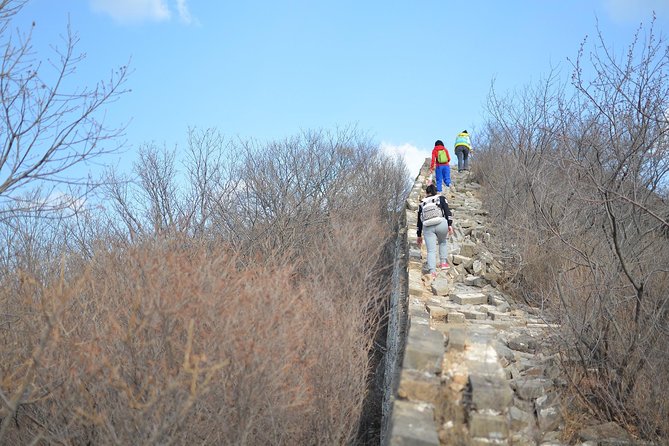
You’ll get hotel pickup around 7:00–7:30 AM (within the 4th Ring Zone of Beijing). Then it’s roughly a 2.5-hour drive to the Jiankou trail area, which matters more than it sounds. Long transfers are usually where day tours lose people; here, the ride is air-conditioned and structured so you start in time and with less stress.
Once you arrive, the hike is about 5 hours to cover around 10 km (6 miles). The pacing is built around that: you’re moving for a half-day, then you’re done. That’s a major value point. A lot of Great Wall tours try to cram too much in and leave you exhausted in the wrong way. This keeps the scope focused.
After the hike, you’ll return by vehicle to your hotel in Beijing. The “door-to-door” part is worth taking seriously. If you’ve ever tried to piece together trains, buses, and taxis in a crowded morning, you know why saving that hassle can make the hike itself feel more enjoyable.
The Jiankou start: village steps, then your first big vertical moments
Jiankou begins with a mix of local scenery and real trail work. You’ll walk through a village area and then climb up via a mountain path toward the Great Wall. This early section is your warm-up and your reality check: the terrain isn’t flat, and you’ll earn your first viewpoints.
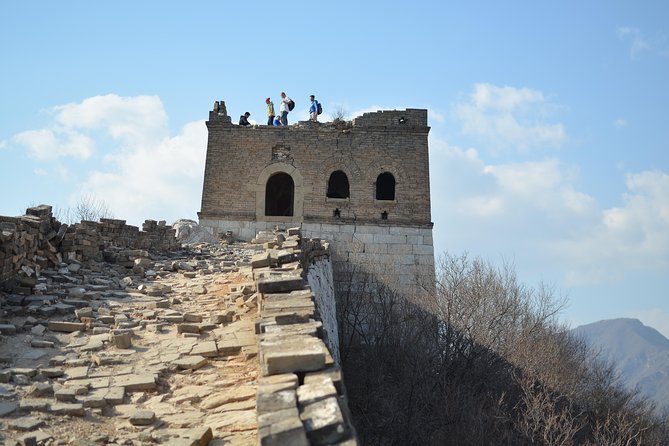
From there, the route leads you toward the Zhengbei Watch Tower. One of the key “you’ll remember this” moments is taking a ladder up to the tower. It’s not optional window-shopping. You’re physically transitioning to higher ground and getting that classic Wall perspective: narrow ridges, looming stonework, and the sense that the wall was built for defense, not comfort.
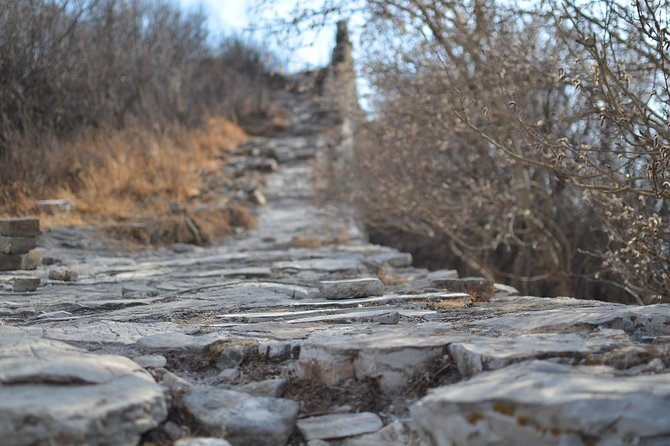
You then continue climbing toward the highest watch tower at Jiankou. After that high point, the route shifts into a downhill rhythm, moving along a rolling ridge line. This is where you get the feeling of Jiankou’s “wild” character—uneven edges, rugged footing, and a walk that feels more like a route than a promenade.
Watch towers, rugged walls, and how ladders change the effort

Ladders are a big deal on this itinerary, and they affect how you should plan your day. The tour includes ladder work as part of the route, and the overall hike is around 10 km with steep sections. That means you should expect your legs to do more than just “walking.”
Here’s what to do with that information: plan your pace around foot placement, not speed. On steep stone and uneven steps, slow becomes smart. If you rush, you’ll spend energy correcting yourself, and you’ll feel it later when the walk continues toward Mutianyu.
The watch tower sequence matters too. Each tower is both a climb and a navigation point, so you’re constantly transitioning. That keeps the hike interesting—no long monotony—but it also means your stamina needs to be ready for repeated effort.
If you’re the kind of traveler who loves physical challenges with payoff views, this is your kind of day. If you want the Great Wall with minimal scrambling, consider a different section that is more accessible. This one is meant to be hiked, not toured.
Mutianyu’s rebuilt section: when the Wall becomes easier to read
After the Jiankou ridge line experience, you reach the Mutianyu visitors’ gate, where the hike continues on the reconstructed Great Wall stretch. This is where the differences become obvious.
Mutianyu is more organized: the wall you walk here is reconstructed and designed to be easier for visitors to follow. The walk runs along the wall from the 23rd watch tower down to the 10th watch tower (in sequence). That matters because you can gradually shift from “endurance mode” to “enjoyment mode,” watching the wall’s structure become more consistent.
You’ll also be able to compare what the guide points out about restoration styles as you move between zones. This is one of the few Great Wall experiences where the changes aren’t just visual; they shape how you walk, how you find the line of the wall, and how you experience the towers.
A practical note: cable cars are not included, and the tour isn’t framed around shortcuts. In other words, you should expect to rely on your own legs for the main movement.


Lunch in Xinshuangquan: plan for extra cost and real downtime
You’ll have a restaurant lunch during the hike area timing, and it’s not included in the price. Lunch happens in the Xinshuangquan area, which is convenient because you don’t need to solve food logistics while your legs are working.
Because lunch isn’t bundled, budget for it. Think of it as the one “known add-on” that can change your total day cost. On the plus side, having a scheduled lunch break is a smart way to keep energy steady, especially for a 10 km route with ladders.
What you should do: treat lunch as recovery. Eat enough to keep moving afterward, but don’t go heavy on anything that makes you sluggish on the final stretch.
Price and value: what you get for $195
At $195 per person, this tour isn’t a cheap ticket. But it’s also not just a casual sightseeing ride.
Included items that raise the value:
- Admission to Jiankou and Mutianyu Great Wall
- A professional English-speaking guide
- Hotel pickup and drop-off within the 4th Ring Zone
- Bottled water
- Air-conditioned vehicle
- The tour runs as a small-group experience (maximum 15 travelers)
What’s not included (your likely extras):
- Lunch
- Cable cars (not included)
- Gratuities (recommended)
When you compare this, the $195 makes more sense if you care about two things: guided access to two Great Wall sections, plus the door-to-door logistics that save time and coordination. The route itself is also more strenuous than many “one-viewpoint” Wall days, so you’re paying for guiding, pacing, and transport designed around hiking rather than just stopping for photos.
What to bring (and what to avoid) for a ladder-and-tower hike
This is a “bring smart, not fancy” day. The official info emphasizes you should have a strong physical fitness level, and the route includes ladders and steep segments. So your packing should support stability and comfort.
Practical checklist:
- Good hiking shoes with grip for stone steps
- Water: you’ll get bottled water, but bring extra if you know you drink a lot
- Weather-ready layers: even when Beijing is calm, mountain air can feel cooler on a climb
- A small day bag you can keep secure while you hike
What to avoid: slick shoes, heavy backpacks, and anything that slows you down at ladder moments. If you’re unsure, choose stability over style. This is one of those days where the wall rewards careful footing.
Weather, timing, and the Jiankou closure possibility
Great Wall days depend on conditions, and the tour data is clear that it needs good weather. If conditions aren’t suitable, you may be offered a different date or a full refund.
There’s also a specific operational possibility: Jiankou could close temporarily due to government control, and the guide may ask for permission to switch the hike to Jinshanling without extra cost. That’s actually a practical safety valve. Instead of leaving you stuck, the tour can adapt, so the day doesn’t fall apart.
Timing-wise, you start early (around 7:00–7:30 AM pickup) and aim to finish back at your hotel the same day. That early start helps you avoid the worst crowds and gives you more daylight for the climb.
Who this tour is for (and who should choose something else)
This hike is a strong match for:
- You want a challenging Great Wall experience, not a gentle stroll
- You like history context while you walk
- You prefer small-group pacing (max 15)
- You value door-to-door service to reduce travel friction
It’s not a great match if:
- You struggle with steep climbs or ladders
- You’re looking for a low-effort sightseeing day
- You’re traveling with children under 12, since it’s not recommended for child aged 12 and under
If you’re an active traveler who enjoys getting off the beaten, polished path and seeing the Wall in tougher terrain, this is one of the better ways to do it in a single day.
Should you book the Jiankou to Mutianyu one-day hike?
I’d book it if you want the Great Wall’s two faces in one day: the wild, rugged Jiankou start, then the clearer, reconstructed Mutianyu walk. The combination is hard to replicate on your own without real planning, and the guided, small-group setup keeps the experience focused.
Skip it if your idea of a great day is minimal effort and maximum convenience at every step. The ladders and steep segments are part of the deal here, and the route expects you to meet it with steady fitness.
If you do book, go in with the right mindset: slow feet, steady breathing, and enough energy for a ladder-to-tower day. You’ll come away with something more than a postcard view. You’ll understand why the Wall looks the way it does—and how restoration choices change what you feel when you’re actually walking it.
FAQ
How long is the Jiankou to Mutianyu hike?
The hike lasts about 5 hours and covers roughly 10 km (about 6 miles). The full tour day is about 7 hours.
Is lunch included in the price?
Lunch is not included. You’ll have a restaurant lunch break during the day, and the lunch fee is extra.
Does the tour include hotel pickup and drop-off?
Yes, hotel pickup and drop-off are available within the 4th Ring Zone of Beijing. You’re picked up around 7:00–7:30 AM.
Are cable cars included?
No. Cable cars at the Great Wall are not included.
What if Jiankou is closed temporarily?
If Jiankou is closed due to government control, the guide may ask for permission to switch to Jinshanling Great Wall. You don’t need to pay extra for the change.
What group size should I expect?
The tour has a maximum of 15 travelers, and it requires a minimum number of participants (2) to run. If the minimum isn’t met, you’ll get a full refund.