REVIEW · SHANGHAI
Private 2-Hour Walking Tour of Shanghai’s Jewish Ghetto
Book on Viator →Operated by Shanghai Pathways · Bookable on Viator
Shanghai’s Jewish ghetto tells a human-sized story. This private 2-hour walking tour in Hongkou pairs street time with visits tied to the Ohel Moishe Synagogue site, plus stops that connect refugees to everyday Shanghai life. I like that you’re guided through real blocks and alleyways, not just handed a route card.
You also get a break from museum walls with a stroll through the area around Huoshan Park and the memorial for Jewish immigrants, then into a working local neighborhood where you can see daily habits up close. I like the mix of big events with small details you feel in your feet and eyes, especially for first-timers who want context fast.
One possible drawback: the final stop is Xiahai Temple, a Buddhist site with a role in the ghetto’s past, and that may not match your priorities if you want only Jewish-focused sights within the limited time.
In This Review
- Key highlights worth your attention
- Why this Hongkou walk works better than a checklist
- The route in plain terms: what you’ll do in about two hours
- 1) Start area near Changyang Road (Chang Yang Lu)
- 2) Shanghai Jewish Refugees Museum (Ohel Moishe Synagogue site)
- 3) Walking links: Joint Distribution Committee area and Huoshan Park
- 4) A local neighborhood walk: daily life beyond the museum
- 5) The final stop: Xiahai Temple (the fish man’s temple)
- Ohel Moishe Synagogue Museum: what to look for before you go
- Joint Distribution Committee and Huoshan Park: support and remembrance in one walk
- The neighborhood segment: how to spot what’s meaningful (not just busy)
- Xiahai Temple at the end: why a Buddhist site appears on this route
- Price and value: $131.28 per person for a two-hour private walk
- Guides can make or break the experience (so set expectations)
- Practical tips so your two hours feel worth it
- Who should book this tour?
- Should you book this Private 2-Hour Walking Tour of Shanghai’s Jewish Ghetto?
- FAQ
- How long is the private walking tour of Shanghai’s Jewish ghetto?
- What’s included in the tour price?
- Does the tour include food and drinks?
- Where do we meet for the tour?
- Does the tour include hotel pickup or drop-off?
- Can I cancel for a full refund?
Key highlights worth your attention
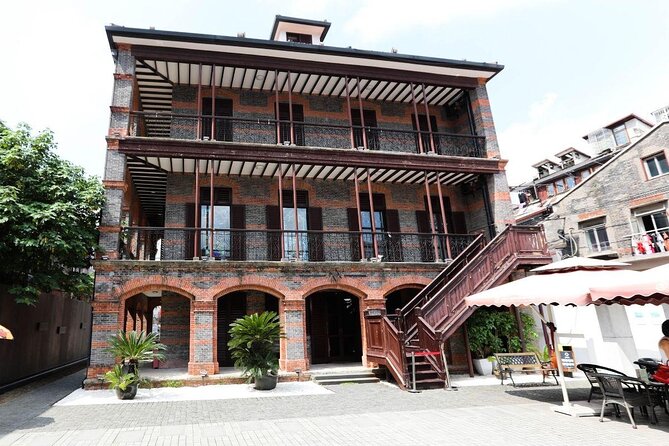
- Museum inside the Ohel Moishe Synagogue story: learn why the synagogue site matters for refugee history
- Aid and memory on the walk: you’ll pass the Joint Distribution Committee area and pause at Huoshan Park and a Jewish immigrant memorial
- Real neighborhood pacing: craft shops, fresh seafood stalls, and everyday street scenes show what daily life looked like beyond the plaques
- Xiahai Temple at the end of the route: a Buddhist temple that helps explain how communities overlapped in the same district
- Private guide for your questions: praised guides include Mason, Mary, Zoe, and Annie, and some have shared personal, family-linked details
- Two hours is tight: the route can feel split between museum content, neighborhood streets, and the temple stop
Why this Hongkou walk works better than a checklist
Hongkou District is one of those parts of Shanghai where the past isn’t hidden—it’s just not in giant neon signs. This tour uses that fact. You walk, you see, and your guide connects the dots between refugees, aid, and local life. It’s the kind of experience that makes Shanghai feel bigger than the Bund and the obvious sights.
The “private” part matters. A group tour can zip past details. Here, you’re positioned to ask why certain buildings and locations connect to Jewish refugee life. If your guide is strong with English and storytelling, the two hours can feel like a crash course with warmth and direction.
That said, the route also has an identity: it isn’t only a museum tour. It’s a Hongkou walk where the Jewish refugee story sits alongside modern neighborhood rhythms. Some people love that. Others come specifically for Jewish sites and end up wanting more of them, sooner.
You can also read our reviews of more tours and experiences in Shanghai.


The route in plain terms: what you’ll do in about two hours
Think of the day as a sequence of “story spaces,” each one showing a different layer of the district.
1) Start area near Changyang Road (Chang Yang Lu)
You’ll meet at Changyang Road (Chang Yang Lu) in Yangpu District, and the tour ends back at the same meeting point. That sounds simple, but it’s useful. You’re not dragged across town, and you don’t need complicated transfers during the walk itself.
This also means you should be ready to navigate Shanghai’s public transportation ecosystem to get to the start. The tour is listed as near public transportation, so plan to arrive with enough time to find your exact meeting spot before your guide arrives.
2) Shanghai Jewish Refugees Museum (Ohel Moishe Synagogue site)
The tour’s anchor stop is the Shanghai Jewish Refugees Museum, built on the site of the Ohel Moishe Synagogue. This is where the story becomes concrete: you’re not guessing where people prayed, sheltered, or gathered. You’re standing where that history was physically rooted.
The museum is included on the tour, so you won’t have to sort out separate entry. Expect the time here to be the most “information-dense” part of the walk. Some visitors found the museum explanations strong. Others felt that the museum itself covers much of the core material, so a guide can add value only if they connect it well to what you’ll see next outside.
3) Walking links: Joint Distribution Committee area and Huoshan Park
After the museum, you move into the “how people survived” layer. Along the way, you’ll walk past the Joint Distribution Committee area, a landmark tied to refugee support. You’ll also reach Huoshan Park, where you’ll see green space and a moment for reflection at a monument memorializing Jewish immigrants.
This part can be surprisingly moving because it shifts the tone. Indoors you get documents and displays. Outdoors you get scale—wide streets, familiar daily movement, and the sense that this neighborhood absorbed major hardship and then carried on.



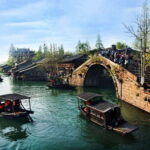
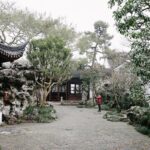
4) A local neighborhood walk: daily life beyond the museum
Then you step into the lived-in Hongkou experience. You’ll browse a local neighborhood and see elements of daily commerce—craft shops, fresh seafood stalls, and rustic restaurants. The point isn’t food tourism for its own sake. It’s perspective: this wasn’t only a “history district,” it’s a district where people still live, shop, and talk.
Some guided tours also include a rare, personal angle. In a few cases, visitors praised guides who were willing to show where family members rented rooms to Jewish refugees. In other cases, a guide may bring you into a local home for conversation through an intermediary. Those moments aren’t guaranteed, but they’re exactly why a private guide can beat a self-guided walk.
5) The final stop: Xiahai Temple (the fish man’s temple)
The tour ends at Xiahai Temple, known as the fish man’s temple in the past. The big idea here is interpretation: a Buddhist temple played a role within the ghetto’s historical environment, helping you understand how different communities shared the same space and how religion and daily needs overlapped.
This ending is the part most likely to divide opinions. If your goal is a tightly Jewish itinerary, you may feel the final stop pulls time away from specific ghetto-related sites. If you want the full “what daily life looked like when people were living close together” angle, this temple stop can be the most memorable.
Ohel Moishe Synagogue Museum: what to look for before you go
Even if you love guided tours, museum time is the make-or-break moment here. You’ll want to use the guide’s time for interpretation, not just translation.
Here’s how to get more from the museum:
- Focus on how the synagogue site connects to refugee settlement and community life, since that’s the tour’s main theme.
- Ask your guide what to pay attention to in the exhibits before you start reading everything. Some guides provide a useful orientation so you don’t wander through unconnected rooms.
- If the guide feels less involved than you expected, remember that the museum itself provides a lot of the basic story. Then use the rest of the tour to get the “so what” by connecting museum details to the streets you’ll see after.
A few visitors felt the museum portion was rushed, so if you’re someone who reads every label, you might wish the walking route had a little more time for the exhibits.
Joint Distribution Committee and Huoshan Park: support and remembrance in one walk
Passing the Joint Distribution Committee area is more than a marker on a map. It represents the relief structure that made survival possible for many refugees. You’re not just learning names—you’re learning the system around them.
Then you hit Huoshan Park. It’s a tonal change, and that matters. You get a green pause and a memorial connected to Jewish immigrants. In a district where history can feel heavy, that pause gives you a chance to process what you’ve learned without rushing straight into the next scene.
If you’re the type who likes to photograph monuments, bring your camera. If you’re more practical, treat this as your “reset” stop. Hydrate, check your route, and be ready for the neighborhood walking afterward.
The neighborhood segment: how to spot what’s meaningful (not just busy)
This is where the tour becomes distinctly Shanghai. You’ll walk through a local neighborhood and see daily life—shops and food stalls included—and your guide will explain what you’re seeing in relation to the Jewish ghetto area.
To make this section land, don’t just look for the most dramatic building. Look for patterns:
- How the streets feel to walk: tight alleys vs. wider roads.
- Where commerce sits: seafood stalls and small craft shops signal everyday routines.
- How residents carry on: the tone of a neighborhood tells you how history has been absorbed into daily life.
This section is also why the tour can surprise you. Even people who come for a history topic sometimes leave thinking more about the people living here now, not only those who passed through decades ago.
One caution: if you’re hoping the tour will hit a long list of named ghetto buildings, this neighborhood segment may feel more general than specific. Some visitors wanted more specific ghetto sites, and felt the time allocation didn’t match what they expected.
Xiahai Temple at the end: why a Buddhist site appears on this route
The Xiahai Temple stop can be either a highlight or an unwanted detour, depending on what you came for.
The tour frames it as connected to the ghetto’s past, including the temple’s earlier nickname as the fish man’s temple. The guide should explain why it matters in the historical context—how a Buddhist temple fit into a district where refugees and locals lived close together.
Here’s the practical takeaway: if you’re booking this tour, go in knowing you’re signing up for cultural overlap, not only Jewish religious landmarks. If you want strict synagogue-only or museum-only content, you might prefer a different format.
Price and value: $131.28 per person for a two-hour private walk
The sticker price—$131.28 per person—puts this firmly in the “pay for a person, not just places” category. That’s not automatically bad. Private walking tours can be great value when they save you time, translate context, and help you navigate an area that isn’t spoon-fed to tourists.
But the value depends on your priorities and your guide fit.
What drives value up:
- A strong guide who can explain the connections between museum exhibits, memorials, aid landmarks, and street scenes.
- Extra personal storytelling—some guides were praised for showing visitors where family members rented rooms to Jewish refugees, or for bringing guests into a home conversation through a local connection.
- A smooth route that matches your interests within the two-hour limit.
What drives value down:
- If you mostly want museum content and you find the neighborhood and temple stops feel like “extras.”
- If you feel the museum is enough on its own and the guide’s added interpretation didn’t justify the premium.
- If your guide focuses more on the temple or present-day neighborhood than on the Jewish ghetto components you came for.
If you care a lot about the Jewish aspect specifically, I’d recommend messaging the tour provider ahead of time (briefly) about your priority: museum depth, ghetto housing sites, and how much time you want for the Jewish-focused segments versus Xiahai Temple.
Guides can make or break the experience (so set expectations)
The quality of a tour like this often comes down to the guide’s ability to tie everything together in a coherent story.
From the names praised for good English and strong explanations—Mason, Masin, Mary, Zoe, and Annie—you can see a pattern: when the guide is comfortable with both history and street context, the whole walk improves. Some guides also offered unusually personal context through family connections and home visits.
There were also drawbacks noted in some experiences. A few people felt the guide’s Jewish history knowledge wasn’t deep enough for the topic, or that some key explanations were insensitive. Others said the museum volunteer explained much of the museum content so the guided portion felt lighter than expected, or that the itinerary felt uneven in order and timing.
The way to protect yourself is simple:
- Decide whether you want strict historical facts and specific sites, or a broader cultural walk that includes the temple and modern neighborhood.
- Come with 2–3 questions so your guide has something to build on.
- If you’re sensitive to interpretation tone, tell the guide what you want early in the tour.
Practical tips so your two hours feel worth it
This is short, so small things matter.
- Wear comfortable shoes. The tour is built on walking through Hongkou streets, including museum-to-park-to-neighborhood segments.
- Bring a light rain layer. One experience continued despite rain, and you’ll be happier if you’re prepared for wet sidewalks.
- If you’re using the subway, give yourself extra buffer time for getting to Changyang Road and finding the exact meeting spot. Some visitors reported communication issues about where to meet.
- Keep your focus during the museum. Ask what to prioritize so you don’t lose the thread.
- At the temple stop, be ready to accept context. If you’re only in it for Jewish religious sites, you may feel the last segment is off-target.
Who should book this tour?
This works best for you if:
- You want a guided introduction to the Jewish refugee story in Shanghai’s Hongkou District in just two hours.
- You like walking through neighborhoods and hearing what the places meant, not only reading museum panels.
- You’re open to cultural overlap, including a Buddhist temple stop that the guide frames as historically connected.
You might want to skip or adjust your expectations if:
- Your main goal is only Jewish sites, with minimal detours.
- You want specific named ghetto sites beyond the museum and general neighborhood area.
- You hate religious context comparisons and prefer a museum-only plan.
Should you book this Private 2-Hour Walking Tour of Shanghai’s Jewish Ghetto?
If you want a guided, human-scale way to understand Jewish refugee life in Shanghai—and you’re okay with the route ending at Xiahai Temple—this tour can be a strong choice, especially because it’s private and designed for street-level context.
I’d book it when you value interpretation as much as destinations. The best versions of this tour (with guides praised for English and story) can turn a short walk into a memorable timeline you can picture long after you leave the neighborhood.
But if you’re mainly chasing one or two specific Jewish landmarks and you think you’ll resent the temple stop, you’ll likely feel the price more sharply. In that case, consider alternative options that match a stricter Jewish-only itinerary.
FAQ
How long is the private walking tour of Shanghai’s Jewish ghetto?
It runs for about 2 hours.
What’s included in the tour price?
You get a private walking tour and a local English-speaking guide. The Shanghai Jewish Refugees Museum ticket is included, and Xiahai Temple has an included admission ticket.
Does the tour include food and drinks?
No. Food and drinks are not included.
Where do we meet for the tour?
You meet at Changyang Road (Chang Yang Lu) in Yangpu District, Shanghai, China.
Does the tour include hotel pickup or drop-off?
No. Hotel pickup and drop-off are not included.
Can I cancel for a full refund?
Yes. You can cancel up to 24 hours in advance for a full refund. If you cancel less than 24 hours before the start time, the amount paid will not be refunded.