REVIEW · SHANGHAI
Relax in Shanghai: Authentic Chinese Body& Foot Massage
Book on GetYourGuide →Operated by China Voyagers · Bookable on GetYourGuide
A tired flight can turn into pure rest here. What I like most is the mix of Tui Na meridian massage with optional cupping and moxibustion, plus the simple tea-and-snack finish. One thing to consider: this is hands-on traditional therapy, and you’ll pay for the specific add-ons you choose on-site.
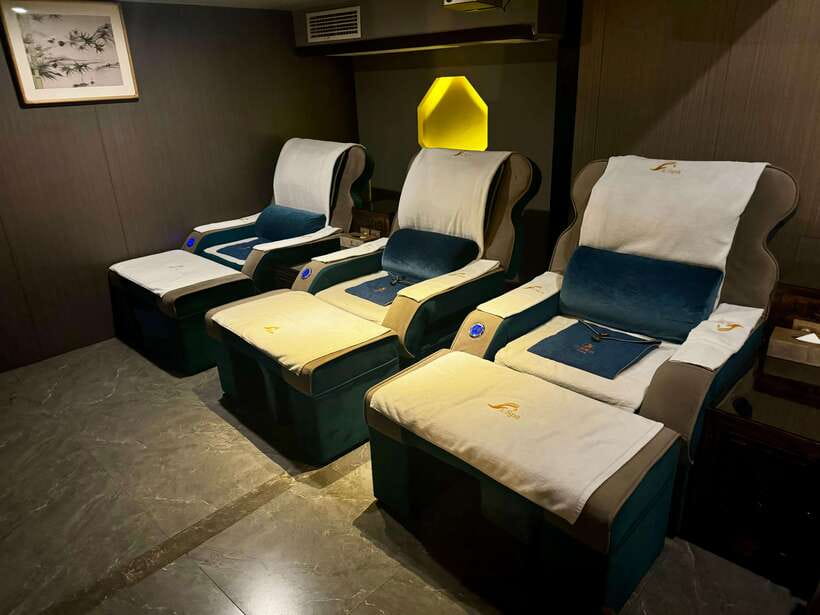
You’ll do this in Shanghai’s central area (Jing’an district options), with help from hosts who translate and explain what’s happening step by step—Bonnie and Guo both come up in the feedback. The space is described as clean and the attention as careful and professional. Still, the exact combo and price can change depending on your treatment choice, so it helps to decide what you want before you arrive.
If you want a no-fuss way to reset after sightseeing, this is a strong value. If you’re sensitive to suction-cup marks or heat therapy, go lighter on the add-ons and ask questions early.
In This Review
- Key takeaways before you book
- Why this Shanghai massage feels more cultural than touristy
- The therapy lineup: what each option actually does
- Tui Na (Meridian massage) for tension and circulation
- Traditional foot massage for leg fatigue
- Cupping for localized suction and muscle release
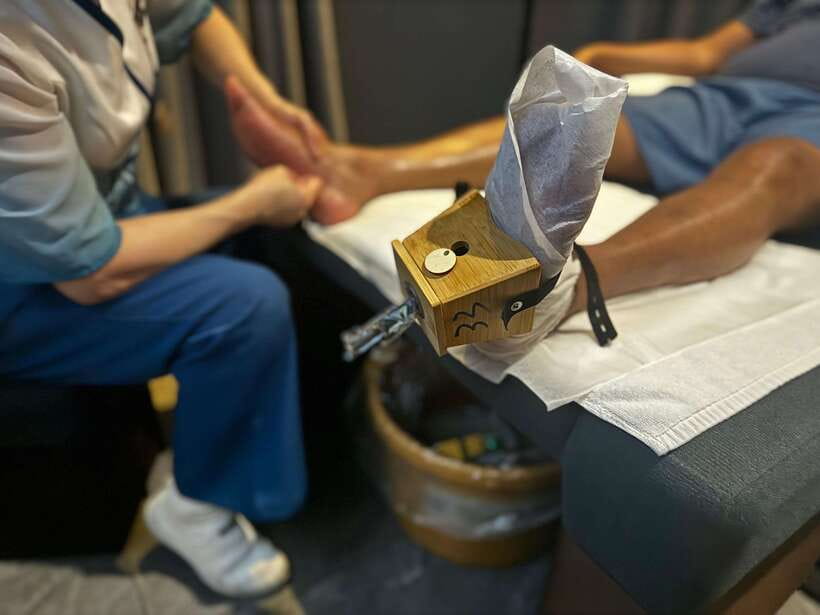
- Moxibustion for warmth on specific points
- “Food massage” and pressure points
- Price and value: how the $8 booking works (and what you’ll likely pay)
- What the 1-hour experience feels like from start to finish
- Meet-up and finding the place
- Tea snack and a calm landing
- What you’ll notice about service (and why it matters)
- Best fit: who should book this massage
- Practical tips to get the most from your session
- Should you book this Traditional Chinese Massage & Therapy?
- FAQ
- How long is the massage experience?
- What treatments are included in the experience?
- Is the price you see ($8) the final price?
- What are the listed on-site treatment prices?
- What payment methods can I use?
- Do I need help finding the location?
- Is the tea snack included?
- When is the best time for moxibustion?
- What is the cancellation policy?
Key takeaways before you book
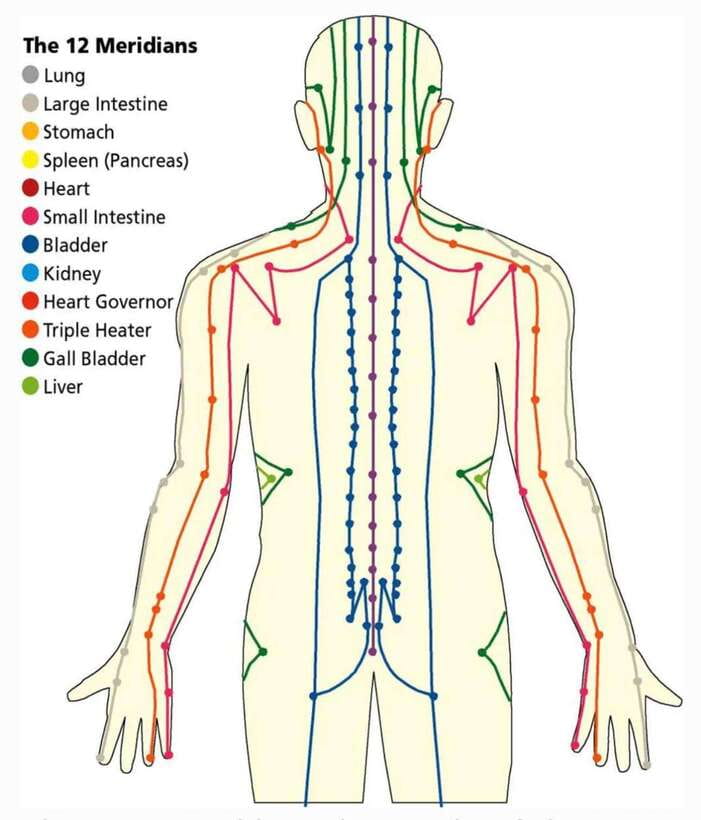
- Tui Na focus: You can choose a 60-minute meridian massage, including an oil option.
- Cupping and heat options: Add short cupping (10 minutes) or longer moxibustion (60 minutes).
- Personalized pressure-point work: There’s mention of food massage and pressure-point techniques in the flow.
- Clear explanations: Bonnie and Guo are repeatedly praised for translation and step-by-step guidance.
- Tea snack included: You end with traditional herb tea and a small snack.
- Central Shanghai meeting spots: It’s near Zhong Xing Road (Line 8) or Bao Shan Road (Lines 3 & 4), with WhatsApp for the exact location.
Why this Shanghai massage feels more cultural than touristy
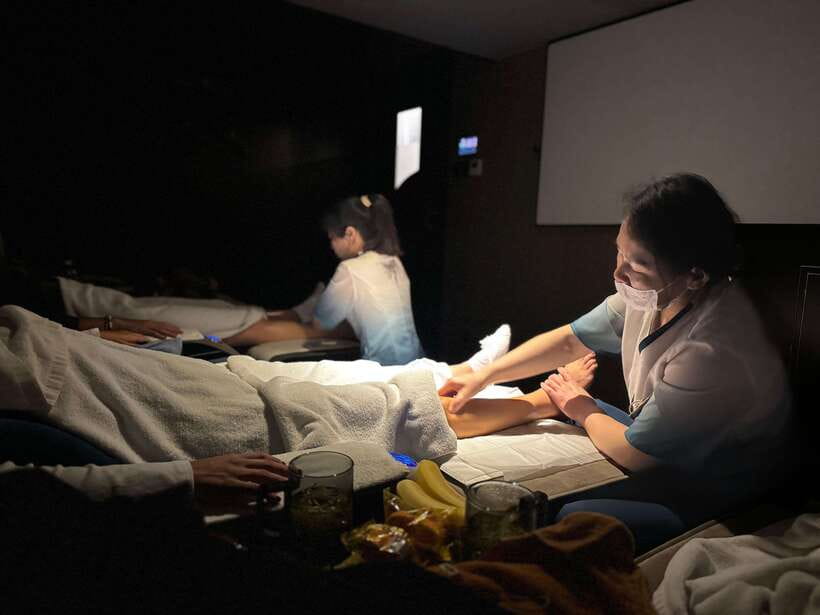
Shanghai can wear you out fast. Even if you love the city, your legs and shoulders pay the bill after enough metro rides, river walks, and stair climbs. This experience is designed as a reset button: you arrive with tension, and you leave with your body feeling sorted—at least that’s the goal of traditional Chinese therapies.
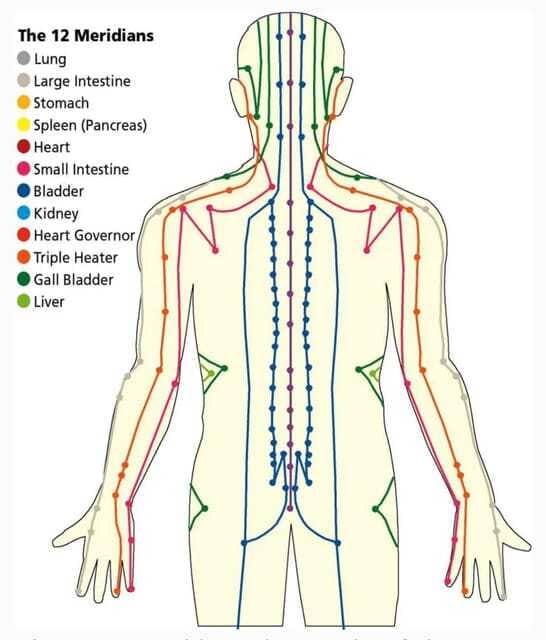
What makes it interesting is that you’re not only getting a generic “relaxing massage.” The session is built around Traditional Chinese Medicine-style techniques, with options for meridian work (Tui Na), cupping, and moxibustion. That’s the difference between a simple spa rub-down and a treatment approach that targets specific areas and points.
Two things I especially like for practical reasons:
- You can tailor the therapy. If you want meridian work only, you can. If you want more intensity, you can add cupping or moxibustion.
- You get it explained. Reviews repeatedly credit Bonnie for translating and walking people through what each step is doing. That matters a lot if your Chinese is limited.
You can also read our reviews of more tours and experiences in Shanghai.



The therapy lineup: what each option actually does
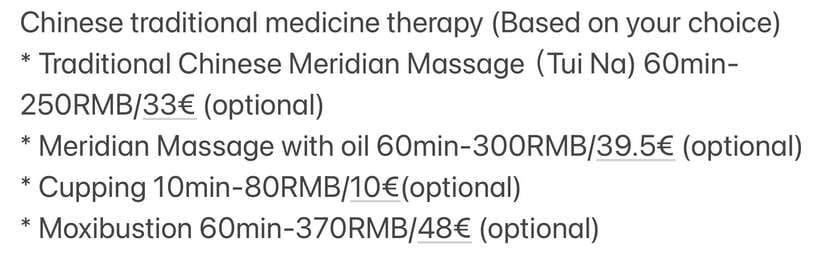
This is the core of your decision. The experience is one booking framework, but your actual treatment is based on what you choose on-site.
Tui Na (Meridian massage) for tension and circulation
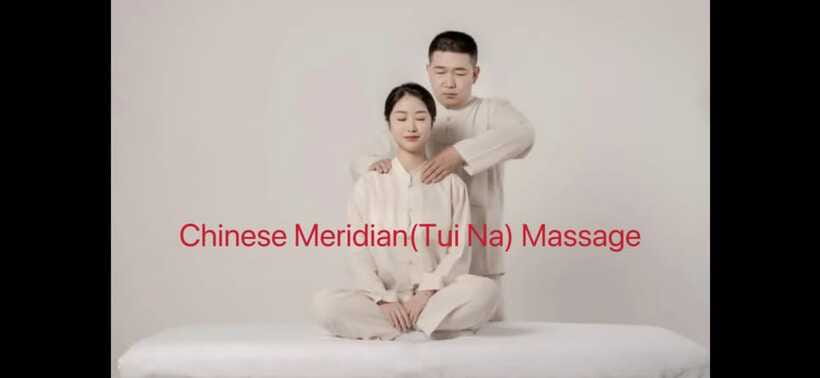
Tui Na is the main event here. It’s described as deep tissue work using precise pressure points and flowing strokes, aimed at relieving tension, improving circulation, and helping you relax. If you’ve been stuck in a hotel chair or airplane seat, this is usually the best starting point.
You’ll see two common Tui Na choices:
- Traditional Chinese Meridian (Tui Na) 60 minutes
- Meridian Massage with oil 60 minutes (a different texture and glide, if you prefer that feel)
Traditional foot massage for leg fatigue
If your trip has been “walk, walk, walk,” the traditional foot massage option makes a lot of sense. It’s listed as 60 minutes, and it’s often easier on first-timers who aren’t sure how strong you want pressure to be.
This is also a good add-on if you want to keep your upper body calmer and just target the part of you that accumulated the most steps.
Cupping for localized suction and muscle release
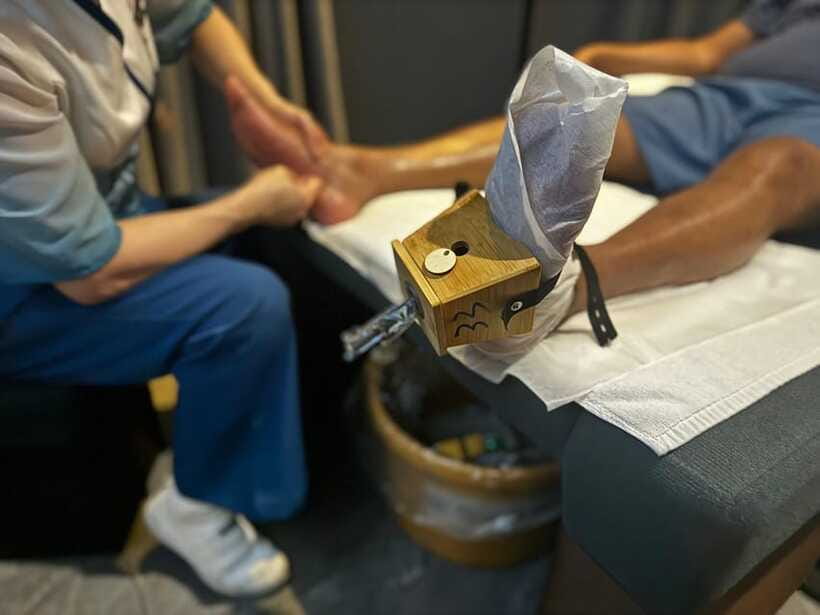
Cupping is an ancient technique using suction cups to create a localized vacuum. The promise is targeted blood-flow stimulation and muscle-tension relief. The practical side: you may notice red marks afterward. That’s normal for the technique described here, and they fade as your body settles.
A key detail: cupping here is listed as 10 minutes. That short window is useful if you want to try it without committing to a long session of marks and intensity.



Moxibustion for warmth on specific points
Moxibustion uses dried mugwort applied to acupuncture points with heat. The listing describes it as gentle warmth that penetrates deeper tissues and supports qi (energy flow) and overall wellbeing.
Practical consideration: it’s listed as 60 minutes, and it’s noted as better to take in the daytime. If you’re the type who gets sleepy after heat, you might prefer a later-morning or early-afternoon appointment.
“Food massage” and pressure points
The description includes mention of a traditional “food massage” using pressure points. The wording is unusual, but the takeaway is clear: the session is intended to use pointwork, not just broad kneading.
If you’re unsure what the therapist plans to do, ask for a quick explanation when you start. With Bonnie or Guo translating, that should be easier.
Price and value: how the $8 booking works (and what you’ll likely pay)
The summary headline says $8 per person, but the reality is more like: you’re paying a booking commission fee up front, and then paying the treatment price on-site based on your choices.
Here’s how the pricing is laid out in the info you’re given:
- Booking commission fee: what you pay as part of the reservation (shown on the page)
- On-site therapy prices (based on what you pick):
- Tui Na 60 min: 250 CNY / 30€
- Meridian massage with oil 60 min: 300 CNY / 37€
- Traditional foot massage 60 min: 220 CNY / 27€
- Cupping 10 min: 100 CNY / 12€
- Moxibustion 60 min: 370 CNY / 45€ (better in daytime)
So is it a bargain? Usually, yes—if you choose the treatment that matches your needs. A full 60-minute meridian session plus tea snack is a straightforward deal for central Shanghai, especially when you factor in the translation/explanation support praised in the feedback.
But don’t treat the headline price as the final cost. Your total depends on whether you choose:
- one 60-minute therapy only (simplest and likely best value), or
- a combo with cupping and/or moxibustion (more intense, and more spend)
My practical advice: decide whether you’re going for relief (Tui Na or foot), experimentation (add cupping), or heat-based point therapy (moxibustion). That keeps the on-site decision from feeling confusing.
What the 1-hour experience feels like from start to finish
The booking is valid for 1 hour, and the session timing is tied to the therapies offered. In practice, you’ll arrive, get set up, receive the chosen treatment, and end with tea.
Meet-up and finding the place
The meeting point isn’t always straightforward because maps may be unreliable. You contact the team via WhatsApp to get the specific location after booking. You’ll have meeting-area options near:
- Zhong Xing Road station (Line 8), or
- Bao Shan Road station (Lines 3 & 4)
There are also multiple options in Jing’an district, plus a store near People’s Square mentioned as an alternate.
Tip: save the WhatsApp message and ask for the closest landmark. It’s faster than trying to guess streets from a pin.
Tea snack and a calm landing
After the therapy, you’ll get a cup of traditional Chinese herb tea and some tea snacks. In the feedback, this is described as part of the care—tea while the team asks how you feel. It’s a simple detail, but it helps you come down from the intensity of pressure work, suction, or heat.
What you’ll notice about service (and why it matters)
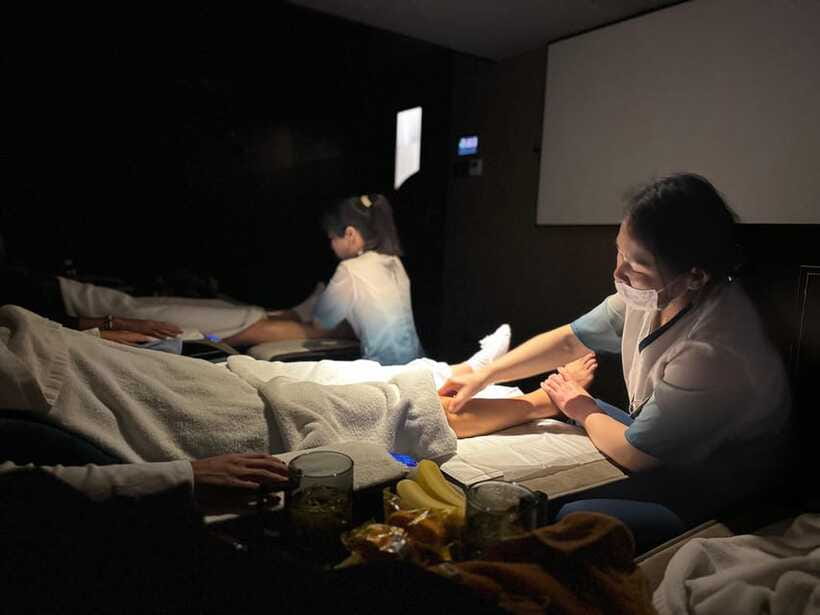
The feedback you’re given is consistently about people, not just technique.
- Bonnie is praised for being flexible with schedules and for translating and explaining each step in detail.
- Guo is also praised for doing well with the massage and for the overall care.
- The staff are described as careful and polite, with a clean space and good attention.
This matters because traditional therapy can feel unfamiliar if you don’t know what’s coming next. When someone explains the process—what you’re about to feel and why—you can relax instead of bracing.
If you’re nervous about trying cupping or moxibustion, this kind of guidance is exactly what makes the experience feel safe.
Best fit: who should book this massage
This experience is a great match if:
- You’re in Shanghai for a short stretch and want one high-impact recovery stop.
- You want something more structured than a generic “deep tissue” session.
- You’re open to traditional methods like suction cups and heat on points.
- You want translation and step-by-step guidance, not just silence and busy hands.
It may be less ideal if:
- You strongly dislike marks that can come from cupping.
- Heat-based point therapy sounds like a bad idea for you.
- You want a very light, spa-style session only (the listing points toward pointwork and deeper techniques).
Practical tips to get the most from your session
Keep these in mind so you leave feeling better, not more confused:
- Choose your goal first: legs (foot massage), full-body tension (Tui Na), muscle release trial (cupping), or heat therapy (moxibustion).
- Ask what’s next at the start. Since explanation is part of the praised service, request clarity on the order and intensity.
- Time it with your day: moxibustion is suggested for daytime, and you’ll probably want time to rest afterward.
- Bring payment options: they accept Alipay, WeChat Pay, and cash, so you won’t get stuck.
- Drink tea slowly after: the herb tea and snack are part of the cooldown, not just a free add-on.
Should you book this Traditional Chinese Massage & Therapy?
If you want a real reset after long-haul travel or exhausting sightseeing, I think this is a solid choice in central Shanghai. The value is especially good when you pick one main therapy (Tui Na or foot massage) and keep add-ons intentional.
Book it if:
- you want traditional Chinese therapy methods (Tui Na, cupping, moxibustion),
- you like the idea of your treatment being explained and tailored,
- you’re okay paying on-site based on the treatment you choose.
Think twice if:
- you’re sensitive to suction-cup marks or to heat on acupuncture points,
- you prefer a completely light, non-therapeutic massage.
If you go in with a clear choice—Tui Na only, or Tui Na plus one add-on—you’ll get the most satisfying experience without the “what did I accidentally buy?” feeling.
FAQ
How long is the massage experience?
The booking is valid for 1 hour. Your chosen therapy options have their own durations, such as 60 minutes for Tui Na and foot massage, 10 minutes for cupping, and 60 minutes for moxibustion.
What treatments are included in the experience?
You choose the Traditional Chinese Medicine therapy on-site based on your preferences. Options listed include Tui Na meridian massage, traditional foot massage, cupping, and moxibustion.
Is the price you see ($8) the final price?
No. The price shown on the page is the booking commission fee. The therapy cost varies based on what treatment you select, and you pay the treatment price on-site.
What are the listed on-site treatment prices?
The suggested on-site prices include:
- Tui Na 60 min: 250 CNY / 30€
- Meridian massage with oil 60 min: 300 CNY / 37€
- Traditional foot massage 60 min: 220 CNY / 27€
- Cupping 10 min: 100 CNY / 12€
- Moxibustion 60 min: 370 CNY / 45€
What payment methods can I use?
You can pay with Alipay, WeChat Pay, or cash.
Do I need help finding the location?
Yes, it helps. You’ll contact the provider via WhatsApp to get a specific location, because maps don’t work well. You can meet near Zhong Xing Road station (Line 8) or Bao Shan Road station (Lines 3 & 4).
Is the tea snack included?
Yes. Tea snack and a cup of traditional Chinese herb tea are included after the therapy.
When is the best time for moxibustion?
The information notes that moxibustion is better to take during the day.
What is the cancellation policy?
Free cancellation is available up to 24 hours in advance for a full refund.