REVIEW · SHANGHAI
Shanghai: Dragon Beard Candy Making with a Chef
Book on GetYourGuide →Operated by shanghaicooking · Bookable on GetYourGuide
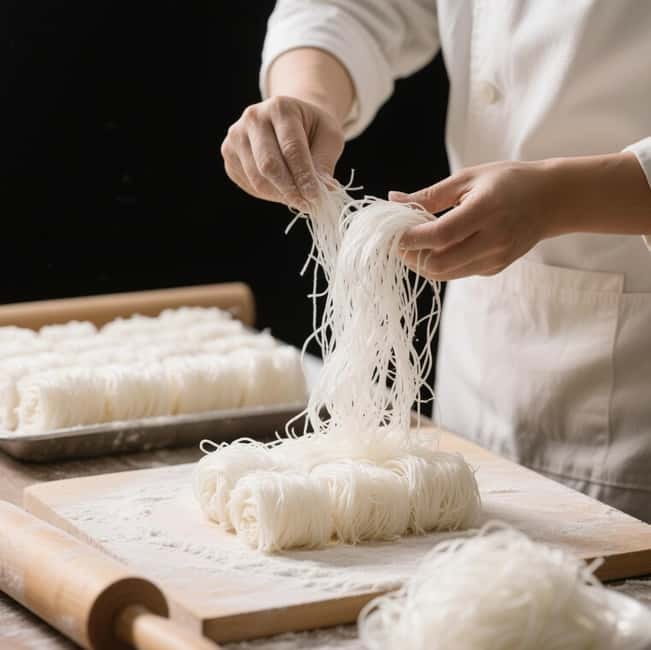
Sugar turns into hair-thin threads. In this Shanghai workshop, I love the hand-stretching technique to pull Dragon Beard Candy sugar into fine strands and I love the chef’s Le Cordon Bleu style precision. One drawback: the sugar is hot and the folding rhythm takes focus, so you’ll want to move carefully and listen closely.
This is a hands-on 2-hour class where the chef teaches both technique and context. You start with a short storytelling session about the candy’s roughly 2,000-year past and its royal roots, then watch molten sugar turn into silky strands before you stretch and fold the sugar yourself.
I also appreciate the payoff at the end: you’ll wrap the threads around a mix of crushed peanuts, sesame, and coconut, and you leave with your own handmade candies plus additional pastries to take home. Free water is included, and you can add optional photos of your sticky success.
In This Review
- Key points before you go
- Meeting Makerhub: Where Shanghai Sweet-Making Starts
- The 2,000-Year Story: Why Dragon Beard Candy Matters
- Watch Molten Sugar Turn Into Hair-Thin Strands
- Your Turn: Stretch and Fold the Sugar 10,000 Times
- Wrapping With Peanut, Sesame, and Coconut Filling
- Tasting, Optional Photos, and What You Take Home
- Price and Value: Is $38 for Two Hours Fair?
- Who Should Take This Dragon Beard Candy Class in Shanghai
- A few practical things to know before you book
- Should You Book This Dragon Beard Candy Workshop
- FAQ
- FAQ
- How long is the Dragon Beard Candy making workshop?
- Where do I meet the instructor?
- Is the class taught in English?
- What’s included in the price?
- Will I be able to take the candy home?
- What is the cancellation policy and can I pay later?
Key points before you go
- Chef-led, technique-first class: You learn the method, not just the finished candy.
- A rare East-meets-West pastry background: Traditional Chinese pastry mixed with classical French patisserie training.
- The 10,000-fold stretch-and-fold moment: This is the core skill you practice with guidance.
- You control the wrapping: Threads get wound around peanut, sesame, and coconut filling.
- You take more than one sweet home: Handmade candy plus additional pastries and a recipe.
- English instruction and local Q&A: The host explains clearly and can point you toward places to visit.
Meeting Makerhub: Where Shanghai Sweet-Making Starts
Your class begins at 4th floor, Makerhub in Shanghai. This matters because you’ll arrive ready to work with your hands, not just watch from the edge of a kitchen counter. If you’re using a map app, double-check you’re actually headed to Makerhub’s 4th floor before you settle in.
Once you’re in, you’ll get set up with high-end ingredients and baking equipment provided as part of the workshop. That’s a practical plus: you don’t have to hunt for specialty tools or worry about missing an ingredient that makes the whole process work. Also, free drinking water is included, so you can pace yourself during the sticky parts.
The instructor works in English, and based on what you can expect from the host style, you’ll get clear step-by-step direction. One added perk: the host is Shanghai born and raised and is comfortable answering questions, including suggesting places to see after the class.
You can also read our reviews of more tours and experiences in Shanghai.



The 2,000-Year Story: Why Dragon Beard Candy Matters
Before you touch anything, you get a short storytelling session about Dragon Beard Candy’s origin. The class frames it as an ancient delicacy with a history of around 2,000 years, once reserved for Chinese royalty. Even if you’re not a history person, I like starting here because it gives your brain a reason for what you’re about to practice.
Dragon Beard Candy isn’t just sugar stretching for fun. The royal association helps explain why the technique is so precise. You’re not only making a sweet; you’re learning a craft that’s traditionally treated like something to show off—thin strands, careful winding, and a texture that feels almost unreal.
This story also improves the hands-on part. When you understand the goal, the chef’s rhythm and instructions make more sense. You’re less likely to rush, and you’ll be more patient about the repeated stretching and folding that transforms the sugar.
Watch Molten Sugar Turn Into Hair-Thin Strands
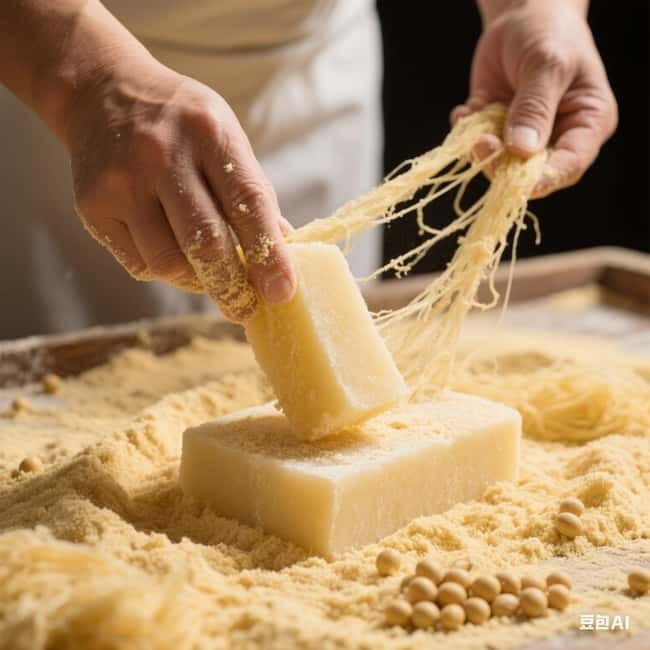
Next comes the live demonstration. The chef starts with molten sugar and shows how it becomes fine, silky strands that resemble a dragon’s beard. Watching matters here, because sugar changes fast. You’re seeing timing, not just ingredients.
What I’d pay attention to during the demo:
- Consistency: how the sugar looks as it’s manipulated
- Pace: the speed of stretching and folding
- Hand position: how the strands stay thin without breaking
- Guidance cues: what the chef says to correct your technique before it goes off track
You’ll get a sense that the transformation is part science, part craft. The sugar needs the right handling to go from thick and molten to threads that can be worked into something delicate. This is one reason the chef’s background matters. The class is built around technique from traditional Chinese pastry plus classical French patisserie training (from Le Cordon Bleu), so you get precision and artistry in the same lesson.
If you’ve ever tried homemade candy and learned the hard way that timing is everything, you’ll appreciate this demo-led approach.
Your Turn: Stretch and Fold the Sugar 10,000 Times
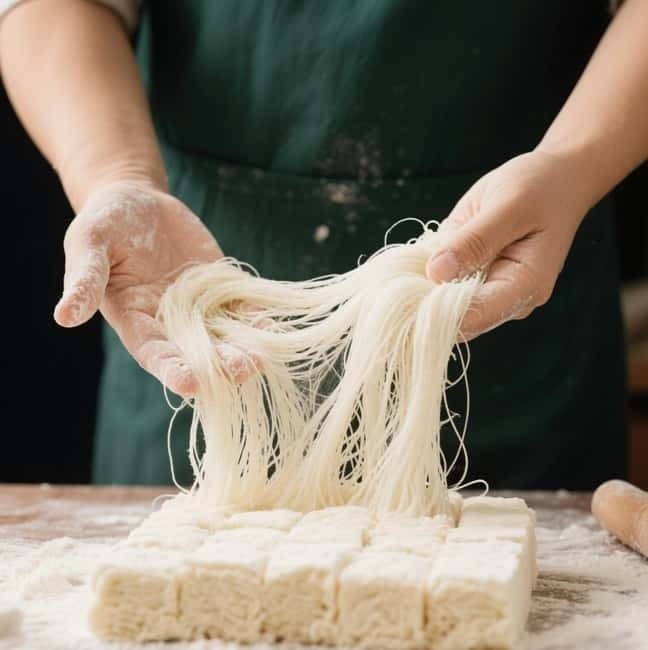
This is the main event. You’ll stretch and fold the sugar dough over 10,000 times, guided by the chef. That number might sound like pure drama, but it captures the real truth: this takes repetition. The strands only get that hair-thin texture through work, not wishful thinking.
Here’s the practical part: your success depends on staying calm and following instructions rather than forcing your hands faster. The stretch-and-fold motion is where you learn control. You’ll practice repeatedly until the sugar reaches the texture where it can be formed into threads.
A few tips that make this easier if you want the best experience:
- Keep your focus on the chef’s correction points, not on comparing your work to the demo.
- Expect some stickiness. It’s normal. The class is structured so you’re doing this safely with guidance.
- Slow down if you feel the sugar resisting. Fast moves can snap threads or ruin the consistency.
The host Luc explains the steps clearly and answers questions, so if something feels off, you have a direct line to the person leading the workshop. English instruction helps here because you can understand what the chef is fixing while you’re doing it.
Wrapping With Peanut, Sesame, and Coconut Filling
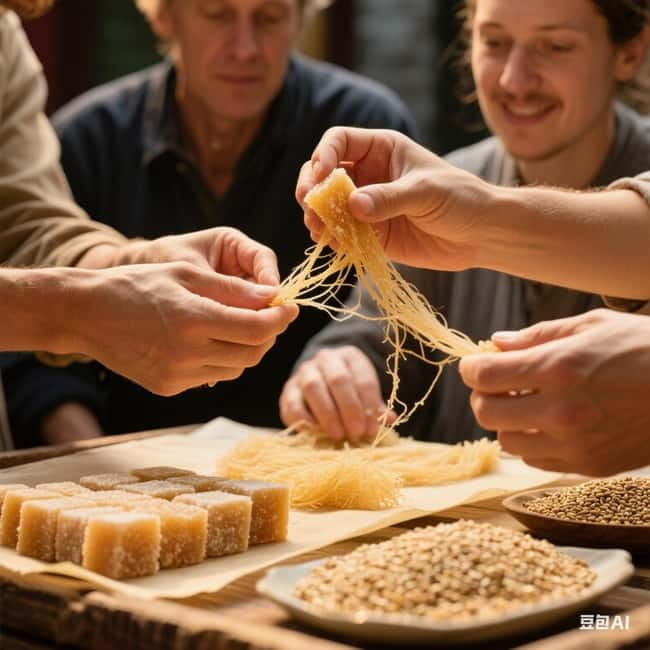
After the sugar reaches the right thread stage, you wrap the strands around a delicious filling made from crushed peanuts, sesame, and coconut. This is where the craft becomes edible art.
The wrapping step is satisfying because you see the final form taking shape. It also helps balance the process. After 10,000 folds, your hands finally get to make something that looks like the candy you’ve probably seen in photos.
You’ll likely notice two different goals at once:
- Keep the sugar threads intact while wrapping
- Make sure the filling ends up evenly distributed
That’s why the guidance matters. Small adjustments in tension and placement affect how the strands hold together. Done well, you get that signature texture contrast: delicate threads plus a crunchy, nutty filling with toasted sesame notes and coconut sweetness.
And yes, it’s hard to stop nibbling while you work. The class is designed so you’ll have a real end product, not just a lesson you “finish for the photos.”






Tasting, Optional Photos, and What You Take Home
When you finish your candy, you’ll have a tasting moment as part of the workshop experience. Then you’ll leave with what you made plus more.
What’s included for take-home:
- Additional pastries beyond your handmade Dragon Beard Candy
- A recipe to recreate the candy at home
- Optional photos of your baking experience
This is one of the better value angles. If you only took home your own candy, you’d still be happy, but pastries plus a recipe make the workshop feel more like a cultural food lesson than a one-off snack.
Also, the optional photos are useful because this kind of craft is hard to capture accurately with your own shaky phone attempts. You’ll get images you can actually use to remember how the candy looked when your threads were at their best.
Price and Value: Is $38 for Two Hours Fair?
At $38 per person for a 2-hour workshop, you’re paying for more than ingredients. You’re paying for:
- A professionally trained pastry chef
- High-end equipment and ingredients provided
- Step-by-step instruction through a craft that needs real timing and hand control
- A class outcome you can eat and take home
In other words, the price isn’t just for sugar and peanuts. It’s for training time and the coaching that helps you do something tricky without wasting the batch.
The experience also has a strong quality signal: it holds a 4.8 average rating based on 6 reviews. That’s not an endless dataset, but it’s consistent with what you’d want from a craft class. The English instruction and the host’s ability to explain and answer questions show up as key strengths, including the chef’s willingness to recommend places to visit in Shanghai.
If you enjoy hands-on food work, this is the kind of class that feels like money well spent because you leave with skills and results.
Who Should Take This Dragon Beard Candy Class in Shanghai
This workshop is a good fit if you want something more meaningful than a quick tasting stop. Dragon Beard Candy makes a great souvenir, but the bigger win is learning the technique.
You’ll especially enjoy it if:
- You like food classes where you participate, not just watch
- You want a cultural activity that still feels practical and repeatable at home
- You enjoy the contrast between traditional Chinese pastry methods and French patisserie precision
- You want an English-friendly class in Shanghai that explains the process clearly
It’s also fine if you’re traveling solo or with a friend, as the format is built around personal hands-on coaching. And because the workshop is wheelchair accessible, it’s designed to be approachable for more travelers.
A few practical things to know before you book
- Duration: 2 hours, so plan your day around a focused block.
- Language: English instruction, which matters for technique-heavy food classes.
- Meet-up: 4th floor, Makerhub.
- What you eat and take: Your handmade Dragon Beard Candy plus additional pastries and a recipe.
- You’ll work with hot sugar: Move carefully and follow instructions.
If you like flexibility, you can reserve with pay later and cancel up to 24 hours in advance for a full refund.
Should You Book This Dragon Beard Candy Workshop
Book it if you want a hands-on Shanghai food experience that’s genuinely craft-based. The combination of a chef-led technique, a clear English explanation, and a real take-home payoff makes this class feel worth your time and money.
Skip it only if you’re looking for a purely passive activity. This is work with your hands, repetition, and focus. If that sounds fun rather than stressful, you’re exactly the kind of traveler who’ll enjoy it.
FAQ
FAQ
How long is the Dragon Beard Candy making workshop?
The workshop lasts 2 hours.
Where do I meet the instructor?
Meeting point is 4th floor, Makerhub.
Is the class taught in English?
Yes, the instructor provides instruction in English.
What’s included in the price?
The class includes a 2-hour hands-on Chinese pastry workshop, high-end ingredients and baking equipment, personalized instruction from a Le Cordon Bleu-trained pastry professional, step-by-step technique guidance, free drinking water, additional pastries to take home, a recipe to recreate the candy at home, and optional photos.
Will I be able to take the candy home?
Yes. You’ll leave with your handmade Dragon Beard Candy and additional pastries included in the workshop.
What is the cancellation policy and can I pay later?
You can cancel up to 24 hours in advance for a full refund, and you can reserve now & pay later.