REVIEW · BEIJING
Half-Day Private Beijing Hutong Walking Tour with Dim Sum
Book on Viator →Operated by Sunflower Tours China · Bookable on Viator
Four hours, and Beijing slows down. This private hutong walk trades big buses for quiet lanes, courtyard doorways, and guide stories that make old neighborhoods make sense. You also get signature street food sampling plus a dim sum lunch, with hotel pickup and drop-off so you spend more time walking and less time figuring out routes.
I like the way this tour mixes big-name landmarks with lesser-known hutongs, so you see both the postcard spots and the everyday details locals live with. I also like that guides can tailor the pace and answer questions on the spot, with examples like Maggie helping visitors notice the small things such as entryways and how they’re used. One thing to consider: some sights can be closed at times (Bell/Drum is sometimes shut), and you’ll want comfortable shoes because the route is walk-first.
You choose a morning or afternoon start (10:00am or 2:00pm), then you work your way toward Houhai (Back Lakes) for that classic day-to-night bridge atmosphere. And if Mondays affect closures, your guide may adjust the plan accordingly, as reflected in past experiences.
In This Review
- Key highlights worth your attention
- Why hutongs feel more real with a private guide
- A fair drawback: it’s still a walking tour
- Price and value: what $148 gets you (and what it doesn’t)
- The timing that matters: morning vs afternoon start
- Good to know before you walk: pace, shoes, and food needs
- Nanluoguxiang: where you get your bearings fast
- Yu’er Hutong and Mao’er Hutong: courtyards and the story behind the walls
- Bell and Drum Towers: big landmark energy, with a real plan for closures
- Wuyutai Tea Shop and Yandai Xie Street: taste and browse without losing the plot
- Houhai (Back Lakes), Shichahai, and the bridge circuit
- If you care about photos, this section is the payoff
- Dim sum lunch and street snacks: how the food fits the day
- How guides personalize the experience (including responses to closures)
- What this tour is best for
- Should you book it?
- FAQ
- FAQ
- How long is the half-day hutong walking tour?
- Is the tour private?
- Do I get hotel pickup and drop-off?
- Does the price include entrance fees and lunch?
- What time does the tour start?
- Which areas does the route include?
- What should I do if I have dietary restrictions or allergies?
- What happens if the Drum Tower is closed?
- How late can I cancel for a full refund?
Key highlights worth your attention

- Private guide, real hutong context: you’ll get stories tied to the spaces you’re standing in
- Street snacks + dim sum lunch: food stops are built into the flow, not tacked on
- Bell and Drum Towers time included: plus a refund if Drum Tower is closed
- Houhai and the ingot-shaped bridges: a fun stretch for photos and people-watching
- Hotel door-to-door convenience: pickup/drop-off and taxi help inside the 4th Ring Road
Why hutongs feel more real with a private guide
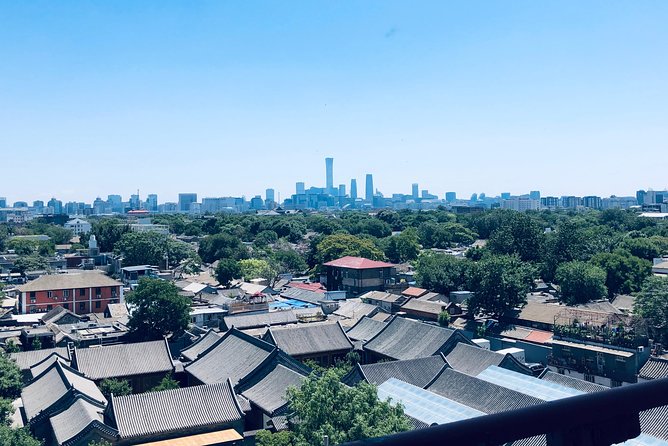
Beijing’s hutongs can look like a maze on a map, but up close they feel like a living neighborhood: narrow lanes, courtyards, bridges, and little clues about who lived where and how daily life worked. With a private guide, you’re not just passing through. You’re learning what you’re seeing as you walk.
I also like that the guide’s job isn’t to recite facts. It’s to translate the street level view into something you can actually picture. That includes the kinds of details many visitors miss, like how house entryways are designed and what that says about older Beijing life. If you want a tour that helps you connect the dots fast, this style works.
You can also read our reviews of more tours and experiences in Beijing.


A fair drawback: it’s still a walking tour
This is built for people with a moderate fitness level. You will be on your feet for about four hours, and the lanes can be uneven. If you need lots of sitting breaks, or you’re planning to travel with very heavy bags, you’ll want to plan around that.
Price and value: what $148 gets you (and what it doesn’t)
At $148 per person, this isn’t a budget group tour. The value comes from three main places:
First, you’re paying for privacy: only your group participates, with an excellent English-speaking guide. Second, you’re getting logistics handled, including taxi fare within the 4th Ring Road and pickup/drop-off from your hotel. Third, entrance fees are included, so you’re not piecing together tickets mid-day.
What’s not included is also pretty clear: liquor drinks and coffee can be purchased separately, and gratuities are recommended. Lunch is included only if your chosen option applies. So before you lock it in, confirm whether your plan includes the dim sum meal.
If you’re traveling with friends, this often starts to look more reasonable because you can split the “per person” cost across a small group and still keep the private pace.
The timing that matters: morning vs afternoon start
You can meet at 10:00am or 2:00pm in your hotel lobby. That choice affects the mood of the day.
- A morning start usually means cooler walking and a more relaxed feel in the hutongs before the busiest shopping moments.
- An afternoon start often leads you toward Houhai later, when that day-to-night transition starts to feel real along the bridges.
Either way, you’ll be moving in a compact area, with transfers set up for you so you’re not spending your energy on transit.
Good to know before you walk: pace, shoes, and food needs
Plan for comfortable shoes. The tour is designed around walking through hutongs, scenic areas, and classic streets, plus a few short stops where you’ll have time to look around.
Food-wise, the route is built around street snacks and a dim sum lunch. If you have dietary restrictions or food allergies, you’ll need to flag them ahead of booking so the food plan can match your needs. If you love tea, there’s also a tea shop stop that focuses on selecting jasmine, chrysanthemum, green, or oolong tea.

Nanluoguxiang: where you get your bearings fast
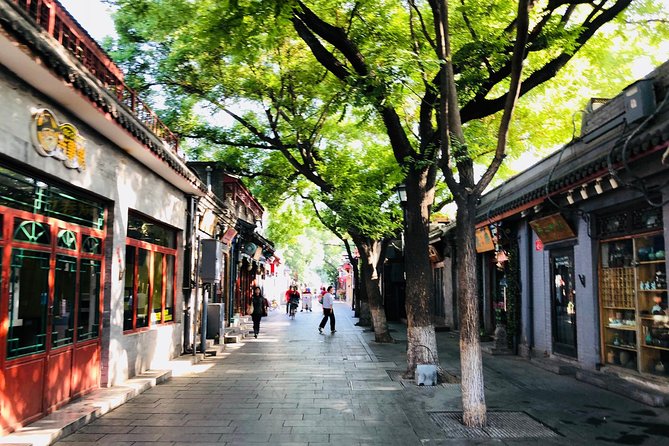
Stop one is Nanluoguxiang, where you’ll meet your guide and then walk through one of Beijing’s most lively lanes. It’s a good first stop because it sets the tone: you get energy, old-stone structure, and the sense that this area is both historical and everyday.
What I like here is that the tour doesn’t treat it like a museum corridor. You’re walking, asking questions, and picking up the rhythm of hutong life as you go. A big plus for first-timers: your guide can explain why things are arranged the way they are, including those narrow connections that are easy to miss if you’re self-guiding.
Possible drawback: since it’s lively, it can feel busy compared with the quieter hutongs later on. If you prefer silence, you’ll still get quieter moments as the tour continues.
Yu’er Hutong and Mao’er Hutong: courtyards and the story behind the walls
Next you’ll shift into Yu’er Hutong, an authentic hutong area near the Jade River. This is where the scenery starts to diversify. You’ll see canals and bridges, plus that feel of courtyards that look lived-in rather than staged. It’s short, but it works as a palate cleanser after the busier lanes.
Then comes Mao’er Hutong, connected to a very specific slice of Beijing’s imperial past. It’s tied to the Last Emperor’s empress, who lived there for a time after the Royal family were driven out of the Forbidden City. Even if you’re not a hardcore history fan, this stop matters because the courtyard trees and layout help you understand how life could continue even after huge political shifts.
The best part about these hutong stops is that you’re not just photographing doors. You’re getting guided context about why certain spaces matter.
Bell and Drum Towers: big landmark energy, with a real plan for closures
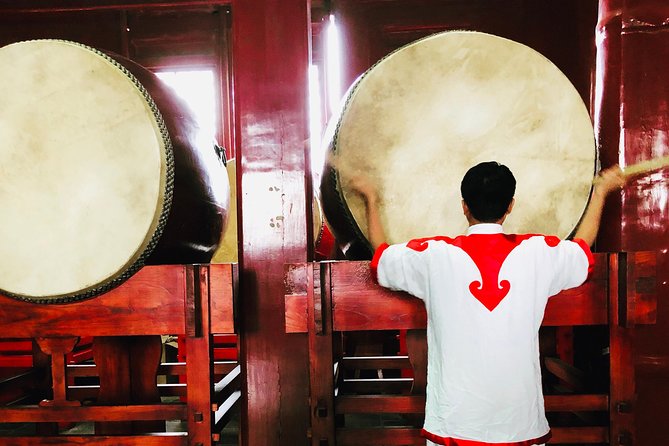
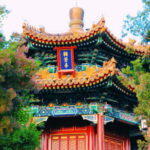
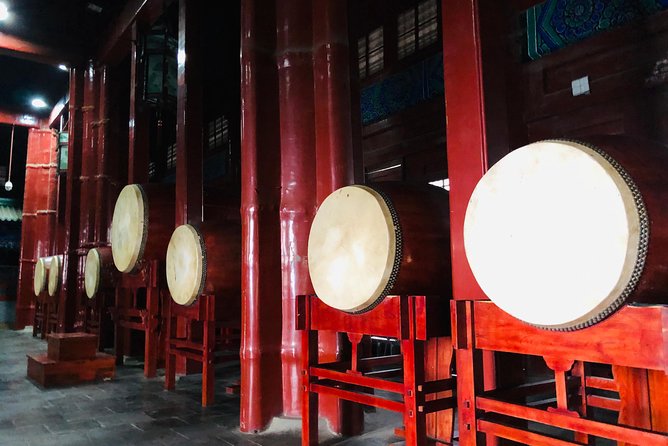
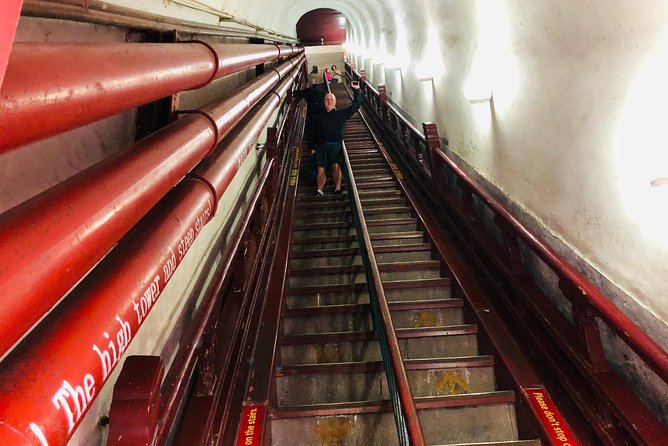
The tour includes time at the Bell and Drum Towers, with mention of drum performance sometimes happening. This is one of those classic Beijing anchors: you get a sense of how older systems worked and why the city centered on landmark timekeeping.
A practical detail you’ll appreciate: sometimes Drum Tower is closed. In that case, your guide should handle it and you’ll receive the entrance fee back. That matters because it reduces the “you showed up, but too bad” feeling.
If you’re the type who hates wasted time, this built-in flexibility is a big plus.
Wuyutai Tea Shop and Yandai Xie Street: taste and browse without losing the plot
After you’ve built up the hutong story, the tour adds a short tea shop stop at Wuyutai Tea Shop in Wangfujing. This part is brief, but it gives you a straightforward way to pick up Beijing tea knowledge and choose between jasmine, chrysanthemum, green, or oolong.
Then you head to Yandai Xie Street, described as Beijing’s oldest commercial street. This is where traditional-style stone buildings house small shops for souvenirs and handicrafts. You’ll get time to walk, look, and decide if anything catches your eye.
One consideration: this is a commercial street, so it’s more shopping than “pure hutong.” If your goal is quiet photography, treat this stop as a short break and move with intention.
Houhai (Back Lakes), Shichahai, and the bridge circuit
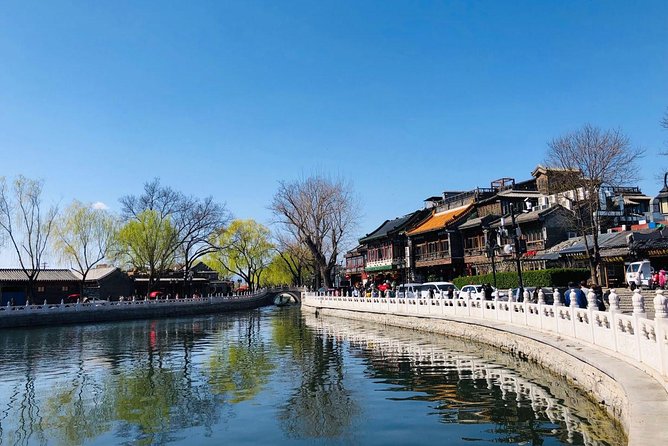
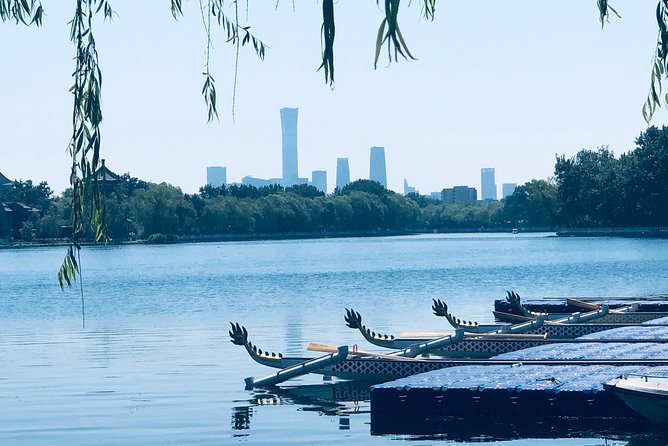
As the walk shifts toward the water, you’ll reach the Back Lakes (Hou Hai) area, which includes Xihai, Houhai, and Qianhai. This is one of the spots that makes Beijing feel less like monuments and more like a place where people hang out. It’s also noted as a more nightlife-friendly area, so if you’re going in late afternoon, you may feel that buzz forming.
Then you’ll pass Yinding Bridge, often called the money bridge because it’s designed like a traditional ingot shape. It’s typically busy, and the atmosphere changes from day to night, which is part of why this stop works so well for photos and people-watching.
After that, you’ll get brief time at Shichahai Scenic Resort, with lake views and a mix of restaurants, bars, and cafes. It’s a good pause point. You’ll likely find yourself slowing down here just to watch the water and boats.
Finally, you finish with Jinding Bridge (golden ingot bridge), another place to enjoy the Houhai views and close the loop after all those earlier hutong turns.
If you care about photos, this section is the payoff
This bridge-and-lakes stretch gives you the “I get it now” Beijing feeling. You’ve seen narrow lanes and doorways; then you see where people go to relax. It’s a nice emotional arc for a half-day tour.
Dim sum lunch and street snacks: how the food fits the day
Food is not just extra here. It’s part of the route rhythm.
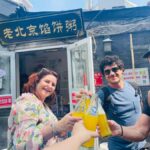
You’ll sample signature street food such as bubble tea, red bean dessert, and mantou buns as you move through the neighborhoods. Then you’ll savor a dim sum lunch.
A few practical pointers based on how these tours are structured:
- Make sure your lunch option is included if you want dim sum as part of the package.
- If you have dietary restrictions or allergies, tell the provider ahead of time so the guide can plan around it.
- You should expect food stops to be “tasted and shared,” not a full sit-down restaurant day from start to finish.
The best value of the food portion is that it helps you experience the culture in everyday form. It’s harder to understand a place only through streets and landmarks. Snacks bridge that gap.
How guides personalize the experience (including responses to closures)
One of the most praised aspects of this tour style is the guide’s ability to adjust to real conditions. For example, past experiences mention that Kris helped handle changes when some sites or museums were closed on Mondays. Another guide mentioned, Maggie, was noted for tailoring and explaining details many tourists miss, especially around house entryways.
You should still treat your schedule as guided walking time rather than a guarantee of every single show or ticketed moment. But compared with DIY plans, you’re far more likely to keep moving smoothly.
What this tour is best for
This fits well if you:
- Want a first-time hutong experience without getting lost
- Like history but also want real street-level context
- Care about eating well, not just collecting sights
- Appreciate a guide who can answer questions as you go
- Prefer hotel pickup and drop-off, especially if you’re short on time
It may not be ideal if you:
- Hate walking or need frequent rest stops
- Want a strictly museum-focused day (this is neighborhood-focused)
- Are expecting totally predictable access at every single landmark regardless of closures
Should you book it?
Yes, I’d seriously consider booking if you want Beijing’s hutong side with less friction and more meaning. The combination of hotel door-to-door convenience, entrance fees included, and a private guide helps this feel like a thoughtful half-day plan rather than a rushed sightseeing loop.
Also, if you’re trying to decide between “touring” and “understanding,” this is the kind of route where the guide can turn ordinary lanes into a story you can remember. The only reason not to book is if your schedule demands guaranteed access to specific attractions every time, or if your walking tolerance is very low.
If you can wear comfortable shoes, plan for walking, and confirm whether your lunch option includes dim sum, this is an excellent way to spend your time in Beijing.
FAQ
FAQ
How long is the half-day hutong walking tour?
It’s about 4 hours.
Is the tour private?
Yes. It’s a private tour/activity, and only your group will participate.
Do I get hotel pickup and drop-off?
Yes. Pickup and drop-off are offered directly from your hotel.
Does the price include entrance fees and lunch?
Entrance fees are included. Lunch is included if the option you choose applies. Liquor drinks and coffee are not included.
What time does the tour start?
You can choose either 10:00am or 2:00pm. The meeting is at your hotel lobby.
Which areas does the route include?
The route includes hutong neighborhoods such as Nanluoguxiang, Yu’er Hutong, and Mao’er Hutong, plus stops at Bell and Drum Towers, Yandai Xie Street, Back Lakes (Hou Hai), and the ingot-shaped bridges around the Houhai/Shichahai area.
What should I do if I have dietary restrictions or allergies?
You should notify the booking ahead of time so the food portion can be handled appropriately.
What happens if the Drum Tower is closed?
If the Drum Tower is closed, the tour guide gives you back the entrance fee.
How late can I cancel for a full refund?
You can cancel up to 24 hours in advance for a full refund. Canceling less than 24 hours before the start time is not refundable.