REVIEW · SHANGHAI
Tour of Jewish Shanghai led by a Jewish History Expert
Book on Viator →Operated by Tours of Jewish Shanghai · Bookable on Viator
Jewish Shanghai has layers, and the streets tell them. This half-day tour links the Bund to Hongkou, where thousands of Jewish refugees lived during WWII, and it does it with a Jewish history expert at the front of the group. You start with the city’s Baghdadi–Jewish legacy, then move through the neighborhood’s lanes and key memorial sites to understand how Shanghai fit into European escape routes.
I especially like two things about this tour: the way the guide explains the different waves of Jewish immigration to Shanghai (not just WWII), and the fact that you visit real places tied to the story. The stops include the Jewish Refugees Museum inside the former Ohel Moishe Synagogue and a WWII-era monument area in Huoshan Park, plus time looking at the neighborhood itself, including a Chinese home associated with refugees’ lives.
One consideration: this is more history heavy than sights heavy. If you’re expecting dramatic ruins or a theme-park-style walk, you may feel like it’s mostly lessons in context—though that approach is exactly why it works so well for many people.
In This Review
- Key Things You’ll Actually Notice on This Tour
- Why the Bund Matters Before You Even Reach Hongkou
- Meeting at the Peace Hotel on the Bund: a Great Starting Point
- Hongkou’s Back Lanes: Following the Jewish Story Through Everyday Streets
- The Former Ohel Moishe Synagogue and Jewish Refugees Museum
- Huoshan Park: a WWII Memorial Stop in Present-Day Shanghai
- Time, Pace, and Weather: How to Plan Your Half-Day
- Price and Value: Is $96 Worth It for Jewish Shanghai?
- Who This Tour Is For (and Who Might Skip It)
- Should You Book the Jewish Shanghai Half-Day Tour?
- FAQ
- How long is the Jewish Shanghai tour?
- Where do we meet, and when does it start?
- What stops are included?
- What’s included in the price?
- Is food or drinks included?
- Does the tour run in bad weather?
Key Things You’ll Actually Notice on This Tour
- Bund-to-Hongkou storyline: the route is designed to connect Shanghai’s skyline history to the Shanghai Ghetto area.
- Ohel Moishe Synagogue museum visit: the story becomes tangible once you’re inside the former synagogue-turned-museum.
- Huoshan Park memorial stop: you get a dedicated moment to reflect on the WWII refugee legacy in present-day Shanghai.
- Back-lane walking: you’ll see how the neighborhood looks and functions now, not just how it once was.
- Small group size: the tour caps at 22 people, which keeps the experience easier to follow during the explanations.
Why the Bund Matters Before You Even Reach Hongkou
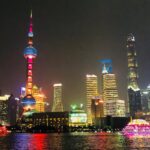
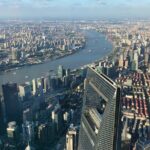
Shanghai’s Jewish story doesn’t start in Hongkou. It starts with the city as a trading port and a magnet for migration, and the tour makes you feel that right away by beginning on the Bund riverfront. From there, you get a big-picture view of Shanghai that helps the details later on make sense.
You’ll hear about the Baghdadi–Jewish legacy tied to the city, including the real-world role prominent Jewish figures played in Shanghai’s development. The point isn’t to turn it into a trivia contest. It’s to show you that Jewish presence in Shanghai had multiple chapters before WWII, and those earlier chapters affect how you read what comes next.
This is also a smart way to pace your thinking. You’re not dropped into a single WWII snapshot. You’re guided through cause-and-effect, which is what makes the emotional weight of the WWII portion land without feeling random.
You can also read our reviews of more tours and experiences in Shanghai.
Meeting at the Peace Hotel on the Bund: a Great Starting Point
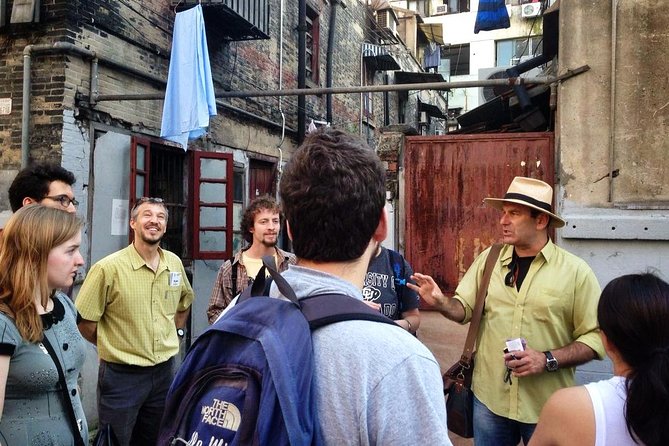
Your morning begins at the Peace Hotel, formerly the Cathay Hotel, which was built by Sir Victor Sassoon. That name alone is a clue: Shanghai’s Jewish connections weren’t only spiritual or communal. They were also commercial and civic.
Before you move inland, you take in the Bund views while the guide sets the stage. This matters because later you’ll be walking through ordinary residential lanes and local streets. Without the earlier framing, it’s easy to miss how much the story depends on the city’s geography and who had access to what.
If you’re sensitive to presentation style, this is one place where the tour earns its reputation. The guide’s approach is described as sympathetic in a delicate subject area, and that tone is helpful when you’re talking about persecution, displacement, and survival.
Hongkou’s Back Lanes: Following the Jewish Story Through Everyday Streets
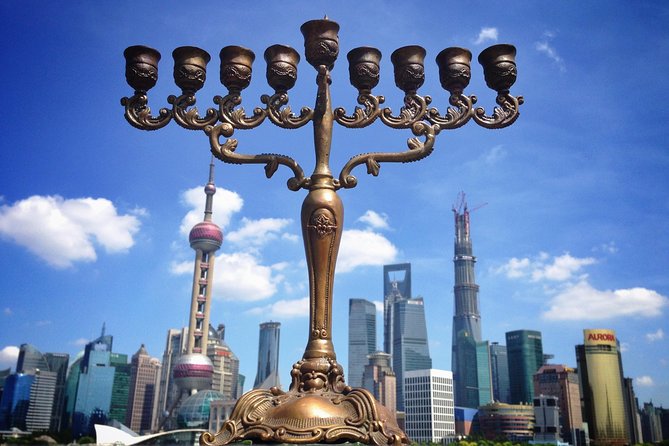
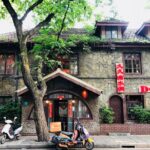
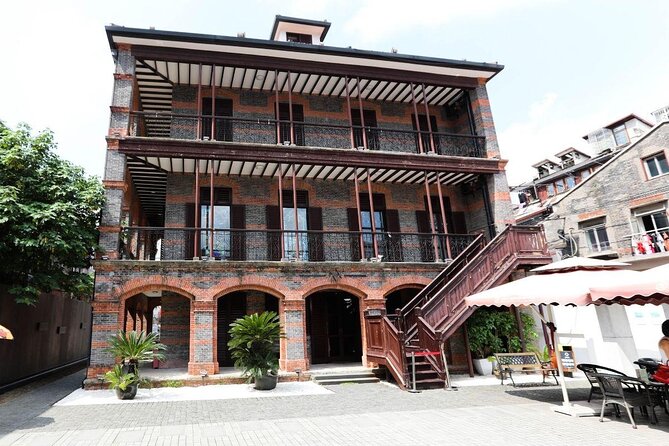
Once you head to Hongkou, the tour becomes very grounded. Hongkou is also known as the Shanghai Ghetto area, and the tour doesn’t treat it like a sealed museum zone. You explore the neighborhood’s back lanes, which helps you understand how historical spaces sit inside modern life.
This part is about the waves—not one single arrival story. You’ll learn about different periods of Jewish immigration to Shanghai, and then you’ll connect those earlier movements to the WWII-era reality when refugees sought safety. The guide also ties in how Jewish lives intersected with the Chinese world around them, including Chinese migrant workers.
What I like about the back-lane format is that it keeps you from zoning out. If you only hear dates, you lose the human scale. When the guide points out what used to be significant and what replaced it, your brain starts mapping history onto the street-level experience.
Also, don’t be surprised if you get chances to sit at intervals. Some people expect this to be a pure walking tour, but the pacing is structured so you’re not constantly on your feet while listening. In a tour centered on heavy stories, that small comfort helps you stay focused for the full 4 hours.
The Former Ohel Moishe Synagogue and Jewish Refugees Museum
One of the tour’s clearest highlights is the Shanghai Jewish Refugees Museum, housed in the former Ohel Moishe Synagogue. This isn’t just a stop with information panels. It’s a conversion of meaning: a place that once served a community now documents the refugee experience.
Admission is included, so you’re not juggling extra tickets or figuring out entry timing. Once you’re inside, you’re more likely to understand why the guide spends time on context outside. The museum adds the personal dimension: migration paths, community survival, and what life looked like under extreme pressure.
People also mention how specific the storytelling can get. For example, you may hear about tombstones and where some were found, which is the kind of detail that turns general history into lived evidence. It’s also the sort of material you can’t fully absorb from a brochure. You need a guide to help you connect objects and locations into a narrative you can remember.
If you’re the type who likes museums but gets impatient with slow pacing, this stop tends to work because it’s paired with street-level observation elsewhere on the route. You’re not stuck reading while standing still. You move from museum artifacts back out into the neighborhood’s “now,” and that contrast helps learning stick.
Huoshan Park: a WWII Memorial Stop in Present-Day Shanghai
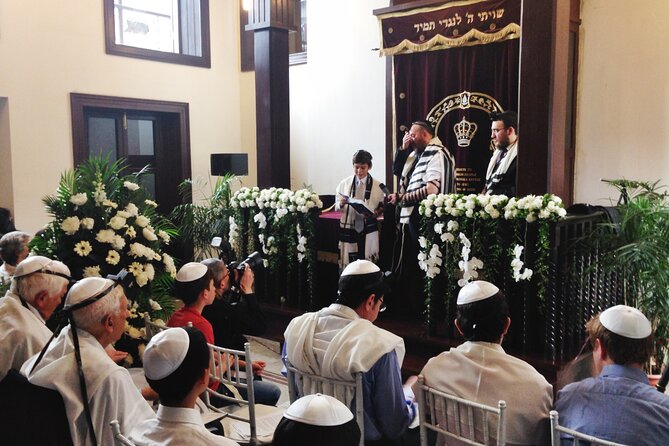
After the museum, the tour shifts toward commemoration. You’ll visit a monument in Huoshan Park tied to Jewish refugees of WWII, including a memorial plaque stop area in the park. This is a crucial change of tone: you’re no longer only absorbing information. You’re also pausing to respect the people whose lives intersected with Shanghai in a terrifying moment.
Huoshan Park matters because it reminds you that history doesn’t sit in glass. It’s integrated into the city people live in today. Seeing a memorial in a functioning urban setting can feel more real than a memorial in an isolated location. It also helps you remember that survivors and refugees weren’t walking through a historical backdrop. They were making choices under pressure while building whatever future they could.
If you’re traveling with someone who has strong feelings about war memorial sites, this stop is one that can create a shared moment of reflection without needing long lectures. The guide’s role is to frame it with facts, so your visit doesn’t feel vague or purely emotional.


Time, Pace, and Weather: How to Plan Your Half-Day
This tour runs about 4 hours. It’s offered in the morning and afternoon, and daylight constraints make the morning tour the better pick. Starting around 9:30 am helps you see more comfortably while you’re walking and watching your time.
The good news: it operates in all weather conditions. So you’ll want rain-ready footwear if the forecast looks iffy. Since food and drinks aren’t included, I recommend you eat beforehand and carry a small water bottle if you’re the type to get dry-mouthed from listening for hours.
Transportation is included, with a private vehicle and air-conditioning. That matters in Shanghai. You’ll cover enough distance to keep the day efficient, without feeling like you’re stuck in a long bus ride. The mix of vehicle time plus walking also helps keep your energy steady for the museum and the park stop.
Finally, note the group size cap at 22. That’s big enough for logistics, but small enough for a guide to keep control of attention. You shouldn’t feel like you’re swallowed by the crowd.
Price and Value: Is $96 Worth It for Jewish Shanghai?
At $96 per person, you’re paying for three things that add up quickly in Shanghai: an expert guide, private air-conditioned transport, and museum admission. This isn’t a bargain-basement walking tour. It’s priced like an experience built around interpretation, not just movement.
Here’s how to think about value. If your goal is to learn the story of Jewish immigration to Shanghai and how the WWII ghetto experience fit into the larger picture, a guided format is the advantage. The tour’s structure—Bund framing, Hongkou walking lanes, museum evidence, then the Huoshan Park memorial—works as a learning pathway. You’re not collecting scattered facts. You’re building one coherent timeline.
If your goal is only sightseeing, you might decide a self-guided walk around Hongkou plus a museum ticket would be enough. But if you care about context, you’ll likely feel the $96 is fair. This is exactly the kind of subject where a good guide saves you time and frustration.
One more value clue: the tour is limited to a maximum group size (up to 22). That helps the guide keep the narrative clear during the street segments. In a city where streets can be confusing and history can feel abstract, that clarity is part of what you’re paying for.
Who This Tour Is For (and Who Might Skip It)
This is a great fit if you want Jewish history in Shanghai that connects multiple periods of immigration, not just the WWII chapter. It also works well if you like tours that explain how cities grow and how refugees navigated real neighborhoods rather than fictional “sites.”
You’ll probably appreciate it if you’re curious about how Shanghai’s Jewish communities intersected with broader city life, including local labor and the shifting social landscape. The tour’s blend of Bund context and Hongkou street-level observation helps you see that interconnection.
I’d be slightly cautious if you need lots of dramatic visual remnants. One comment described the experience as more of a history lesson than a place to see much physically. If that mismatch sounds like you, you might prefer a different type of tour that leans more toward architecture and scenery.
That said, if you can enjoy learning through place—reading a street scene like it’s a map—then this tour does the job.
Should You Book the Jewish Shanghai Half-Day Tour?
If you want a guided, emotionally respectful, fact-based walk through Shanghai’s Jewish story—especially the link between the Bund, Hongkou, the Ohel Moishe Synagogue museum, and the Huoshan Park WWII memorial—you should book this. The format is efficient (about 4 hours), the route makes sense for first-timers, and museum entry is handled for you.
Book it if history is your thing and you want interpretation, not just locations. Skip it if you’re chasing visual spectacle and want fewer lectures. Either way, plan for walking, bring weather-ready footwear, and eat before you go since food isn’t included.
FAQ
How long is the Jewish Shanghai tour?
It’s approximately 4 hours.
Where do we meet, and when does it start?
The meeting point is listed as Nanjing Road (E). The tour starts at the Peace Hotel on the Bund riverfront, and the start time is 9:30 am.
What stops are included?
You visit the Shanghai Jewish Refugees Museum in the former Ohel Moishe Synagogue, and you also see a WWII memorial in Huoshan Park. The route also includes time in the Hongkou district, including back lanes and a Chinese home associated with Jewish refugees.
What’s included in the price?
The tour includes a historical expert guide, private transportation, and an air-conditioned vehicle. Museum admission is included.
Is food or drinks included?
No, food and drinks are not included.
Does the tour run in bad weather?
Yes, it operates in all weather conditions.