REVIEW · GUANGZHOU
UNESCO Watchtowers World Heritage Ancient Villages Private Tour
Book on Viator →Operated by Guangzhou Local Tours · Bookable on Viator
Fortress towers in rural China take planning. This private Kaiping outing is a smart way to see UNESCO diaolou watchtowers and big scenery without wrestling buses, plus you’ll spend time at Li Garden with its classic-literature inspiration. It’s a rare day where you get countryside calm and real architecture that looks defensive even when it’s simply homes and family compounds.
I like the focus on specific village clusters like Zili and Majianglong, not just one quick photo stop. I also like how the itinerary mixes UNESCO sites with Chikan Old Town’s Cantonese Qilou streets and western-leaning street scenes, so the day feels balanced instead of copy-paste sightseeing. One thing to consider: admission fees and lunch aren’t included, and the full day can run long depending on how the timing works.
In This Review
- Key highlights you’ll care about
- Getting from Guangzhou to Kaiping: the ride matters
- Zili Village diaolou cluster: fortress-style watchtowers and family surnames
- The Watchtower Group of Zili Village: what 1837 tells you
- Jinjiangli Village: farmland paths, river edges, and a slower rhythm
- Li Garden in Kaiping: garden design tied to Dream of the Red Chamber
- Majianglong Towers Group: the flatland watchtower feel along Tanjiang River
- Chikan Movie Town: Qilou streets and a western-leaning contrast
- Price and logistics: what $255 gets you (and what it doesn’t)
- Best for who? Who will enjoy this most
- Booking advice: how to set yourself up for a smooth day
- Should you book this Kaiping UNESCO watchtowers day trip?
- FAQ
- How far is Kaiping from Guangzhou?
- How long is the tour?
- Is hotel pick-up and drop-off included?
- Is this tour private?
- Do I need to pay admission fees?
- Is lunch included?
- What language is the guide?
- Is a mobile ticket provided?
- How is the itinerary structured?
- What is the cancellation policy?
Key highlights you’ll care about
- UNESCO diaolou clusters in Zili and Majianglong: watchtower-style buildings tied to overseas Chinese communities
- Real village context: farmland, river edges, and working-rural surroundings along the route
- Li Garden by Xie Weili: early 20th-century garden design linked to Dream of the Red Chamber
- Chikan Movie Town streets: Cantonese Qilou street buildings plus western-influenced touches
- Private car pickup in downtown Guangzhou: reduces stress on a day with several sites
Getting from Guangzhou to Kaiping: the ride matters

This is built for convenience. You get hotel pick-up and drop-off in downtown Guangzhou, plus a private air-conditioned car and a professional driver. That’s a big deal because Kaiping is about a two-hour drive from Guangzhou, and a day like this lives or dies by smooth transport.
I’d plan this as a half-day to full-day outing. The on-site time blocks add up to roughly eight hours, with extra travel time layered in. If you’re going on a calmer weekday, the villages often feel quieter and easier to move through at a slow pace.
The other practical win: a local English-speaking guide is with you the whole time. That matters when you’re staring at buildings that look like forts but were built by real families with specific surnames and timelines.
You can also read our reviews of more tours and experiences in Guangzhou.


Zili Village diaolou cluster: fortress-style watchtowers and family surnames
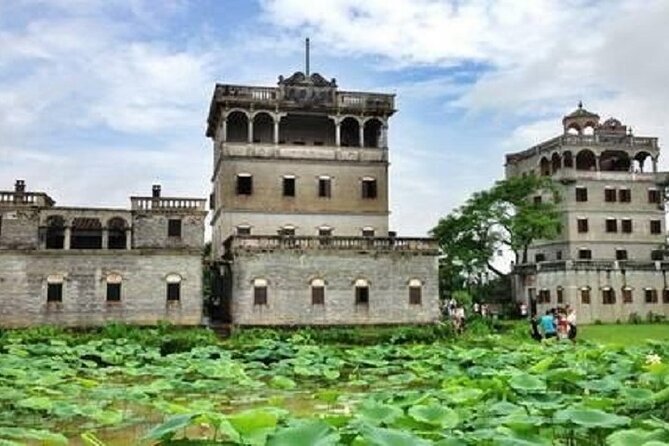
Your first major hit is the Kaiping Diaolou and Villages area, with a visit to the diaolou cluster in Zili Village and then the watchtowers-focused part of the Zili area. This region is famous for diaolou—house buildings that can look like fortress walls and guard towers. The overview calls out that these were built in the early 1900s by overseas Chinese migrant workers, which helps you understand why some structures feel more defensive than decorative.
Zili Village’s watchtower group is especially detailed. The itinerary includes the Watchtower Group of Zili Village, described as founded in the 17th year of Daoguang’s reign (1837). It’s made up of unincorporated villages with the surname Fang—Anheli, He’anli, and Yong’anli. That kind of specificity is helpful, because you’re not just admiring a landmark; you’re learning how a community organized itself around these towers.
A drawback to keep in mind: the visit time is set for about two hours for the first cluster segment, which means you’ll want to focus. Don’t try to read every detail on every wall. Pick a few buildings and learn their story first.
The Watchtower Group of Zili Village: what 1837 tells you
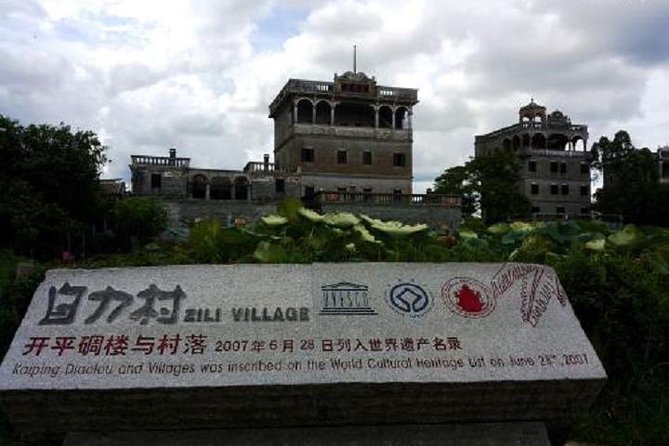
After the first cluster viewing, the itinerary narrows further into the Watchtower Group of Zili Village with about 1.5 hours. This is where the experience becomes more than architecture sightseeing.
Why it’s valuable: learning that the complex is tied to a specific founding moment (1837) gives you a time anchor. You start noticing how the towers function as communal identity—buildings created for safety and presence, but also for family legacy.
Also, the description notes that the area includes several Fang-family villages. If your goal is to trace cultural roots, this is the moment where you’ll feel the connection between the buildings and the people who lived behind them.
Practical tip: if you’re the type who likes names, maps, and structure, ask your guide to point out how each named village sits within the watchtower story. It makes the whole cluster easier to remember later.
Jinjiangli Village: farmland paths, river edges, and a slower rhythm
Next you’ll head to Jinjiangli Village, one of the smaller stops on the day (about 30 minutes on the schedule). The setting is described as surrounded by mountains, with crisscross paths across farmland and a river flowing through the area before it runs away. The itinerary also points out farm life details like water buffaloes and geese.
This is a good stop for a couple reasons. First, you get a break from the intense “tower viewing” energy and a chance to see how people actually live around these heritage sites. Second, the short time makes it feel like a countryside intermission instead of another marathon attraction.
The consideration: because it’s a shorter segment, don’t expect deep history-level coverage here. Treat it as a viewpoint and context stop—soaks-in-the-area time—then you’re ready to switch gears again.
Li Garden in Kaiping: garden design tied to Dream of the Red Chamber
One of the strongest value-adds on this tour is Kaiping Garden (Li Garden), planned for about an hour. It’s described as built in the early 20th century by Mr. Xie Weili, a US-based Chinese. That cross-continental note matters: you’re seeing how overseas Chinese identity shaped not only towers and village compounds, but also taste and architecture back home.
Even better, the garden is said to be based on the Grand View Garden depicted in Dream of the Red Chamber. The itinerary calls it a masterpiece of gardens built by overseas Chinese and notes it combines classical garden features in a skillful way. In plain terms: you’re not just walking through greenery or pretty paths. You’re looking at a themed, designed world that references a major literary classic.
A small practical note: because it’s about an hour, you’ll get a satisfying overview, not a museum-style hour-by-hour reading experience. If gardens are your thing, pay attention to layout and transitions—how the garden guides your eye.





Majianglong Towers Group: the flatland watchtower feel along Tanjiang River
Then you’ll visit the Ma-Xianglong Towers Group in Majianglong Village. The schedule gives about one hour. This area is described as being in the flatland on the eastern coast of the Tanjiang River, under Baihe Township administration.
What I like here is that it adds geographic contrast. Zili Village’s watchtower story can feel like a village-with-compound vibe. Majianglong’s riverside flatland setting helps you understand how these structures served as visible presence in a broader agricultural region.
The description also frames the village cluster as composed of five villages, including Yong’an and Nan’an of the Huang family, among others. Again, those family-linked details give the site structure. You’re not guessing who built what—you’re learning how groups formed a heritage landscape.
Consideration: this is still a “towers plus villages” day. If you only want one or two heritage spots, you might feel the day stacks similar elements. If you genuinely like architecture and cultural context, the sequence works well.
Chikan Movie Town: Qilou streets and a western-leaning contrast
Your last major stop is Chikan Movie Town, scheduled for about two hours. The itinerary describes it as established in the early Qing Dynasty, next to the Tan River, with convenient transportation for surrounding rural villages.
Chikan is famous here for Cantonese style Qilou street buildings, plus western-influenced street scenes. That combination can be surprisingly refreshing after diaolou towers, because you’re shifting from vertical fortress silhouettes to street-level architecture and building facades.
Why this stop is worth your time: it shows how cultural contact and movement aren’t only tied to overseas Chinese migrant workers building towers in the countryside. The street scene reinforces how different architectural ideas can appear in the same regional timeline.
The drawback is simple: two hours can feel a bit long if you aren’t interested in streets and buildings for their details. If you are, this is a great place to slow down, watch how the street layout feels, and take photos without rushing between towers.
Price and logistics: what $255 gets you (and what it doesn’t)
This tour is priced at $255 per person and is typically booked around six days in advance. The big value point isn’t just the price—it’s what’s included: a local English-speaking guide, a private car with air-con, professional driver, and hotel pick-up and drop-off in downtown Guangzhou. That’s your day’s backbone.
What’s not included: admission fees and lunch (for both you and the guide). So you should budget extra for entry tickets at the UNESCO villages and garden and for your meals. The itinerary also notes mobile tickets are part of the experience features, which usually means less friction at the gate—but you’ll still want to plan money for what the tour doesn’t cover.
In terms of time value, the scheduled visit blocks are long enough to feel substantial. It’s not a quick drive-by. The downside is that it’s not a half-hour “toss in a village” add-on either—this is a committed day, and your comfort matters.
Best for who? Who will enjoy this most
This fits best if you like:
- architecture with a story, especially diaolou watchtowers and village clusters
- countryside context beyond city sightseeing
- a private day plan where transport is handled and language is covered by a guide
It may be less ideal if you’re short on time in Guangzhou and only want one or two stops. The day packs several distinct areas: Zili, Jinjiangli, Li Garden, Majianglong, then Chikan.
If you’re traveling with family, it can still work well because it’s private and time-controlled. Just remember that the day can run up to 11 hours depending on how timing lands.
Booking advice: how to set yourself up for a smooth day
A practical note from the way the local team runs this: after you book, they’ll follow up to firm up the itinerary. One person you might see referenced in communications is Damon from Guangzhou Local Tours, and that kind of pre-trip contact is helpful when you care about timing.
Here’s how I’d prepare:
- Decide whether you want more focus on the UNESCO watchtower buildings or more on gardens and street scenes. The itinerary covers all, but you can still choose what you pay attention to.
- Budget for admission and lunch ahead of time so you aren’t doing last-minute math while you’re hungry.
- If you prefer a quieter feel, consider going on a weekday, when the countryside pace can be calmer.
Should you book this Kaiping UNESCO watchtowers day trip?
Book it if you want a private, structured day that connects UNESCO diaolou villages with a garden and a contrasting old town street experience. The transport setup—private car, air-con, and downtown pick-up—turns a long drive into an easier, more comfortable heritage day.
Skip or reconsider if you hate long days, you don’t want to pay separate admission fees, or you only want a single highlight. Also, if you’re chasing only scenic views and not architecture or village context, you might find the stop stack heavy.
If your goal is a full, coherent cultural day around Kaiping, this is a strong fit for the time you spend.
FAQ
How far is Kaiping from Guangzhou?
Kaiping is about a two-hour drive from Guangzhou.
How long is the tour?
The tour runs about 5 to 11 hours, depending on timing.
Is hotel pick-up and drop-off included?
Yes. Pick-up and drop-off in downtown Guangzhou are included.
Is this tour private?
Yes. It’s a private tour/activity, and only your group participates.
Do I need to pay admission fees?
Admission fees are not included, so you should budget for tickets at the stops.
Is lunch included?
Lunch is not included (for you and the guide).
What language is the guide?
The tour includes a local English-speaking guide with full escort.
Is a mobile ticket provided?
Yes, mobile ticket is listed as a feature.
How is the itinerary structured?
You visit Kaiping area sites including diaolou clusters and villages (such as Zili and Majianglong), Li Garden, and Chikan Movie Town.
What is the cancellation policy?
The experience is non-refundable and cannot be changed for any reason.