REVIEW · CHENGDU
6-Hour Private Chengdu City Walking Tour with Tea Tasting
Book on Viator →Operated by Jiuzhai Minjiang International Travel Service · Bookable on Viator
Tea, temples, and parks make Chengdu click. I like the private pacing (you can ask questions without feeling rushed) and I really enjoy the kung-fu tea ceremony with a proper tea tasting. The main consideration is simple: this is a walking-heavy half day, so wear shoes you can stand in for hours.
You start early at Qingyang Gong (Green Ram Temple) around 8am, then move through parks and old-styled streets before sitting down in People’s Park for the tea ceremony. It’s built for first-time orientation, with entrance fees, snacks, and tea included, plus a guide who can adjust the flow if your legs or curiosity need a pause.
In This Review
- Key highlights at a glance
- Starting at Qingyang Gong: the best way to set the tone
- Huanhuaxi Park and the Funan River walk: Chengdu’s lighter side
- Qingyang Palace to Qintai Road: from Taoist symbols to old-street shopping
- Kuanzhai Alley and Renmin Park: two kinds of “local”
- Kuanzhai Alley: famous, but still useful
- Renmin Park: where people actually slow down
- People’s Park kung-fu tea ceremony: the moment that ties it together
- Qintai Road, snacks, and timing: how to plan your morning
- Songxianqiao Curio Art City: tea culture talk with a local pause
- Price and value: why $115 can make sense here
- Who this private Chengdu walk suits best
- Should you book this tour?
- FAQ
- Where does the tour start?
- How long is the tour?
- Is the tea ceremony included?
- Are entrance fees included?
- What about food and snacks?
- Is pickup and drop-off included?
- What should I bring?
- Is this a private tour?
- What is the cancellation policy?
Key highlights at a glance
- Private guide, flexible questions: You get personal attention and time to slow down or re-route a bit if needed
- Daoism at Qingyang Palace: A hands-on look at how Chinese Taoism is lived in a monastery setting
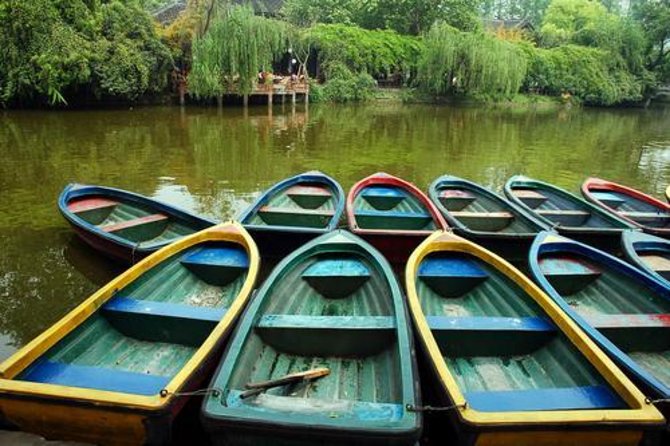
- Scenic strolls on water and paths: Funan River area plus Huanhuaxi Park’s local pace
- 1-hour kung-fu tea ceremony in People’s Park: Tea etiquette, tea culture, and tasting all built in
- Old streets plus real neighborhood life: Qintai Road, Kuanzhai Alley, and Renmin Park mix tourist-friendly with local
- Meals and tea are included: Tea/coffee, plus lunch noodles and snacks depending on your departure time
Starting at Qingyang Gong: the best way to set the tone
This tour works because it begins with a place that feels meaningful even before you fully understand it. Qingyang Palace—also known as the Green Ram Temple—is the anchor. You’ll meet around 8am at the site, at No 9, the Second West Section, 1st ring road, Qingyang District (or you can upgrade to pickup from your Chengdu hotel).
Why this matters: starting early helps you dodge the most chaotic hours and gives you calmer time to look closely. You’ll tour the property with a guide explaining Taoism in straightforward terms—what monks do there, and how the religion traces back to the 7th century AD. If you’ve ever wondered why symbols and rituals show up everywhere in Chinese culture, this stop gives you a “wait, that’s where it comes from” moment.
What to watch for during the visit: you’re moving through a monastery/temple environment, so keep your tone respectful, stay with your guide, and give yourself time to notice details in the halls and artworks. The tour includes entrance fees here, so you’re not juggling tickets while trying to take it all in.
You can also read our reviews of more tours and experiences in Chengdu.
Huanhuaxi Park and the Funan River walk: Chengdu’s lighter side
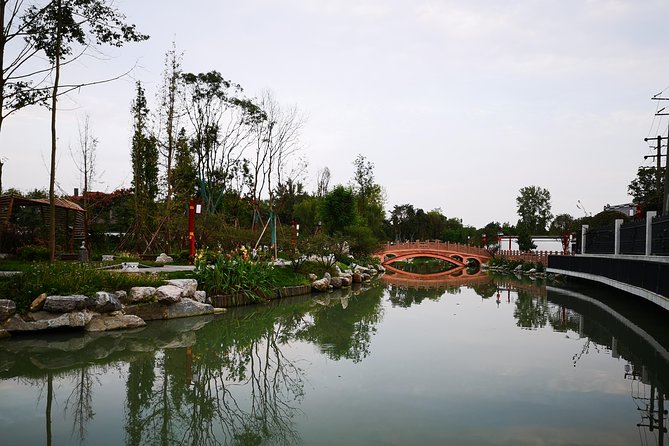
After the palace, the route shifts to a more relaxed Chengdu mood. You’ll head to Huanhuaxi Park, a public park in west downtown where the city moat runs nearby. This isn’t a staged attraction—it’s a place where locals do their daily thing, and it’s a great contrast to the more structured temple atmosphere.
The tour keeps Huanhuaxi practical: about 30 minutes, and it’s free admission. That’s long enough to enjoy a stroll, watch people hang out, and get your bearings without turning your morning into a long sit-in.
Then comes the part that many walking tours miss: the Funan River area. The route runs past the Sichuan Museum and into Huanhuaxi Park’s orbit, so you get a sense of how Chengdu connects “major sights” with everyday urban life. If you like your travel day to include both culture and normal street scenery, this segment helps.
Practical note: the tour duration includes travel time and tea time, not just “standing at sights.” So take it as a compact tour day and don’t plan anything tight right after noon unless your stamina is great.
Qingyang Palace to Qintai Road: from Taoist symbols to old-street shopping
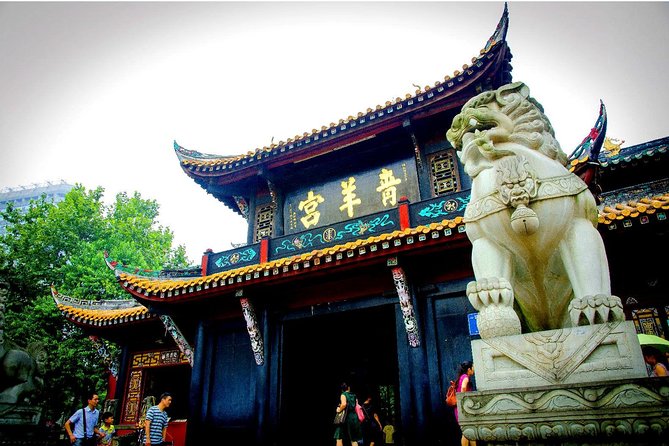
Once you’ve seen Daoism up close, the walking shifts into streets that feel older and more local. You’ll stop at Qintai Road, a renovated street with traditional style. The tour time here is about 1 hour, and admission is free.
What makes Qintai Road worth your attention is the texture: it’s a place for shopping (especially jewelry) but also for casual street life. Your guide also includes time for simple, authentic local food here. That’s a smart move—this tour doesn’t treat snacks as an afterthought. You’ll eat in the middle of walking, not at some distant restaurant where you lose the morning’s momentum.
If you’re sensitive to crowd energy, treat this as your browsing stop. Look, pick up a small souvenir if something really catches your eye, and then refocus when it’s time to eat.
Kuanzhai Alley and Renmin Park: two kinds of “local”
Chengdu has a talent for mixing tourist-friendly streets with real neighborhood behavior. You’ll see both on this route.
Kuanzhai Alley: famous, but still useful
Kuanzhai Alley is one of the city’s best-known walking streets. The tour gives you about 45 minutes and free admission. You’ll notice courtyards, and yes, there are lots of shops and snack places now. But the value here isn’t shopping—it’s getting a quick “old Chengdu layout” feel: courtyard houses, narrow lanes, and the way the street curves you from one scene into the next.
Quick advice: if you go into Kuanzhai with the right expectations, you’ll enjoy it. If you’re chasing a totally untouched, no-tourists street, you might feel the changes. Still, it works as a readable stop that helps you understand the city’s historic form.

Renmin Park: where people actually slow down
Then the tour heads to Chengdu Renmin Park for about 45 minutes (also free admission). This is the real payoff if you like seeing daily life without a museum barrier.
You can expect to observe things like water calligraphy, poker, square dancing, and open tea-house scenes. The tour’s goal here isn’t to “do activities” so much as to watch how Chengdu people use public space. You’ll feel the city’s pace shift again—less “temple visit,” more “people practice their hobbies.”
People’s Park kung-fu tea ceremony: the moment that ties it together
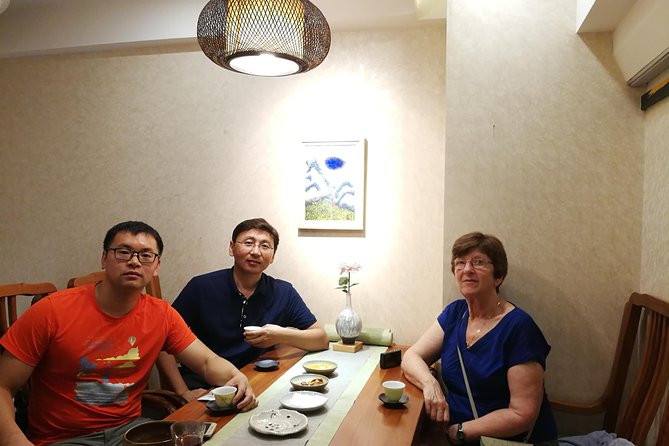
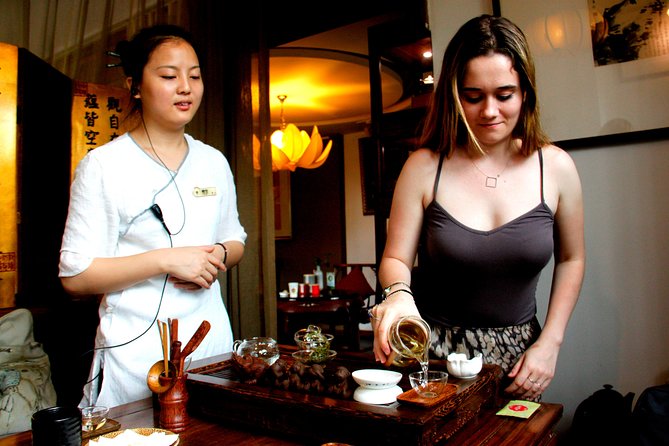
The centerpiece is the 1-hour kung-fu tea ceremony in an elegant tea house in People’s Park. This is where you stop walking and start paying attention with your whole senses.
This part is more than a performance. Your guide talks through the heritage of traditional tea service and the etiquette—how tea culture works in practice, not just as a history lesson. Then you get tea tasting as part of the experience, plus coffee and/or tea is included across the tour.
Why I think this is such strong value: tea ceremonies can feel overpriced when you’re paying for a seat but not learning anything. Here, the tour explicitly builds in culture plus tasting, and the ceremony length is long enough to actually notice differences and how the ritual flows.
If you want to get more out of it, keep a small mental checklist:
- Watch how the tea is poured and handled.
- Listen for the etiquette rules your guide explains (those usually connect to cultural habits beyond tea).
- Don’t rush the tasting—this is the time to slow down.
Also, you’ll end the tour around 12pm outside the tea house unless you’ve upgraded for a ride back to your accommodation. So this tea stop is not just a mid-point. It’s essentially the finish line.
Qintai Road, snacks, and timing: how to plan your morning
This tour includes snacks and lunch noodle for your lunch or dinner timing (depending on when you depart). It’s the kind of inclusion that makes a walking tour feel humane. You don’t have to hunt for food between temples, parks, and street stops.
One timing thing to remember: the tour covers 5 to 6 hours, but that’s with walking, travel, and the ceremony built in. You’ll want to start with a calm schedule and avoid stacking another major activity right after the noon ending.
Dress for comfort, not fashion. Bring a light jacket or raincoat, wear comfortable shoes, and use sunscreen. Chengdu can stay pleasant in the morning, but outdoor walking means the weather matters.
Songxianqiao Curio Art City: tea culture talk with a local pause
After the big tea moment and street scenes, there’s still a final stop built around tea culture and local texture: Songxianqiao Curio Art City. The tour includes a break at a local teahouse nearby, about 1 hour, focused on talking with locals and experiencing Chinese tea culture.
Important detail: the description here is about conversation and tea culture, not a specific ticketed museum. So don’t treat it like another “must-see building.” Treat it as a chance to soften the end of your tour—one more guided stop that keeps the theme going without feeling like the day is dragging.
This also works as a good option if you’re curious and want a slower, lower-pressure wrap-up.
Price and value: why $115 can make sense here
At $115 per person, you’re paying for a private guide, included admissions where listed, plus the tea ceremony and tastings, and the snack/meal component. On a walking itinerary, the guide is the main difference between just wandering around and actually understanding what you’re looking at.
Here’s where the value becomes practical:
- The tea ceremony is included (including the tasting and etiquette explanation), so you’re not adding a separate paid experience later.
- Entrance fees at Qingyang Palace are included, and the parks/streets with free admission keep your costs controlled.
- You get food built into the route: lunch noodle and snacks, plus coffee/tea.
One caution on logistics: taxi to the start point from your hotel is included, but taxi back to your hotel is not included unless you opt for pickup/drop-off as an upgrade. If you don’t upgrade, the tour ends around noon outside the tea house.
If you prefer not to figure out transport after a half-day out, that upgrade can be worth it. If you’re happy with public transport and a short post-tour stroll, you can save the upgrade cost.
Who this private Chengdu walk suits best
This tour fits best if you:
- Want a first-time Chengdu orientation that mixes Taoist culture, parks, and historic street form.
- Like tea as a cultural thread, not just a drink.
- Prefer private pacing so questions don’t get cut off.
- Appreciate simple, local food breaks during walking days.
It may be less ideal if you:
- Have limited walking tolerance. The tour includes multiple outdoor stops and a full tea ceremony, so plan for sustained walking and standing.
- Want only “big-ticket” attractions with lots of downtime. This tour is paced, not sleepy.
One extra note from guide quality: in past experiences with guides named Andie and Bruce, the common praise is that they’re knowledgeable and adaptable, so you can ask questions and adjust the pace. That’s exactly what makes a private walking tour feel personal instead of scripted.
Should you book this tour?
If you want Chengdu with context—Daoism in the morning, a river-and-park stroll for grounding, then a real tea ceremony where the guide actually explains what you’re doing—this is a smart booking.
I’d book it especially if you’re traveling with one other person or a small group and you want to avoid the “group rush.” The route is compact and theme-based: Qingyang Palace → parks and streets → People’s Park tea ceremony.
If you dislike walking or you hate tea ceremonies as an activity, then skip it and choose a different kind of tour. But if you like learning through places (not through lectures), this half-day plan is a strong match.
FAQ
Where does the tour start?
The tour starts at Qingyang Gong (Green Ram Temple) around 8am, at No 9, the Second West Section, 1st ring road, Qingyang District. You can also upgrade to include pickup from your Chengdu hotel.
How long is the tour?
It runs about 5 to 6 hours. That total includes travel time, walking time, and the tea ceremony time.
Is the tea ceremony included?
Yes. You’ll enjoy a 1-hour kung-fu tea ceremony in an elegant tea house in People’s Park, including tea tasting.
Are entrance fees included?
Yes. Entrance fees are included, and some stops (like Huanhuaxi Park and several street/park areas) are listed as free.
What about food and snacks?
Lunch noodle and snacks are included depending on your departure time. Coffee and/or tea are also included.
Is pickup and drop-off included?
Taxi to the start point from your hotel is included. Taxi back to your hotel is not included unless you choose the pickup and drop-off upgrade.
What should I bring?
Bring a light jacket or raincoat, comfortable shoes, and sunscreen. Also plan for outdoor walking.
Is this a private tour?
Yes. It’s a private tour, and only your group participates.
What is the cancellation policy?
Cancellation is free up to 24 hours in advance for a full refund. If you cancel less than 24 hours before the start time, the amount paid is not refunded.