REVIEW · CHENGDU
All-Inclusive Private Day Tour of Mount Qingcheng and Dujiangyan
Book on Viator →Operated by ChengDu WestChinaGo Travel Service · Bookable on Viator
Chasing Taoist silence and irrigation engineering in one day works. This private tour pairs Mount Qingcheng with the Dujiangyan Irrigation System, plus smooth hotel pickup and a calm pace with a guide. You start early, ride up by cart and cable car, then spend the afternoon on a site that still works the way it was designed.
I like two things a lot: the hotel pickup/drop-off that removes stress, and the way you get real context at each stop. Lunch is included at a local restaurant, and guides like Amber, Cassie, Lucy, and Abby were praised for explaining what you’re seeing in a way that sticks.
The main drawback is simple: it’s a long day with real walking. Expect steep or uneven paths on Mount Qingcheng, and the tour runs in all weather, so comfortable shoes matter.
In This Review
- Key highlights you’ll feel right away
- Why Mount Qingcheng and Dujiangyan click for a full-day private outing
- Price and logistics: what $229 buys you (and why it can be fair)
- Morning start: getting out early from Chengdu (and why it matters)
- Mount Qingcheng: temples, Taoist architecture, and an easy route up
- Shangqing Palace to Laojun Pavilion: how the day balances walking and views
- Lunch on the route: a local meal that keeps momentum
- Dujiangyan Irrigation System: ancient engineering that’s still doing the job
- Fish Mouth Weir, Bottle-Neck Channel, and the Anlan Suspension Bridge
- How to pace a 9-hour day without burning out
- Who should book this private tour (and who might want a different plan)
- Should you book? My honest take on the decision
- FAQ
- What sites does this private day tour include?
- How long is the tour?
- Is hotel pickup and drop-off included?
- Are cable cars and admission tickets included?
- Do I need to speak Chinese to join?
- Does the tour run in bad weather?
Key highlights you’ll feel right away
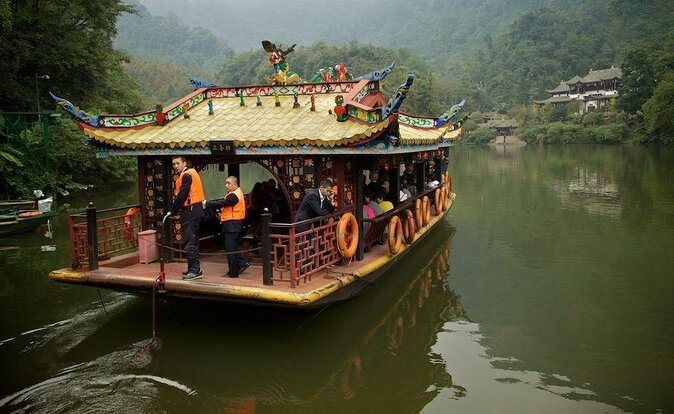
- Door-to-door hotel pickup within the 3rd ring road, so you start without wrestling transit.
- Cable car + eco golf cart at Mount Qingcheng, saving energy for the parts that are actually worth walking.
- UNESCO pairing in one 9-hour day: Taoist mountain temples and Dujiangyan’s still-functioning irrigation system.
- Lunchtime is handled with a included local meal, not a random snack stop.
- Guides bring the stories; Lucy, Cassie, Ivy Wang, Mia, and Lily were specifically noted for care, flexibility, and good explanations.
Why Mount Qingcheng and Dujiangyan click for a full-day private outing
If you’re basing yourself in Chengdu, you’ve got a convenient problem: the best-known day trips can be far and time-consuming. This one solves that with a private, air-conditioned vehicle and a start time designed to dodge traffic.
What you end up with is a really good contrast. Mount Qingcheng is about atmosphere: Taoist temples, forest paths, and quiet views when weather cooperates. Then Dujiangyan flips to practical awe: third-century BC engineering that still moves water and still feeds farmland.
And because it’s private, you’re not stuck in a hurry-to-everywhere group rhythm. Your guide can slow down, pause for photos, and adjust timing based on the day.
You can also read our reviews of more tours and experiences in Chengdu.
Price and logistics: what $229 buys you (and why it can be fair)
At $229 per person, this tour isn’t the cheapest thing in Chengdu. But you’re paying for a bundle: private transport, an English-speaking guide, admission coverage for key sites, and multiple rides that would be annoying to coordinate yourself.
Here’s the value equation I’d use if I were booking:
- If you factor in a private car for a full day plus guide time, it starts to look more reasonable.
- The round-trip cable car and eco golf cart at Mount Qingcheng remove a lot of guesswork and walking strain.
- Hotel pickup/drop-off within the 3rd ring road means you don’t lose your morning to finding a meeting point.
One practical note: the tour is about 9 hours total. That’s long enough that you should treat it like a day of real exploring, not a casual stroll.
Morning start: getting out early from Chengdu (and why it matters)
You meet your guide and driver at your downtown hotel lobby around 7:15am. Then it’s about a 1.5-hour drive to Mount Qingcheng. The reason for the early start is straightforward: you’re trying to beat traffic and arrive with more calm in the air.
There’s also a flexibility lever. If you’d rather depart later, you can request it during booking. If you’re traveling with parents or someone who needs a slower start, that ability to tweak timing is a real plus.
Mount Qingcheng: temples, Taoist architecture, and an easy route up
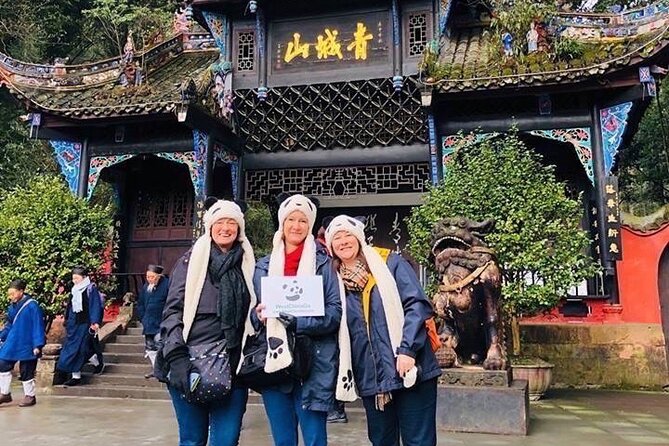
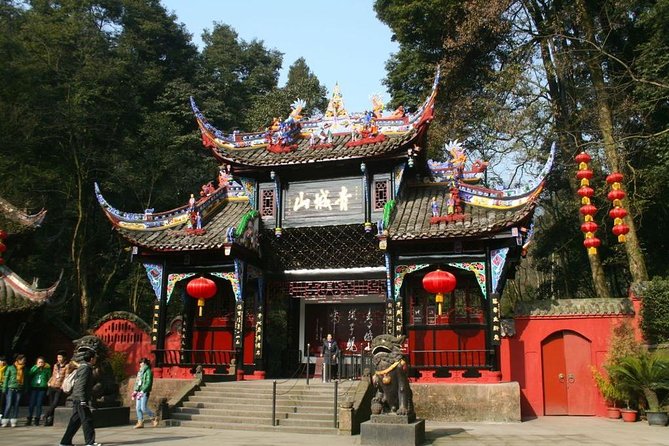
Mount Qingcheng isn’t just a scenic stop. It’s one of China’s key centers of Taoism, and you’ll feel that in how the site is arranged and how visitors move through it. The mountain is forested, and the vibe is more peaceful than you might expect for a popular UNESCO destination.
When you arrive, you take an eco golf cart to the entrance. That matters because you get the experience with less early fatigue. After stepping into the gate area, you’ll see Taoist-style architecture that’s been linked with the Panda Village setting in Kung Fu Panda 3.
Then you walk uphill for about 30 minutes toward Moon City Lake. After that, you ride the cable car up, which is a good tradeoff: less climbing, more time for temples and viewpoints.
Shangqing Palace to Laojun Pavilion: how the day balances walking and views
Once you’re up, the tour focuses on classic Mount Qingcheng highlights in a logical order.
At Moon City Lake, the day shifts from scenery to temples. You then head to Shangqing Palace, one of Qingcheng’s most significant sites. It sits about 1,000 meters above sea level and dates back to the Jin Dynasty, with a beautifully restored complex. There’s also an ancient ginkgo tree connected to the palace area, and it’s the kind of small detail you can easily overlook if you’re touring alone without context.
From Shangqing Palace, you continue hiking toward Laojun Pavilion. Weather matters here. If conditions are good, you can enjoy sweeping views over Dujiangyan below. If it’s cloudy or hazy, you still get the temple-and-path experience, but the horizon wow-factor may be reduced. That’s true of any mountain site, and this tour is honest about it.
Afterward, you descend using a mix of foot paths and cable car. The route design is practical: it keeps the experience moving while preventing you from spending the whole day doing the same uphill struggle.

Lunch on the route: a local meal that keeps momentum
You’ll stop for lunch at a local restaurant after your morning exploring. Since lunch is included, you don’t have to gamble on finding something good quickly once you’ve already walked a few miles.
From the guide side, this is one of the most important “behind the scenes” wins. In the reviews, guides mentioned choosing highly rated places and handling lunch smoothly for different group needs. If you’re coming straight off a flight or you’re jet-lagged, having this handled is a quiet quality-of-life upgrade.
Dietary needs can be discussed at booking, and you should do that early so your guide can plan accordingly.
Dujiangyan Irrigation System: ancient engineering that’s still doing the job
After lunch, you shift from Taoist temples to a site that feels like science class, but outdoors.
Dujiangyan Irrigation System is about how water from the Min River is channeled to farmland—without building a dam. The system is often called the world’s oldest surviving non-dam irrigation system, and it dates back to the third century BC era. That’s the kind of detail that turns a walk into an actual understanding of why this place matters.
The tour begins with Qinyan Pavilion, where you get panoramic views of the irrigation system. This is a smart start, because it helps you see the big picture before you focus on the parts.
Then you move to Erwang Temple, also known as Two Kings Temple. It was erected in the Qin Dynasty to commemorate the designers of the irrigation system—Li Bing and his son. If you like context, this temple stop is where it clicks: you’re not just looking at channels and bridges; you’re seeing a human story behind the engineering.
Fish Mouth Weir, Bottle-Neck Channel, and the Anlan Suspension Bridge
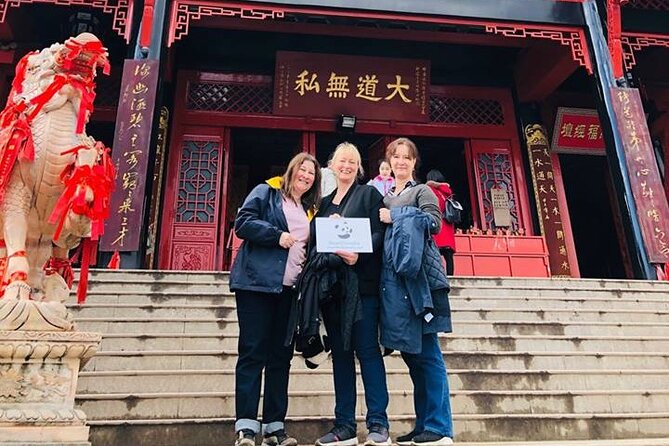
This is where you’ll stop and look around a little longer, even if you’re normally the quick-photo person.
You cross the Anlan Suspension Bridge to reach the main part of the system, including the Fish Mouth Weir and the Bottle-Neck Channel. The names are memorable, but what’s more important is how they describe design logic. You’ll come away with a clearer sense of how the system directs and manages water flow.
From there, you continue through Lidui Park and its bonsai gardens. It’s a calmer closing note after the engineering focus. If you want a breather before heading back to Chengdu, this is a good place for it.
How to pace a 9-hour day without burning out
This is a private day tour, but it’s not a sit-and-sip itinerary. There’s enough walking to make your shoes matter, and there are points where the paths feel more like garden trails and temple stairs than flat museum floors.
So here’s how I’d set you up for success:
- Wear comfortable walking shoes. The tour explicitly recommends this, and they’re right.
- Plan for a mix of steps plus uneven surfaces. Mount Qingcheng is a mountain, not a promenade.
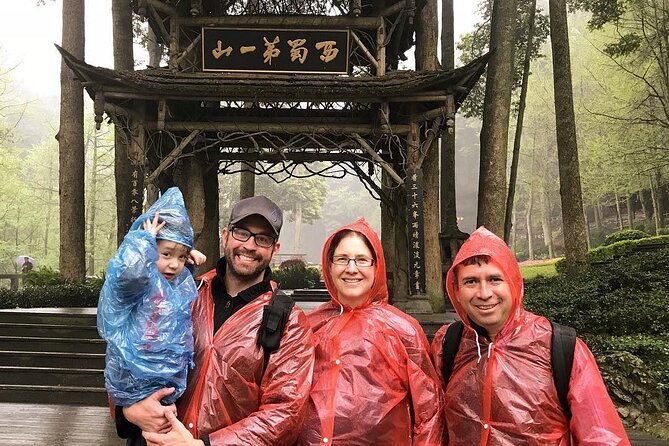
- If the weather turns, dress appropriately. The tour runs in all weather conditions, which means you should be prepared instead of hoping for perfect sunshine.
The good news: the mix of cable car and eco golf cart helps keep the day from turning into one long uphill grind.
Who should book this private tour (and who might want a different plan)
This tour is a strong match if you want:
- UNESCO sites that aren’t just quick photo stops
- Taoism plus practical engineering in one day
- A guide who can explain what you’re seeing as you go
- Hotel convenience without bargaining with transit
It’s also ideal for people who value comfort. The transport is private and air-conditioned, and pickup/drop-off is built in for hotels within the 3rd ring road.
Consider a different option if you:
- Have very limited mobility or dislike stairs and uneven walking. You can do some parts by cart and cable car, but you still need to walk.
- Expect a short, low-effort day. This is more of a full experience than a quick tour.
Should you book? My honest take on the decision
If you’re in Chengdu and you want one day that feels both meaningful and efficient, I’d book this. Mount Qingcheng gives you Taoist atmosphere and a classic temple route. Dujiangyan gives you the kind of history that still works today, not history trapped behind ropes.
At $229, you’re paying for the private logistics—pickup, guide, transportation, and included rides—that make the day feel smoother than doing it solo. The best part is the human pace: guides such as Lucy, Cassie, Ivy Wang, Abby, Mia, and Lily were praised for care, flexibility, and clear explanations, so the time doesn’t feel rushed or confusing.
If that blend sounds like your style, book it and wear good shoes.
FAQ
What sites does this private day tour include?
It covers Mount Qingcheng and the Dujiangyan Irrigation System. Cable cars and other transport within the sites are included, and you’ll explore temples, pavilions, and the irrigation features on the second half of the day.
How long is the tour?
The tour runs for about 9 hours.
Is hotel pickup and drop-off included?
Yes. Free hotel pickup and drop-off are included within the 3rd ring road.
Are cable cars and admission tickets included?
Yes. The tour includes round-trip cable car at Mount Qingcheng, round-trip eco golf car at Mount Qingcheng, and admission tickets for the site visits listed.
Do I need to speak Chinese to join?
No. The tour includes an English-speaking guide.
Does the tour run in bad weather?
The tour operates in all weather conditions, so you should dress appropriately. Comfortable walking shoes are strongly recommended.