REVIEW · BEIJING
Beijing: Bell and Drum Towers Entry Ticket—Historic Landmark
Book on GetYourGuide →Operated by PANDA HAPPY JOURNEY IN CHINA · Bookable on GetYourGuide
Two towers, one ancient rhythm. The Bell and Drum Towers were Beijing’s old-time way to mark the day, and this ticket lets you explore both at your own pace. You’ll see how imperial China kept time before phones, buses, and watch-checking became a sport.
I really like the scale and craft here. The Drum Tower is famed for holding 25 drums, and the Yongle-era bell is known as the King of Ancient Bells, weighing 63 tons. It’s not just decoration; it’s built to project sound and authority.
One thing to consider: this is self-guided, with an English PDF and no live guide. If you want someone to explain every detail as you go, you may wish you had a guide elsewhere in Beijing.
In This Review
- Key things to know before you go
- Why the Bell and Drum Towers are Beijing’s old-school clock
- What’s included in this Bell-and-Drum Tower ticket (and what isn’t)
- Your 4-hour self-guided plan: Bell Tower to Drum Tower
- Step 1: Enter and get your bearings fast
- Step 2: Bell Tower—why the bell matters
- Step 3: Drum Tower—25 drums and a louder story
- Step 4: Climb the Drum Tower top (if you want the performance chance)
- Step 5: Re-read the PDF with the building in front of you
- The architecture you’re actually looking at: Yuan origins and Yongle craftsmanship
- Drum Tower top: when you might catch the 5-minute show
- Photo spots and pacing tips for a smooth visit
- Price and value: is $13 really worth it?
- Who this suits best (and who might want a different pace)
- Should you book this Beijing Bell and Drum Towers ticket?
- FAQ
- What is included in the Bell and Drum Towers ticket?
- How long should I plan to spend?
- Do I need to bring anything for entry?
- Is there a live guide included?
- Is the drum performance guaranteed?
- Does the ticket let me avoid the ticket line?
- What are the rules for canceling?
Key things to know before you go

- Skip-the-line entry helps you start exploring fast, without the usual waiting game
- English PDF guidebook gives you context while you wander both towers
- 25 drums inside the Drum Tower make the timekeeping story feel unusually specific
- 63-ton Yongle bell earns its nickname for a reason: this is serious imperial engineering
- Chance of a 5-minute drum performance from the Drum Tower top, but the exact time can vary
- Central Beijing location is convenient if you’re juggling multiple sights in a day
Why the Bell and Drum Towers are Beijing’s old-school clock
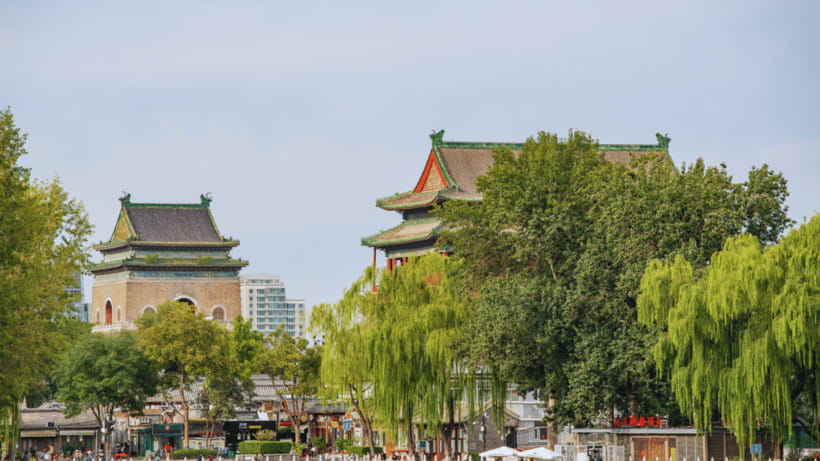
Beijing’s famous central axis is long and ceremonial, but the Bell and Drum Towers sit at its northern end like punctuation marks. These two buildings weren’t just landmarks for tourists. They were the city’s timekeepers—part schedule, part announcement system—used to set the daily rhythm for ordinary people and officials.
What I like most is how simple the concept is: when the day changes, the city hears about it. The towers are tied to the idea of “a dusk drum and a morning bell.” That north-south pairing matters. You don’t just see two random monuments; you see how one side signals nightfall and the other marks morning.
The architecture also does real work here. This complex was built originally in the Yuan Dynasty, and it later gained major additions and the most famous bell in the Ming Dynasty. So when you walk the grounds, you’re moving through layers of Chinese urban planning and imperial priorities, not only admiring a pretty view.
You can also read our reviews of more tours and experiences in Beijing.


What’s included in this Bell-and-Drum Tower ticket (and what isn’t)

You get entry tickets for both the Bell Tower and the Drum Tower, plus an English PDF guidebook. That combination is a practical match for a short visit. You can read, look up, and then keep moving when you’re ready.
You do not get a live tour guide. There’s also no live guide included, so you’re relying on your own pace and the PDF for interpretation. The payoff is flexibility: you can spend 20 minutes where you’re interested and skip the rest without worrying you’re falling behind.
Another nice touch is that the ticket is designed to let you skip the ticket line. In a crowded city, that small “time saved” piece matters. You’re planning for about 4 hours, so cutting friction at the start helps you actually have time to enjoy the experience instead of just processing queues.
Finally, bring passport or ID card. That’s a common checkpoint detail in Chinese historic sites, and it can save you stress on arrival.
Your 4-hour self-guided plan: Bell Tower to Drum Tower
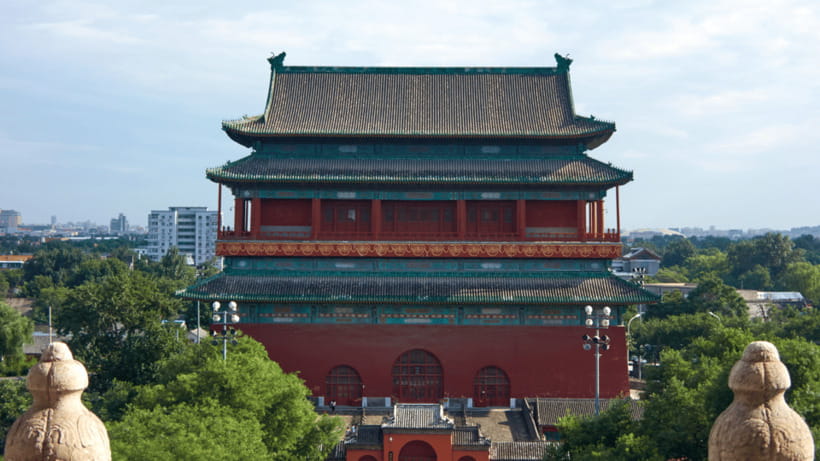
Think of this visit like two chapters. Chapter one is sound and announcement (the Bell Tower). Chapter two is the performance and the tools behind the timing (the Drum Tower). You can flip the order, but most people naturally go from one to the other because the layout is built for the north-south story.
Step 1: Enter and get your bearings fast
Once inside, I suggest you do a quick loop before you slow down. Look at the complex from a distance first, so the buildings make sense as a pair. Then start reading the PDF while you stand still for a minute. That’s the fastest way to make the site feel less like “two big buildings” and more like “how the city functioned.”
Step 2: Bell Tower—why the bell matters
The Bell Tower is where the Ming-era legend really lands. The bell connected to Yongle-era craftsmanship is famous for its sheer weight—63 tons—and for the nickname King of Ancient Bells. You don’t need to be an engineer to feel why that’s impressive: a bell of that size isn’t for subtle sound. It’s for coverage.
Inside, focus on what the bell represents: imperial timekeeping as public infrastructure. This is the kind of monument where the more you understand the purpose, the more you appreciate the architecture. If you love history that connects to daily life, the Bell Tower section is likely to click.






Step 3: Drum Tower—25 drums and a louder story
Then you move to the Drum Tower, the other half of Beijing’s old-time schedule. This tower is known for 25 drums, which gives the story a tangible “how it worked” feeling. Instead of imagining one drum and one moment, you’re looking at a full system built to mark different parts of the day.
This is also where the complex feels most alive for many visitors, because the Drum Tower experience often leads to the short performance you might catch.
Step 4: Climb the Drum Tower top (if you want the performance chance)
If you climb to the top, you may have a shot at seeing a 5-minute drum performance. The exact timing can vary based on the onsite schedule, so you should treat this as a chance, not a promise.
Even when the performance isn’t running at the exact moment you arrive, climbing still pays off. The Drum Tower top is about connection—between the drums below, the building design, and how sound is meant to travel.
Step 5: Re-read the PDF with the building in front of you
After you’ve explored both towers, go back to the PDF for a last pass. I like doing this on the way out because the explanations match what I’ve just seen. It turns the visit from “photos, done” into “photos with meaning.”
The architecture you’re actually looking at: Yuan origins and Yongle craftsmanship

This complex isn’t random. It was built originally in the Yuan Dynasty, and it’s tied to major Ming-era developments. That matters because Chinese historic sites often feel like one style repeating over and over. Here, you can feel the timekeeping purpose pushing the design.
One of the most useful ideas to keep in your head is the pairing itself: the bell and the drum aren’t separate attractions—they’re a system for daily order. The towers are described as timekeepers at the northern end of the city’s central axis, and that north-south layout is a big part of why the buildings feel coordinated rather than decorative.
Inside the Drum Tower, the mention of 25 drums isn’t just trivia. It points to a structured way of announcing time. In a city without digital clocks, that kind of system has to be consistent, loud enough, and believable to the people relying on it.
And then there’s the 63-ton Yongle bell. That detail gives you a benchmark for scale. It’s not just a big artifact; it’s a statement about resources, imperial engineering, and the seriousness of public timing. The nickname “King of Ancient Bells” exists because the bell is so large it becomes a category of its own.
The complex is also state-protected and covers 12,597 square meters. That’s another reason this is worth your time. You’re not rushing through a small room. You’re walking a protected historic area where the overall space helps the story.
Drum Tower top: when you might catch the 5-minute show
Here’s how I’d plan around the performance. Since the drum demo is described as a daily possibility with an onsite schedule—and the exact time can vary—you shouldn’t count on it like a movie ticket with a fixed start.
Instead, build flexibility into your visit. If you reach the Drum Tower top and the performance looks like it might be scheduled soon, wait a bit. If it isn’t, enjoy the climb anyway. Either way, your ticket gives you full access, so you’re not losing money if the timing doesn’t work out perfectly.
What makes this part of the visit so praised is the feeling of connection. You’re not watching some far-away event and hoping it relates to the tower. You’re standing where the drums are meant to be experienced. A short 5-minute performance can still land hard if you understand what it’s doing.
And if you do catch it, try to watch first, then take photos. Sound-based moments are trickier than still life, so getting your eyes on the moment before you freeze your arms in photographer mode makes for a better memory.
Photo spots and pacing tips for a smooth visit
This is a very walkable historic complex, and your best strategy is simple: don’t sprint.
- Plan to spend real time at the points where the tower’s purpose becomes clear: Bell Tower for the bell story, Drum Tower for the drum story.
- Use the PDF guide when you’re standing still. Reading while walking is harder than you think, and you’ll miss cues.
- If you want photos without crowds swallowing your frame, slow down and rotate your angles instead of chasing the most obvious postcard view.
Also, because this ticket is designed around a 4-hour visit, it’s easy to overstuff your day. I’d rather you treat this as a main stop, not a “quick detour between subway rides.” If you squeeze it too hard, you’ll end up rushing the very thing that makes it special: the timekeeping narrative.
Price and value: is $13 really worth it?
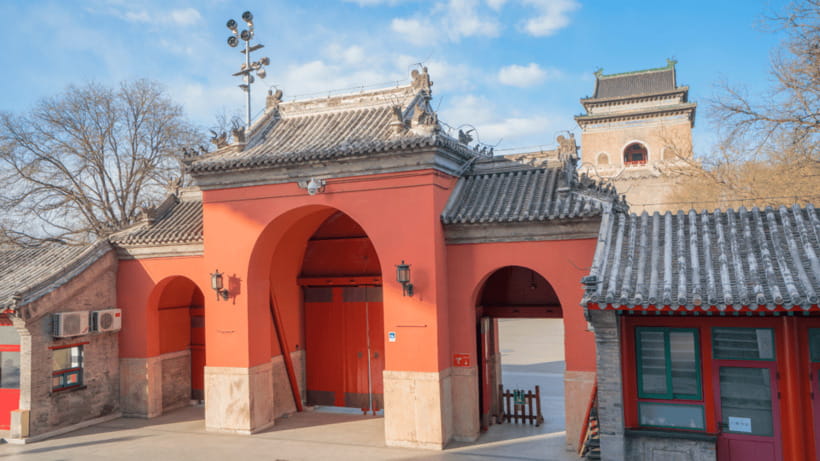
At about $13 per person for both towers, this is the kind of attraction where value comes from access and context, not just spectacle.
What you get:
- Entry to two major sites (Bell Tower and Drum Tower)
- An English PDF guidebook for interpretation
- Designed to let you skip the ticket line
- About 4 hours of self-paced time
Where the value is strongest is for travelers who like cultural landmarks with clear purpose. The bell and drum towers aren’t random museums. They’re a direct window into how a capital city managed daily order.
If you’re the type who wants live commentary at every step, you might feel the lack of a tour guide. But if you’re comfortable using a guidebook PDF and letting the buildings explain themselves, this is a solid, affordable way to learn a distinct slice of Beijing’s historical daily life.
And one more value note: the “chance” element for the 5-minute performance is often what makes a visit feel memorable. Even when the show doesn’t happen at your exact time, you still get full access to both towers.
Who this suits best (and who might want a different pace)

This ticket is a great match for:
- history lovers who enjoy specific details like the Yuan origin and Yongle craftsmanship
- culture travelers who like landmarks that connect to everyday life, not only dynastic dates
- photographers who want a dramatic, symmetrical city landmark feel
- people who prefer self-paced visits over groups and set timing
You might reconsider if:
- you need a live guide to explain context as you go
- you want a very hands-on, activity-heavy experience rather than monument exploration
- you’re already feeling monument fatigue after other big Beijing stops (the towers work best when you lean into the timekeeping theme)
For me, the best visits are the ones where you treat the complex like a story: bell for morning, drum for dusk, and two towers that together explain how the city once kept time.
Should you book this Beijing Bell and Drum Towers ticket?

Book it if you want a genuinely cultural stop that’s easy to fit into a day and doesn’t require deep planning. The skip-the-line setup plus full access to both towers makes it feel efficient, and the English PDF guidebook keeps you from wandering in the dark.
I’d also book it if you’re interested in sound and architecture—because the Drum Tower in particular gives you that chance to climb and potentially catch a short drum performance. It’s a small time window, but it’s tied directly to why these towers existed.
If you’re unsure, here’s a simple decision rule: if you’re interested in how Beijing worked in the past, this will feel rewarding. If you’re just trying to tick off buildings without caring about the timekeeping idea, you may find it a quick stop.
FAQ
What is included in the Bell and Drum Towers ticket?
The ticket includes entry tickets to both the Bell Tower and the Drum Tower, plus an English PDF guidebook.
How long should I plan to spend?
Plan for about 4 hours, at a self-guided pace.
Do I need to bring anything for entry?
Yes. You should bring your passport or ID card.
Is there a live guide included?
No. This experience includes the PDF guidebook, but it does not include a live tour guide.
Is the drum performance guaranteed?
No. If you climb to the top of the Drum Tower, you may have a chance to see a short drum performance, but the exact time can vary based on the onsite schedule.
Does the ticket let me avoid the ticket line?
Yes. It includes a setup to skip the ticket line.
What are the rules for canceling?
Free cancellation is available up to 24 hours in advance for a full refund. You can also reserve now and pay later to keep flexibility.