REVIEW · BEIJING
Beijing: Full-Day Small-Group Great Wall Hiking at Jinshanling
Book on Viator →Operated by Great Wall Hiking · Bookable on Viator
The Great Wall gets real here. I like that you hike Jinshanling, where you see both original stones and carefully restored stretches, and I also love the chance to avoid the worst crowds with a quieter route. One thing to consider: the stairs are real, including a very steep start, and there’s no toilet on the wall path.
This is a full-day outing built for people who want more than a quick photo stop. You’re picked up in an air-con vehicle, guided by an English-speaking leader, and kept moving with plenty of water and breaks. And yes, the view payoff is huge, especially if you’ve seen the packed, tour-bus sections before.
If you have moderate fitness, good shoes, and patience for steps, this feels like one of the best ways to experience the wall on your own terms. It runs about 9 hours, starts at 8:00 am, and returns around 5–6 pm based on traffic, so plan your day accordingly.
In This Review
- Key highlights worth knowing
- Entering Jinshanling: Why This Section Hits Different
- The Day Route From Simatai West to Jinshanling
- The Hike Itself: Steps, Stamina, and Real Breaks
- Your Guide Runs the Show: Jason, Cheney, Dewit, Luis, Woody
- Lunch at a Local Farmers’ Restaurant: Fuel and Conversation
- Getting There Without Stress: Pickup, Vehicle, and Mobile Ticket
- Water, Trekking Poles, and the No-Toilet Reality
- Crowd Control and Photo Opportunities That Feel Worth It
- Price and Value: Is $138 Fair for a Full Wall Day?
- Timing and Planning: Return Around 5–6 pm
- Should You Book This Jinshanling Great Wall Hike?
- FAQ
- How long is the Jinshanling Great Wall hiking tour?
- Is lunch included, and do you offer vegetarian options?
- Are there toilets along the wall path?
- What’s included in the price?
- Is a chairlift included if I want an easier way down?
- How many people are in the group?
Key highlights worth knowing
- Original vs restored sections: you get a more honest picture of the wall’s patchwork across time
- Small group size (max 10): easier pacing, better photos, less waiting around
- Photo-friendly quiet stretches: a real chance to take pictures without a crowd in every frame
- Included lunch after hiking: meal is part of the plan, not an afterthought
- Guide-led history lessons: decorative details and wall context come with the walking
- No toilet on the wall path: prep before you start and carry toilet paper
Entering Jinshanling: Why This Section Hits Different
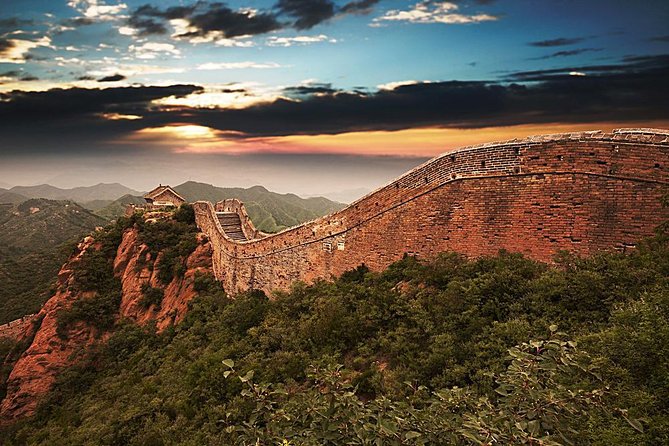
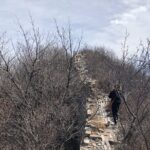
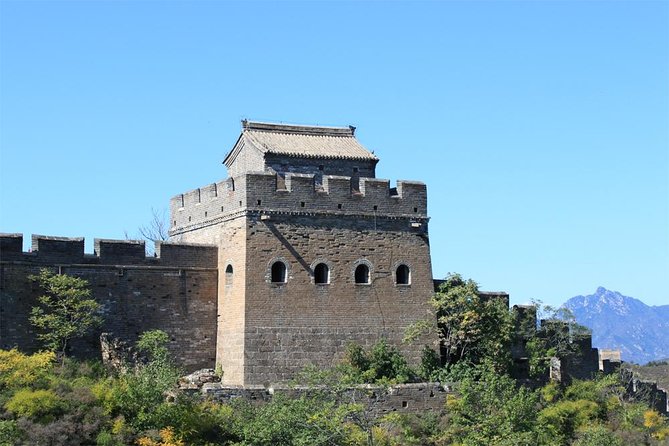
Jinshanling is famous for a reason, but what stands out here is the balance. You’ll see parts that have been restored enough to look crisp and readable, then you’ll also walk sections that feel rougher, older, and more like what time did to stone. That mix helps you understand the wall as a living structure, not just a single polished monument.
Another win is the crowd level. You’re taking a less-hyped route that generally keeps you away from the densest tour-funnel areas. In plain terms: you get more space to look, breathe, and take photos that don’t look like you’re standing inside a moving crowd.
One more thing I appreciate: the emphasis isn’t only on the climb. Your guide points out decorative elements and shares context as you walk, which makes the wall’s details feel less random and more intentional.
You can also read our reviews of more tours and experiences in Beijing.


The Day Route From Simatai West to Jinshanling
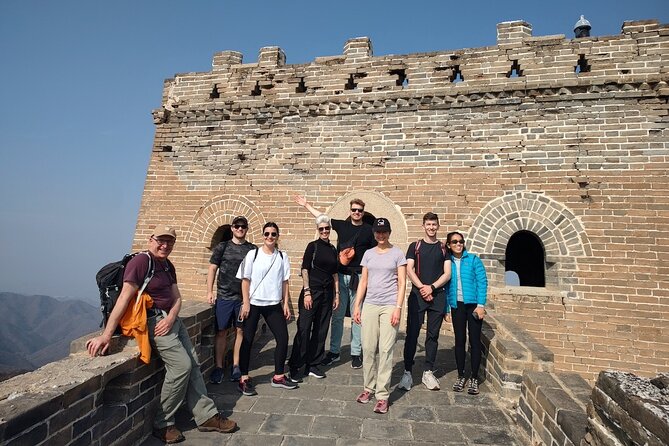
This is a full-day hike built around the Great Wall stretch between Simatai West and Jinshanling. The overall schedule runs about 9 hours, starting at 8:00 am and ending back at the meeting point, with timing shaped by mountain travel and traffic on the way back.
At the Jinshanling area, you’ll have about 3 hours on the wall itself, which is a good chunk of time to feel like you actually walked the wall rather than simply passed by it. You’ll move along watchtowers and ridges, and the route is paced for hiking continuity—enough stops to regroup, but not so many that the day turns into a series of standing around.
Plan your day like a hike day, not a sightseeing day. You won’t want to rush in and out of the Wall. You’re better off treating this as the main event, with the rest of Beijing taking a back seat.
The Hike Itself: Steps, Stamina, and Real Breaks
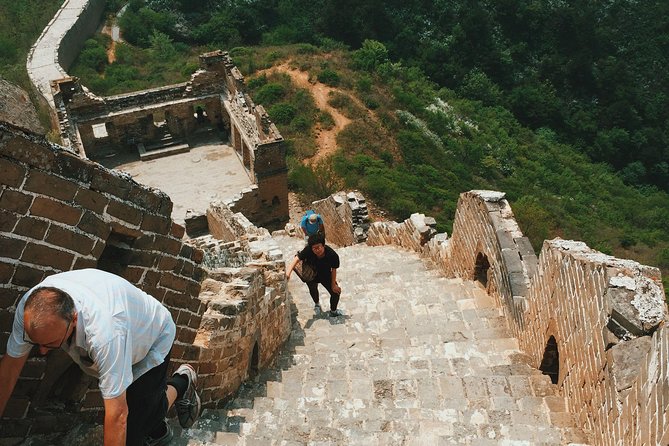
Let’s talk about effort. This hike is active and involves a lot of stairs, including a tough initial climb. One common pattern is a steep start around the first ascent—roughly 1,000 steps up about 300 meters—then a rhythm of ups and downs along the wall after that.
Distance is in the range of a solid walk (some people report something like 5–6 km total depending on pace and the route details your guide follows). If you’re used to city walking and have decent leg strength, you’ll likely be fine. If your knees hate stairs, go slow and consider trekking poles early.
The good news: the pacing includes breaks. Guides know the wall is steep and that heat and fatigue can sneak up fast. You also get unlimited bottled water during the hike stored in the vehicle, but you’ll need a day pack to carry it.
Bottom line: this is not the “meander and admire” Great Wall experience. It’s a hike that rewards you with fewer people, more continuity, and better views for longer.
Your Guide Runs the Show: Jason, Cheney, Dewit, Luis, Woody
The guide experience matters a lot on the wall, because your day depends on pacing, route sense, and explaining what you’re seeing. This tour includes a personal English-speaking hiking guide, and in the wild you’ll see names like Jason, Cheney, Dewit, Luis, and Woody leading groups.
What I like about this format is the combination of history and practical hiking leadership. Guides don’t just recite facts; they point out wall details and decorative elements while also helping you navigate the physical side—where to pause for photos, how to manage uneven footing, and how to keep the group together at a sane pace.
A few guides are also known for being flexible—adapting the hike to what the group needs—while still keeping an eye on safety. If you care about understanding the wall beyond its silhouette, this kind of guided context is a big part of the value.
Lunch at a Local Farmers’ Restaurant: Fuel and Conversation
After hiking, you eat lunch at a restaurant operated by local farmers. This is one of those details that quietly improves the day. You’re not forced to hunt for food near a tourist gate, and lunch is included as part of the experience instead of being a separate expense you need to plan.
The meal also gives you a chance to slow down and chat with locals in a setting that feels tied to the area rather than staged for visitors. If you book vegetarian, that option is available if you tell the operator at booking time.
By the time lunch arrives, your legs are usually done negotiating. So the best-case lunch is simple and filling—and that’s what this setup aims to provide.

Getting There Without Stress: Pickup, Vehicle, and Mobile Ticket
Pickup starts at WCRP+934, Beijing, China, and the activity ends back at the meeting point. This is designed to be straightforward for independent travelers who don’t want to piece together a complicated day trip.
You ride in an air-con vehicle with an experienced driver. That might not sound exciting until you realize how much time and energy the mountain day can eat up. Comfortable transport makes it easier to start strong at 8:00 am and still have enough energy to enjoy the wall.
You also get a mobile ticket, which is handy if you’re juggling reservations and don’t want paper chaos.
Practical tip: taxis can get stuck in traffic, so using public transit to reach the meeting point can be a smarter move than trying to time a ride to the pickup spot.
Water, Trekking Poles, and the No-Toilet Reality
A few logistics details are worth taking seriously because they make the difference between a fun hike day and an awkward one.
- Water: bottled water is available in the vehicle, but you’ll need a day pack to carry it on the wall.
- Trekking poles: poles are stored in the car/van; tell your guide if you want to use them.
- Toilet access: there is no toilet along the path on the wall. There are toilets at the entrance of Simatai West and Jinshanling. Prepare before you start, and always carry toilet paper.
That last point is the one I’d highlight for anyone new to Great Wall hiking. Mountain trails and old stone stairs are not places to improvise.
Also note: chairlift is not included. So if you’re hoping for an easy skip-down option, you’ll need a different plan.
Crowd Control and Photo Opportunities That Feel Worth It
This tour is built around a simple idea: fewer people means a better experience. By walking a section that’s generally less crowded than the most famous wall checkpoints, you get more time to stop and look without feeling like you’re being shuffled forward.
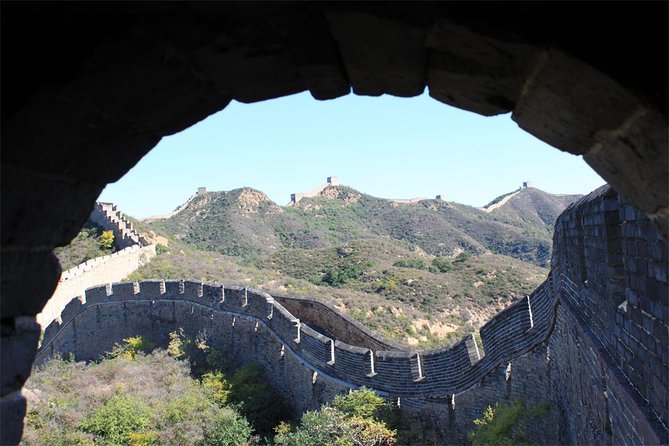
That matters for photos. When you’re on the wall with fewer visitors, you can frame watchtowers, ridgelines, and wall lines without dozens of heads in every direction. It also makes the atmosphere feel more authentic and less like a timed theme-park queue.
If you’re the type who likes detailed shots—texture on stones, watchtower shapes, the way the wall threads over the mountains—this is where that style pays off.
Price and Value: Is $138 Fair for a Full Wall Day?
At $138 per person, you’re paying for more than admission. You’re getting:
- guided hiking with an English-speaking leader
- air-conditioned round-trip transport from Beijing area
- entrance ticket to Jinshanling
- unlimited bottled water during hiking
- lunch after hiking
- a small group cap of 10 travelers
In value terms, the big win is that lunch and the entrance ticket are bundled, and you’re paying for guide time across a long day, not just a brief viewpoint stop. That’s usually where Great Wall trips either feel expensive or feel worth it.
The main thing you should mentally budget separately is anything personal (souvenirs, extra snacks) and your own travel insurance if you choose it. Also, remember there’s no chairlift included.
If you want the Great Wall with a bit more authenticity, fewer crowds, and actual walking time, the price lines up well with that goal.
Timing and Planning: Return Around 5–6 pm
The tour starts at 8:00 am, and you’ll return back to the meeting point in the 5–6 pm window depending on traffic. That timing is why the operator asks you not to schedule appointments after the trip.
This is smart advice. Beijing traffic can turn a simple return into a slow grind, and you don’t want your whole day anchored to a late reservation you can’t control.
If you’re planning dinner, choose something near your hotel or near your easy transit options, and keep the evening flexible.
Should You Book This Jinshanling Great Wall Hike?
Book it if you want:
- a real hike with a meaningful stretch of wall walking
- fewer crowds and better photo chances
- a guide who explains wall details, not just a route pass-through
- included lunch and water, with a small group experience
Skip or switch sections if:
- you need very low stair climbing or a mostly flat experience
- you can’t handle the no-toilet-along-the-path reality
- you were hoping for a chairlift option built into the plan
Who it fits best: couples, solo travelers, and small groups who are moderately fit and want an authentic wall day without the circus energy of the busiest segments.
FAQ
How long is the Jinshanling Great Wall hiking tour?
It runs for about 9 hours total, starting at 8:00 am and returning around 5–6 pm based on traffic.
Is lunch included, and do you offer vegetarian options?
Yes. Lunch after the hike is included, and a vegetarian option is available if you request it at booking.
Are there toilets along the wall path?
No. There are toilets at the entrance of Simatai West and at Jinshanling. You should prepare before hiking and carry toilet paper.
What’s included in the price?
The tour includes air-conditioned transport with an experienced driver, an English-speaking hiking guide, unlimited bottled water during hiking, lunch after hiking, and the entrance ticket to Jinshanling.
Is a chairlift included if I want an easier way down?
No. Chairlift is not included.
How many people are in the group?
The group size is capped at a maximum of 10 travelers.