REVIEW · BEIJING
Old Beijing Dinner Tour
Book on Viator →Operated by UnTour Food Tours · Bookable on Viator
Old Beijing at night has a way of surprising you. This 3-hour small-group dinner tour gets you walking through working hutong neighborhoods and eating in places most people never find. I like that it’s set up as an insider route—so you’re not guessing where to go or what to order—and that the food plan includes classic northern specialties.
Two things I really love: the off-the-tourist-trail restaurant stops (you’ll be eating like locals, not just sightseeing), and the way the guides connect the dishes to stories about Beijing and Chinese food. One thing to plan for: it’s a lot of eating in a short time, so go easy at the first stop and save room for the later tastings.
In This Review
- Key reasons this dinner tour earns a spot on your Beijing list
- Starting at Beixinqiao: an easy meeting point and a smart way to begin
- Hutong walking after dark: why this part feels different
- The food plan: a dinner that’s really a sequence of tastings
- A real-world “don’t overdo it early” tip
- What this is worth at $75
- Stop 1: the first UnTour Food Tours tasting stop
- Stop 2: the hutong tour that turns streets into flavor
- Stop 3: Nuoyan rice wine shop and the small flight tasting
- Stop 4: Ghost Street (Gui Jie) for a quick snack finish
- Guide styles I saw come through in the experience
- When this tour fits best (and when it might not)
- Should you book Old Beijing Dinner Tour by UnTour Food Tours?
- FAQ
- How long is the Old Beijing Dinner Tour?
- What time does the tour start?
- Where do I meet the guide?
- Where does the tour end?
- What’s included in the price?
- Is beer included?
- What happens at the rice wine shop?
- How big is the group?
- What if I have dietary restrictions?
Key reasons this dinner tour earns a spot on your Beijing list
- Small groups (about 8, up to 12) keep things relaxed and easier for questions during the meal walk
- Hutong streets at evening pace: you’ll follow an insider path through narrow lanes without getting turned around
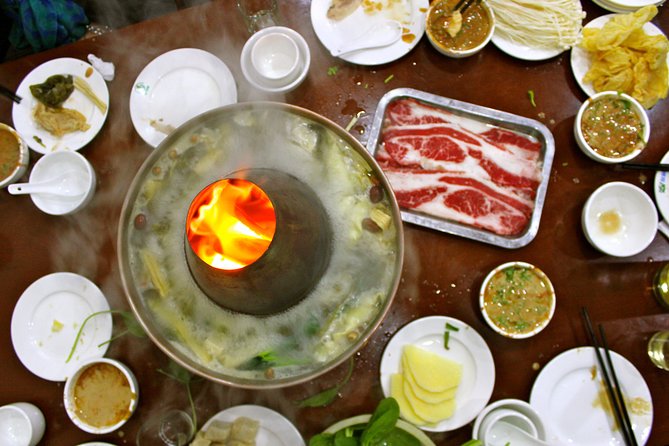
- Multiple tastings that can include hotpot, dumplings, and sauced meats—plus local beer
- Nuoyan rice wine stop with a short tasting flight and drink background (mi jiu dates back around 1,000 BC, according to historians)
- Ghost Street (Gui Jie) as a quick snack street finale near the end of your route
Starting at Beixinqiao: an easy meeting point and a smart way to begin
The tour starts at Beixinqiao Station around 7:00 pm, with a clear, public-transit meeting point in Dongcheng. I’m a big fan of tours that don’t force you into a taxi lottery at the last minute. Starting near the subway also helps you arrive calmer, since Beijing traffic can be intense for evening transfers.
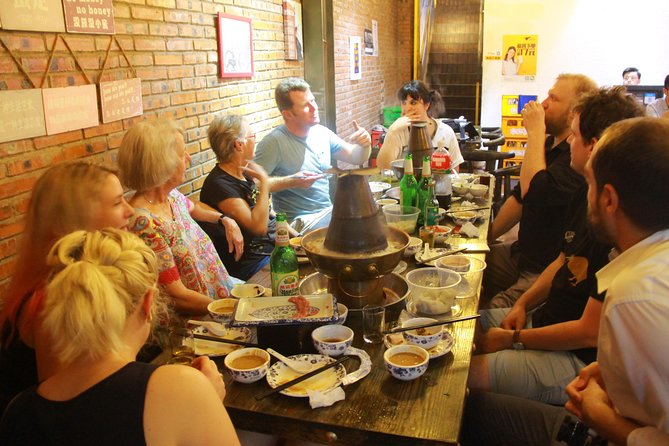
You’re in a small group—typically 8 people, sometimes up to 12 with a second guide. That group size matters. In crowded areas like hutongs, you want enough people to feel social, but not so many you’re stuck in a line. It also makes it easier to ask, What’s in this? How do you eat it? Why does it taste like this?
You’ll finish near Dongsi North St & Dongsi 10th Alley (close to Zhangzizhong Rd Metro line 5). That matters because you can keep your night moving with the metro, or let your guide help you get back to your hotel.
You can also read our reviews of more tours and experiences in Beijing.
Hutong walking after dark: why this part feels different
The core experience is the evening walk through Old Beijing hutong neighborhoods—those narrow lanes where daily life still plays out at street level. This isn’t the big, showy version of Beijing. You’ll be moving through lanes where residents actually live and shop.
What you gain from the guide here is simple: you avoid getting lost and you avoid eating at random places. The tour is built around an insider route to local, family-run spots you’re unlikely to find on your own. Even if you’re fairly adventurous, hutongs can be confusing at night—little turns, tight passages, and no obvious signage for the best food.
Practical note: wear shoes you can walk in for three hours. The tour is mostly walking, and you’re going to be moving through narrow streets where you don’t want to worry about blisters.
The food plan: a dinner that’s really a sequence of tastings
Think of this less as one sit-down dinner and more as a planned run of multiple stops. The tour description frames it as a meal that adds up to something like a full dinner—and the tastings are meant to last long enough that you probably won’t want another meal right after.
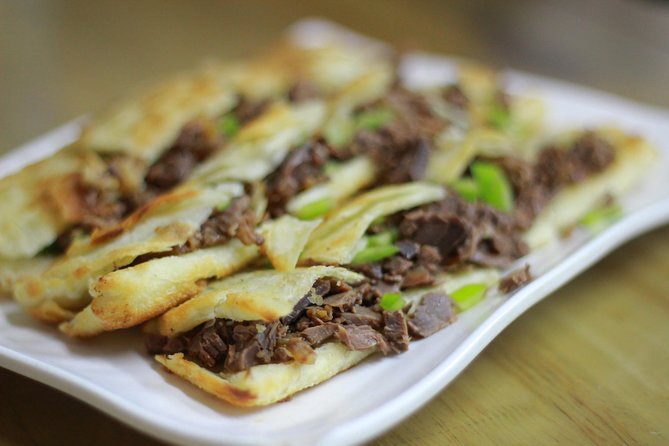
The food you might sample includes traditional northern dishes such as:
- Mongolian-style hotpot
- Hand-stuffed boiled dumplings
- Beijing sauced meats
And you’ll also get a bottle of local beer paired with the meal. That pairing is a big part of the “eat like a local” feel—beer is common at casual local meals, and it changes the whole rhythm of the night.
A real-world “don’t overdo it early” tip
One consistent theme in the feedback is that the portions can be generous. So here’s the practical move: don’t fill up completely at the first stop. Let the guide guide you. If you’re hungry, take small bites, then come back for seconds on something you love later in the tour.
What this is worth at $75
At $75 per person, you’re paying for much more than a reservation. The price covers multiple paid tastings across several locations, plus bottled water, soft drinks, and local alcoholic beverages (including beer), along with the guide fee. You’re also getting a post-tour welcome packet with restaurant recommendations and local tips, which is genuinely useful when you’re deciding where to go next.
In plain terms: you’re buying an organized evening where the “where should we eat?” problem is already solved.
Stop 1: the first UnTour Food Tours tasting stop
Your first stop is with UnTour Food Tours, which sets the tone for the night: get you eating quickly, then you build the hutong walk from there. This is where you’ll likely start with a hearty starter-type tasting—often described as hotpot early in the experience.
Expect the guide to explain what you’re eating and how the dish connects to northern Chinese cuisine. If you’ve ever eaten something and wished you knew what you were tasting, this is designed to fix that.
Possible drawback here: this is where “too much food too fast” can happen if you go full-speed. If hot and rich foods are your thing, pace yourself. You still have more stops ahead.
Stop 2: the hutong tour that turns streets into flavor
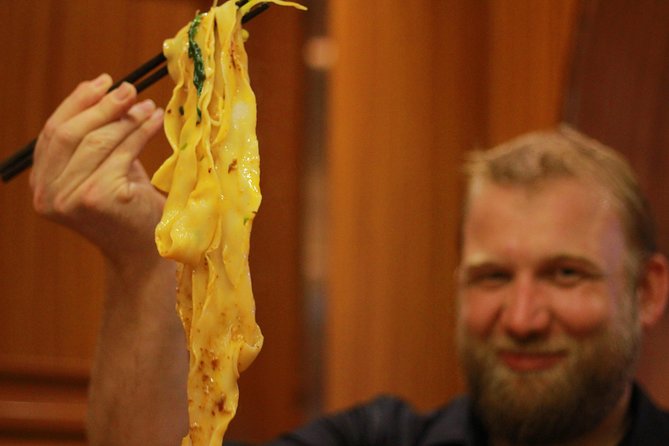
The second phase is the hutong tour—moving deeper into the narrow lanes where “hidden” food is usually hidden for a reason: locals don’t need to advertise.
This part is where the route pays off. A guide knows which alleys are worth the detour and which restaurants are consistent, clean, and built for the evening crowd. More importantly, they know how to translate food choices for you.
If you’ve got dietary restrictions, say so in advance. The tour info notes that advanced notice is required so they can cater. Based on real experience shared with the guide team, they also take safety seriously—especially when someone has allergies—so don’t be shy about telling them what you need to avoid.
Stop 3: Nuoyan rice wine shop and the small flight tasting
The tour’s beverage story continues at a boutique rice wine producer, stopping at Nuoyan Rice Wine Shop for about 30 minutes. This isn’t just a photo stop. You’ll sample a small tasting flight and learn how rice wine fits into Chinese culture.
A bit of context you’ll hear: historians believe rice wine (mijiu) was first brewed in China as far back as around 1,000 BC, and the method spread across East Asia. The info also connects that evolution to drinks like Japan’s sake and Korea’s cheongju.
What makes this stop valuable is the payoff: you taste first, then you get the story. That’s how it sticks. Even if you’re not a big drinker, you can treat this like a cultural mini-lesson that ends with actual sensory experience.
Stop 4: Ghost Street (Gui Jie) for a quick snack finish
The end of the walk includes a short visit to Ghost Street (Gui Jie)—about 10 minutes—which is described as a popular place for snacks. This is a good way to wrap the tour because it keeps your senses sharp without turning the night into a marathon.
You also get a practical finish location: the tour ends near the intersection of Dongsi North St & Dongsi 10th Alley, close to line 5. That’s handy if you want to continue exploring on your own.
Guide styles I saw come through in the experience
The biggest recurring theme from the guides’ impact is not just food knowledge—it’s pacing, clarity, and how well they make small-group walking work.
I’ve seen guides named Shan, Garth, Jesus, Kelly, Katie, Eric, and Gareth/Julia/Zeben in accounts of this tour, and the consistent pattern is that they explain:
- what you’re eating
- where it comes from
- why it belongs in Beijing’s daily life
- how the hutong setting shapes the meal
A small, useful bonus: several guides are also willing to help with the practical end of the evening—directions back to your hotel, and help navigating taxi/ride-hailing when needed. That’s not guaranteed in every city, so I’d count it as real value.
When this tour fits best (and when it might not)
This tour is a strong match if you want:
- a guided Old Beijing experience without spending your night guessing
- a food-first introduction to northern Chinese flavors
- a small group with a guide who can explain what you’re tasting and why
It’s not the best match if you want a light, casual walk with just one meal. This is an eating sequence. Even when you pace yourself, you’ll likely feel fed by the end.
It also depends on weather. The tour info says it requires good weather, and if it’s canceled due to poor weather, you’ll be offered a different date or a full refund. So keep an eye on forecasts and don’t plan to gamble on this as your only Beijing evening plan.
Should you book Old Beijing Dinner Tour by UnTour Food Tours?
I’d book it if you want your Beijing evening to be practical, local, and guided by real people who know the hutongs and the food stops. For $75, the value is the combination: multiple tastings, drinks, small-group walking, and a guide who can turn eating into understanding—without making it feel like a lecture.
Skip it if you hate walking, if you’re extremely sensitive to heavy food portions, or if you need a very quiet, low-interaction dinner. Also, if you have allergies or strong dietary needs, book with enough lead time to request accommodations.
If you’re the kind of traveler who thinks, I’d rather eat in the neighborhoods than just see monuments, then this is a very solid “do it once” Beijing experience.
FAQ
How long is the Old Beijing Dinner Tour?
It runs about 3 hours.
What time does the tour start?
It starts at 7:00 pm in the evening.
Where do I meet the guide?
The meeting point is near Beixinqiao Station (Dongzhimen, Dongcheng, Beijing).
Where does the tour end?
It ends near the intersection of Dongsi North St & Dongsi 10th Alley, close to Zhangzizhong Rd Metro (line 5).
What’s included in the price?
Dinner tasting stops, bottled water, soft drinks, local alcoholic beverages, the guide fee, and a post-tour welcome packet.
Is beer included?
Yes. The meal is paired with a bottle of local beer.
What happens at the rice wine shop?
You visit Nuoyan Rice Wine Shop for a small tasting flight and learn about rice wine from your guide.
How big is the group?
The standard group size is 8, and in some cases it can be up to 12 with a second guide.
What if I have dietary restrictions?
You should advise dietary requirements when booking, with advanced notice required so the team can try to cater to restrictions.