REVIEW · BEIJING
Beijing: Temple of Heaven Park ticket(day tour/guide opt)
Book on GetYourGuide →Operated by Guangzhou Zhiwooyou Travel Agency Co., Ltd. · Bookable on GetYourGuide
The Echo Wall makes sound feel magic. The Temple of Heaven visit is interesting because it mixes big imperial symbolism with moments you can actually experience, like the Echo Wall and the sacred Circular Mound Altar. You get a clear, walkable route through an enormous Ming-era complex that still feels calm inside the city noise.
My favorite part is how easy it is to tailor your day with different ticket and tour options, from entrance-only to combos with an English guide. One consideration: timing matters, and if you arrive too late, you might end up limited to the outer garden instead of the main temple areas.
In This Review
- Key things to know before you go
- Temple of Heaven: what you’re actually visiting
- Ticket options: finding the right value for your day
- Getting in through East, North, or South gates (and choosing your walking pace)
- Seven Star Stone and the 72 Corridors: the walk that sets the tone
- Hall of Prayer for Good Harvests: the main ceremony stop
- Echo Wall: the acoustic moment people remember
- Circular Mound Altar: celestial symbolism you can’t ignore
- Palace of Abstinence, Hundred Flowers Garden, Longevity Pavilion
- Night timing: lights on specific days and late-entry risk
- Eating near Tiantan Fuyan and Tiantan Fuyin without losing your rhythm
- Adding Summer Palace or Mutianyu Great Wall in one day
- Practical tips that make the visit smoother
- Who this suits best (and who might skip the guided option)
- Should you book this Temple of Heaven experience?
- FAQ
- What’s included in the Temple of Heaven entry?
- How long is the experience?
- Are there different ticket options with guidance?
- What are the nearby metro options for the East Gate?
- Is Temple of Heaven open every day?
- Are drones allowed?
Key things to know before you go
- Echo Wall is the acoustic highlight that turns a pretty courtyard into something you can try and remember.
- Circular Mound Altar connects to celestial symbolism, so the design has meaning, not just looks.
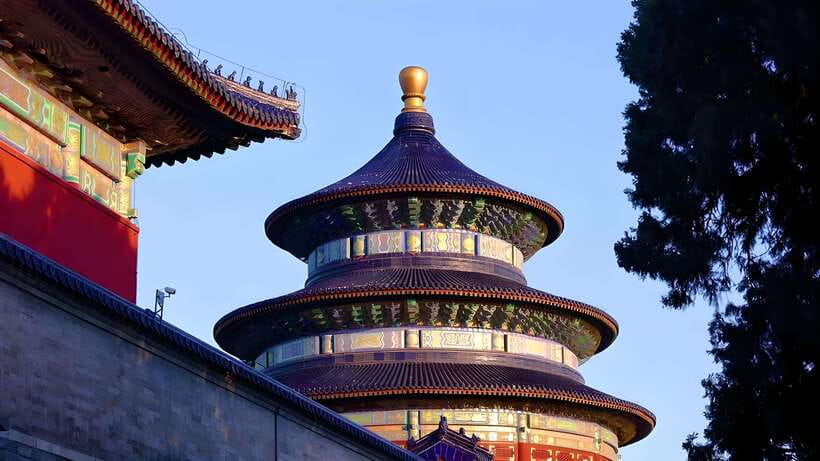
- Hall of Prayer for Good Harvests is the visual center of the whole imperial-worship story.
- Multiple entry gates mean multiple walking styles, including a faster route.
- Plan for night lighting on select days only, and don’t count on late entry.
- Food options cluster near both gates, so you can eat without wasting metro time.
Temple of Heaven: what you’re actually visiting
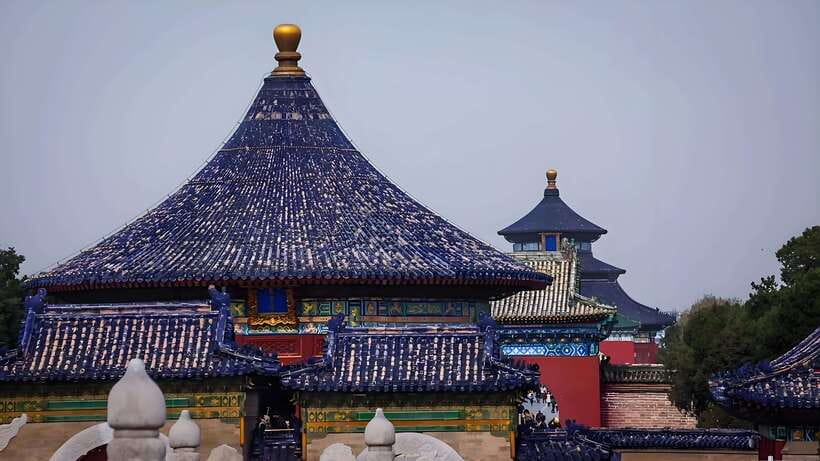
Temple of Heaven is one of Beijing’s big imperial landmarks. It was built in 1420 during the Ming Dynasty, and emperors used it as a sacred site to worship heaven, pray for good harvests, and carry out major rituals. The complex was originally called the Temple of Heaven and Earth, then renamed Temple of Heaven in 1530.
You’ll also notice the scale right away. This isn’t a quick museum stop. You’ll move through gardens, stone features, and ceremonial architecture that were designed to make a specific kind of day happen: slow walking, big sightlines, and plenty of moments to stop and look up.
It’s also UNESCO World Heritage, listed in 1998. That matters because it helps explain why so many parts feel carefully preserved and why the overall layout still reads like an imperial system, not just a collection of buildings.
You can also read our reviews of more tours and experiences in Beijing.

Ticket options: finding the right value for your day
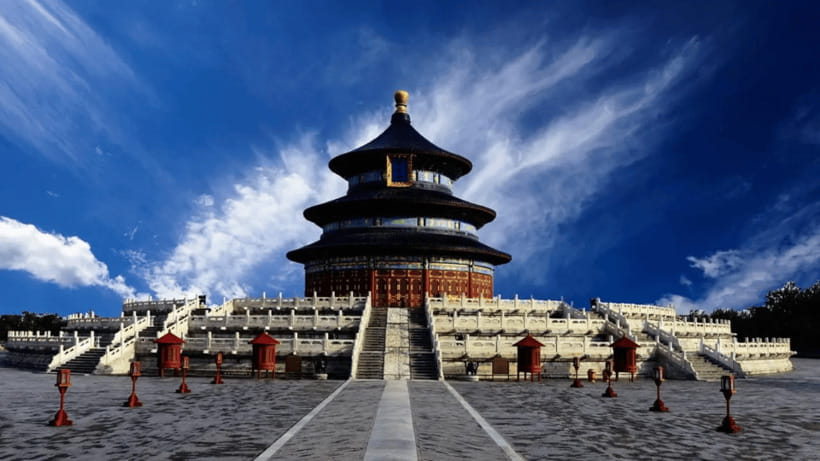
This experience is priced at about $5 per person for a day visit. That’s a low entry cost for a site that includes several of the most famous stops: the Hall of Prayer for Good Harvests, Echo Wall, and the Circular Mound Altar. In other words, you’re not paying a premium just to stand in one spot.
Where value gets tricky (in a good way) is choice. You can go simple or upgrade:
- Entrance ticket only if you’re comfortable exploring on your own.
- Combo ticket + English guide book for more context while you wander.
- Combo ticket + English guide if you want someone to interpret what you’re seeing as you go.
- Combo ticket + restaurant and bar reservations if you already know you want a scheduled meal around your visit.
Then there are one-day add-ons if Temple of Heaven is only your first stop:
- Temple of Heaven + Summer Palace in one day.
- Temple of Heaven + Mutianyu Great Wall in one day.
My advice: if it’s your first Beijing trip and you want the site to make sense fast, go with the English guide option. If you just want the main sights and you’re comfortable reading your way through, the entry ticket or English guide book combo will do the job.
Getting in through East, North, or South gates (and choosing your walking pace)
How you enter changes your experience. Not dramatically, but enough that your energy level and photo time will feel different.
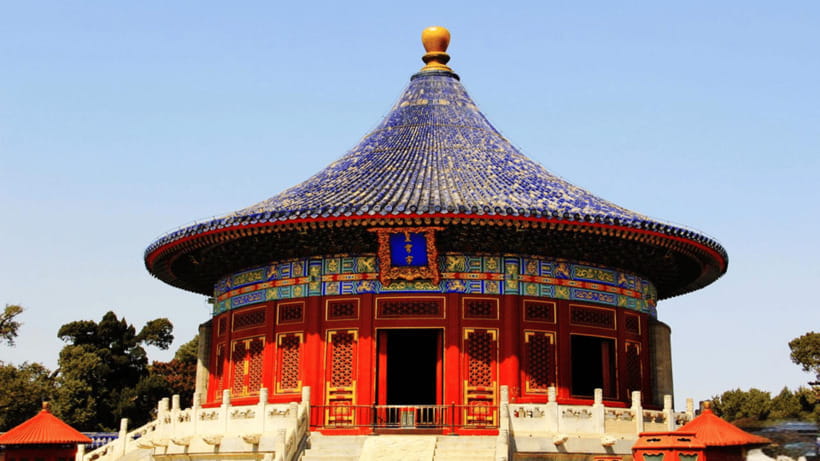
One common approach uses East Gate. The route starts at Exit A2 of Tiantan East Gate Station on the metro (listed as Line 1 in the notes), about 100 meters away. From there, the walk flows through key ceremonial stops like Seven Star Stone, the 72 Corridors, North Kitchen, Imperial Palace areas, and then leads you to the Hall of Prayer for Good Harvests, Imperial Vault of Heaven, Echo Wall, and onward to the Circular Mound Altar. The East-style route also includes areas like the Palace of Abstinence, Hundred Flowers Garden, and Longevity Pavilion. You can exit near the West Gate, noted as about 70 meters to Exit C of Tianqiao Station on Line 8.
If you prefer a tighter plan, there’s a fast pass version using a north-entry route. It starts at the North Gate near Exit C of Qiaowan Station on Line 7, about 700 meters away. This version skips some of the longer ceremonial sections and focuses on the Imperial Palace, Hall of Prayer for Good Harvest, Gate of Prayer for Good Harvest, Imperial Vault of Heaven, Echo Wall, and Circular Mound.
There’s also a South Gate option, about 1200 meters to Exit B of Jingtai Station on Line 14. This is helpful if your day already routes you that way.
Practical takeaway: if you’re traveling with kids or you want fewer stairs and fewer detours, pick the faster route. If you love a long wander and want more stops in one loop, the East Gate sequence fits better.
Seven Star Stone and the 72 Corridors: the walk that sets the tone
Early on, you’ll hit some of the complex’s most recognizable “movement” features. The Seven Star Stone and the 72 Corridors feel like stage-setting. They’re not just decorative paths; they’re part of how the space guides your pace.
On the longer route, you’ll also pass through the North Kitchen and toward the Imperial Palace areas before the main worship center. Even if you don’t read every detail, you’ll feel the logic: you transition from general grounds into ceremonial space, and then you reach the major halls.
One benefit of taking your time here is photo timing. Corridors and stonework give you angles that aren’t available at the final halls. The drawback is simple: you’ll walk more. If you’re on a tight schedule, the fast version reduces some of this wandering.
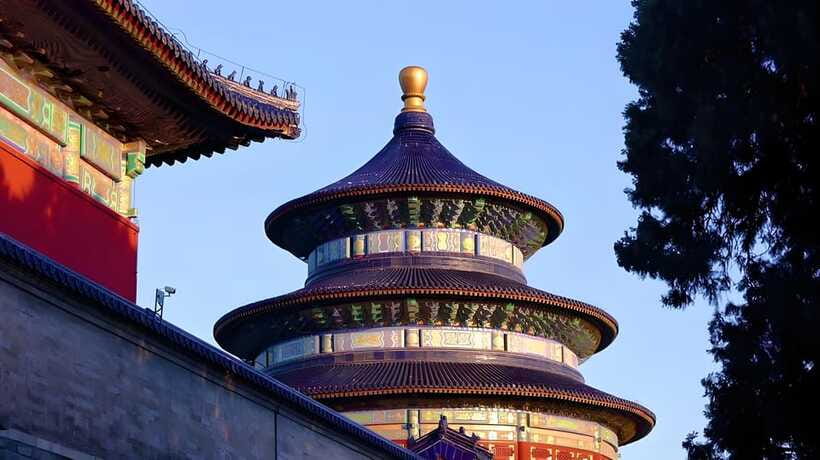
Hall of Prayer for Good Harvests: the main ceremony stop
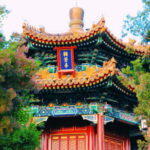
The Hall of Prayer for Good Harvests is one of the big reasons you’re here. It’s also named as part of the included highlights, so your visit should prioritize it even if you choose the shorter walking style.
In practical terms, this is where the site’s imperial purpose becomes easiest to understand. Temple of Heaven was built for worship of heaven and prayers tied to good harvests, and this hall represents the ceremony side of that mission.
What I like about making this your anchor point is that everything afterward feels connected. When you move from the hall area toward the Echo Wall and Circular Mound Altar, you’re not just collecting landmarks—you’re following a theme.

Echo Wall: the acoustic moment people remember
Echo Wall is the “try it and grin” part of the day. The highlight isn’t only that it’s old or pretty. It’s that it has an acoustic wonder reputation, meaning the sound experience is part of the point.
If you’re taking photos, you might be tempted to treat Echo Wall like a background spot. Don’t. Give it a little attention time. Stand where you can see the wall clearly, then focus on the sound effect before you rush onward.
Why this matters: it’s the kind of experience that breaks up the visual weight of imperial architecture. One moment you’re reading symbols through buildings; the next, you’re actively testing how the space responds.
Circular Mound Altar: celestial symbolism you can’t ignore
The Circular Mound Altar is highlighted specifically for its celestial symbolism. That’s the key idea to keep in your head as you approach it: this wasn’t designed as a random pedestal. It’s part of the worship system emperors used to connect earth and heaven.
Even if you don’t memorize every design meaning, you’ll notice how the altar’s form supports the overall theme. The space sets you up to think symbol-first. And that changes how you look at the hall, the vault area, and the paths between them.
If you’re the kind of traveler who likes a spot to have a clear “why,” this one delivers. It turns the visit from a nice walk into an understandable concept.
Palace of Abstinence, Hundred Flowers Garden, Longevity Pavilion
If you take the longer route, you’ll have extra stops that feel more garden-like than ceremonial-hall-like. The Palace of Abstinence, Hundred Flowers Garden, and Longevity Pavilion are part of the listed East Gate walking path.
This is where you can shift from “main sights” to “slow moments.” Gardens and pavilion areas are good for:
- a breather between big architecture stops
- photos that feel less symmetrical and more human-scale
- watching how the site feels when the crowd moves on
If you’re traveling with someone who gets tired of constant stone and stair steps, these garden zones help keep the day enjoyable.
Night timing: lights on specific days and late-entry risk
Night can be beautiful at Temple of Heaven, but the schedule is strict. The notes say night view lighting is only on Fridays/Saturdays and holidays after 19:30.
Also, don’t assume a late arrival means you’ll still see everything. One booking experience described arriving around 20:00, only to be unable to enter the temple area and ending up with access mainly to the outer garden. The lights were on for the general evening vibe, but the garden itself was very dark and there wasn’t much to do there.
So here’s the rule I’d follow: if you want the temple areas, aim to be there earlier rather than later. If you’re mainly chasing night lighting and don’t mind a more limited scope, the evening slot can still work.
Eating near Tiantan Fuyan and Tiantan Fuyin without losing your rhythm
One of the best parts of this kind of day tour is that food is close. The guidance places food near the gates, which means fewer metro detours and less time hunting.
Near the West Gate, Tiantan Fuyan is recommended, and it specifically points to a must-order Temple of Heaven Cake. The strawberry flavor sells out fastest, so if it’s your mission, treat it like a limited special. Roast duck is also available for dinner. A helpful tip here: get a number on your phone first, then go back to visit while you wait.
Near the East Gate, Tiantan Fuyin offers treats built for both taste and photos, including Divine Beast Ice Cream and a Glitter Lollipop. If you’re traveling with kids or you just enjoy playful snacks, it’s a nice break that doesn’t eat up the day.
Two other standouts are:
- Dongmen Yinsan Douzhi: described as Michelin recommended, serving fried dough rings and douzhi. This is a more old-Beijing flavor stop.
- Nanmen Shabu-shabu: hand-cut lamb in a copper pot clear soup. You’ll want to get a number in advance to avoid queuing.
For me, the value is that these spots let you plan a full day without feeling like food is a separate trip.
Adding Summer Palace or Mutianyu Great Wall in one day
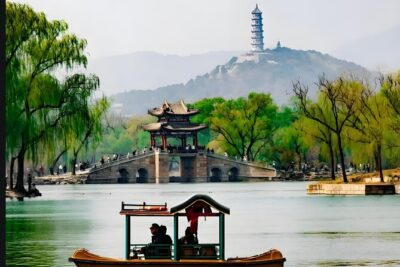
If you choose a 1 day tour combination, you’ll be packing more into the same day: Temple of Heaven plus either the Summer Palace or Mutianyu Great Wall.
This can be a smart way to avoid backtracking across Beijing. You get two iconic experiences without paying for a second full day. The tradeoff is energy. Great Wall days and palace days both eat up time and walking.
If you’re on a shorter trip and you want maximum sight coverage, the add-on option makes sense. If you’d rather savor Temple of Heaven deeply and move slowly, consider sticking to Temple of Heaven as the main plan and keeping the rest of the day flexible.
Practical tips that make the visit smoother
A few small things can prevent big frustration:
- Bring your passport for the experience. The notes also mention bringing your ID card, so plan on having government ID on hand.
- Drones are prohibited.
- You’ll want a power bank and sunscreen. The garden routes and open areas mean you’ll feel the sun.
- You might be walking between gates and areas, so wear shoes you can handle for a long loop.
Group size is listed as small group. That usually means less chaos than huge tours, and it helps if you want to ask questions without shouting over a crowd.
Also note the closure: Temple of Heaven is closed on Mondays. Build your schedule around that, especially if you’re traveling during the workweek.
Who this suits best (and who might skip the guided option)
This plan is best for:
- First-time Beijing check-in travelers who want a compact but meaningful cultural experience.
- Families with children who need clear landmarks and photo-friendly stops.
- Couples who enjoy architecture plus atmospheric gardens.
- Food explorers because the gate-side eats keep your day moving.
You might skip the English guide option if you’re already confident reading basic context and you’re mostly focused on the must-see sights at your own pace.
But if you want the symbolism to make sense as you walk—especially around the Circular Mound Altar and the hall areas—an English guide is the easiest way to get there without spending your entire visit on your phone.
Should you book this Temple of Heaven experience?
Yes, if you want a day that hits the key architecture stops without turning Beijing into a logistics puzzle. The included highlights cover the core trio many people travel for: Hall of Prayer for Good Harvests, Echo Wall, and the Circular Mound Altar. And the choice of routes makes it adjustable, whether you want a longer ceremonial loop or a faster hit of the main sights.
Book with the English guide if this is your first time here and you want the meaning attached to what you’re seeing. If you’re budget-minded and just want access plus the highlights, the entrance or guide book combo is still strong value for a full day.
One final decision tip: pick your entry time based on what you care about. Temple areas need earlier timing. Night lighting exists on Fridays/Saturdays and holidays after 19:30, but late arrival can mean reduced access—so don’t treat evening as a guaranteed way to see everything.
FAQ
What’s included in the Temple of Heaven entry?
The included access covers Temple of Heaven Park plus the Hall of Prayer for Good Harvests, Echo Wall, and the Circular Mound Altar.
How long is the experience?
It’s listed as valid for 1 day.
Are there different ticket options with guidance?
Yes. Options include entrance only, combo tickets with an English guide book, and combo tickets with an English guide. There are also combo options that include restaurant and bar reservations.
What are the nearby metro options for the East Gate?
One note says Metro Line 5 Temple of Heaven East Gate Station is closest, specifically Exit A. There’s also an East Gate start described from Exit A2 of Tiantan East Gate Station.
Is Temple of Heaven open every day?
No. It is closed on Mondays.
Are drones allowed?
No. Drones are prohibited.