REVIEW · BEIJING
Beijing: The Forbidden City Entry Ticket
Book on GetYourGuide →Operated by Andy's private china tours · Bookable on GetYourGuide
Your Beijing day starts at the gate. I love that booking locks in your entry time so you don’t play ticket roulette, and I love that your passport works as the entry ticket so the check-in stays painless. The only real catch is that the Forbidden City is extremely crowded, and that can feel overwhelming in the busiest halls.
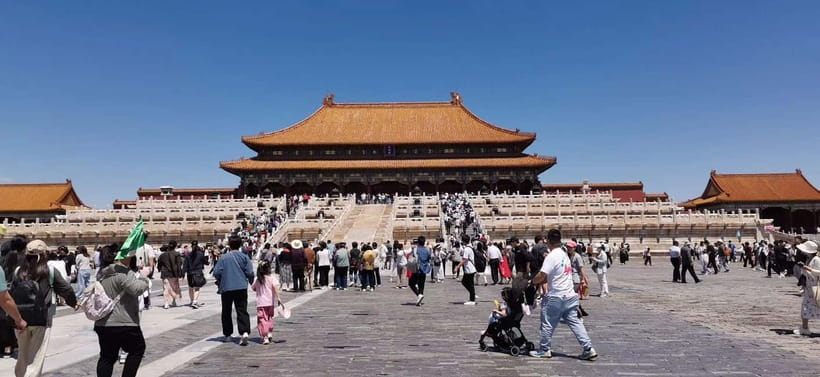
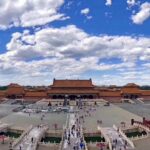
The Forbidden City, or Gùgōng, sits at the center of Beijing and was the ceremonial and political heart of imperial China for about five centuries. It’s built on a scale that’s hard to picture until you’re standing in the main courtyards—huge axis views, bright palace tones, and the sense that the empire ran on rules, not vibes.
You’ll choose a morning or afternoon entry slot, and you can go guided or do a self-guided visit for around 2 hours. Some options also roll into Tiananmen Square and Mutianyu Great Wall, which turns this from a ticket problem into a full-day plan—just keep in mind meeting points can vary based on what you book, so check your details carefully.
In This Review
- Key highlights I’d plan around
- Booking the Forbidden City ticket: you’re buying a smooth entry
- Morning vs afternoon at 午门: timing changes the whole feel
- Passport entry: the one detail that can ruin your day
- Inside the Forbidden City: what you’ll get in about 2 hours
- What to focus on: architecture, court power, and the clock moment
- When the ticket includes Tiananmen and Mutianyu: making it a real day
- Crowds and lines: how to keep your visit from feeling like a workout
- Price and value: what $26 buys you in Beijing terms
- Should you book this Forbidden City entry ticket?
- FAQ
- Do I need to reserve in advance?
- Can I choose a morning or afternoon entry?
- What do I use to enter the Forbidden City?
- Where does the tour start?
- How long does this experience last?
- Do I get a guided tour?
- Is Tiananmen Square and Mutianyu included?
- Will I be picked up from my hotel?
- Can I cancel for a refund?
- Can I change the travel date after booking?
Key highlights I’d plan around

- Guaranteed entry time so sold-out stress stays outside the gate
- Morning or afternoon tickets to match your energy and crowds
- Passport-only entry after you book with correct passport details
- 2 hours inside with guided or self-guided pacing
- Optional Tiananmen + Mutianyu for a bigger Beijing highlights day
- Guide support (including examples like Yoyo) when you want context fast
Booking the Forbidden City ticket: you’re buying a smooth entry
In Beijing, the Forbidden City is the kind of place people plan months ahead for. If you arrive without the right access, you’re stuck in lines and uncertainty, and your day starts getting dragged around by whoever has the best luck. Pre-booking is the practical win here: you choose a day and time, and your admission is reserved.
This ticket is also simple on paper. You’re not juggling multiple documents or a stack of vouchers. You just use your passport to enter, as long as the name and passport number you provided during booking match what’s in your passport.
Price-wise, $26 per person isn’t about “saving money.” It’s about buying certainty. When a site sells time slots and access fills up quickly, the real value is your schedule staying intact instead of turning into a guessing game.
You can also read our reviews of more tours and experiences in Beijing.

Morning vs afternoon at 午门: timing changes the whole feel
Your entry timing matters more than people expect. With the option for morning or afternoon tickets, you can pick a slot that fits your travel style and your tolerance for crowd levels.
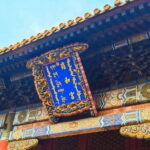
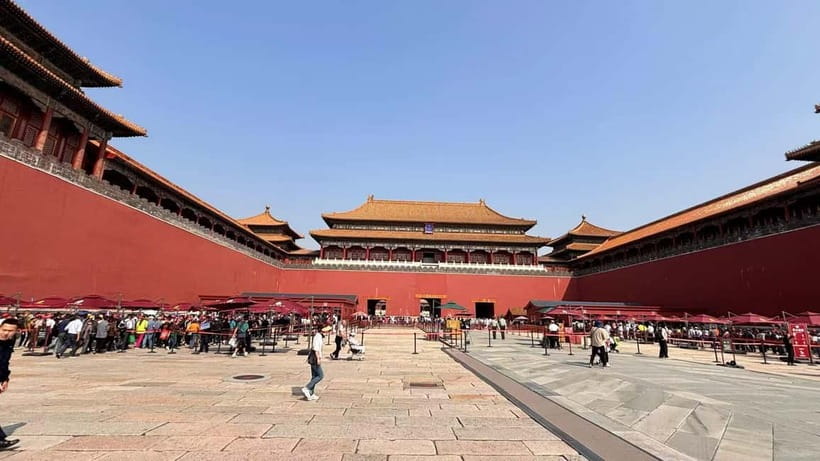
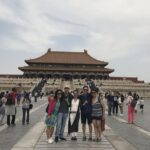
Entry is associated with 午门 (Wumen) as a starting point option. That matters because it’s a main ceremonial gateway, so it helps you get your bearings fast once you’re through the initial checkpoints.
Here’s the practical way to decide:
- If you like clear photos and fewer “moving wall” crowds, lean toward the earlier slot.
- If you’re coming from other Beijing sights and want a calmer start, an afternoon entry can work well.
Your overall duration can run from 3 to 9 hours, depending on what option you select. A Forbidden City-only plan is shorter, while add-on days (like Tiananmen Square and Mutianyu Great Wall) naturally stretch the schedule.
Passport entry: the one detail that can ruin your day
This is the part I’d treat like a “trust but verify” checklist.
When you book, you need to leave your name and passport number, and make sure the passport numbers are correct. Then, on the day, you can use your passport as your entry method.
That’s great news for convenience. It’s also why accuracy matters: if your passport details don’t match what was entered, you can end up spending your trip fixing preventable problems at the gate.
So before you leave your accommodation, do a quick check:
- Passport is the same one you used to book
- The passport spelling and number are exactly right
If you’re traveling with others, double-check each person’s details too. One mismatch can throw off the entire group timing.
Inside the Forbidden City: what you’ll get in about 2 hours
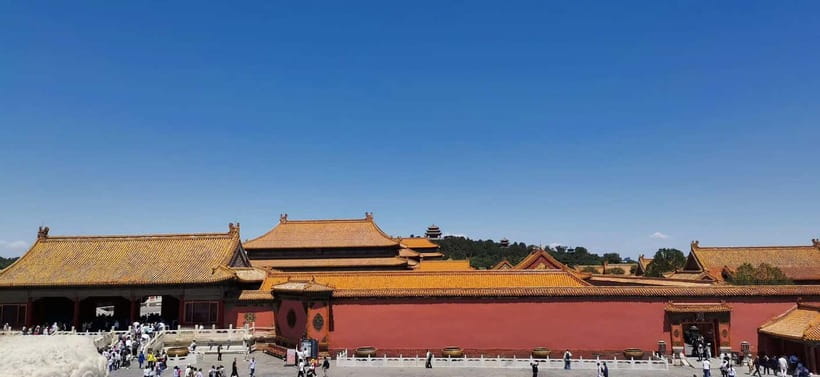
Once you’re in, you’re stepping into the former power center of imperial China. The Forbidden City was built between 1406 and 1420, and it served as the home of 24 emperors and their families across about 500 years. Today, it houses the Palace Museum, one of China’s largest national museums, with collections rooted in the former imperial holdings.
The visit format is flexible: you can do a guided tour or a self-guided experience, both designed around about 2 hours at the site.
What a guided 2-hour tour does best is context. You get help making sense of what you’re looking at, without wasting your time guessing which building matters. Some guides (like Yoyo, mentioned in service feedback) are attentive and practical with meeting instructions and throughout-the-day guidance, which is a big help when the grounds are busy and wayfinding is stressful.
If you go self-guided, you’ll want to be a bit more intentional. Pick what you want to see before you walk in. Otherwise, the sheer scale can make your time feel scattered, especially when crowds compress your pace.
What to focus on: architecture, court power, and the clock moment
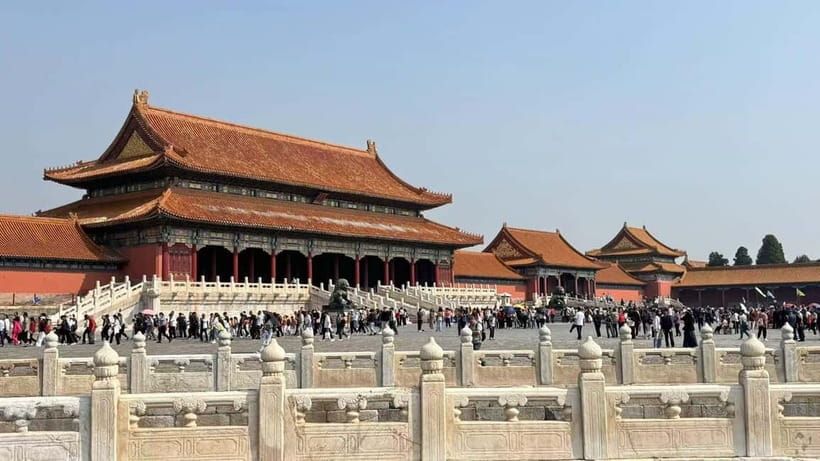
The Forbidden City’s main magic is the feeling of control—symmetry, hierarchy, and the way the spaces are organized to impress visitors and officials alike. In plain terms: it’s not just old buildings. It’s old political design.
A few things are especially worth your attention during your 2-hour window:
- The big ceremonial spaces where you get that “axis” perspective
- The palace halls and courtyards that show how court life was staged
- Exhibits that visitors flag as highlights, including impressive clocks
People often talk about the clocks for a reason: they’re the kind of detail that makes you realize the imperial world wasn’t only about power displays. It was also about collecting knowledge, craftsmanship, and status through objects.
If you’re short on time, focus on the areas that match your interest: grand architecture if you love scale, or museum-style exhibits if you want artifacts and interpretation. With only about 2 hours inside, you’ll get more satisfaction by choosing than by trying to see everything.
When the ticket includes Tiananmen and Mutianyu: making it a real day
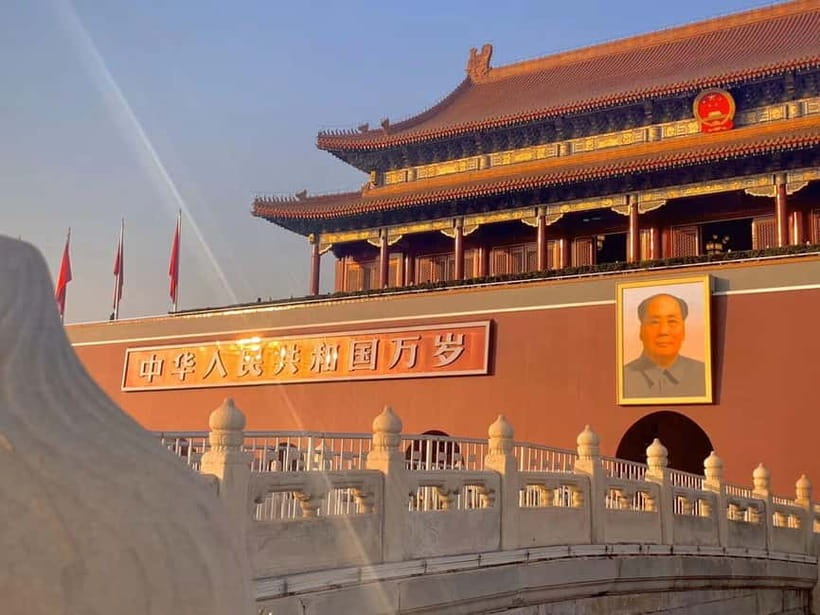
Some versions of this plan add Tiananmen Square and Mutianyu Great Wall, and they may include hotel pickup and drop-off depending on the option you select.
This matters because it turns your Forbidden City visit from a single-site stop into a broader Beijing highlights day:
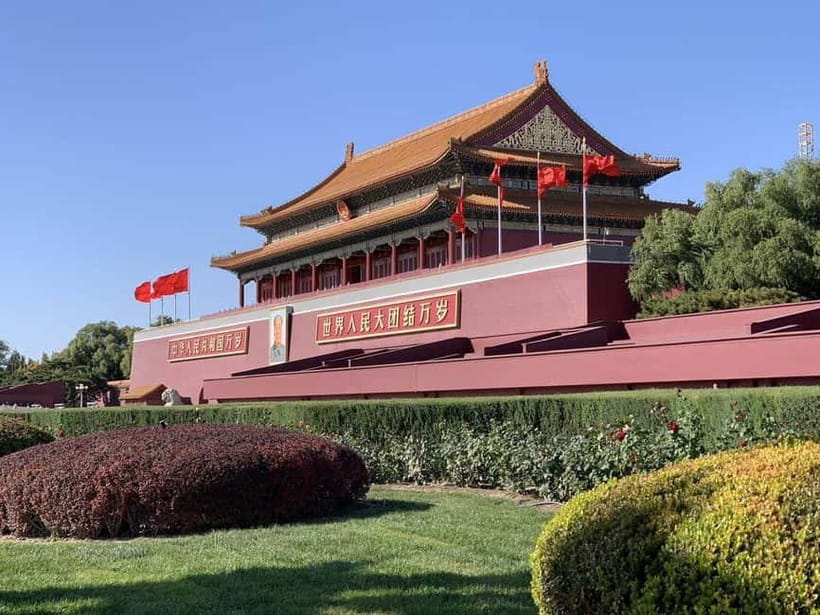
- Tiananmen Square gives you the modern-political overlay to the imperial center.
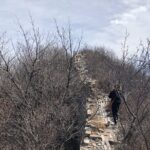
- Mutianyu Great Wall adds the outside-world scale: long ridgelines and the sense of distance that palace walls can’t teach.
One practical bonus mentioned alongside these add-on days is that food can be included (for example, a lunch buffet was referenced in feedback tied to the wider day trip). If your schedule includes a combined day, factor in that it will be more of a “whole itinerary” effort than a slow cultural browse.
If you don’t want a long day, stick with Forbidden City-only. If you want maximum highlights with less decision-making, the combo option is where this ticket starts to feel like good value.
Crowds and lines: how to keep your visit from feeling like a workout
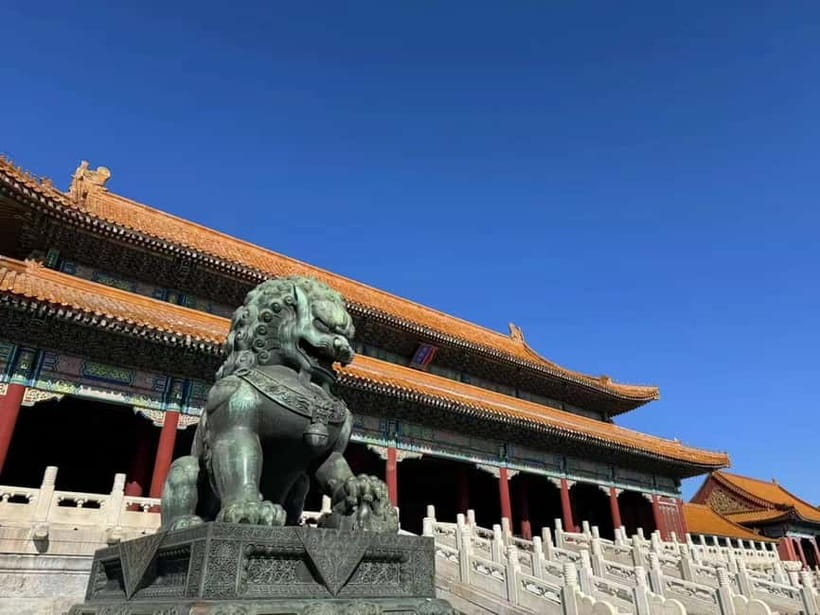
The Forbidden City is famous for its crowds. Even with a reserved entry time, you should expect busy walkways and lots of people pausing in the same spots for photos.
The good news is that queues and movement can still work efficiently. A common pattern is that lines look scary but move in a steady rhythm once you’re processed.
Still, your strategy determines your stress level:
- Go in with a shortlist of what matters to you
- Don’t fight the flow—step aside for photos, then move on
- Give yourself permission to skip a few spots if the crowds are too compressed
If the idea of crowds would drain you, the “shorter and focused” 2-hour structure is actually a benefit. You’re less likely to burn the whole day on people-watching and more likely to walk out satisfied.
Price and value: what $26 buys you in Beijing terms
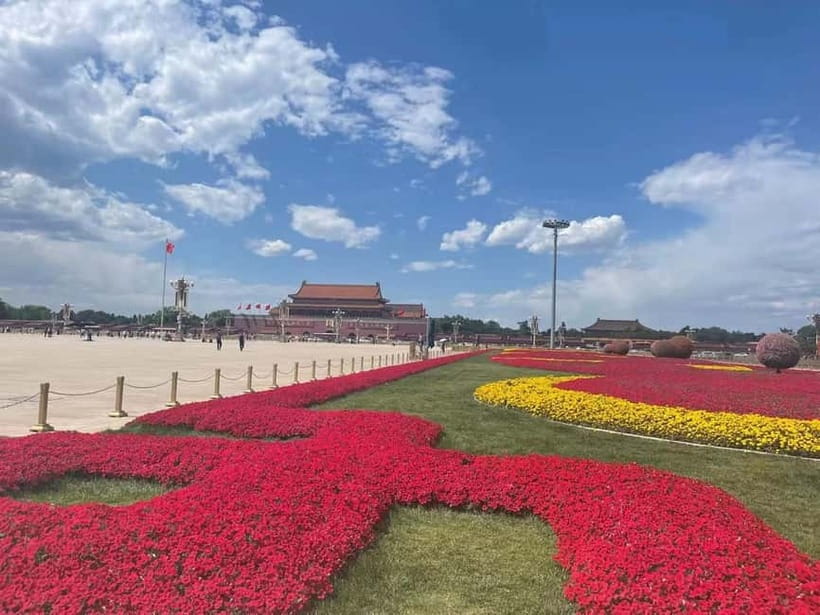
At $26 per person, this ticket is priced like a practical solution, not a luxury tour. And that’s exactly what it is: you’re paying for entry control, timing, and less friction getting into one of Beijing’s busiest, most regulated attractions.
Here’s how the value really shows up:
- You avoid the uncertainty of sold-out time slots.
- You reduce paperwork because your passport is the entry key.
- You can add structure with a guided option or keep it flexible with self-guided time.
If you also select the options with Tiananmen and Mutianyu, the value expands further—especially when pickup and drop-off are included. That’s not just “more places.” It’s fewer transport hassles and fewer chances for your day to go off-track.
So think of this as a buy-the-block-of-time ticket. You’re buying time confidence.
Should you book this Forbidden City entry ticket?
Book it if you care about a guaranteed entry time, you want the passport-only entry simplicity, and you’d rather spend your energy looking at buildings than hunting for tickets. This is a smart choice for first-timers who want a clean, organized start.
Skip it (or consider a different plan) if you’re the type who wants total freedom to roam without any time-slot structure, or if a crowded major attraction would genuinely ruin your day. You’ll still get in, but the Forbidden City’s popularity is the main reality check.
If your goal is: get in on time, see the key highlights in a focused window, and keep your day from turning into logistics, then this is an easy yes.
FAQ
Do I need to reserve in advance?
Yes. Booking in advance guarantees your admission for your chosen day and time.
Can I choose a morning or afternoon entry?
Yes. You can have the morning ticket or the afternoon ticket.
What do I use to enter the Forbidden City?
You can use your passport to enter the park.
Where does the tour start?
Starting location can vary depending on the option booked. One starting point option is 午门 (Wumen) in Beijing.
How long does this experience last?
The duration ranges from 3 to 9 hours, depending on the option. You should check availability to see the starting times.
Do I get a guided tour?
You can choose a guided tour or a self-guided tour. The self-guided option is for about 2 hours.
Is Tiananmen Square and Mutianyu included?
They’re included only if you select the option that adds Tiananmen Square and Mutianyu Great Wall.
Will I be picked up from my hotel?
Hotel pickup and drop-off may be included if you choose the option that offers it.
Can I cancel for a refund?
Yes. You can cancel up to 24 hours in advance for a full refund.
Can I change the travel date after booking?
No. The travel date cannot be changed after booking because tickets can sell out shortly.