REVIEW · BEIJING
Beijing:Drum and Bell Towers Entry Ticket- Cultural Treasure
Book on GetYourGuide →Operated by Hua Hua Explore China · Bookable on GetYourGuide
Beijing has a way of turning small details into big stories. The Drum and Bell Towers are basically Beijing’s old time system made stone-and-wood. You’ll spend your visit learning how these towers worked through the Yuan, Ming, and Qing dynasties, and why the bell and drum rhythms mattered for daily life.
I especially like two things here. First, you get tickets that let you enter both towers directly with the e-ticket, which saves time when lines are long. Second, the included English textual and visual guide doesn’t just cover the buildings; it also helps you connect the towers to what’s around them, including nearby hutong streets and even local food suggestions.
The main drawback to plan around is steep, long stairs inside the complex. If mobility is limited, this won’t feel like an easy walk-through.
In This Review
- Key takeaways before you go
- Why the Bell and Drum Towers Are Beijing’s Old Time Machines
- How the Ticket Works: E-Tickets, Passport Details, and Direct Entry
- A 2-Hour Game Plan Inside the Complex
- Inside the Drum Tower: Understanding the Dusk Beat
- Inside the Bell Tower: Why a 63-Ton Bell Still Commands Attention
- The English Guide That Connects Towers to Hutongs
- Price and Value: What $13 Really Buys You
- Practical Tips: Bring the Right ID and Plan for the Stairs
- Who This Ticket Fits Best (and Who Should Rethink)
- Should You Book This Ticket?
- FAQ
- FAQ
- Do I need to provide passport details when booking?
- How far in advance are the tickets reserved?
- When will I receive the e-tickets?
- Can I enter both the Bell Tower and Drum Tower using the same e-ticket?
- How much time should I plan for the visit?
- What’s included with the ticket?
- Is there a live tour guide or audio guide included?
- What language is the guide in?
- What should I bring to the site?
- What’s the price?
- How does cancellation work?
Key takeaways before you go

- Yuan-to-Qing timekeeping legacy: built in the Yuan era and still central to the story of imperial Beijing time.
- The 63-ton Yongle bell: the bell is famous as the King of Ancient Bells of China.
- Pre-booked e-tickets: reserved in advance and usable for direct entry to both towers.
- English guide support: textual and visual materials make the architecture easier to read.
- Hutongs nearby: the guide package points you toward the hutong area next to the towers.
- Stairs are real: expect a workout, especially on a second tower stop.
Why the Bell and Drum Towers Are Beijing’s Old Time Machines
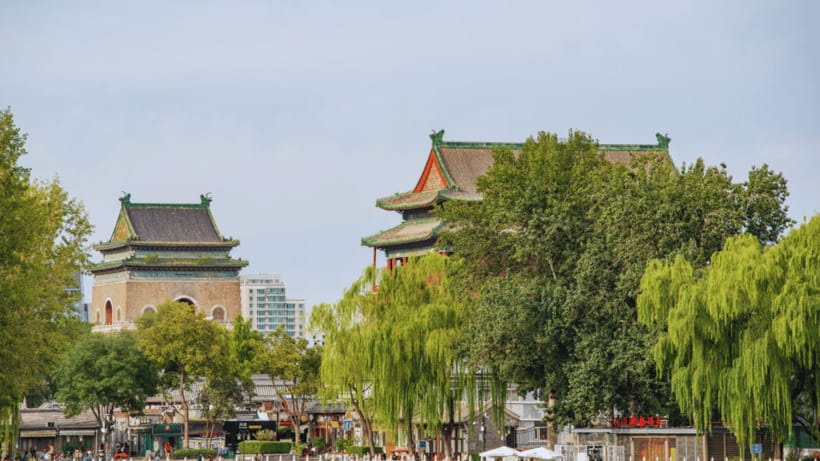
The Drum and Bell Towers sit at the northern end of Beijing’s central axis, a location that matters. This wasn’t just a random viewpoint or a pretty landmark. This was the city’s official rhythm. Historically, the complex served as a time-telling center through major dynasties: the Yuan (1206–1368), Ming (1368–1644), and Qing (1644–1911).
Here’s the kind of detail that makes the visit click. Time was told in a pattern of a dusk drum and a morning bell. That phrase sounds simple, but it helps you understand the purpose of the two towers as a paired system: one for the evening beat, one for the morning call. The Drum Tower and Bell Tower are close enough to feel like neighbors in your mind, even if the buildings themselves have slightly different layouts.
Also, pay attention to how they’re arranged. In this complex, the Bell Tower sits slightly north of the Drum Tower. That detail isn’t just architectural trivia—it’s part of the logic of the central-axis planning that shaped old Beijing.
Then there’s the scale. You’ll learn that there used to be 25 drums in the Drum Tower. On the bell side, the story is even more dramatic: the bell cast during the Yongle era (1403–1424) of the Ming Dynasty weighs 63 tons, earning it the title King of Ancient Bells of China. Those numbers are worth mentally holding onto while you’re there, because they turn the visit from sightseeing into context.
Finally, the complex is protected at the state level and covers 12,597 square meters. Translation: this isn’t a quick “snap a photo and leave” stop. Even if you’re only there for about 2 hours, you’ll want to spend that time reading the guide and looking slowly at how the complex works.
You can also read our reviews of more tours and experiences in Beijing.



How the Ticket Works: E-Tickets, Passport Details, and Direct Entry

This experience is built for speed and clarity. After you order, you’re asked for your passport name, passport number, and date of birth. That step is there so your tickets can be reserved in advance—specifically 3 days prior to your visit.
Once the reservation is successful, your tickets are sent to you as e-tickets by email or WhatsApp. Then you use those e-tickets at the entrance. The key practical point: you can enter the Bell Tower and Drum Tower directly with the e-tickets provided.
Because the reservation ties to your identity details, don’t show up with just a photo on your phone and hope for the best. Bring your passport or ID card. This is one of those “easy to fix ahead of time” items that can save you stress at the gate.
One more thing I appreciate: the ticket experience is designed around skipping the ticket line. You’re not meant to wait around sorting out paperwork during peak hours. If you’re visiting when Beijing is packed, that time-saving matters more than it sounds.
A 2-Hour Game Plan Inside the Complex

You’re aiming for about 2 hours total, and that’s a realistic window for two towers plus reading the English guide at a steady pace. The experience is self-guided in the sense that there’s no live tour guide included and there’s no audio guide included. So you’re the one driving the pace—good news if you like learning at your own speed.
A practical flow that works well:
- Go in and start with the guide so you’re oriented before you start scanning details.
- Spend enough time in the first tower to understand its time-telling role.
- Then treat the second tower like the “missing piece” that completes the story.
Because this is a paired site—drum for dusk, bell for morning—you’ll get more out of it when you mentally compare both towers instead of treating them like two separate photo stops.
Inside the Drum Tower: Understanding the Dusk Beat

The Drum Tower part of the visit is about grasping the idea of a city that ran on scheduled signals. You’ll learn that time was told with a dusk drum, and historically there used to be 25 drums in the Drum Tower. Even if you’re not picturing exactly how every element looked, knowing that the system was multi-drum helps you understand why this building mattered.
What makes the Drum Tower stop valuable is that it’s not just about the exterior architecture. The included English textual and visual guide helps you interpret what you’re seeing. In practical terms, that means you can connect:
- the tower’s role in timekeeping,
- the “dusk drum” concept,
- and how this fit into a broader city rhythm.
Because there’s no live guide and no audio, your best move is to spend a few minutes reading before you rush. If you do that, the Drum Tower stops feeling like a monument and starts feeling like a tool the city once relied on.
Also, prepare for the physical reality: you’ll be on foot and climbing. The stairs are a big part of the overall experience here, and they’re why I’d call this a “bring comfortable shoes” stop.
Inside the Bell Tower: Why a 63-Ton Bell Still Commands Attention
Then you shift to the bell side, where the story gets heavyweight—literally. The Bell Tower is tied to the Yongle-era bell (1403–1424) that weighs 63 tons. That weight is one of the reasons the bell is known as the King of Ancient Bells of China.
When you’re inside, don’t treat that number like trivia. Treat it like a clue. It tells you that you’re not looking at a decorative element. This is tied to the city’s official morning call, the kind of signal that would structure daily life for a whole urban area.
Again, because there’s no live guide, the value here is in how the provided English textual and visual guide gives you the context to read the site. It helps you understand the meaning behind the architecture and the timekeeping purpose behind the bell tower.
If you like history that has specific, measurable facts—weights, dynasties, and roles—you’ll probably enjoy the Bell Tower more than a generic “old building” stop. The 63-ton bell story gives the site a spine.






The English Guide That Connects Towers to Hutongs
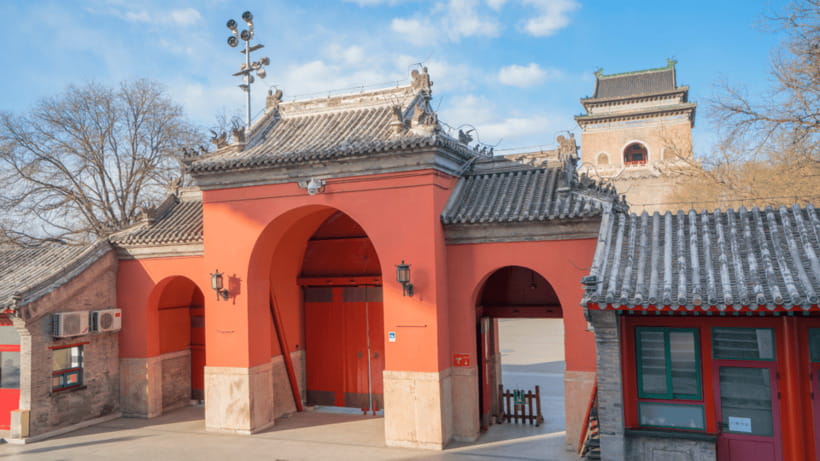
One reason this ticket package works better than a bare-bones entry pass is the guide support. You get an English textual and visual guide for both towers, and the materials go beyond the towers themselves.
I like that the guide package helps you connect the complex to the surrounding neighborhood. The information includes details about nearby hutongs—old street lanes that are right next to the towers—and it even offers recommendations for local restaurants in the area.
That matters because many people visit the towers, spend 20 minutes inside, and leave with only the monument in mind. With the guide material, you’re set up to keep the story going after you exit—turning the visit into an easy bridge between imperial Beijing and everyday local streets.
So when you finish both towers, you’ll have a plan for what to do next that doesn’t require guessing. If you enjoy walking through hutongs and want something practical for where to eat nearby, the guide adds real value.
Price and Value: What $13 Really Buys You
At $13 per person for access to both the Bell Tower and Drum Tower, plus the English guide, the price can make sense—especially if you value time savings and clear documentation.
Here’s the honest tradeoff. Some people feel that the ticket price is steep if they’re comparing it to what they might pay on-site. That’s a fair consideration. If you’re the type who enjoys hunting for the cheapest option, this ticket may feel less satisfying.
But if you care about smooth entry, advance reservation timing, and having an English guide ready before you start, then $13 can look like good “effort saved” value. You’re buying convenience: e-tickets, direct entry for both towers, and a guide you can read immediately.
My practical advice: treat this as a “reduce friction” purchase. If your priority is maximizing learning and minimizing waiting, you’ll likely feel the value quickly.
Practical Tips: Bring the Right ID and Plan for the Stairs

Before you go, make sure you have:
- your passport or ID card
- your e-ticket access details (email or WhatsApp)
Wear shoes with grip. The complex is famous for being steep and stair-heavy. Even if you’re an active walker, you’ll probably feel the climb by the time you’re moving through both towers in one visit.
Also, keep expectations realistic about timing. 2 hours is enough if you read and move at a calm pace. If you try to sprint for photos, you’ll end up missing the parts that make this ticket worth it—the dynasties, the timekeeping role, and the guide context.
Who This Ticket Fits Best (and Who Should Rethink)

This experience is a strong fit for:
- Independent travelers who like reading and self-guided learning
- People interested in the specific timekeeping story of old Beijing: dusk drum and morning bell
- Travelers who appreciate facts with numbers, like dynasties and the 63-ton Yongle bell
- Visitors who want to continue into hutongs afterward, using the provided restaurant and neighborhood suggestions
It may be less ideal for:
- Anyone with mobility limitations who struggles with long, steep stair climbs
- People expecting a live tour guide or an audio guide—neither is included here, so you’ll rely on the guide materials yourself
If you’re flexible, enjoy history, and can handle stairs, this ticket turns into a satisfying, compact cultural stop.
Should You Book This Ticket?
If your goal is a smooth, well-supported visit to both towers in about 2 hours, I’d lean yes. Pre-booked e-tickets and direct entry for both the Drum Tower and Bell Tower reduce the friction that can ruin a short schedule. The English guide package adds extra value by connecting the towers to nearby hutongs and helping you plan what to do next.
If you’re trying to bargain for the cheapest possible entry cost, or if stairs are a real problem for you, you may want to rethink. In that case, you might prefer a different approach—either planning for mobility needs or checking alternatives that better match your budget and pace.
FAQ
FAQ
Do I need to provide passport details when booking?
Yes. You’ll be asked for your passport name, passport number, and date of birth so the tickets can be reserved in advance.
How far in advance are the tickets reserved?
Your tickets are reserved 3 days prior to your visit.
When will I receive the e-tickets?
Once the reservation is successful, the e-tickets are sent to you by email or WhatsApp.
Can I enter both the Bell Tower and Drum Tower using the same e-ticket?
Yes. You can enter the Bell Tower and Drum Tower directly with the e-tickets provided.
How much time should I plan for the visit?
Plan for about 2 hours total.
What’s included with the ticket?
Included are tickets for Bell Tower and Drum Tower, plus an English textual and visual guide for the towers.
Is there a live tour guide or audio guide included?
No. There is no live tour guide and no audio guide included.
What language is the guide in?
The guide materials are in English.
What should I bring to the site?
Bring your passport or ID card.
What’s the price?
The price is $13 per person.
How does cancellation work?
Free cancellation is available up to 24 hours in advance for a full refund.