REVIEW · BEIJING
Chinese Calligraphy Class for Small Group
Book on Viator →Operated by Hutong Calligraphy Class · Bookable on Viator
Brush and peace, in one hour. A small-group Chinese calligraphy class in Beijing is a great way to slow down after sightseeing and actually learn how to hold the brush and form characters. I like that the setup is designed for personal instruction in a group capped at 15, so you’re not just watching from the back. You’ll also get cultural context through a short philosophy-style practice tied to yin-yang ideas for inner calm.
The one thing to consider: the class length options mean you can walk out with very different levels of finished work. If you choose only 30 minutes, you may feel rushed, especially if it’s your first time with brush technique and posture.
In This Review
- Key highlights you’ll care about
- A Small-Group Calligraphy Class Near Wangfujing and the Hutong Arts Scene
- The Lesson Flow: Posture, Basic Strokes, Then Your Own Practice
- Picking the Right Class Length: 30, 45, 60, 90, or 120 Minutes
- What You’ll Make and Take Home: A Real Souvenir, Not Just a Demo
- Teachers, Tea, and the Cultural Side You’ll Actually Feel
- Price and Value: Why $20 Can Feel Like a Good Deal
- Who This Calligraphy Class Is Perfect For (and Who Should Think Twice)
- Should You Book This Chinese Calligraphy Class in Beijing?
- FAQ
- How long is the Chinese calligraphy class?
- Where do we meet for the class?
- What is included in the price?
- Is there a small-group limit?
- Do I need to know calligraphy before I go?
- Can children join the class?
- Is a mobile ticket provided?
- Is the location easy to reach using public transportation?
- How much does it cost per person?
- Is free cancellation available?
Key highlights you’ll care about
- Small group size (up to 15) so questions don’t get lost
- Multiple daily time options including morning, afternoon, and evening to fit your Beijing plan
- Three-step lesson flow: posture + basic strokes + guided practice
- Tea included, plus a more mindful, calmer pace than a typical craft class
- Take-home artwork you can hang up or frame as a souvenir
A Small-Group Calligraphy Class Near Wangfujing and the Hutong Arts Scene
This class is based in central Beijing, with the meeting point set at the entrance of the Hilton Beijing Wangfujing hotel lobby. That’s a helpful anchor if you’re juggling multiple activities, because you can route your day around a known landmark. From there, you’ll join a small-group session designed for hands-on learning instead of lecture.
You’re getting a workshop format with an actual instructor who slows things down for beginners. The biggest practical win for you is the group size: with a maximum of 15 people, you should expect real coaching on posture and brush control, not just a quick demo. Several people highlighted that the teachers were patient, attentive, and willing to repeat instructions when your wrist and brush decide to do their own thing.
One extra Beijing detail worth knowing: some directions you see online may not match the exact studio entrance. If you arrive and something feels slightly off, check building numbers and the immediate entrance setup—one review notes the arts center shares an entrance with a mixed martial arts club. In practice, it’s usually fixable fast, especially because the teacher can help you get oriented once you’re nearby.
You can also read our reviews of more tours and experiences in Beijing.


The Lesson Flow: Posture, Basic Strokes, Then Your Own Practice
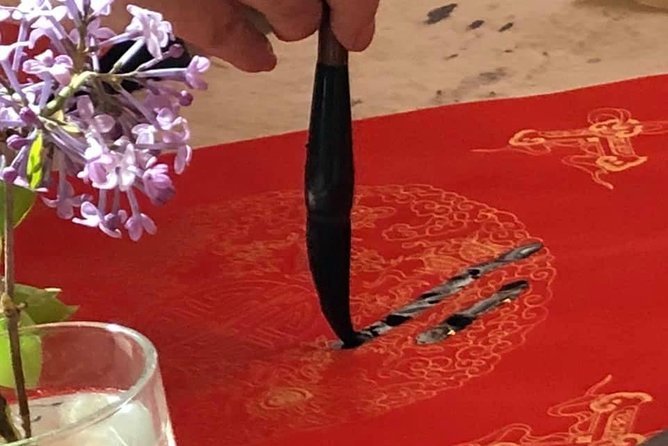
The heart of the experience is a structured, step-by-step approach. You start with a short practice aimed at calming your body and focus. The lesson includes a standing exercise linked to the idea of finding inner peace and getting rid of impetuous energy—think of it as settling in before you touch the brush.
Next comes the part you’ll feel in your hands: correct posture for calligraphy. You’ll be coached on how to sit or stand, how to position yourself so your wrist and arm move smoothly, and how to use the brush properly. This is where a beginner often struggles most, because brush calligraphy is less like writing on paper with a pen and more like controlling an instrument. Good instruction here saves you from making the same awkward movements the whole session.
Then you move into the basics of strokes—how to execute key foundation movements that form the building blocks of characters. After that, you practice. This is not just copy-and-rush; the teacher guides you through trying techniques and refining them during the session.
You’ll also notice a tea moment built into the class experience. The itinerary describes a part called Your Art Tea, which pairs learning with a calmer rhythm. In real terms, that means you get a short pause that helps you reset your focus, then continue practicing without feeling like you’re being pushed through a factory-style class.
Picking the Right Class Length: 30, 45, 60, 90, or 120 Minutes
This is one of the best parts of the experience design: you can choose different durations on booking—30 minutes, 45 minutes, 1 hour, 1.5 hours, or 2 hours. The total time matters because calligraphy is physical. It takes a few minutes just to get comfortable with grip, posture, and stroke direction before your work starts looking like something you’d want to hang at home.
If you only book 30 minutes, you may finish with a souvenir, but you might not get enough repetitions to feel confident. Multiple people specifically advised that the longer options are worth it, with the most common advice being that the 1-hour class tends to hit the sweet spot for first-timers. In other words, you’ll likely spend less time feeling lost and more time producing a piece you’re genuinely proud of.
If you choose 1.5 or 2 hours, you’re buying more practice time—often enough for a final product plus extra guided attempts. At least one person even extended their class beyond what they originally booked, suggesting the instructor can sometimes adjust if time allows. I’d treat extensions as a bonus, not a guarantee, but it’s a good sign that the teaching style supports learning at a steady pace.
My practical recommendation: if you’re a true beginner and you want the “I did this with my own hands” satisfaction, aim for 1 hour or longer. If you’re short on time and mainly want a quick cultural souvenir, 30 minutes can still work—you just need to accept that your strokes may start improving at the same moment the class ends.
What You’ll Make and Take Home: A Real Souvenir, Not Just a Demo
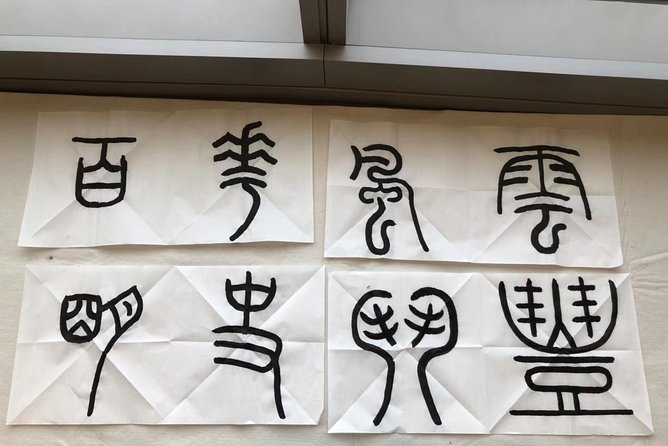
The class is built to end with something you can bring home. Reviews mention finished pieces on canvas and also describe a final product that students paint as a hanging ornament style souvenir. That matters because calligraphy workshops can be either “watch and leave” or “practice and produce.” This one is designed for the second option.
The takeaway isn’t just a random character. The teacher format is meant to help you understand what you’re doing: how posture affects strokes, how foundation movements work, and how your practice improves across the session. So even if your final character isn’t perfect, it’s still an authentic first attempt that reflects your time in Beijing.
Another small detail that shows up repeatedly: photo help. Several reviews mention the instructor taking pictures for memories. If you care about documenting the experience (and many people do), this is a real plus because you can focus on practicing rather than trying to hold the camera at the exact moment your brush makes a good stroke.
Also, you should expect that your final work will be a direct result of the time you choose. More time usually means more refinement and a better chance that you’ll feel satisfied with what you’re taking home.
Teachers, Tea, and the Cultural Side You’ll Actually Feel
What makes this class stand out isn’t only the calligraphy technique. It’s the way the instructor connects craft to mindset and culture. The lesson includes yin-yang ideas aimed at inner peace, and reviews repeatedly point out that teachers explained more than brush mechanics—they shared cultural and philosophical insights tied to what students were learning.
In reviews, instructors are named—Richard, David, and Robert Lee show up as standout teachers. The common thread across names is patience. People emphasized that the instructor stayed attentive, corrected posture and technique, and offered clear explanations for beginners. That combination is rare when you compare it to many DIY-style workshops.
Tea shows up as part of the experience too. Reviews mention hot tea and even tea-and-chat at arrival for some participants. You may not remember every philosophy point later, but you’ll probably remember how the lesson felt: calmer, slower, and more personal than a typical activity where you rush through steps.
One more practical note: the class happens in a small, local-feeling setting near Wangfujing. That’s great if you want cultural immersion that doesn’t require a long transfer outside the city center.




Price and Value: Why $20 Can Feel Like a Good Deal
At $20 per person, you’re paying for a real teaching interaction plus supplied materials during class. The price is also easier to justify because the supplies are included—brush tools and materials needed for practice. You’re not just paying for a room; you’re paying for instruction and usable output.
Value also comes from what you avoid. A rushed one-off souvenir session can be expensive for what you actually learn. Here, the lesson is structured around posture, basic strokes, and guided practice. That’s the kind of learning that makes the piece you take home feel earned.
Group size helps too. With a maximum of 15 travelers, you’re likely getting more attention than big group craft classes. In a city like Beijing, where many activities require tickets, long transfers, or pricey guides, this workshop-style class is a straightforward win if you want something hands-on and meaningful without burning your whole budget.
Who This Calligraphy Class Is Perfect For (and Who Should Think Twice)
I’d book this class if you want a break from running across Beijing sites and you’d like a calm activity you can actually participate in. It’s also ideal for couples and families because it’s structured and beginner-friendly, and reviews mention learning in family settings with children.
You should also like it if you enjoy culture that’s explained alongside action. The lesson is not purely technical, and it isn’t just a tour with a craft stop. You get a blend of brush practice and short philosophy-style ideas.
Children can participate, but the additional info says children must be accompanied by an adult. If you’re traveling with kids, plan your expectations: the class is about concentration and fine motor control, so build in patience and help them settle into the posture and practice rhythm.
Who might reconsider? If you want calligraphy as a serious multi-session skill-building course, a one-time workshop won’t replace long practice and coaching. But as a first taste of Chinese calligraphy, it’s exactly the kind of activity that gives you a souvenir plus a working foundation—enough to keep practicing later if you want.
Should You Book This Chinese Calligraphy Class in Beijing?
Yes, I think you should book it—especially if you’re in Beijing for several days and want one activity that slows you down. Choose the 1-hour option or longer if you want the best balance between learning and leaving with a piece you love. If you’re tight on time and mainly want a quick cultural keepsake, 30 minutes can work, but go in expecting less practice depth.
One last tip: if you’re navigating to the studio, double-check you’re using the correct entrance and building number near the arts center area. The meeting point at Hilton Beijing Wangfujing helps, but the final studio spot may be slightly different than what you expect—one review explicitly calls that out. With a little attention to where you’re walking, the experience is smooth.
FAQ
How long is the Chinese calligraphy class?
The experience duration is listed as about 1 hour, but you can choose different class lengths when you book: 30 minutes, 45 minutes, 1 hour, 1.5 hours, or 2 hours.
Where do we meet for the class?
You meet at the entrance of the Hilton Beijing Wangfujing hotel lobby.
What is included in the price?
The class includes calligraphy supplies to use during the session and an included admission ticket for your selected class length.
Is there a small-group limit?
Yes. The maximum group size is 15 travelers.
Do I need to know calligraphy before I go?
No. The class is set up for beginners, with instruction on correct posture and basic strokes.
Can children join the class?
Children can participate, but they must be accompanied by an adult.
Is a mobile ticket provided?
Yes, the tour features a mobile ticket.
Is the location easy to reach using public transportation?
The additional info states it’s near public transportation.
How much does it cost per person?
The price is $20.00 per person.
Is free cancellation available?
Yes. You can cancel up to 24 hours in advance for a full refund.
If you share your travel dates and which class length you’re considering, I can help you choose the best option for your schedule and what you’ll likely want to walk away with.