REVIEW · GUANGZHOU
Guangzhou: Cantonese Heritage Tour with Key Cultural Stops
Book on GetYourGuide →Operated by Guangzhou Travels · Bookable on GetYourGuide
Guangzhou has a Cantonese soundtrack. This half-day walk strings together Qingping Herbal Market, Shangxiajiu, Yongqingfang, and the Cantonese Opera Art Museum, with a Bruce Lee family story in the middle. I like how the stops feel practical, not just photo ops, and I especially like how the guide keeps everything conversational and easy to ask questions about (Tony is one guide you may hear praised for this). The only real catch is time: it’s a 3.5-hour route, so you’ll move steadily and won’t have long to linger at every stall or shop.
At about $6 per person, the price is mostly paying for a guide who can translate what you’re seeing and help you interact with locals, plus good pacing for a tight itinerary. You’ll also want to plan for a fair tip—200 RMB (around $30 / £20) is the recommended amount per traveler—so the experience stays sustainable.
In This Review
- Key things you’ll notice on this Cantonese Heritage Tour
- Cantonese Heritage in 3.5 Hours: what you’re really buying
- Meeting at 文化公园 Metro (Exit E): how the start sets the pace
- Qingping Herbal Market: the smells and labels that make medicine human
- Shangxiajiu Pedestrian Street: arcade buildings plus street food choices
- Yongqingfang Wharf: courtyards, lanes, and a working neighborhood feel
- Guangzhou Intangible Cultural Heritage Street: crafts you can watch closely
- Lixiaolong Ancestral Home: Bruce Lee’s Guangzhou roots
- Cantonese Opera Art Museum: understanding costume and movement
- Price, value, and the tip that keeps it fair
- Who should book this Guangzhou Cantonese Tour
- Should you book? My decision guide
- FAQ
- How long is the Cantonese Heritage Tour?
- What is the meeting point?
- Is the tour guide English-speaking?
- How big is the group?
- What are the main stops on the itinerary?
- What is included in the price?
- What is not included?
- How much does the tour cost?
- Can I cancel for a refund?
- Do I have to pay right away?
Key things you’ll notice on this Cantonese Heritage Tour
- Qingping Herbal Market: smells, labels, and everyday uses of traditional medicine explained in plain terms
- Shangxiajiu Pedestrian Street: arcade-style storefronts and street food guidance without the guesswork
- Yongqingfang: wharf-side lanes where old architecture and modern cafés sit side by side
- Intangible Cultural Heritage Street: live craft moments and lion dance preparation you can watch up close
- Bruce Lee roots at Lixiaolong Ancestral Home: a global icon tied to family history in Guangzhou
- Cantonese Opera Art Museum: costume and movement symbolism made easier to understand
Cantonese Heritage in 3.5 Hours: what you’re really buying
This is a focused on-foot tour designed to connect Cantonese culture through five big lenses: traditional medicine, street life, neighborhood history, living crafts, and performance art. You’re not trying to “cover everything in Guangzhou.” Instead, you’re seeing a chain of places that explain how Cantonese identity shows up in daily life, not just on posters.
The value here comes from interpretation. Many of these locations are active public spaces—markets, pedestrian streets, craft areas, and museums. Without a guide, you can still walk through them, but you’ll likely miss the meaning behind what you’re looking at: why a stall does what it does, what the opera costumes signal, and how local traditions are practiced.
One more point that matters for planning: the tour is capped at 8 participants. That small size helps the guide keep momentum and answer questions without turning it into a timed lecture where you never get to ask anything.
You can also read our reviews of more tours and experiences in Guangzhou.

Meeting at 文化公园 Metro (Exit E): how the start sets the pace
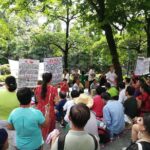
You start at 文化公园地铁站 (Cultural Park Metro Station), Exit E, outside. That matters because it’s easy to find if you’re using the metro, and it keeps the morning/afternoon simple. You’re also starting at a point that’s close to the kinds of streets this route is built around, so you don’t waste time on long transfers.
From there, you should expect a walking rhythm. The whole experience runs about 3.5 hours, with short guided stops along the way. In practice, that means you’ll get time for photos and small observations, but you should treat this as a “watch-and-ask” style tour rather than a “browse at leisure” style tour.
The tour is in English, and the guide is a key part of the package. The most consistent praise is about conversation—people highlight how easy it is to talk with the guide and how well they handle questions. If you like learning while you’re moving, this format fits your style.
Qingping Herbal Market: the smells and labels that make medicine human
Qingping Herbal Market is where the tour turns from sightseeing into daily culture. You’ll get about 30 minutes here with a guide, and the point isn’t to make you buy anything—it’s to show you what traditional medicine looks like when it’s part of everyday commerce.
What I like about this stop is that it’s sensory. You see packaged ingredients, you notice how vendors present products, and you start understanding why herbal medicine is woven into local habits. Even if you don’t plan to purchase, you’ll come away with better instincts for reading the market: what’s being sold, how it’s explained, and why it matters locally.
One practical consideration: markets can be visually dense. Give yourself permission to slow down for a minute when the guide points something out, then keep walking when it’s time to move on. If you’re hoping for an extended browsing session, this timing may feel short, but it’s long enough to get the idea and ask questions.
Also, the tour includes interaction with local people. In a place like Qingping, that can be the difference between watching from a distance and actually understanding what you’re looking at.
Shangxiajiu Pedestrian Street: arcade buildings plus street food choices
Next you’ll walk through Shangxiajiu Commercial Pedestrian Street, again for about 30 minutes. This is the kind of street where you can easily lose time if you don’t have a plan: endless shops, signage, and food smells competing for your attention.
The benefit of having a guide is not just saving time—it’s helping you notice architectural details, and also helping you decide what to try. One of the recurring strengths mentioned is that the guide introduced local delicacies during the tour, and that guidance helped people sample without feeling lost.
You’ll also get stories tied to shopkeepers and the street’s character. That matters because Shangxiajiu isn’t just a shopping corridor—it’s a window into how commerce and local life overlap. When you hear the context, the street feels less like a place you pass through and more like a place with meaning.
If you’re sensitive to crowds or prefer quiet streets, this is the most “public energy” stop of the route. Still, with a small group, you should be able to move together without it feeling chaotic.
Yongqingfang Wharf: courtyards, lanes, and a working neighborhood feel
Yongqingfang is where the tour slows slightly into atmosphere. You’ll get about 45 minutes, which is generous compared to the other street stops. The setting is a mix of historic charm and present-day life: old lanes, small courtyards, and contemporary cafés tucked into side streets.
I like this stop because it gives you a break from the market-and-shopping pace. You get to walk, stop, look at how spaces are arranged, and think about how neighborhoods evolve. You’re not only looking at old buildings; you’re also seeing how people live now.
The guide’s job here is to point out what’s easy to miss—layout, details, and the idea that this area functions as a cultural hub, not just a background for photos. If you like architecture and you like noticing how public spaces work, you’ll likely enjoy the time allotment.
If it’s hot or rainy, this portion can still work, since the lanes and courtyards give you moments to slow down and regroup. Just keep in mind that this is still a walking route.





Guangzhou Intangible Cultural Heritage Street: crafts you can watch closely
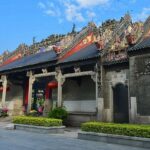
The tour also visits the Guangzhou Intangible Cultural Heritage Street area (listed in the itinerary as a “hidden gem”). This is about 30 minutes of hands-on viewing: craft activity in progress and demonstrations connected to living tradition.
What you should expect is the kind of cultural showing that’s meant for real practice, not performance-for-tourists only. The tour description specifically mentions seeing masters at work—things like embroidery—and also watching preparation connected to lion dance.
Even without participating, you’ll get a lot more out of this stop than you would wandering. A guide can explain what to look for: why certain steps matter, what the craft is trying to preserve, and how performance traditions connect to community identity.
The drawback is simple: 30 minutes can’t turn you into a craft expert. But it’s a good “first look” that can make you want to return later with your own curiosity.
Lixiaolong Ancestral Home: Bruce Lee’s Guangzhou roots
One of the standout storytelling stops is Lixiaolong Ancestral Home, described as a peek into Bruce Lee’s former residence and family roots in Guangzhou. This is about 30 minutes and it’s where the tour adds a global connection to local heritage.
This stop tends to land well with people who know Bruce Lee as a worldwide figure but want the personal, place-based story. You’re not just seeing a name on a wall—you’re getting a sense of how his family history links back to Guangzhou. The guide connects the legend’s spirit to a more grounded narrative of roots and upbringing.
I find this is a good mid-tour reset, too. After markets and streets, a calmer heritage home setting gives your brain a chance to process what you’ve learned. And if you’re a fan of Bruce Lee, it adds a layer of emotion that’s hard to replicate elsewhere.
If you’re visiting with teens or family members, this is often the moment that helps everyone feel the tour is more than just walking around.
Cantonese Opera Art Museum: understanding costume and movement
The final major stop is the Cantonese Opera Art Museum (also where the tour finishes). You’ll get about 20 minutes inside.
Cantonese opera is a performance tradition, so the biggest challenge for many visitors is simply knowing how to read it. Here’s what makes the museum worthwhile in the context of the tour: you’ll get help understanding symbolism—especially the meaning behind vibrant costume elements and the logic behind intricate movements.
A short museum stop can feel limited, but with a guide explaining what to notice, 20 minutes can be enough to leave with a mental framework. You start seeing why the costumes are designed the way they are, and you begin to understand that opera isn’t random theatrics—it’s a system of visual language.
Also, finishing at the museum is practical. You end in a clear place rather than dispersing into streets where you must “find your way back” by yourself. That can matter if you’re trying to keep the rest of your afternoon organized.
Price, value, and the tip that keeps it fair
Let’s talk about the elephant in the room: $6 per person sounds almost too low for a guided 3.5-hour route. The key is what that price covers. The description explains that the fee you pay goes to the platform for organizing the experience, while the guide’s efforts are supported by an in-person contribution.
That’s why the suggested tip—200 RMB / 30 USD / 20 GBP per traveler—is part of the real value equation. Think of it like this: you’re getting a low-cost guided route because the platform is taking its share, and the guide’s livelihood depends on you showing appreciation beyond the booking price.
If you’re used to paying much more for private guides, this pricing can feel like a deal. If you’re on a tight budget, it is a deal. Still, don’t treat it as a free tour. Bring cash for the tip, and you’ll be doing your part to keep the quality of guiding sustainable.
Who should book this Guangzhou Cantonese Tour
This tour fits best if you:
- Want a guided walking route through key Cantonese culture places without doing the research yourself
- Enjoy asking questions while you’re on the move, not only standing in front of one exhibit
- Like culture that connects to daily life—markets, neighborhood lanes, crafts, and performance art
- Prefer small group pacing (it’s limited to 8 participants)
It may be less ideal if you:
- Hate walking or want a long stretch to browse shops slowly
- Want a deep, academic lecture style tour rather than interpretive guided stops
- Are only interested in one single topic like Bruce Lee and nothing else (this is intentionally multi-stop)
Should you book? My decision guide
Book this tour if you want a smart way to understand Cantonese heritage in a short window. The lineup makes sense—herbs at Qingping, street life at Shangxiajiu, neighborhood character at Yongqingfang, craft and performance context through the intangible heritage area and the opera museum, and then the Bruce Lee family link at Lixiaolong Ancestral Home.
Skip it only if you’re the type who needs lots of free time to wander without guidance. Because this route is timed, you’ll get a guided version of each place, not an all-day free-for-all.
If you do book, plan to ask questions, and plan to tip. That’s how you get the best version of the experience you’re paying for.
FAQ
How long is the Cantonese Heritage Tour?
The tour lasts about 3.5 hours.
What is the meeting point?
You meet at 文化公园地铁站 (Guangzhou Cultural Park Metro Station), Exit E, outside.
Is the tour guide English-speaking?
Yes, the live tour guide works in English.
How big is the group?
It’s a small group limited to 8 participants.
What are the main stops on the itinerary?
You’ll visit Qingping Herbal Market, Shangxiajiu Pedestrian Street, Yongqingfang, the Guangzhou Intangible Cultural Heritage Street area, Lixiaolong Ancestral Home, and the Cantonese Opera Art Museum.
What is included in the price?
The price includes a professional tour guide and interaction with local people.
What is not included?
Personal expenses are not included.
How much does the tour cost?
The price is listed as $6 per person.
Can I cancel for a refund?
Yes. You can cancel up to 24 hours in advance for a full refund.
Do I have to pay right away?
No. You can reserve now and pay later.