REVIEW · GUILIN
Guilin: Longji Rice Terraces& Long Hair Village Private Tour
Book on GetYourGuide →Operated by Discover China Trips · Bookable on GetYourGuide
Dragon’s Backbone looks unreal up close.
I love the mix of UNESCO terraces and real cultural encounters, not just photo stops. Two things especially worked for me: the big views from Golden Buddha Peak (via cable car on the Dazhai option) and the Long Hair Village show tied to Yao long-hair tradition. One thing to consider: you’ll deal with hiking and stairs if you choose Ping’an, so plan on comfortable shoes and pace yourself.
The long drive out pays off with quiet scenery.
In a good group setup, you can get time to walk, pause, and actually see how the terraces stack and curve across the hills. A possible drawback: depending on your chosen option (Dazhai vs Ping’an) and the conditions, visibility may limit what you can capture that day.
In This Review
- Key things to know before you go
- Entering Dragon’s Backbone: how the terraces become real
- Dazhai vs Ping’an: two ways to follow the dragon’s spine
- Cable car at Golden Buddha Peak vs hiking at Ping’an
- Terraces, villages, and what you’re seeing beyond the view
- Long Hair Village: the Yao tradition in a real setting
- Lunch in a local village: simple, practical, and included
- Private transportation and English guiding that actually helps
- Price and value: is $148 per person fair?
- Weather, timing, and getting the photos you want
- Ending in Longsheng or returning to Guilin
- Should you book this private Guilin terraces and Long Hair Village tour?
- FAQ
- How long is the Guilin Longji Rice Terraces and Long Hair Village private tour?
- Is hotel pickup included, and is the group private?
- Will the guide speak English?
- Do I get to choose between Dazhai and Ping’an rice terraces?
- Is the cable car ride included?
- Is lunch included in the price?
- Can I end the tour in Longsheng or return to Guilin?
- Is there free cancellation?
Key things to know before you go
- Dazhai vs Ping’an: pick the style you want—cable car + easy walking, or hiking + multiple viewing platforms
- Cable car option matters: Golden Buddha Peak is the Dazhai focus, while Ping’an relies more on walking viewpoints
- Terraces with deep time: built in the Yuan Dynasty and lasting into the early Qing Dynasty
- Two minority cultures, two terrace stories: Zhuang and Yao communities live with the terraced fields for centuries
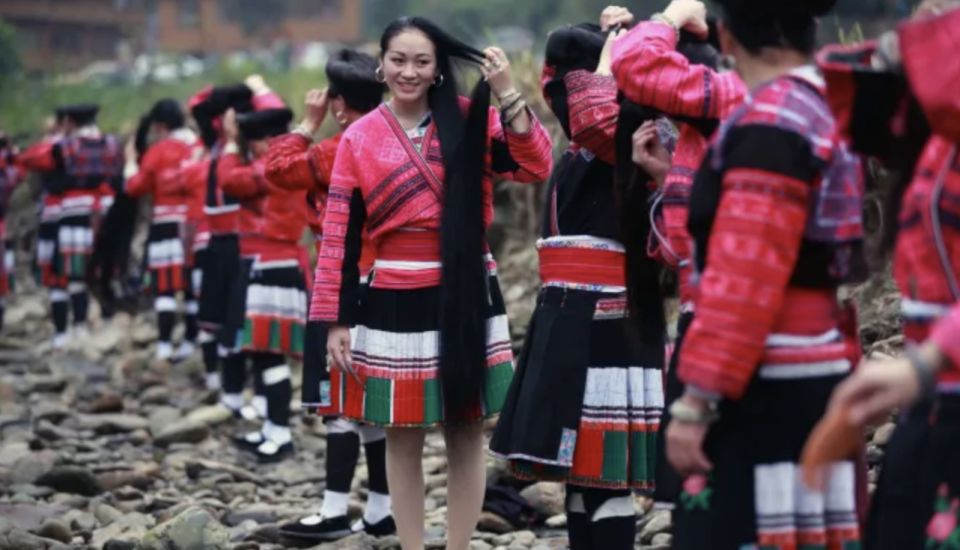
- Long Hair Village isn’t a quick glance: you’ll see the Yao long-hair tradition plus a show
- Private logistics are the point: hotel pickup, English guide, and a private air-conditioned vehicle reduce stress
Entering Dragon’s Backbone: how the terraces become real

The Dragon’s Backbone Rice Terraces are the kind of sight that looks like a postcard… until you’re standing there and realize it’s engineered work. The terraces were constructed during the Yuan Dynasty and lasted until the early Qing Dynasty, which gives you the right frame of mind: this isn’t a modern “scenery project.” It’s an old system people built with patience, and it still shapes daily life.
On this private tour, you’re guided from Guilin in an air-conditioned vehicle with an English-speaking guide. That matters because the terraces can feel confusing if you’re left to wander on your own. With a guide, you get practical orientation fast: where you can see the best terrace layers, how the viewpoints relate to each other, and what details to watch for as you move.
If you enjoy photography, you’ll also appreciate the rhythm of the day. You’re not just dropped at one overlook. You’ll have time to walk around the viewing areas and take photos from different spots, which is the difference between “I saw it” and “I understand it.”
You can also read our reviews of more tours and experiences in Guilin.

Dazhai vs Ping’an: two ways to follow the dragon’s spine
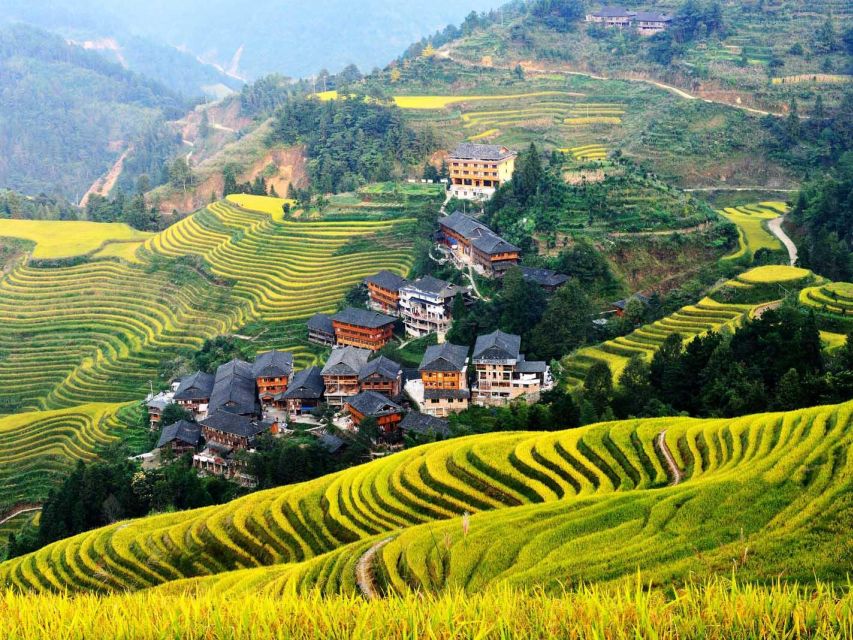
Your guide will help you choose between the Dazhai Rice Terraces and the Ping’an Rice Terraces. Both are part of the larger Dragon’s Backbone system, but the viewing approach feels different.
With Dazhai, the focus is on reaching high ground efficiently. You can take the convenient cable car directly to Golden Buddha Peak, then take an easy walk around for photos from multiple locations. This option is a strong fit if you want big views without spending the whole day climbing.
With Ping’an, the day leans more active. You’ll follow your guide to hike and explore the undulating “dragon’s spine” scenery. You’ll also see specific scenic stops tied to platforms—West Hill Music or the No. 1 viewing platform, plus Large-scale Thousand-Layer Terraces or the No. 2 viewing platform. If you like variety and walking, Ping’an gives you that “keep moving, keep noticing” effect.
Either choice is worth it. The real decision is your energy level and your preferred pace.
Cable car at Golden Buddha Peak vs hiking at Ping’an

Here’s the plain truth: your legs will influence how much you enjoy the terraces. The Dazhai option uses a cable car to get you up to Golden Buddha Peak, which helps a lot when you want great views but don’t want a long slog right away. Once you’re there, the walking is described as easy, which makes it simpler to stop frequently for photos and just soak it in.
Ping’an is different. The tour description is clear that you’ll hike and explore. That can be fantastic if you like trails and slow scenic discovery, but it also means more time spent stepping and adjusting your pace. Comfortable shoes aren’t optional—your day will feel much better if you’re prepared for uneven ground.
One practical note: admission and the cable car ride are included only if you pick the related option. If you choose the basic tour, you can buy cable car tickets on the spot. Either way, your guide can help you plan which option fits the day you want.
Terraces, villages, and what you’re seeing beyond the view
It’s easy to treat rice terraces as pure scenery. The more interesting approach is to treat them as a living system you can still read from the hillsides.
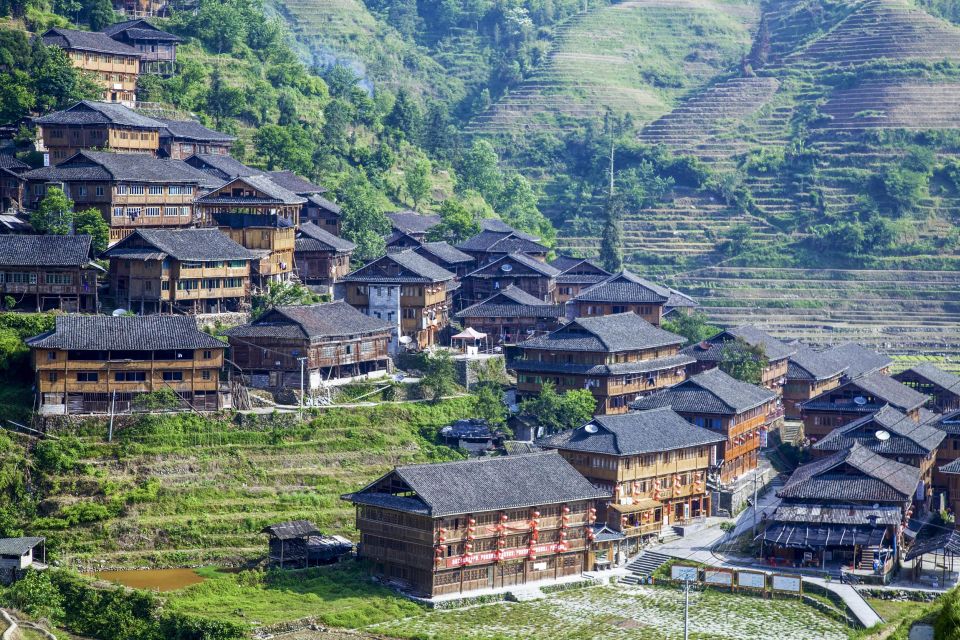
On your route, you’ll take in the incredible terrace shapes described as being constructed over centuries. You’ll also visit terraced field areas associated with living communities, including the Ping’an Zhuang Village Terraced Fields and Jinkeng Terraced Fields. The point isn’t just that people live there; it’s that Zhuang and Yao minority people have been living with these terraced fields for hundreds of years. That context makes the terraces feel less like “nature art” and more like human-scale engineering.
If you enjoy cultural details, ask your guide to point out what changes as you move—how terraces step across slopes, how paths connect viewing points, and why certain areas look especially layered. A good guide will also help you understand the name of what you’re seeing and why it’s called Dragon’s Backbone.
And if the weather throws a curveball, don’t panic. One of the best real-world advantages of having a guide and private transport is adaptability when visibility drops. You can shift where you spend more time, and you’re not stuck waiting at the wrong place with no plan.
Long Hair Village: the Yao tradition in a real setting
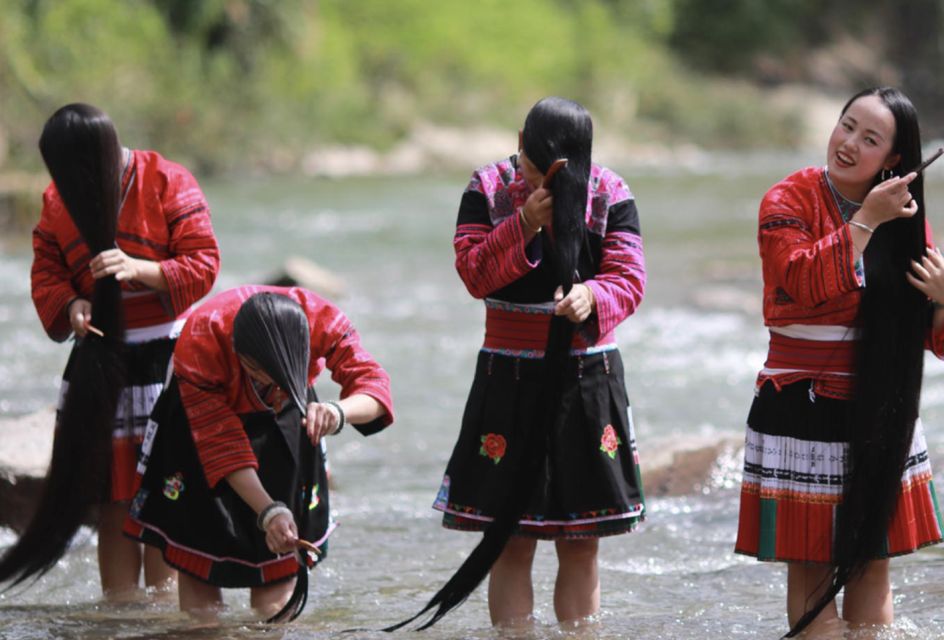
The Huangluo Long Hair Village stop is the cultural counterweight to the terraces. This is where the tour goes beyond views and into identity and tradition.
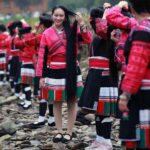
You’ll learn about the Yao ethnic group and their long hair tradition. The hair is long enough that the village is recognized by Guinness World Records as the world’s longest hair village. That’s a big claim, but it also gives you a helpful lens: this isn’t just style—it’s tied to community identity and how the tradition is recognized globally.
You’ll also enjoy a long hair show. The show is described as fun and interesting, and it’s a nice break from walking. In practice, it helps you connect names and stories to something visual and immediate—so the day doesn’t feel like “just sightseeing.”
If you’re the type who likes cultural stops but hates rushed, scripted experiences, this part is worth paying attention to. Give it time. Watch what’s happening, then ask your guide what’s traditional and what’s meant for visitors.



Lunch in a local village: simple, practical, and included
This tour includes lunch only if you select the option that has it. When lunch is included, it’s in a local village, and you’ll taste traditional dishes.
Even if you’re not a food fanatic, village lunch is practical. It breaks up the day when you’ve been traveling and climbing, and it keeps you from losing time hunting for something open and easy. Also, because it’s integrated into the tour flow, you’re not stuck coordinating transportation and timing on your own.
One more benefit: with a private guide, you can ask what to expect before you sit down—what’s typical, what might be spicy, and what order you’ll see dishes. You get to eat without guessing.
Private transportation and English guiding that actually helps
This tour is private, and that changes how the day feels. Hotel pickup in Guilin is handled by a guide holding a sign with your name in the hotel lobby. That sounds small, but it saves a lot of first-day confusion in Guilin.
The vehicle is also a real selling point. Transport is rated highly, with 87% of reviewers giving it a perfect score. In plain terms: you’re less likely to feel stressed about comfort or safety during a long day out to Longsheng.
What really makes the private format shine is the guide conversation. Guides like Emily, Tom, Joe Wu, and Eric have been praised for strong English and for explaining what you’re seeing. That includes history and context, plus answers to questions about China that you probably won’t find from signage alone.
Also, you may get extra helpful touches depending on your guide—one example from real experiences: accommodating family needs and even helping coordinate luggage drop-off at an overnight hotel. If you’re traveling with bags or you want smoother handoffs, a private guide can save you headaches.
Price and value: is $148 per person fair?
At $148 per person for an 8-hour private tour, you’re paying for a few things at once: door-to-door pickup, a live English guide, private air-conditioned transport, and—depending on your option—admission and a cable car ride, plus lunch.
So is it good value? For me, the answer is yes if you want a low-stress day with planning built in. The terraces require time and movement, and getting there isn’t a quick hop from Guilin. Paying for private logistics matters when you’d otherwise spend energy figuring out transport, ticketing, and the best order of viewpoints.
The key value lever is what option you choose:
- If you pick the package that includes admission and the cable car ride, you’re buying convenience and fewer decisions on the ground.
- If you choose the basic tour, you can purchase the cable car ticket on the spot, but you’ll have more on-the-fly work.
Either way, the day is structured around two big anchors: Dragon’s Backbone terraces and Long Hair Village. That combo is harder to replicate on your own without losing time.
Weather, timing, and getting the photos you want
Terraces are very much a “conditions matter” experience. Clouds can soften the contrast, and limited visibility can hide the depth you’re hoping for. The good news is you’re not stuck alone in that situation. A private guide can help you make choices quickly about where to stand and when to move.
Also, terrace days work best when you take breaks on purpose. Build in short pauses, not long “I’ll wait and see” gaps. The tour is designed with time for walking and photography around key viewpoints—so you can get multiple angles rather than rushing through one area and calling it done.
One practical tip from how people describe the walking portion: if your guide suggests an easy walk, take it seriously. Those extra viewpoint steps can make your terrace photos look more dimensional, because you’re changing height and angle as you move.
And if you care about avoiding crowds, ask your guide for the best plan for that day. The combination of private timing and a local route approach can help keep the day feeling calmer than you might expect.
Ending in Longsheng or returning to Guilin
At the end of your tour, you can choose to finish in Longsheng or return to Guilin. That flexibility is useful if you’re planning an overnight stay in the region or if you prefer to base yourself back in Guilin after a full day out.
This is also where private touring helps your schedule. You’re not tied to a single fixed return time that ignores your next plan. If you already know where you’ll be sleeping, pick the option that protects your evening.
Should you book this private Guilin terraces and Long Hair Village tour?
Book it if you want the terraces and the culture in one organized day without turning your trip into logistics homework. This is especially appealing if you:
- want an English-speaking guide who explains what you’re seeing (not just directions)
- prefer a private vehicle for a long day outside Guilin
- like pairing big scenery with a cultural stop that has real meaning, like the Yao long-hair tradition
- want help choosing between Dazhai (cable car + easier walking) and Ping’an (hiking + multiple viewing platforms)
Skip it or rethink the pace if you strongly dislike hiking, because the Ping’an option is described as an active exploration. Also, if you’re aiming for only one quick terrace overlook, a full guided half-day structure might feel like more time than you need.
If you want a day that feels like it has a plan—terraces, viewpoints, village lunch, then Long Hair Village—this private tour is a strong fit. It’s a classic Guilin-region day, but with the kind of guidance that helps you leave with understanding, not just photos.
FAQ
How long is the Guilin Longji Rice Terraces and Long Hair Village private tour?
The tour lasts about 8 hours.
Is hotel pickup included, and is the group private?
Yes. Your guide meets you in the lobby of your Guilin downtown hotel and the tour is a private group.
Will the guide speak English?
Yes, the tour includes a live English-speaking guide.
Do I get to choose between Dazhai and Ping’an rice terraces?
Yes. You can choose to explore either the Dazhai or Ping’an rice terraces, and the experience differs between the two options.
Is the cable car ride included?
It depends on the option you choose. Cable car and related admission are included with the related option, and for a basic tour you can buy your own ticket on the spot.
Is lunch included in the price?
Lunch is included only if you choose the option that includes lunch.
Can I end the tour in Longsheng or return to Guilin?
Yes. After the tour, you can choose to end in Longsheng or return to Guilin.
Is there free cancellation?
Free cancellation is available up to 24 hours in advance for a full refund. You can also reserve now and pay later.