REVIEW · CHENGDU
Half-Day Sichuan Cooking Class Experience in Chengdu
Book on Viator →Operated by Samtour of Chengdu OTC Travel · Bookable on Viator
Sichuan cooking starts with a spice lesson. In about four hours, you’ll trade sightseeing mode for an actual kitchen session in Chengdu, learning Sichuan cooking techniques from a chef while you make a real meal. It’s the kind of class that feels practical, not performative, and the small scale helps you stay involved.
Two things I really like: you cook multiple dishes instead of watching only, and you leave with recipe cards you can realistically follow later. Hotel pickup and drop-off also make it easy to fit this into your day without playing transit roulette.
One thing to consider: the level of English support can vary by chef and day. The class is designed with local guidance in mind, but you should be ready for hands-on learning, more than long lectures about theory.
In This Review
- Key Highlights Worth Your Time
- A 4pm Kitchen Reset in Chengdu
- From Pickup to Chef Hat: What the Class Flow Actually Feels Like
- Kung Pao Chicken: Learning Heat and Texture the Right Way
- Sweet and Sour Pork: Balancing Flavor Without Guesswork
- Fish-Flavored Eggplant and Steamed Dumplings: Two Different Skill Sets
- Requesting a Dish Beyond the Menu: Flexibility, Not a Guarantee
- Dinner Included: Eating What You Cook (and Not Waiting Around)
- Small Group Size: Why Max 5 Really Helps
- Language and Teaching Style: Hands-On Wins
- Price and Value: What $83.99 Buys You in Real Life
- Practical Tips Before You Go
- Who Should Book This Sichuan Class (and Who Might Not)
- Should You Book This Half-Day Sichuan Cooking Class?
- FAQ
- What time does the Half-Day Sichuan cooking class start?
- How long is the cooking class?
- Is hotel pickup and drop-off included?
- How many people are in the group?
- What dishes will I cook?
- Can I request a different Sichuan dish not on the menu?
- Do I get recipes to take home?
- Is dinner included?
- Is there English support during the class?
- Is the meeting location near public transportation?
- FAQ
- Can I cancel for a full refund?
- What if I cancel less than 24 hours before?
- Should You Book This Half-Day Sichuan Cooking Class?
Key Highlights Worth Your Time
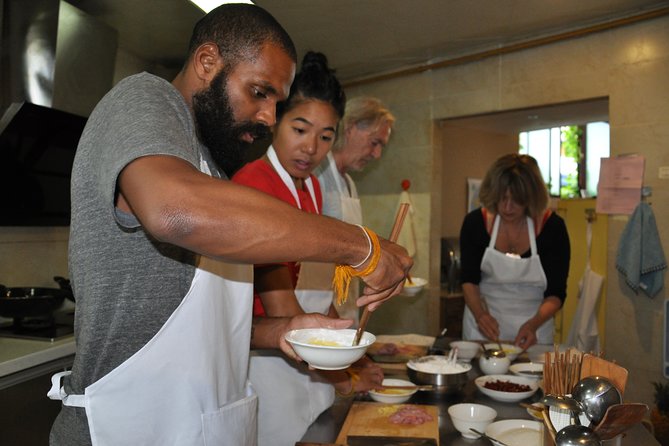
- Small group size (max 5): more hands-on help and quicker feedback while you cook
- Four classic Sichuan dishes: Kung Pao chicken, sweet and sour pork, fish-flavored eggplant, and steamed dumplings
- Hotel pickup and drop-off: a big time-saver in Chengdu
- You request a custom dish: you can ask for something off-menu, though it isn’t guaranteed
- Recipes to take home: you’re not leaving empty-handed or just with photos
A 4pm Kitchen Reset in Chengdu
This is a half-day class built around a simple idea: learn Sichuan technique by doing it, then eat what you make. The session starts at 4:00 pm, and the class runs about 4 hours depending on how many people show up. In other words, you’re not stuck in a long workshop. You’re in and out with dinner and notes.
You’ll start with pickup from your Chengdu hotel. That matters more than it sounds. Chengdu can be easy to navigate once you get your bearings, but saving yourself the route planning before a cooking class is a win. After pickup, you head to the cooking school or kitchen space where the class happens.
Even the timing feels smart. A late-afternoon start means you can avoid an early scramble and still get a full evening meal without hunting around for dinner after you’ve cooked.
You can also read our reviews of more tours and experiences in Chengdu.


From Pickup to Chef Hat: What the Class Flow Actually Feels Like
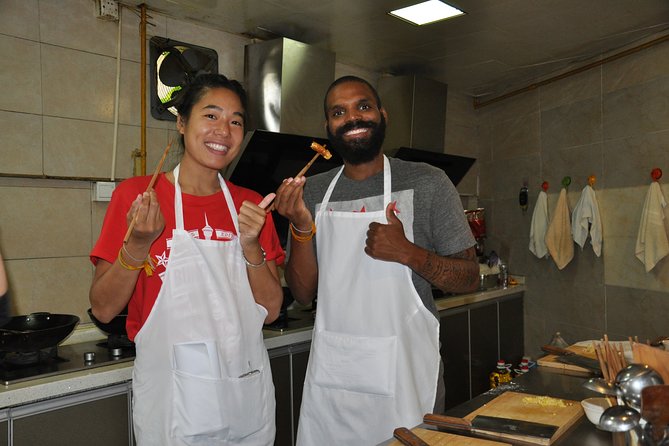
Once you arrive, the rhythm is steady and practical. You’ll meet your guide and chef, put on a chef’s hat, and start with an explanation of Sichuan flavor combinations and how techniques shape taste. Some sessions lean more toward demonstration, but the better ones push you to start cooking sooner, not later.
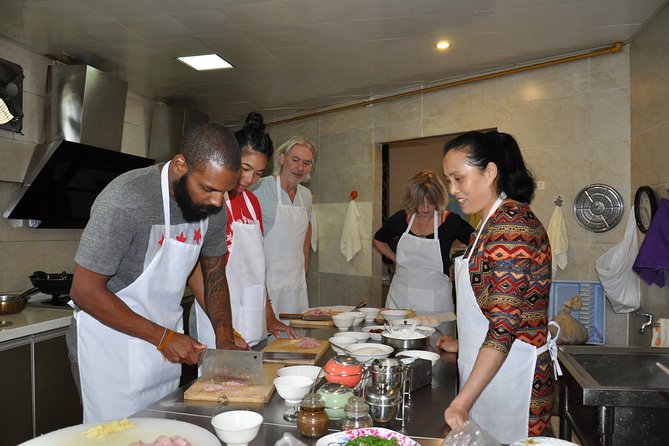
Then you’ll move into cooking four dishes. You’re not just chopping vegetables and hoping for the best. You handle real steps like stir-frying, assembling, and finishing so the food you eat at the end feels like it came from your hands, not your plate.
The vibe is relaxed. You’ll sit down to eat with your fellow food lovers after cooking, and you can ask questions while your dishes are being served. If you want a class that’s equal parts learning and hanging out, this one fits.
A small but important detail: the kitchen space can be small. A couple of sessions have taken place in compact, working kitchens (including hostel-like kitchens or family-run spaces). That’s not a problem if you like being close to the action. If you prefer lots of counter space and big classroom layouts, you might find it snug—but you’ll still get your hands on the food.
Kung Pao Chicken: Learning Heat and Texture the Right Way
Kung Pao chicken is one of the anchor dishes in this class, and it’s a great choice for learning. Why? Because it teaches the “shape” of the dish: how sauce and seasoning work together, and how stir-fry timing changes the final texture.
Here’s what you should expect as you cook it:
- you’ll follow the chef’s steps for preparing the ingredients and building flavor
- you’ll learn how the dish is finished so it tastes cohesive, not just salty or spicy
- you’ll get guidance that’s meant to make the method repeatable later
The practical payoff is that Kung Pao chicken is common enough that you can test yourself right after the trip. When you cook it at home later, you’ll quickly see whether you understood the sequence or just the ingredients.
If you’re new to Chinese cooking, this is a good starting point. If you’ve cooked before, it’s still useful because it forces you to focus on technique rather than copying a recipe list.
Sweet and Sour Pork: Balancing Flavor Without Guesswork
Sweet and sour pork shows up because it teaches contrast. You’re working with a profile that depends on balance, so technique matters more than you might think. The class approach focuses on how the flavors come together through cooking steps and finishing touches.
In plain terms, you’ll learn:
- how the dish is built rather than just plated
- when to move from prep to cook to finish
- how to keep the flavor from ending up one-note
This dish is also a nice counterpoint to Kung Pao. One tends to be punchy and spicy-forward; the other leans into tang and sweetness. Cooking both in the same class helps you see how different Sichuan dishes can rely on the same core idea: seasoning and timing create the final taste.
Fish-Flavored Eggplant and Steamed Dumplings: Two Different Skill Sets
Next up is fish-flavored eggplant. Despite the name, it’s famous more for its flavor approach than for obvious fish chunks. In your class, it becomes a technique lesson in getting aromatics and seasoning to taste right without overcomplicating the cooking.
You’ll typically learn steps that change how eggplant holds up in the finished dish—how it absorbs sauce and how the final texture should feel. Eggplant can easily go wrong if you rush it, so this portion is where the chef’s timing advice is most valuable.
Then comes the dumplings, and this is often the part people get excited about. You’ll learn soft steamed dumplings, and at least one session included hands-on dumpling folding. Dumplings are a great skill to take home because:
- the method is clear once you’ve done it once
- the results are satisfying even if your first try isn’t perfect
- the recipe cards make it easier to repeat
If you like learning by doing, dumplings are where the class stops being theoretical. You’re shaping, steaming, and then eating the results while it’s still fresh.






Requesting a Dish Beyond the Menu: Flexibility, Not a Guarantee
One of the best practical features is that you can request a Sichuan dish not listed in the standard set. You do this through the Special Requirements box at booking. The chef will try to accommodate, but it can’t be guaranteed.
In real terms, you should treat this as a “permission to ask,” not a promise of an outcome. If your favorite Sichuan dish is important to you, send the request early and be open to alternatives if the kitchen schedule can’t support it.
Also, menus can vary by class size and setup. In some cases, the cooking has included additional Sichuan-style dishes like mapo tofu or other pork-based preparations, plus dumpling variations. So if you have a specific dish in mind, asking helps. If you don’t, you’ll still get a solid Sichuan spread.
Dinner Included: Eating What You Cook (and Not Waiting Around)
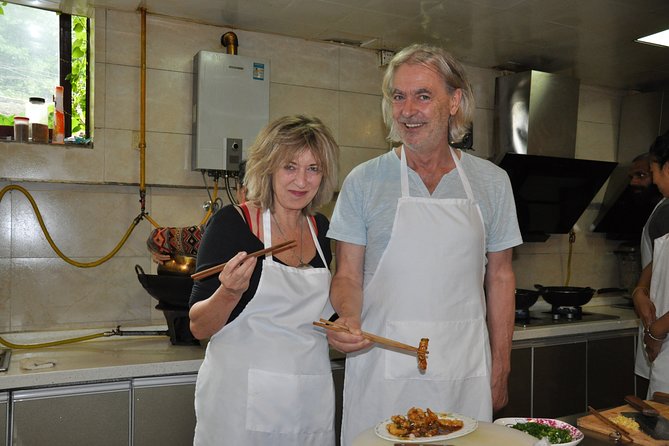
This class includes dinner, but it’s not dinner in the sense of ordering off a menu. You’ll eat the dishes you prepared after finishing the final touches. That sounds obvious, but it changes the whole experience. You don’t have to guess whether it will be satisfying. You already know because you watched the steps and took part in them.
A meal like this also helps the language gap. Even if you and the chef don’t share many words, you can still learn through action—watching, copying, adjusting, and tasting. It’s food education at table level.
Small Group Size: Why Max 5 Really Helps
This is capped at 5 travelers, and you feel that limit in the cooking process. In a bigger class, the chef’s attention spreads out. Here, you’re more likely to get specific feedback on what you’re doing wrong and what to fix next.
The group size also affects the pacing. Confirmation comes at booking, and the course duration can change depending on participant count. Practically, fewer people can mean a more individualized feel, which is especially helpful if you want to ask questions mid-cook instead of waiting until the end.
Some days can be extremely intimate, even to the point where the class feels close to a private lesson. If you want personal attention and you hate feeling rushed, this format is a good match.
Language and Teaching Style: Hands-On Wins
The tour includes a local English-speaking chef, but the real-world experience can vary. Some sessions have had excellent English support. Other times, the chef’s English is limited, and the class works through demonstration and a helper who translates.
So plan for this:
- expect hands-on guidance, even if explanations are short
- bring a positive attitude and be ready to learn with your hands
- ask questions when you can, but don’t rely on long ingredient lectures
One helpful thing: cooking classes naturally teach you by repeating steps. You watch, do it, taste, adjust. Even when you’re not getting a detailed ingredient breakdown, the technique often becomes clear through practice.
Price and Value: What $83.99 Buys You in Real Life
At $83.99 per person for a half-day, this is not a budget “snack and a demo” option. But it can feel fair value if you treat it like a dinner + workshop combo with pickup.
Here’s why the price can make sense:
- you get hotel pickup and drop-off, which saves time and reduces hassle
- dinner is included and is the meal you cook
- the group is capped at 5, which can reduce the “tourist assembly line” feeling
- you leave with recipe cards you can use at home
It can feel expensive if you expected lots of deep culinary theory or an ultra-luxury teaching kitchen. But if you want a practical way to learn technique and leave with a meal plus repeatable recipes, it’s easier to justify.
Practical Tips Before You Go
If you want this class to go smoothly, here’s how I’d prep:
- Eat lightly beforehand so you enjoy what you cook instead of feeling stuffed too early.
- Come ready to stand, chop, stir, and fold dumplings if it’s on the menu.
- If you have a Sichuan dish you want to cook, request it at booking and keep an open mind.
- Take photos of your finished dishes, but also take notes on the steps you repeat most.
Also, since the kitchen setups can be small, wear something comfortable. You’ll likely be close to heat and steam during cooking and dumpling steaming.
Who Should Book This Sichuan Class (and Who Might Not)
This class is a great fit if you:
- want a hands-on foodie experience in Chengdu
- like learning by cooking, not just watching
- want a meal that’s included and made from scratch
- prefer small groups where you can ask questions
You might think twice if you:
- want a long, lecture-heavy lesson with deep ingredient science (this is more action-focused)
- dislike compact cooking spaces
- need very detailed English explanations all the way through
Should You Book This Half-Day Sichuan Cooking Class?
I’d book it if your goal is practical Sichuan cooking and a satisfying dinner that you actually helped make. The combination of hotel pickup, a small max group, and recipe cards gives you good value for a 4-hour block.
If you’re hoping for a long chain of culinary theory, you may find it more hands-on than academic. If you want technique, tasting, and the confidence to cook again at home, this is a strong choice—especially in a city like Chengdu where food is the main event.
FAQ
What time does the Half-Day Sichuan cooking class start?
The start time is 4:00 pm in Chengdu.
How long is the cooking class?
The duration is about 4 hours. The exact length depends on the number of participants.
Is hotel pickup and drop-off included?
Yes. Hotel pickup and drop-off are included.
How many people are in the group?
The class has a maximum of 5 travelers.
What dishes will I cook?
Typical dishes include Kung Pao chicken, sweet and sour pork, fish-flavored eggplant, and soft steamed dumplings.
Can I request a different Sichuan dish not on the menu?
Yes. You can request a dish in the Special Requirements box at booking. Accommodation can’t be guaranteed, but the chef will try.
Do I get recipes to take home?
Yes. You receive recipe cards to take home.
Is dinner included?
Yes. Dinner is included, and it’s the dishes you prepare.
Is there English support during the class?
The class includes a local English-speaking chef, but the amount of English used can vary depending on the instructor and setup.
Is the meeting location near public transportation?
Yes, the tour/activity is near public transportation.
FAQ
Can I cancel for a full refund?
Free cancellation is available. To get a full refund, you must cancel at least 24 hours before the experience’s start time.
What if I cancel less than 24 hours before?
If you cancel less than 24 hours before the start time, the amount paid will not be refunded.
Should You Book This Half-Day Sichuan Cooking Class?
Yes—if you want a small-group, hands-on Sichuan meal with pickup and take-home recipes, this is an easy “food-first” choice. Pack comfy clothes, ask about off-menu dishes early, and go in ready to learn mostly by cooking and tasting.