REVIEW · CHENGDU
Half-Day steamed Buns Cooking Class with a Local Market Visit
Book on Viator →Operated by Chilli Cool China · Bookable on Viator
This is one of the better ways to learn Chengdu flavors without just watching videos. The experience blends a Sichuan spice market walk with a hands-on steamed Bao Zi workshop, then ends with you eating what you made. I especially liked how the guide turns the market into a learning game, and how the class is taught in a traditional-style setting with clear, practical steps.
One thing to consider: it’s still a cooking class with standing and walking, so if you want a totally low-energy activity, plan accordingly—wear comfortable shoes and expect to move.
In This Review
- Bonus highlights you’ll probably notice fast
- Key points worth your attention
- Why a Bao Zi class that starts in a spice market works
- Meeting at Chilli Cool China: the easy part (and what to bring)
- Stop 1: The Sichuan spice market with learning games
- Tea welcome and the courtyard cooking vibe
- Stop 2: Learning Bao Zi in a cozy kitchen with a pro chef
- What you’ll do (in plain terms)
- The part you’ll remember most: eating what you made
- Value check: is $80 worth it in Chengdu?
- Who this fits best (and who might skip it)
- Tips to make the most of your Bao Zi day
- Should you book this Bao Zi market-and-cooking workshop?
- FAQ
- How long is the Bao Zi cooking class?
- Where does the tour start?
- What is included in the price?
- Do I get to eat the buns I make?
- Is there a vegetarian option?
- What is the minimum age for the tour?
- Does the tour run in bad weather?
- How many people are in a group?
- What passport information is required?
- Is there free cancellation?
Bonus highlights you’ll probably notice fast
The group stays small (up to 15), and you get an English-speaking guide from start to finish. You’ll also get local tea early on, then beverages or beer after the cooking, which makes the whole thing feel more like an evening with locals than a classroom.
If you’re a foodie who likes to understand ingredients, not just recipes, you’ll fit right in. If you’re cooking-competent already, you may find it a bit introductory—but it’s great for building confidence.
Key points worth your attention
- Sichuan spice market challenge: You don’t just browse; you learn through prompts and hands-on ingredient spotting.
- Traditional courtyard-style teaching: The bun workshop is set up in a classic Sichuan courtyard atmosphere, then moves into a cozy kitchen.
- You steam and fill your own Bao Zi: The highlight is making steamed buns with filling, not watching someone else do it.
- Tea, then a meal with drinks: Local tea comes as part of the welcome, and you finish with your buns plus beer or beverages.
- Small group size: With a maximum of 15, you’re more likely to get help when you need it.
You can also read our reviews of more tours and experiences in Chengdu.

Why a Bao Zi class that starts in a spice market works
Most cooking classes start when you’re already past the ingredients. This one flips that. You begin by stepping into a local spice market environment where you can see and understand the building blocks of Sichuan cooking. That difference matters because you stop memorizing recipes and start learning what ingredients do.
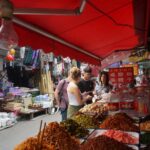
You’ll spend time exploring the market with a guide, and you’ll use fun prompts to learn about Sichuan spices and local ingredients that later show up in your cooking lesson. Even if you only remember a handful of things, the mental map sticks fast: this flavor came from that spice, and this aroma belongs to that ingredient.
I also like the pacing. You’re not rushed into the kitchen before your brain has context. When you finally start shaping and preparing your Bao Zi, you’ll understand what you’re aiming for.
Meeting at Chilli Cool China: the easy part (and what to bring)
The tour meets at 167 Yi Huan Lu Bei San Duan, Jin Niu Qu, Chengdu, Sichuan, 610051. From there, you’re guided through the experience as a group, typically in a format that keeps things efficient and friendly.
Bring comfortable walking shoes. The market stop is active, and you’ll be moving around to look at ingredients and work through learning prompts. The tour also runs in all weather conditions, so dress for rain or heat as needed. If you’re the kind of person who hates getting caught in wet sidewalks, bring a small umbrella or a light rain layer.
One practical detail that surprised me: you’ll need passport details at booking—name, number, expiry, and country—for all participants. It’s a normal travel bureaucracy thing, but it’s worth doing right away so your plan stays smooth.
Stop 1: The Sichuan spice market with learning games
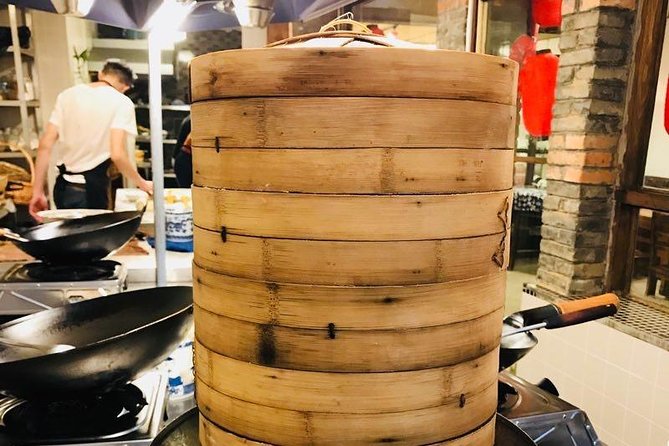
The market portion is where the tour earns its value. You’re not just walking past shelves and hoping something clicks. You’re guided through Sichuan spices and ingredients, and you complete activities that make you pay attention.
A big win here is the English-speaking guide. You’re learning terms and uses in a way that’s easy to follow, and you’re likely to pick up small bits of language along the way. In places like Chengdu, knowing even a couple of basic phrases can make market interactions feel less awkward—and more fun.
You’ll also get a chance to ask questions. If you’ve ever wondered what makes Sichuan flavors taste the way they do, this is the moment to connect the sensory experience to the ingredient story. You may not leave with a full spice dictionary, but you should leave with a stronger instinct for what you’re tasting later.
Potential drawback: if you’ve already done a Chengdu market tour that you loved, this may feel similar at first glance. The difference is that here it’s tied tightly to the cooking lesson, so the goal is learning for use—so come with that mindset.
Tea welcome and the courtyard cooking vibe
After the market segment, the day shifts into a more local, slower rhythm. You’ll be treated with Sichuan local tea, described as a custom locals use to welcome visitors like friends.
Then you move into a traditional Sichuan style courtyard environment for the workshop setup, before transitioning into a cozy kitchen space for the hands-on part. That setting is more than decoration. A courtyard kitchen atmosphere helps you relax and focus on technique, especially when you’re dealing with steamed buns where timing and handling matter.
This is also where you’ll switch from ingredient attention to process attention. The guide and chef focus on what you need to do next, and the atmosphere makes it feel like a practical lesson instead of a performance.





Stop 2: Learning Bao Zi in a cozy kitchen with a pro chef
Once you’re in the kitchen, the experience becomes straightforward and skill-based. A professional chef leads the cooking process, and you’ll follow along to make steamed Bao Zi buns with filling.
Because this is a group class, you won’t get a one-on-one private lesson, but the class size helps. With up to 15 people, you’re usually in a space where questions and corrections are possible, especially if you’re willing to ask.
What you’ll do (in plain terms)
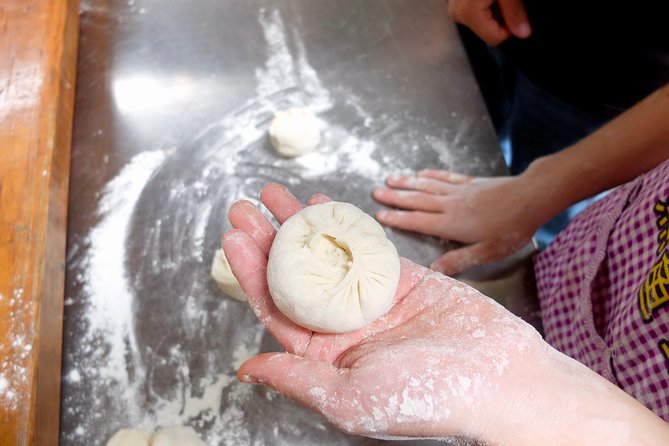
You’ll be guided through making your own Bao Zi—preparing, shaping, filling, and setting up for steaming. The focus is on learning a repeatable method. If you’ve never shaped dumplings or buns before, you should still find it manageable because the guide’s job is to translate steps into something you can actually follow.
One smart consideration: steamed buns can be sensitive to handling. If you’re expecting a totally hands-off cooking demo, you’ll be disappointed. The good news is that this is exactly the kind of activity where you learn by doing, not by watching.
The part you’ll remember most: eating what you made
After cooking, you get to feast on the Bao Zi you created. That matters more than it sounds, because eating your own food is how you calibrate what worked. If your buns aren’t perfect, you’ll still understand what to improve next time.
You’ll also have drinks with your meal—described as beers or beverages—plus light refreshments during the class flow. In addition, the package includes lunch or dinner based on the class schedule, which is great for planning your day. You won’t need to hunt for food immediately afterward unless you want something extra.
If you’re trying to build a Chengdu “food story” beyond spicy restaurant meals, this helps. You’ll taste the flavor, then you’ll remember how the ingredient knowledge from the market guided the process.
Value check: is $80 worth it in Chengdu?
At $80 per person, you’re not paying for a quick snack stop. You’re paying for a structured mix of services: an English-speaking guide, market time, ingredients, a professional chef-led workshop, tea, and drinks. You’re also getting included food—plus lunch or dinner depending on timing.
The value really comes from the combination. Market tours alone can be interesting, but they don’t guarantee you’ll leave with cooking confidence. Cooking classes alone can teach technique, but they often skip the ingredient context. Here you get both, and that’s why the total experience feels coherent rather than scattered.
Small group size (up to 15) also pushes this toward better learning conditions. And the experience is designed to run in all weather, so you’re not paying for something that collapses the second the sky turns.
If you’re comparing to cheaper classes, consider what’s actually included. If a lower-price option doesn’t cover ingredients, drinks, and the full meal segment, the savings can disappear quickly once you add costs.
Who this fits best (and who might skip it)
I think this is ideal for:
- Foodies who want ingredient understanding, not just recipes
- People who like hands-on activities more than museum-style sightseeing
- Travelers who want a Sichuan-focused experience without needing advanced cooking skills
It’s less ideal if:
- You want a purely relaxing stroll with no cooking pressure
- You have limited mobility, since the market part involves walking on uneven surfaces (bring comfy shoes and expect movement)
- You’re traveling with very young kids—there’s a minimum age of 5
Also note: there’s a vegetarian option, but you need to request it at booking. If you eat vegetarian, don’t assume it will automatically be accommodated.
Tips to make the most of your Bao Zi day
A few small choices can make this smoother.
- Wear comfortable walking shoes so the market stop feels easy.
- Dress for all-weather operation. Bring a light layer you can adjust.
- Plan to ask questions about Sichuan spices and local ingredients. If you wait until the kitchen, you’ll lose some of the ingredient “context glow.”
- If you’re vegetarian, mention it early. This class offers a vegetarian option, but you should request it during booking.
- Complete passport details promptly when booking (name, number, expiry, and country), so your spot is confirmed without stress.
- Bring a phone and be ready to take photos. The experience is built around learning moments—ingredients at the market, then the step-by-step bun process.
If you’d like to look more local, you can even practice a few simple phrases you learn from the guide. It doesn’t need to be perfect. You just need the effort.
Should you book this Bao Zi market-and-cooking workshop?
I’d book it if you want a Chengdu food experience that’s practical, structured, and actually connects flavors to ingredients. The best part isn’t only the steamed buns—it’s the way the day begins in a Sichuan spice market and then follows through into a real cooking outcome you can eat right away.
Skip it only if you already feel confident with Sichuan cooking and want something more advanced, or if you’d rather spend your time on a different type of activity that doesn’t involve a fair bit of movement and hands-on work.
If you’re visiting Chengdu and you care about learning the why behind the taste, this one is a solid choice. It’s designed to be fun, small-group friendly, and focused on the kind of food skill you can actually repeat later.
FAQ
How long is the Bao Zi cooking class?
The class runs about 4 hours (approximately).
Where does the tour start?
The meeting point is 167 Yi Huan Lu Bei San Duan, Jin Niu Qu, Chengdu, Sichuan, 610051.
What is included in the price?
It includes an English-speaking guide, a market tour, food ingredients, beverages/beer, light refreshments, and lunch or dinner depending on the class schedule.
Do I get to eat the buns I make?
Yes. At the end of the class, you can feast on the steamed Bao Zi buns you made.
Is there a vegetarian option?
Yes. A vegetarian option is available, and you need to advise them at the time of booking.
What is the minimum age for the tour?
The minimum age is 5 years.
Does the tour run in bad weather?
Yes. It operates in all weather conditions, so dress appropriately.
How many people are in a group?
The tour has a maximum of 15 travelers.
What passport information is required?
You’ll need the passport name, number, expiry, and country for all participants at the time of booking.
Is there free cancellation?
Yes. You can cancel for a full refund if you cancel at least 24 hours in advance of the experience start time.