REVIEW · BEIJING
11-Day Small-Group China Tour: Beijing, Xi’an, Guilin, Yangshuo and Shanghai
Book on Viator →Operated by Travel China Guide · Bookable on Viator
A trip across China hits different when it’s organized well. This 11-day small-group run strings together Beijing, Xi’an, Guilin, Yangshuo, and Shanghai with expert timing, mostly included admissions, and smooth day-to-day logistics. It’s the kind of itinerary that saves you from decision fatigue while still giving you real street-level China.
Two things I really like: you get the big UNESCO hits without wasting hours hunting tickets, and you also get cultural stops that feel local, like the hutong rickshaw time and the Guilin villager home visit. I also like that the tour avoids the usual shopping detours, so your time stays focused on sights and people.
One thing to consider: you’ll be flying three times and moving between cities quickly, so if you hate “go-go-day” schedules, you might want a slower option. Also, some show-related inclusions depend on the month—more on that below.
In This Review
- Key highlights that make this tour worth your time
- Why this Beijing-to-Shanghai route fits together
- Beijing: Tiananmen, the Forbidden City, and the Temple of Heaven
- Beijing’s Big Wall Day: Mutianyu cable car, red-wine toast, Bird’s Nest photos
- Hutong rickshaw time: seeing Beijing beyond the monuments
- Beijing evening option: acrobatics at the Red Theater
- Xi’an: Terracotta Warriors, a discoverer’s home, and Tang-era entertainment
- Xi’an’s City Wall, Tai Chi lessons, and the Muslim Quarter
- Guilin: Reed Flute Cave and Elephant Trunk Hill
- The Li River cruise to Yangshuo: why this is the payoff
- Shanghai: Museum culture, Yu Garden charm, and the Bund on the waterline
- Price and value: what you’re really paying for at $2,089
- Pacing, flights, and how to keep the trip feeling good
- Who should book this tour (and who might not)
- Quick FAQ
- FAQ
- What cities are included on this 11-day China tour?
- How large is the group?
- Are entrance fees included?
- Does the price include domestic flights and hotels?
- Are meals included?
- Is pick-up offered?
- Is there any shopping detour?
- Can I request a vegetarian option?
- Should you book this 11-day China tour?
Key highlights that make this tour worth your time
- Mutianyu Great Wall with a cable car and a red-wine toast on the wall
- Forbidden City + Temple of Heaven paired with a classic Beijing welcome lunch (including Peking roast duck)
- Terracotta Warriors museum plus a hands-on mini clay warrior workshop
- Xi’an’s Muslim Quarter and Great Mosque for a different side of Chinese history
- Li River cruise from Guilin to Yangshuo with West Street and countryside roads afterward
- Shanghai Museum, Yu Garden, and the Bund/Huangpu River combo for a strong finale
Why this Beijing-to-Shanghai route fits together
This tour works because it doesn’t just “collect landmarks.” It connects eras and regions in a way that actually makes sense: imperial China in Beijing and Xi’an, karst scenery in Guilin/Yangshuo, then Shanghai’s cosmopolitan feel at the end.
You also get the practical wins that matter on the ground. A professional English-speaking guide and air-conditioned vehicle handle the big movements, entrance fees are included, and you get daily bottled water. With a group cap of 18, you’re less likely to feel like you’re part of a moving crowd blob.
And since tickets are handled with mobile access, you’re not stuck in long lines just to get into the places you came for.
You can also read our reviews of more tours and experiences in Beijing.
Beijing: Tiananmen, the Forbidden City, and the Temple of Heaven
Beijing starts with a classic first impression: Tiananmen Square. It’s enormous, a little intimidating, and very much the kind of place that tells you you’re in a real capital city, not just a museum town.
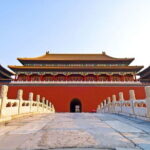
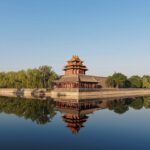
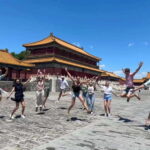
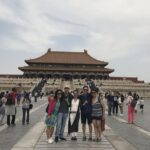
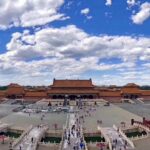
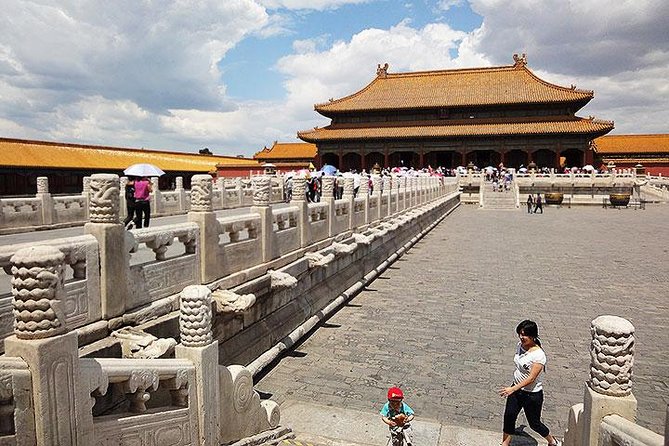
From there, the Forbidden City (Palace Museum) is where the depth kicks in. You’ll walk through the imperial halls and pavilions, and you’ll also get context for how emperors managed state affairs and daily life. The best part here is that it’s guided—so you’re not just staring at walls and decorative details wondering what you’re supposed to notice.
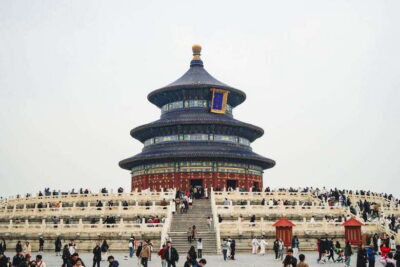
After a welcome lunch (a la carte) at a local restaurant, you’ll likely taste Peking roast duck, one of those foods that lives up to its reputation. Then the Temple of Heaven gives you the other side of imperial life: worship and ritual architecture designed for emperors to seek good harvests.
A heads-up: the pace in Beijing can feel dense. This is a two-day sprint through the city’s top historic sites, so build in extra water breaks and take a moment to sit when you can.
Beijing’s Big Wall Day: Mutianyu cable car, red-wine toast, Bird’s Nest photos
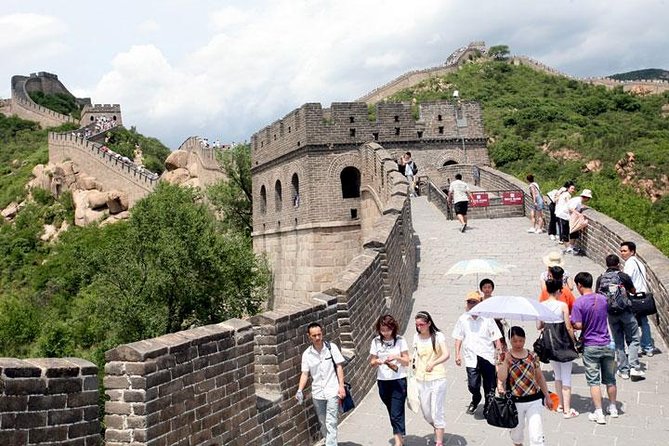
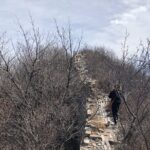
Mutianyu Great Wall is the wall you want. It’s famous for a reason, and the cable car helps you spend your energy on the walking that matters rather than on logistics.
One of my favorite small touches is that you get a group toast moment on the wall, with red wine provided for toasting. It’s not a party bus thing; it’s a quick, memorable waypoint that turns the scenery into a moment you’ll actually remember.
You also get a photo stop at the Olympic National Stadium, the Bird’s Nest. You’re not touring every nook—this is a quick look from the outside—but it’s a nice contrast to the ancient sites. And it keeps the day moving without piling on another long museum block.
Hutong rickshaw time: seeing Beijing beyond the monuments
After the Great Wall, the day shifts into street-level Beijing with a hutong tour by rickshaw. This is one of the best ways to understand how the old alley neighborhoods feel when you move through them at a human pace instead of from a bus window.
You also get a chance to visit a local family. I like this kind of stop because it changes the tour from sightseeing into lived experience—less about checking boxes, more about understanding routines and home life.
Tip: wear comfortable shoes for hutongs. Surfaces can be uneven, and you’ll want stable footing when you’re moving through narrow alleys.
Beijing evening option: acrobatics at the Red Theater
That first Beijing stretch ends with an acrobatic show at the Red Theater. It’s a different kind of culture than temples and palaces—more performance art, timing, and physical skill.
If you’re traveling with kids or you just want one night that’s not another major walking day, this works well. It also offers a chance to rest your feet while still doing something memorable.
Xi’an: Terracotta Warriors, a discoverer’s home, and Tang-era entertainment
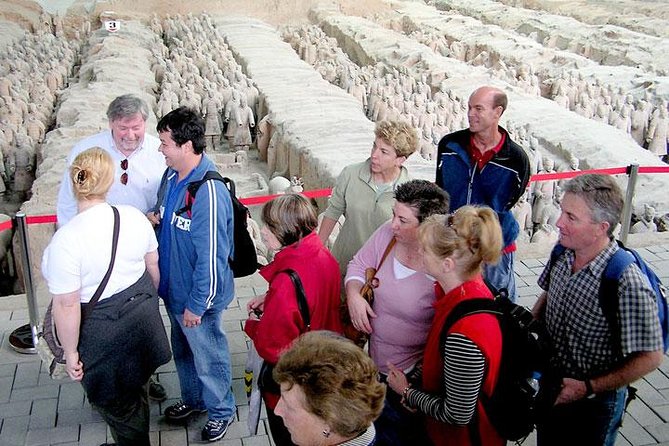
Xi’an is about tangibles: you can see, touch, and understand the power of the past in a very physical way. The Terracotta Army museum is the anchor stop, with three excavated pits and a close-up view of the warriors and ancient weapons.
What makes this visit better than a quick drive-by is that it includes more than viewing. You’ll also have a visit connected to the first discoverer of the Terracotta Army, which adds a human story to the site. Then you’ll make a mini clay warrior yourself with help from a local artisan. That last part is small, but it’s the kind of activity that sticks in your memory long after the photos fade.
In the afternoon, you’ll visit the Big Wild Goose Pagoda, built during the Tang Dynasty to store Buddhist scriptures from ancient India. This is a good pairing with the Terracotta Army day because it keeps the Tang-era connection alive while broadening your sense of what “ancient China” means.
That night, there’s a Tang Dynasty music and dance show paired with a dumpling dinner. One important detail: the theater is not open during January, February, March, and December, so in those months the show and dumpling dinner aren’t included in the tour price. If your dates fall in an open month, this becomes a fun cultural capstone to Xi’an.
Xi’an’s City Wall, Tai Chi lessons, and the Muslim Quarter
Xi’an doesn’t just hand you history; it gives you daily-life glimpses too. The day begins around the City Wall Park and includes time at the City Wall itself, known as the most complete existing urban fortification in China. It’s also a good place to watch how people live around heritage instead of sealing it off.
You can even learn Tai Chi from a master. That’s one of those experiences that can feel more real than another photo stop, because you’re sharing space with locals doing something they do every day.
If you want an extra activity, cycling on the wall is available, but bike rental fees aren’t included. Plan for that if you’re tempted—don’t assume the tour covers it.
Then the Muslim Quarter becomes your food-and-street culture window. You’ll lunch at a well-known restaurant in the area and snack your way through local flavors like sweet steamed rice, green bean cake, persimmon cake, and rice cake. After lunch, you’ll visit the Great Mosque of Xi’an, which shows a mix of Chinese architectural style and Islamic religious design.
Finally, you’ll see the Small Wild Goose Pagoda, which also houses Xi’an Museum. The inclusion of both larger and smaller pagoda stops is a nice way to vary the feeling of your visit—more than one angle on Tang-era influence.
Guilin: Reed Flute Cave and Elephant Trunk Hill
After a morning flight to Guilin, the scenery starts fast. Reed Flute Cave is the first major stop, a long karst cave known for stalactites and stalagmites shaped into dramatic forms. It’s one of those places where your brain keeps finding new shapes the longer you look.
Then comes Elephant Trunk Hill, a hill shaped like an elephant drinking river water. This is a simpler stop than the cave, but it’s a good “breather” between indoor and outdoor sightseeing.
These two stops together help you get a feel for Guilin’s natural character without turning your day into a marathon.
The Li River cruise to Yangshuo: why this is the payoff
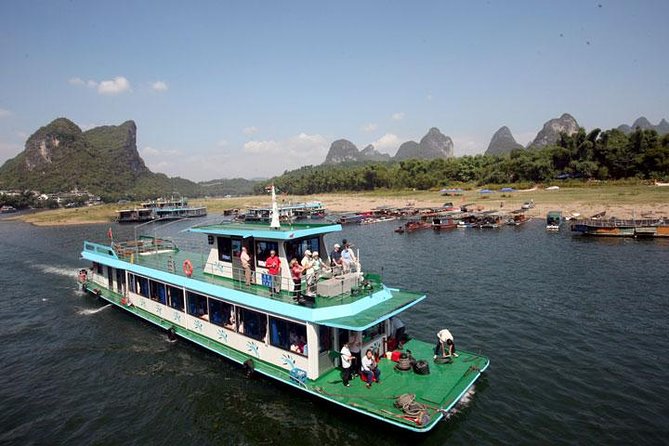
The biggest scenery moment comes on the Li River cruise from Guilin to Yangshuo. The cruise lasts about 4.5 hours including the travel time, and it’s often described as the heart of the region’s landscape—think classic karst peaks lined up like a gallery.
What I like about a cruise here is that it slows you down at exactly the right time. After temples, walls, and museums, you finally get a chunk of time where the main job is to look out the window and let your brain reset.
When you arrive in Yangshuo, you’ll stroll through West Street, then the program continues with driving along country roads and a stop at a villager’s home.
One practical note: don’t underestimate the comfort factor. If you’re prone to getting cold in boats or on long rides, bring a light layer.
Shanghai: Museum culture, Yu Garden charm, and the Bund on the waterline
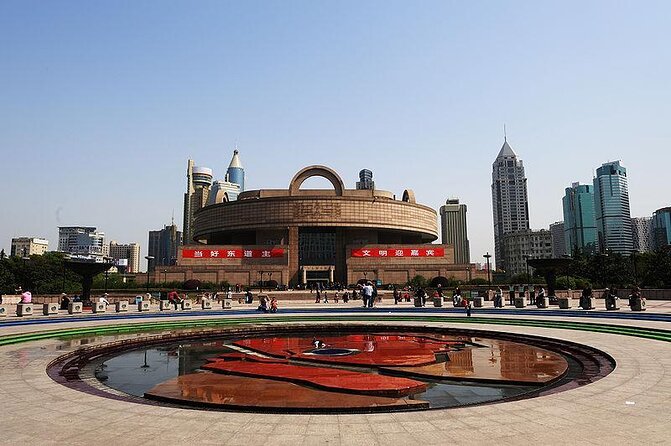
Shanghai is your “big city with layers” finale. The first morning includes a visit to the Shanghai Museum, one of the four largest museums in China and focused on artwork from ancient times. This sets a strong tone because it’s not just modern skyline sightseeing—it’s deep cultural content.
Next up is Yu Garden (Yuyuan) and the nearby traditional bazaar. The Nine Zigzag Bridge is the signature feature here, and the mid-lake pavilion helps make the garden feel like a designed world, not just a park you walk through.
You also get a farewell lunch (a la carte) around noon at a nice restaurant, included and valued at CNY150 per person. This kind of structured meal matters at the end of a tour because it gives you a relaxed moment right before the final city walk-and-photo rhythm.
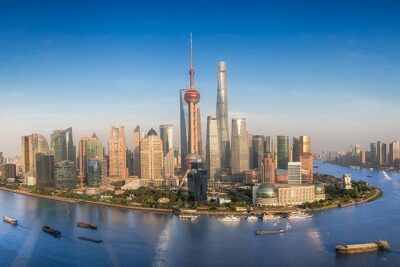
Then the day shifts to the waterline and skyline views at the Bund area. You’ll also enjoy a panorama viewpoint at the Shanghai Tower’s Duo Yun Bookstore on the 52nd floor. After that, a one-hour cruise on the Huangpu River rounds it out.
You’ll get free time on the Bund too, so you can do your own pacing—photos, a slow walk, or just people-watching without a guide moving you along every five minutes.
Price and value: what you’re really paying for at $2,089
At $2,089 per person, the question isn’t just whether it’s affordable. It’s what you’re buying with that price tag.
This tour bundles the stuff that quietly adds up: domestic flights between Beijing, Xi’an, Guilin, and Shanghai; hotel accommodation based on twin-sharing rooms; air-conditioned vehicles and drivers; English-speaking guides; entrance fees; and a set number of meals. You also get mobile ticket handling, plus two bottled waters per person per day.
So the value is in removing friction. Instead of paying for each entrance, arranging guides city by city, and piecing together transport yourself, you get one package that keeps your days on schedule. That’s especially helpful for China, where attractions can be far apart and tickets can be timed.
The one potential downside of “included everything” is that you should watch the show-related seasonal detail. In winter months, the Tang Dynasty show and dumpling dinner may not run, and that’s reflected in what’s included.
Pacing, flights, and how to keep the trip feeling good
This itinerary is efficient, not leisurely. You’ll do major sites on multiple days, and you’ll have flight transitions on the “city change” moments. That can be great if you like momentum, but you should plan your energy accordingly.
My advice: schedule an early dinner whenever the group meal happens, and don’t try to squeeze extra late-night plans into each arrival day. The tour leaves some free time, especially in Shanghai, but the sightseeing blocks are still strong.
Also, the group size matters. With a max of 18 people, you’re less likely to get stuck behind a sea of strangers at every entrance. It’s still a group schedule, though—build in patience at busy sites like the Forbidden City area.
Who should book this tour (and who might not)
This tour suits you if you want a clear, well-run route across classic China highlights and you prefer guided structure over solo planning.
It’s also a strong match if you care about balance: you get the famous UNESCO sites, but you also get hutong-style local experiences, Muslim Quarter culture, and a real nature payoff with the Li River cruise.
You might look elsewhere if you’re highly sensitive to fast pacing, or if you want lots of unscheduled time in each city. This is a “see a lot with help” experience, not a slow wandering trip.
Quick FAQ
FAQ
What cities are included on this 11-day China tour?
The tour covers Beijing, Xi’an, Guilin (with Yangshuo day time), and Shanghai.
How large is the group?
The maximum group size is 18 travelers.
Are entrance fees included?
Yes. Entrance fees to the listed tourist sites are included.
Does the price include domestic flights and hotels?
Yes. It includes economy-class airfare among Beijing, Xi’an, Guilin, and Shanghai, plus hotel accommodation based on twin-sharing.
Are meals included?
Yes. Breakfast is included for 10 days, lunch is included for 5 days, and dinner is included (plus additional included lunches noted in the program).
Is pick-up offered?
Yes. Pickup is offered, and you’re also met at the airport on the start day for transfer to your hotel.
Is there any shopping detour?
No. The tour notes there are no shopping detours, factory stores, tea ceremony stops, or shopping-site restaurant stops.
Can I request a vegetarian option?
Yes. A vegetarian option is available if you advise in advance.
Should you book this 11-day China tour?
If you want a confident route through Beijing, Xi’an, Guilin/Yangshuo, and Shanghai without fighting tickets, transport, or timing, this is an easy yes. The strongest reasons are the combination of top UNESCO hits (Great Wall at Mutianyu, Forbidden City, Summer Palace, Terracotta Warriors) with culture you feel on the street (hutongs with rickshaws and local family visits) and a genuine nature payoff (Li River cruise).
One last practical check: confirm your travel month if the Tang Dynasty show matters to you. If your dates fall in an open season, you’ll get that added evening experience; if not, you’ll want to mentally swap that out for a different kind of night plan in Xi’an.
If that pacing and “included structure” sounds like your style, book it and spend your prep time on comfort basics: good shoes, light layers for caves and boats, and a flexible attitude for flight-day transitions.